DD
MM
YYYY

PAGES

DD
MM
YYYY

spot_img

PAGES

Home Blog Page 7049

My Response: Voice Payment and Banking for Northern Nigeria

2

Since I wrote the piece on moving startups including fintechs to northern part of Nigeria where BVN penetration rates are about a factor of 10 below what Lagos has, many have commented explaining why the move would be a bad strategy. Of course, no one said it would be easy, and without any risk. As I explained in the free-range chicken analogy, opportunities come in uncontested markets for pioneers who have the visions and capacities to unlock them.

Let me quote this comment which largely summarizes most of the points

I don’t agree with you. The most important consideration for any business is the market need for it’s products or services. First off, is there a considerable need for my products/services in a particular market? Is the market ready and sophisticated enough for my kind of business offerings? Who are the people that make up my potential customer base? Are they willing and able to buy or afford my products/services? Will my products be too advanced or simplistic for them? When it comes to Fintech, not sure northern Nigeria qualifies as a viable market (at least not for now). That region is still struggling to embrace basic financial & banking services not to talk of more advanced digital financial services like that which fintech offers. How many of the FG & CBNs financial inclusion initiatives have succeed in northern Nigeria till date? $mart businessmen and investors follow the money and the viable markets when it comes to locating or building their business structures and models. Northern Nigeria doesn’t present such an attractive offer or potential worth all the inherent risks (security & socio-economic) therein. Just several days ago, over 100 persons were killed in Kaduna out of nowhere without any warning. That’s a disaster. (edited)
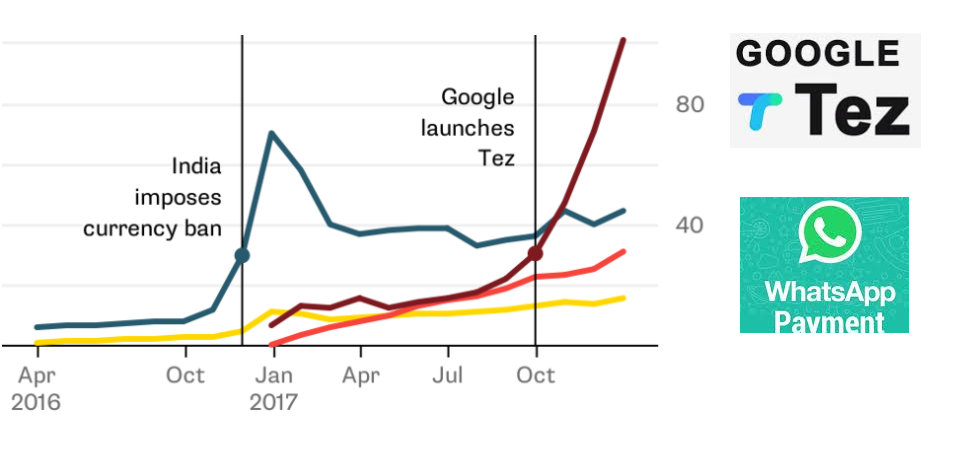
How WhatsApp Payment and Google Tez Would Impact African Banking

My response: The commenter is right on all the points noted. Yet, he is making this comment based on the present technology he is aware. If we do believe that innovation can bring disruption through a new basis of competition, it is fair to expect that one can build a financial service technology company in Northern Nigeria at scale. That we have text-based payment system does not mean that is the final state, and what is desirable in Nigeria. Even literacy should not be a barrier if we make that product to be delivered via voice. Our challenge here is the limitation of what we read on Silicon Valley which defines what we expect to deliver to customers in Nigeria. Provided one does not need a high level of literacy to use a mobile phone, it is fair game that one can do banking via voice while being an illiterate. MPESA has not been slowed down because people are not literate. Typically, within weeks, non-educated people pick some key enablers to do their MPESA without any help – how to send money and how to receive money. Then, know the amount!

I had noted that Google Tez would also cause disruption with its potential voice banking capabilities. Possibly, Google Tez would come first to Northern Nigeria before our entrepreneurs.

Voice banking will be presented as secure and convenient and will open new vistas for a really brilliant startup to set a new basis of competition in the fintech world. 2018 is the year of Voice Banking in Nigeria, and Africa. If you have the capabilities, go for it.

Simply, I told him “Voice Banking” but it may not be a bank product, but likely from a fintech. We have experienced ecommerce, journeying on mobile commerce, and right now, this is the age of voice-commerce. For Africa, there is no emerging financial technology that is coming in 2018 that will be bigger than voice, and banking (not necessarily banks) is going to be the clear beneficiary in Africa

Voice banking will be key in places like Northern Nigeria

On security, provided you have MTN and Glo in those areas, you do not need to be in villages to deliver your services. At the end, everything comes down to how you create that product. Yet, no one said it is going to be easy but I am very confident that Northern Nigeria is ready if the right products arrive for the citizens in ways they can use them.

LinkedIn Comment On this Piece

There’s really no argument/misunderstanding on what needs to be done or how it should be done; the only thing remaining is having the capacity to deliver, the market is already there in the north.

Some people are still stuck in the traditional way of product design, whereby a business entity comes up with what it likes, or what it thinks the consumers would like, and then force it on them. But the construct of digital platform has changed all of that. Now, you need to go out and find out what the people want, and how best to deliver it, in order to suit their limitations and other challenges they may have. When you learn to develop products with this kind of mindset, obviously the things you highlight as impediments will vanish.

As for security issues, I am sure many who worry much about security have not travelled to the north before, they rely mostly on what they read and hear. The way you hear about boko haram and bombing, you might be tempted to believe that Maiduguri is a deserted town by now, interestingly there’s still over a million people within the city. If you travel to Kano or Kaduna and spend some time, you will appreciate that there’s so much economic activities happening, with billions of naira exchanging hands.
Nigeria’s 115th Position

0

The World Economic Forum (WEF) ranked Nigeria as the 115th country out of 140 on global competitiveness. If you attended the same secondary school I attended (Secondary Technical School Ovim, Abia State), and came anywhere that far, you would get the principal time. When that happens, it means you are in real trouble because you are failing irrespective of your scores. So, Nigeria did not do well. That is not news: the big issue is that the city that makes Nigeria look great is going through big  major structural redesign. Lagos is chronically sick with the traffic congestion and if that is not fixed, Africa’s 5th largest economy may experience severe diminishing returns by 2030. The solutions put to address the traffic problems have been largely transient and ephemeral.

Nigeria has been ranked 115th out of 140 countries assessed in the 2018 Global Competitiveness Report (GCR) of the World Economic Forum (WEF), an official has said.

A statement issued by Jumoke Oduwole, senior special assistant to the president on industry, trade and investment, office of the vice president, on Monday in Abuja said that the report was released on October 17.

She said that the report showed improved performance across key enabling business environment indicators and suggested an overall improvement in the country’s competitiveness.

The GCR is an annual ranking which compares the national competitiveness environment of 140 countries based on 12 pillars – four grouped under basic requirements, six under efficiency enhancers and two under innovation and sophistication factors.

Yes, Lagos needs help – everyone wants to move to Lagos. It is the ultimate center of excellence where a boy comes with a nylon bag and returns to village with a car. It has something for everyone, and any person can find value in Lagos. This system has created a challenging situation where Lagos has become extremely overpopulated and there is no tangible model to manage this paralysis.

That brings me to this question: What can be done? I have noted a solution.

I propose for Lagos state government to begin immediate discussions with neighboring states to move some of the business hubs therein. Do not bank on that though, as doing so will mean that Lagos will lose some tax revenues to the states. So, for Lagos state government, that would not be a good idea, even though it may help the region!

Yet, what we have in Lagos is not sustainable – this city will crash under severe traffic, in ten years, if nothing strategic is done. The Atlantic City should have been built in Ogun State to re-distribute traffic from the Island to the Mainland. All that Lagos State needs to do is to work out a tax revenue sharing formula with the neighboring states.

But that is easier said than done since Nigerian law is still primitive in that space on where earnings or incomes are taxed. Afterall, Nasarawa State houses most people that work in Abuja, and most of those Abuja workers living in Nasarawa state do not pay taxes to Nasarawa state government.

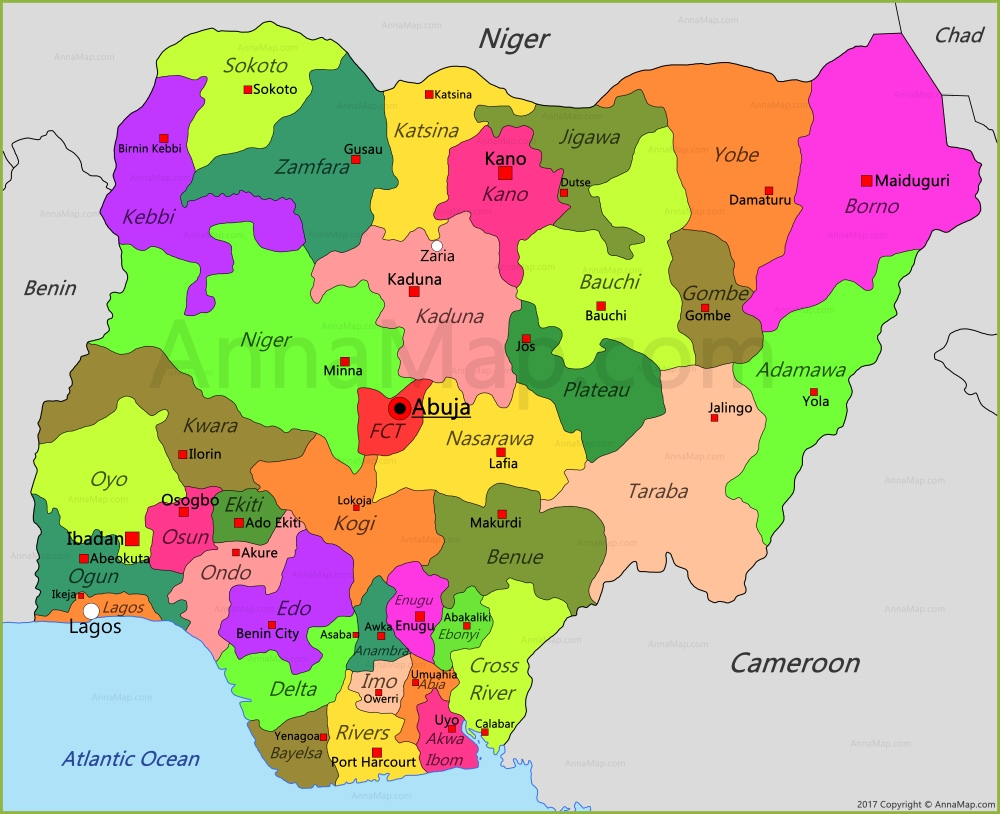
Map of Nigeria (source: World Map)

I wish we have free cash in Nigeria – we do not. But where that is possible, I think it is time to add one more new city, stimulated with massive government funding. Uyo would be a natural choice. Yes, if you have Uyo and a deep seaport running, within five years, the traffic in Lagos ports and overall Lagos traffic will drop by at least 20%. All the traffics from Onitsha and Aba will move to Uyo, and some from the North diverted to Uyo, and magically Lagos would become more livable. Of course, interests and shenanigans do not allow sensible things to happen in Nigeria. But anyone that tells you that Lagos would continue to grow without a surgical roadmap by 2030 does not live in Lagos! Of course, it takes efforts to see that since people are indeed celebrating that they made progress, coming 115th out of 140.

From Numbers to AI – Podcast w/ Ndubuisi Ekekwe

0

You can read the text here from page 11.


Zenvus Goes on Exhibitions in Germany, Senegal and South Africa

0

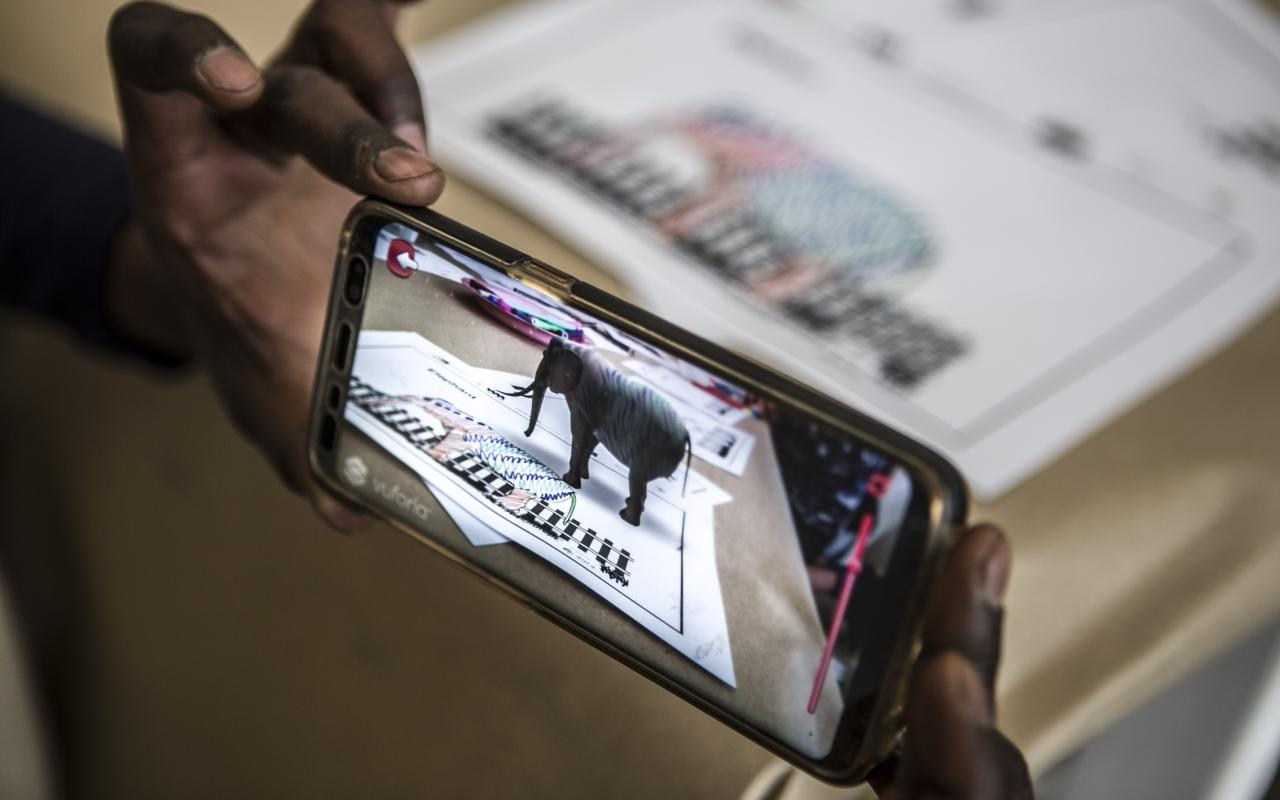
Zenvus, our agtech product, will be on exhibitions in three countries – Senegal, South Africa and Germany. The exhibitions are managed by ZKM I Karlsruhe, Germany to chronicle some of the most fascinating digital ideas out of modern Africa. For date and time, visit ZKM. When you walk into the locations – Afropixel Festival in Dakar, Wits Art Museum and Fak’ugesi Festival of African Digital Innovation in Johannesburg and  center for Art and Media Karlsruhe in Germany – check for Digital Imaginaries – Africas in Production.

ZKM I Karlsruhe will hold the research and exhibition project Digital Imaginaries – Africas in Production from November 17, 2018 until March 31, 2019. The project explores how digital practices and imaginaries shift what Africa is and can be. Digital Imaginaries brings together artist, social scientist and digital makers to trace, disturb and redirect the flux between digital practices and imaginaries. Digital Imaginaries is a joined project of Kër Thiossane, the independent center for digital art, and the Afropixel Festival in Dakar, the Wits Art Museum and Fak’ugesi Festival of African Digital Innovation in Johannesburg and the ZKM | Center for Art and Media Karlsruhe.

The ZKM I Center for Art and Media Karlsruhe  (Germany) will is a unique cultural institution worldwide. Established in 1989 as a foundation under public law, the ZKM is a house of all media and genres, a house of both spatial arts such as painting, photography and sculpture and time-based arts such as film, video, media art, music, dance, theater and performance. Numerous temporary exhibitions and thematic events are to be found alongside research and production in the field of new media, fundamental research and a comprehensive concept of education.


Nigeria Will Have GREAT Private Companies Before Good Public Institutions

0

I wrote a piece on Paul Graham’s bold prediction on the Nigerian startup scene. Many responded on LinkedIn and noted largely that Nigeria must have electricity, great schools, etc before we could witness what Mr. Graham was predicting. I am not saying that we do not need those enabling environments. Yet, if you check human history, great private companies have typically preceded the strengthening of public institutions. Why? Governments use the taxes and fees on companies to build public institutions! In other words, you cannot expect good roads, great schools, etc if there are no companies with capacities to pay taxes to make such possible. The thinking that one has to wait, for everything to be perfect, before investing or building in Nigeria, is decoupled from how nations have developed.

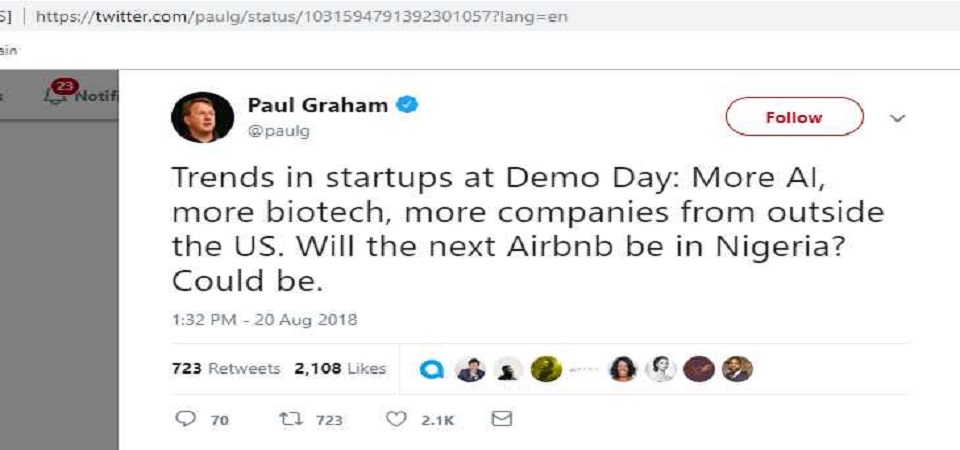
While I believe in the potentials of Africa, especially Nigeria, I would caution against the celebration of hype as reality and hope as achievement. Especially when all the factors that perpetuated the creation, scale and success of Airbnb are absent in Nigeria. In four years, the only new $millionaires will be from Africa’s political class, unless some serious institutions for delivering good governance, politics, free market economy and civil interactions magically appear and become effectively implemented before 2022. Since there are no indications of such positive change happening overnight in Africa and or Nigeria, given that such processes take decades, I simply wouldn’t be banking on such $millionaire party. That’s not how Rome was built.

It’s all about a media hype, the reality on ground is that Africa still lies in the dark and Nigeria especially is backward in terms of ordinary electricity that is the source of innovation

So, if you expect Nigeria to be perfect with good infrastructure, top-grade schools, etc before you can invest or do anything in Nigeria, you would be out of luck. Vodafone had the same mindset when Nigeria wanted it desperately for mobile telephony. We continue to appreciate MTN for believing in Nigeria.

Across human histories, from UK to America, companies rise before nations can build strong institutions. In other words, if you expect Nigeria to have the best public institutions before great companies, you would keep waiting. Typically, what happens is that nations have great companies, and then use the taxes paid by those companies to build better public institutions.

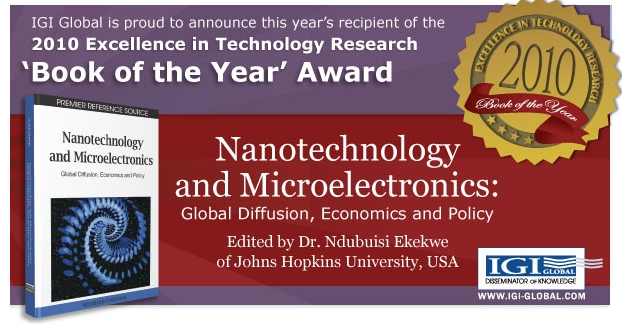
My thesis is that Nigeria cannot have solid public institutions, from great schools to good public institutions, until Nigeria has created category-leading private companies that would provide resources to build those institutions. This was well discussed in one of my books which received IGI Global Book of the Year award.

Prof Ndubuisi Ekekwe’s book received the prestigious IGI Global “Book of the Year” Award in 2010

Yet, the private companies need good public institutions to thrive. But there is no record that that public institutions must exist first. America was partially built on the wealth created by Rockefeller, Carnegie, Mellon, etc who generated enormous wealth for the commonwealth, and using the money the American government set up institutions. Yes, the tax from Standard Oil was used to build institutions to regulate the oil industry. Without the money from Standard Oil, government would not have the resourceful to do the needful in bringing competition in the American energy sector, by breaking the firm into pieces with incarnations of Exxon, Chevron, etc.

Standard Oil Co. Inc. was an American oil producing, transporting, refining, and marketing company. Established in 1870 by John D. Rockefeller and Henry Flagler as a corporation in Ohio, it was the largest oil refinery in the world of its time.

[…]

In 1911 The original Standard Oil Company corporate entity continues in existence and was the operating entity for Sohio; the Standard Oil Company was transformed into entities such as ESSO (phonetic spelling of SO), now Exxon; and SOcal, now Chevron

Nigeria Needs GREAT Private Companies First

That is what will happen – we cannot expect a poor public sector to do magic. It is only when the private sector has generated enormous wealth would we see governments begin to evolve in ways we want them. Interestingly, the private sector cannot exclusively wait for those public institutions to be in existence before they can move to fix the market frictions.

I hope things improve from the public sector. Yes, I do wish we can move faster in many things. But I am not the type that believes that things can only happen after government has fixed many things. Government needs money to do those things and having great companies can make them happen.

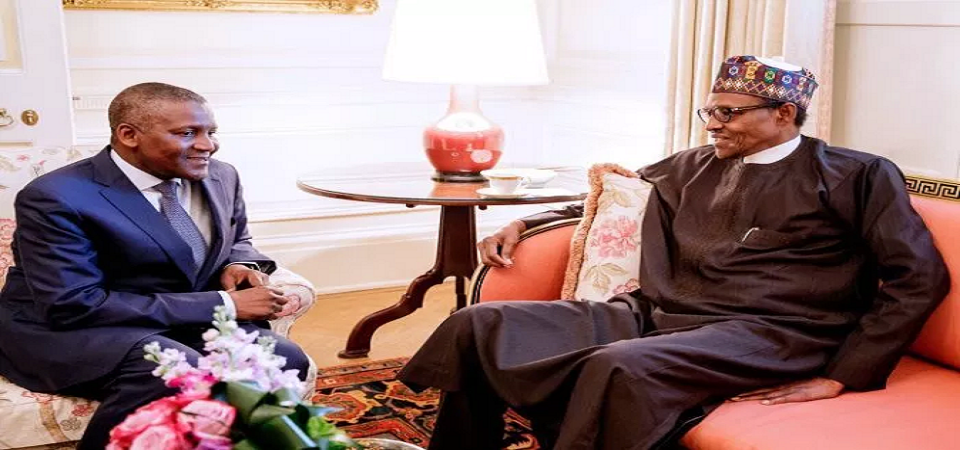
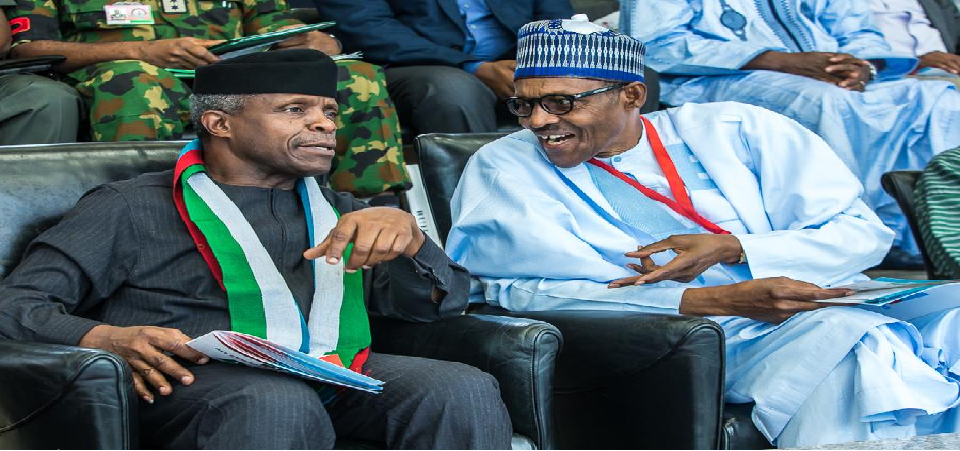
President and Vice President of Nigeria

All Together

The structures of many government institutions are designed in ways that unless the private sector does well, the government institutions will not do well. From National Information Technology Development Agency (NITDA) to Industrial Training Fund (ITF), government has structured everything that unless the private sector does well, these institutions would not have resources to thrive.

That is what is happening across all government agencies and institutions – they are largely waiting for resources from the private sector to build them. The oil revenue is asymmetric, largely uncorrelated to the growth of the local economic organically, and offers nothing sustainable. You take the oil money to Umuahia, Sokoto, Osogbo etc and once it is finished, nothing happens. But if you have companies in those cities that could bring a quarter of the allocations coming from oil money via taxes, the local economies will be better over long-term.

In summary, if you just wait for Nigeria to be perfect before investing or starting a business, you would run out of time. Nigeria is really waiting for the private sector to fund whatever it wants in Nigerian public institutions. That has been the ways the world has developed – public institutions are funded by private companies. Most private companies would be pioneers in some categories and sectors. Before them, government had nothing to regulate those areas. But as they begin to operate, they would provide funding which government would then use to regulate, develop and improve them.

Practically, we have no aerospace tourism sector in Nigeria. But if we have 5 private companies in that sector, in weeks, government will establish an agency to support it. Interestingly, as those companies expand, they would fund the institution needed to keep them going by providing better standards and regulations to ensure they are nurtured. But where you want that aerospace tourism agency to emerge before the private sector, you may keep waiting for decades.