DD
MM
YYYY

PAGES

DD
MM
YYYY

spot_img

PAGES

Home Blog Page 708

Bullish Soars More Than 80% in NYSE Debut, Valuation Hits $13bn

0

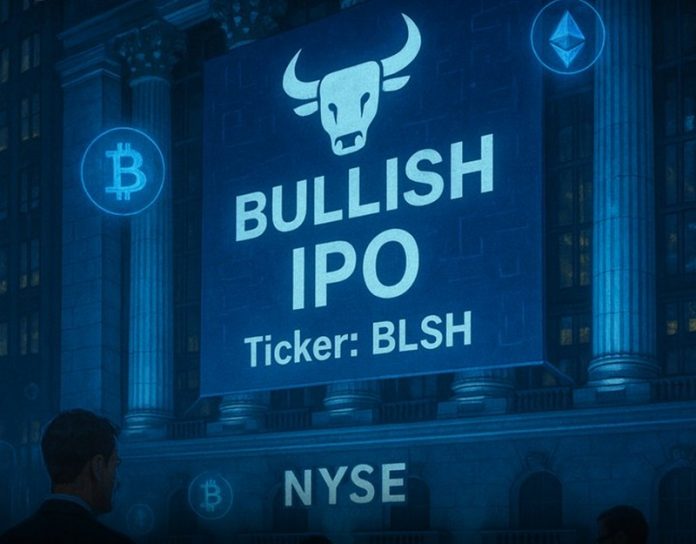
Peter Thiel-backed cryptocurrency exchange Bullish made a striking debut on the New York Stock Exchange on Wednesday, surging more than 80% in its first day of trading and underscoring investor appetite for digital asset stocks amid a political and regulatory environment increasingly favorable to the sector.

The Cayman Islands–domiciled exchange priced its initial public offering at $37 a share, raising $1.11 billion and giving it a market capitalization of $5.4 billion at the offer price. Investor enthusiasm was evident even before trading began, as the company twice raised its target price in the days leading up to the listing.

Shares opened at $90, rocketed to $118 intraday, and settled at $68 — still 83% above the IPO price — for a fully diluted valuation reaching about $13.16 billion. In late afternoon trading, the stock was quoted at $92.60, more than 150% higher than its offer price.

“Bullish came out with an attractive initial valuation, and investors responded by aggressively bidding it up during the pre-IPO process,” said Jeff Zell, senior research analyst at IPO Boutique.

Bullish president Chris Tyrer said the offering’s reception reflected the public capital markets’ growing willingness to back crypto-focused businesses, citing the strong post-listing performance of Circle Internet, the stablecoin operator whose shares have surged since its June debut.

“We’ve gone public today, and there’s a slew of others that are going to follow us, and I think that is net beneficial, because it gives people more options in terms of how they access this asset class,” Tyrer told Reuters.

The IPO came as bitcoin prices have reached record highs, driven in part by US President Donald Trump’s reversal of the Biden-era crackdown on digital assets. Trump has positioned himself as a staunch ally of the cryptocurrency industry, with his administration advancing legislation to regulate stablecoins — most notably the Genius Act — and supporting broader corporate adoption of blockchain technologies. The White House’s pro-crypto stance, coupled with ETF inflows and growing interest from corporate treasuries, has accelerated mainstream acceptance of digital assets.

Bullish, which describes itself as an “institutionally focused” exchange, caters to quantitative traders and hedge funds rather than retail investors. The company says it handled about 35% of all bitcoin spot trading in 2024, excluding offshore platforms such as Binance. In addition to operating its trading platform, Bullish owns CoinDesk, the crypto news outlet and data provider it acquired in 2023. The exchange also maintains large reserves of bitcoin and stablecoins on its balance sheet and plans to convert a significant portion of its IPO proceeds into stablecoins — a segment of the market that has expanded rapidly since the passage of the Genius Act.

Among Bullish’s earliest backers were Thiel, US crypto billionaire Mike Novogratz, and British hedge fund manager Alan Howard, though Howard has since exited his stake. Tyrer emphasized that while Thiel provided early funding, “he is not really involved day to day” in the company’s operations.

Bullish’s debut comes amid a wave of blockbuster US IPOs in recent weeks. Circle’s shares jumped 168% on their first day, while design software company Figma soared 250%. The sharp rallies have renewed criticism from some investors, such as venture capitalist Bill Gurley, that IPO underwriters are leaving substantial money on the table by underpricing offerings.

Despite the market’s euphoria, Bullish reported a net loss of $349 million in the three months to March 31, compared with net income of $105 million in the same period last year. The exchange abandoned an earlier attempt to go public via a special purpose acquisition company in 2021 when rising US interest rates dampened equity markets.

Now, buoyed by shifting political winds and record digital asset valuations, Bullish is one of only a few crypto exchanges to achieve a US listing. Its rival, Coinbase, which caters more to retail investors, became the first crypto firm to join the S&P 500 in May. Bullish is also close to securing a coveted New York “BitLicense,” which would allow it to operate in the state under strict know-your-customer, anti-money laundering, and capital requirements.

For Tyrer, the market debut is less about chasing the highs and more about preparing for the inevitable cycles in digital assets.

“Crypto is an asset class that has cycles. Peaks are peaky and troughs are deep,” he said. “I don’t think we have yet seen anything that would lead me to believe we’re in a bubble.”


The S&P 500’s New All-Time High Reflects Strong Market Momentum and Economic Optimism

0

The S&P 500 closed at a new all-time high of 6,445.76 on August 12, 2025, marking a 1.13% increase from the previous day and its 16th record close of the year.

This rally, which saw the index climb nearly 33% since its April 2025 low, was driven by a cooler-than-expected inflation report, boosting hopes for a Federal Reserve rate cut in September. The SPDR S&P 500 ETF Trust (SPY) also reflected this upward momentum, with a current price of $643.805, slightly below its yearly high of $646.152.

However, some analysts caution that forward returns may be muted, citing historical data where new highs after a 4-12 month gap averaged only 4.4% gains over the next year, compared to the market’s typical 11% annual return.

Others warn of potential volatility due to high valuations, with the S&P 500’s forward P/E ratio near 22, and upcoming economic data like retail sales and the Jackson Hole Fed meeting could influence future trends. A new record high signals strong market optimism, often driven by positive economic data like the recent cooler-than-expected inflation report.

This reinforces expectations of a Federal Reserve rate cut in September, which typically supports equity valuations by reducing borrowing costs and stimulating economic activity. Higher confidence can encourage both retail and institutional investors to allocate more capital to equities, sustaining the rally.

The 33% surge since April 2025 reflects resilience in corporate earnings and economic fundamentals, despite concerns about high valuations (S&P 500 forward P/E ratio ~22). This can signal robust economic health, particularly in sectors like technology and consumer discretionary, which often lead index gains.

However, high valuations may raise concerns about sustainability, potentially prompting closer scrutiny of earnings reports and macroeconomic indicators. The rally may highlight outperformance in growth stocks (e.g., tech-heavy Nasdaq components), but investors may also rotate into undervalued sectors.

Small-cap and mid-cap stocks, often more sensitive to domestic economic conditions, could see increased interest as lower rates reduce financing costs. Historical data suggests muted forward returns (average 4.4% one-year gains after new highs following a 4-12 month gap) compared to the market’s typical 11% annual return.

Upcoming events like retail sales data and the Jackson Hole Fed meeting (late August 2025) could introduce volatility if they deviate from market expectations. The new high prompts investors to reassess valuations, particularly in high P/E sectors. Analysts may focus on earnings growth sustainability, with Q3 2025 corporate earnings becoming a key evaluation metric.

Record highs often attract media attention, drawing retail investors via platforms like Robinhood or eToro. The accessibility of the S&P 500 through ETFs like SPY (current price ~$643.805) lowers barriers for retail participation. Pension funds, hedge funds, and asset managers may increase equity exposure, particularly in index funds.

A strong U.S. market often attracts foreign capital, especially if the dollar strengthens or U.S. assets are perceived as safer than other global markets (e.g., amid European or Chinese economic uncertainty). Outperforming sectors (e.g., AI-driven tech) may see heightened interest, with investors chasing momentum or seeking exposure via thematic ETFs.

With the S&P 500’s forward P/E ratio at ~22, higher than historical averages (~16-18), investors may become cautious, particularly if earnings disappoint or inflation resurges. Increased retail interest could lead to speculative bubbles in certain sectors, requiring careful evaluation to avoid overexposure.

The S&P 500’s new all-time high reflects strong market momentum and economic optimism, likely driven by expectations of looser monetary policy. It encourages deeper evaluation of valuations, earnings, and macro trends while attracting interest from retail and institutional investors. However, high valuations and potential volatility warrant cautious optimism. Investors can leverage tools like ETFs.

A Generational Opportunity – Missed Bitcoin, the AI Play [podcast]

0

In this Tekedia Daily video podcast, Ndubuisi Ekekwe argues that AI represents a generational opportunity comparable to the rise of Bitcoin, which saw an exponential increase in value from being nearly worthless to a significant asset. The speaker identifies three primary ways to capitalize on the AI revolution: by using AI to enhance productivity and increase earnings, by building AI-centric businesses and participating in the rapid creation of wealth, and by investing in the diverse range of companies that form the AI industry’s value chain.

The message is a clear call to action: engage with AI to avoid missing out on what is predicted to be a massive and transformative force.

Indeed, a powerful reminder that AI is not a fleeting trend but a significant industry transformation. Just as those who were skeptical of Bitcoin’s early days later regretted their inaction, the speaker warns against dismissing AI as mere “hype.” The future impact of AI is predicted to be immense, and individuals are encouraged to find their own way to participate in this unfolding opportunity.

The key takeaway is to learn, build, or invest in AI to secure a place in this new economic landscape.


Podcast VideoSign-up at Blucera and check Tekedia Daily podcast category under Training module.

Airtel Africa, Vodacom Sign Cross-Border Infrastructure-Sharing Deal to Boost Digital Connectivity in Mozambique, Tanzania, DRC

0

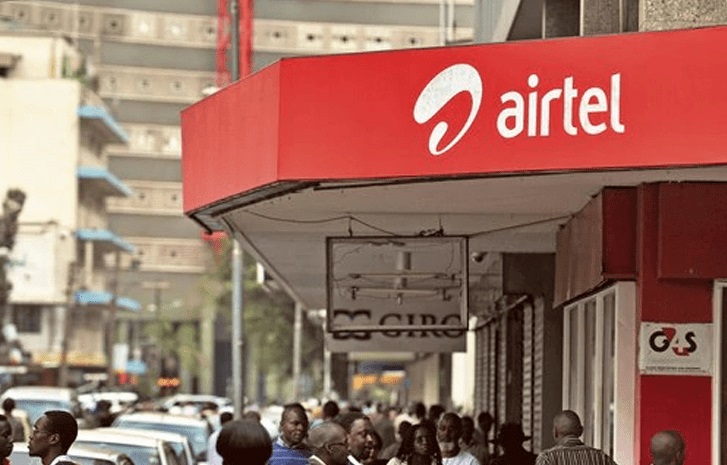
Airtel Africa and Vodacom Group have entered into a strategic infrastructure-sharing agreement covering Mozambique, Tanzania, and the Democratic Republic of Congo (DRC) in a bid to expand digital connectivity, improve service quality, and reduce operational costs across key African markets.

The deal, which remains subject to regulatory approvals, will see the two telecom giants share fiber-optic networks and tower infrastructure to accelerate the rollout of high-speed internet services, particularly in underserved and rural communities where deployment costs are high.

Under the arrangement, both companies will be able to leverage each other’s existing network assets, reducing the need for costly parallel infrastructure builds. This is expected to result in faster internet speeds, better service reliability, and improved access to mobile, fixed, and financial services.

Driving Digital Inclusion

Vodacom CEO Shameel Joosub called the partnership a “proactive step” toward a sustainable and inclusive digital future for Africa, noting that the company’s goal to connect 260 million customers by 2030 hinges on scalable, cost-efficient network solutions.

Airtel Africa CEO Sunil Taldar echoed this sentiment, stating that collaboration, even between competitors, has become essential to meet Africa’s growing demand for data-driven services.

“Accelerating the deployment of fibre connectivity is key to enabling 4G and 5G technologies in Africa,” Taldar said, adding that the move will also enhance network performance, extend rural coverage, and create more opportunities for digital and financial inclusion.

He noted that partnering with Vodacom will open up greater access to digital and financial opportunities for customers, while meeting all regulatory requirements.

Economic Impact of The Deal

Industry analysts say the deal reflects a broader shift in Africa’s telecom sector toward cooperative infrastructure models. As demand for data surges due to the rise of video streaming, fintech applications, and cloud-based services, operators are increasingly opting to share assets to keep costs down while speeding up network deployment.

In many African countries, infrastructure-sharing agreements have proven effective in bridging connectivity gaps in regions where return on investment is traditionally low. By pooling resources, operators can free up capital for service innovation, while governments benefit from quicker progress toward national broadband and digital economy goals.

The move also positions Airtel Africa and Vodacom to compete more aggressively with MTN Group, which has been expanding its own cross-border infrastructure-sharing agreements. Airtel Africa struck a similar deal with MTN earlier this year in Nigeria and Uganda, while Nigerian operator 9mobile recently partnered with MTN to cut capital expenditure and improve network reach.

Catalyst for 5G Readiness

Analysts also note that fiber connectivity is critical for powering next-generation networks. With the African 5G rollout still in early stages, deals like this could play a pivotal role in building the backbone infrastructure needed to support ultra-fast mobile networks. This, in turn, would enable advanced applications in telemedicine, e-learning, and remote work — areas that have seen increased adoption since the COVID-19 pandemic.

By pooling infrastructure in Mozambique, Tanzania, and DRC — three markets with growing internet penetration but significant connectivity gaps — Airtel Africa and Vodacom aim to deliver a sustainable model for expanding access while meeting rising consumer and enterprise demand for reliable, high-speed data services.

Cold Wallet’s $5.94M Presale Run & 35x Price Gap at Launch Could Make It a Top Crypto of the 2025 Cycle!

0

In previous crypto market cycles, some of the biggest gains were captured by those who identified strong opportunities just before a bull run took hold. The most impressive returns often came from tokens selling at a fraction of their eventual listing price, supported by solid fundamentals and real-world utility.

Cold Wallet now finds itself in a comparable position. Its CWT token is available at just $0.00998 in presale Stage 17, with a confirmed launch price of $0.3517. This gap offers a compelling upside for those entering early.

With $5.94 million already raised and a product built to address one of crypto’s most enduring challenges, high transaction fees, Cold Wallet ($CWT) is shaping up as a top crypto to buy before the next market surge.

Timing in Crypto Can Redefine Outcomes

History shows that in cryptocurrency, timing can be the decisive factor between extraordinary gains and missed chances. Projects that built momentum in the months leading up to a bull run often multiplied in value many times over, not just from market enthusiasm but because demand collided with scarcity at precisely the right point. Cold Wallet appears to be entering that same high-potential window, positioned ahead of what several analysts believe could be the next significant market uptrend.

Its presale structure is reminiscent of the early opportunities seen in 2020 and 2021, when token prices were fixed at low levels before listing-day demand surged. At $0.00998 per CWT in Stage 17, the gap to the $0.3517 launch price is more than 35 times higher, contrasting buying now and post-launch enormously. For those who watch historical patterns, this is the kind of setup that has often defined life-changing wins in past cycles.

Utility and Tokenomics Built for Longevity

Not every low-cost presale becomes a standout performer, but the ones that did, whether in DeFi or blockchain infrastructure, shared key elements such as real utility, sound tokenomics, and early user traction. Cold Wallet fits that profile closely. Its value proposition flips the standard model, rewarding users instead of charging them for each on-chain action.

From paying gas fees to swapping tokens and moving funds between fiat and crypto, users earn cashback in CWT. The more CWT they hold, the higher their reward tier, with the top level offering up to 100% gas fee rebates. This design creates organic demand for the token while promoting holding over selling, easing potential post-launch sell pressure. With $5.94 million already raised, early participants clearly recognize both the product’s value and its growth potential, strengthening CWT’s position as one of the top crypto buys before the wider market turns its attention toward it.

Positioned for Impact Before the Market Cycle Shifts

A common thread among the biggest winners of past bull runs was their strategic positioning before sentiment shifted or major events unfolded. Cold Wallet has already taken steps to prepare for such a moment, including acquiring Plus Wallet and integrating its base of over two million users into its ecosystem.

This built-in audience can dramatically speed up adoption once the token lists, mirroring a trait seen in several past market leaders. With the presale now in Stage 17 and the entry price still at $0.00998, the rising stage-based model means each delay reduces the number of tokens that can be secured for the same outlay. By the time the bull market reaches its peak, today’s pricing window will be gone. Looking back, 2025 may mark this period as one of the last chances to lock in a meaningful position in a utility token with the potential to lead the cycle.

Quick Recap

If past cycles are any indication, the largest gains in crypto often come from spotting strong projects before they reach peak valuation. Cold Wallet’s current presale price of $0.00998 compared to its $0.3517 launch target presents a rare window for early positioning.

With $5.94 million already raised, a proven growth boost from the Plus Wallet acquisition, and a utility model that turns everyday crypto costs into rewards, CWT combines timing and fundamentals in a way that has historically fueled major runs. As the market prepares for its next cycle, chances at this entry point may not come again.


Explore Cold Wallet Now:


Presale: https://purchase.coldwallet.com/

Website: https://coldwallet.com/

X: https://x.com/coldwalletapp

Telegram: https://t.me/ColdWalletAppOfficial