DD
MM
YYYY

PAGES

DD
MM
YYYY

spot_img

PAGES

Home Blog Page 7087

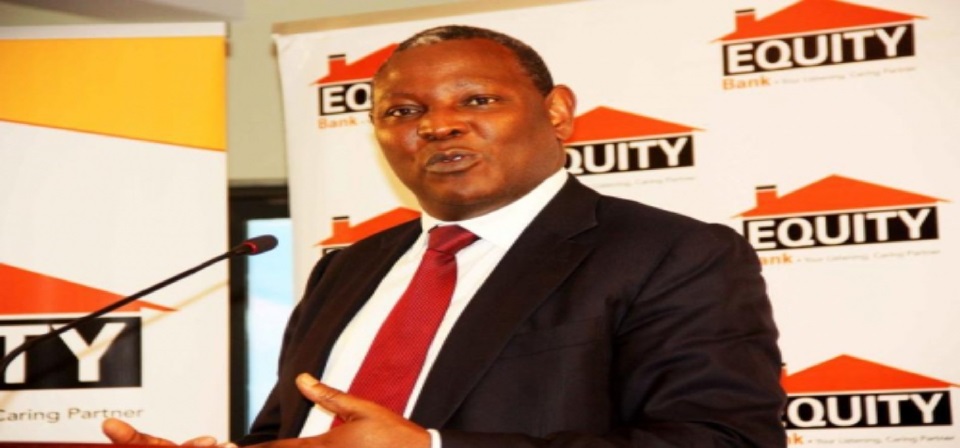
Kenya’s Equity Bank Upgrades Growth Strategy on Finserve

0
Equity Bank

Somewhere in Africa (not Kenya), a bank board had gathered for a strategy session. There were three external consultants. They wanted to know how they could handle some electronic and digital products to find growth. There were many insights on improving the products and pushing them through multi-channels to customers. Yes, the typical things: distribution, bundling, network effects, partners, growth, etc.

In my talk to the client (still one since 2015), I proposed to the bank to spin out or limit its brand on some of its digital products. Technically, I demonstrated analytically and quantitatively the limitation a bank license imposes on scaling financial products in Africa. In other words, if you have a digital product, you are bounded by your bank license in both distribution and innovation, in Africa because of disparate regulations across the continent.

A fintech can use a press release to announce that its products are available in 50 African countries overnight. But a bank offering similar products cannot do same as it may be required to clear with the regulator before launch. The implication is that banks cannot move at the speed of fintech when they plan to leave their home territories. Simply, most African banks could win local markets but would struggle to scale African-wide.

My client has a product – yes, a fintech which is autonomous legally from the bank. The product has been a success because even the bank’s competitors are fans of the product. It seems others are realizing that. Kenya’s Equity Group wants to spin out its fintech subsidiary as a totally separate and autonomous entity.

Equity Group Holdings Plc has launched its fintech subsidiary, Finserve, signaling a future defined by disruptive innovation beyond the Group’s current financial services. Finserve will operate as an autonomous commercial enterprise, delivering solutions not just for Equity Group, but to the entire economy.

Finserve has been the technology arm of Equity Group and is credited with revolutionizing banking and other financial services through digitization.  It has been behind innovations such as Equitel, the Group’s Mobile Virtual Network Operator (MVNO).

[…]

Speaking during the launch, Finserve Managing Director, Jack Ngare said that fintech will be the driver of financial solutions in the future as it makes financial services delivery better, cost-effective, safer and more secure.

He observed that for the last four years that Finserve has been in existence, the fintech has been dedicated to innovating and delivering technology solutions for Equity Group. “As a subsidiary of Equity Group, our capabilities have been tried and tested through the innovations and digitization we have delivered for the Group. We stand on the shoulders of the leading financial services provider in the region,” he said and added: “Our vision is to power business ecosystems through innovation and collaboration that cut across geographical boundaries and sectors.”

Untethered from the bank, Finserve will find new growth models, not just in Kenya, but across Africa. Expect Finserve in Nigeria in coming months. When it comes, because it is no more a part of Equity Bank, the Central Bank of Nigeria will not ask it to show bank license to operate in Nigeria. Simply, Finserve will get a fintech license and offer services to the Nigerian users, unconstrained by the “burden” of Equity Bank.  In its local Kenyan market, Finserve can now serve anyone, including Equity Bank’s competitors, making growth easier.

All Together

Business models are going to be important for companies to win in Africa. I have shared some insights on how banks could win in a piece in Harvard Business Review.

Indeed, the challenges ahead of African banks are enormous. To remain relevant, the banks must internally mutate, disrupting themselves to participate in modern banking. From my practice working with bank clients in the continent, here are a few suggestions to make that happen:

Yes, business model, not just technology, will win this game which continues to escalate. Today, Africa has gotten a dedicated “school” from Alibaba founder, Jack Ma, for training and developing ecommerce business. Very soon, I am sure we would see deeper fintech penetration and companies like Paypal and Square will arrive at scale, offering their own versions of business systems.  In other words, expect deeper level of innovation in the fintech space and being unconstrained by bank license is a real competitive advantage in many product lines.

Alibaba Business School has launched its “Global E-commerce Talent” (GET) program for Rwandan educators, and in partnership with Rwanda’s Higher Education Council and the Rwanda Development Board.

Alibaba has brought the GET program to other countries, such as Malaysia and Thailand, but this was the first time it was offered in Africa. The goal of the program is to boost the competencies of Rwandan university teachers and deepen their understanding of the e-commerce industry, so that they can train digital talent and future entrepreneurs in the country to compete in the global economy.

I commend Equity Bank for spinning out its Finserve subsidiary. Largely, successful fintech products from banks in local markets will struggle to scale African-wide. With a bank license at the back, there are things which are not possible.

Yes, a fintech can release its products to 50 countries overnight. But a bank, offering similar products, in one African country, cannot do the same. It has to get clearances from local regulators and permits in new markets. Fintech does not care. That affects speed and scalable advantages. Sure, being part of a bank has advantage. But most times, that advantage is localized. To be full pan-African, you need to be untethered!
A Presentation in College of Health Sciences, University of Abuja, Scheduled

0

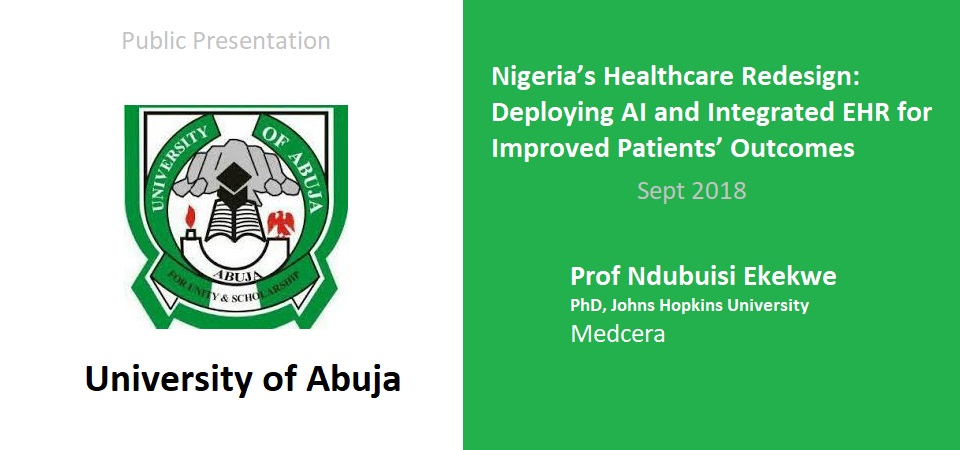
I just received confirmation from the Vice Chancellor of University of Abuja approving my proposal to speak in College of Health Sciences, University of Abuja, this September. We would be working with the Provost of the College of Health Sciences, University of Abuja, to finalize the time and date. I will update here once we have the final details.

It may take a while since Nigeria has public holidays today and tomorrow. I also hope to share the date/time for a similar presentation in the College of Medicine, University of Lagos once that is finalized.

Topic: Nigeria’s Healthcare Redesign: Deploying AI and Integrated EHR for Improved Patients’ Outcomes

Venue: College of Health Sciences, University of Abuja

Date/Time: Coming later

Ahmadu Bello University has sent an invitation. I have spent time in that great African citadel of learning, working mainly with professors in engineering on circuits and systems. But the timing of the invitation is challenging. Nonetheless, if that works out, I will update.

If you can, come over to these talks. We are at the forefront of modern healthcare delivery; you would pick some insights.

Court Stops DStv in Nigeria

0
DSTv court

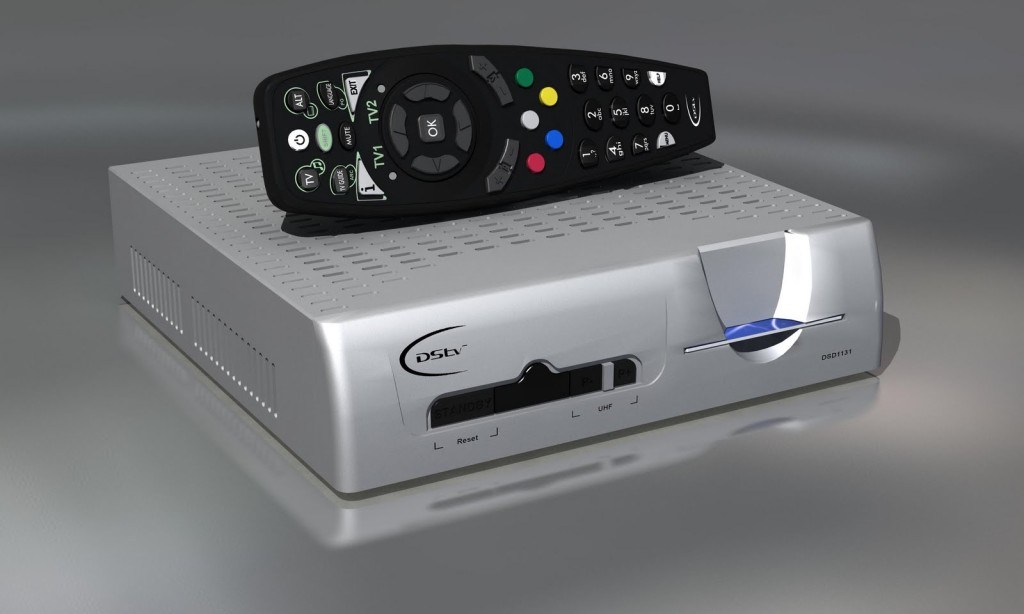
A Nigerian Court has stopped DStv from increasing its prices in the nation. In July, MultiChoice, the owner of DStv, announced new monthly subscription rates, jacking up the Premium package by 7.5%; the new rates took effect from August 1. The consumers cried foul and sought help from the Consumer Protection Council, a consumer protection advocate funded by government, making a case that MultiChoice was exploiting Nigerian consumers.

A Federal High Court in Abuja on Monday restrained Multichoice Nigeria Limited from going ahead with its recent decision to increase the subscription tariffs for DSTV, its satellite cable television service providers.

The restraining order was issued in respect of Suit No FHC/ABJ/CS/894/18 brought before the court by the Consumer Protection Council (CPC) in the light of the strong public interest raised in the application.

The Attorney-General of the Federation and Minister of Justice, Abubakar Malami, had granted the authority for the Council to initiate the suit under Section 10 and 16 of the Consumer Protection Council Act, Cap c25, LFN 2004.

In his order, the judge, Nnamdi Dimgba, said the interim injunction restrains Multichoice Nigeria or its agents and representatives from continuing the implementation of any increase in subscription rates or price review policy imposing increased charges and costs on the consumers pending the determination of the motion on notice.

[…]

In July, MultiChoice Nigeria announced new monthly subscription rates for the DSTV Premium package from N14,700 to N15,800 (about 7.5 per cent) Compact Plus from N9,900 to N10,650; Compact bouquet from N6,300 to N6,800; Family from N3,800 to N4,000, and Access from N1,900 to N2,000.

This is not necessarily good news: simply, the court is saying that DStv is a monopoly. If not, this court-driven price control would not have been necessary in an entertainment sector. This is not electricity where the court has been active with its hammer on tariffs.

Interestingly, the consumers may not have noticed that Nigeria has nurtured a local competitor. When TSTv unveiled, I wrote it off as a decent competitor to the MultiChoice empire. The action of the court has confirmed that nothing has changed. Had TSTv held its domain, DStv would not even be thinking of increasing price and the consumers would certainly not be concerned of fighting a legal battle: yes, they would cancel DStv for TSTv because TSTv would offer value at a low amount. Unfortunately, there is no TSTv in all ramifications.

TStv, a new pay TV company, is beginning a journey to challenge the largest company in Africa by market valuation. Naspers which owns MultiChoice operates the DStv brand across sub-Saharan Africa. DStv is a digital satellite TV service which leads its category in the region. It is well funded by South Africa’s Naspers which has a valuation of $100 billion.

Bad Trend

If it has gotten this easy for court to rule on entertainment pricing, we have a real problem in Nigeria. DStv competes with many companies including Netflix, iROKOtv, YouTube, Facebook and anything that can entertain and keep consumers glued to their computers. If the court does not understand that, and focuses on regulating DStv, the trajectory is dangerous. Largely, allowing DStv to price entertainment as it wants could possibly trigger opportunities for another company to emerge with competitive pricing. But that is not the case: Nigerians are seeing DStv as a monopoly and by that acknowledging that everyone in the sector has failed. If not, there is no reason for a court to stop a company from increasing how much it sells movies and shows.

All Together

In this piece, I argue that the court is making a huge mistake. Nigeria should not be seen as a nation where courts are fixing prices of movies and shows. DStv competes with YouTube, Facebook, Netflix, TStv, etc. If it thinks it can increase rates, it can be increasing itself out of relevance. Possibly, consumers will revolt and take another look at a competitor.

Our courts are becoming increasingly trial in nature. I do hope they modulate because if they take this trajectory further, they would destroy innovation in the nation. Watching videos is not the same as water and electricity rates [yes, they do rule on those]: I do not support courts fixing the prices of movies and shows!

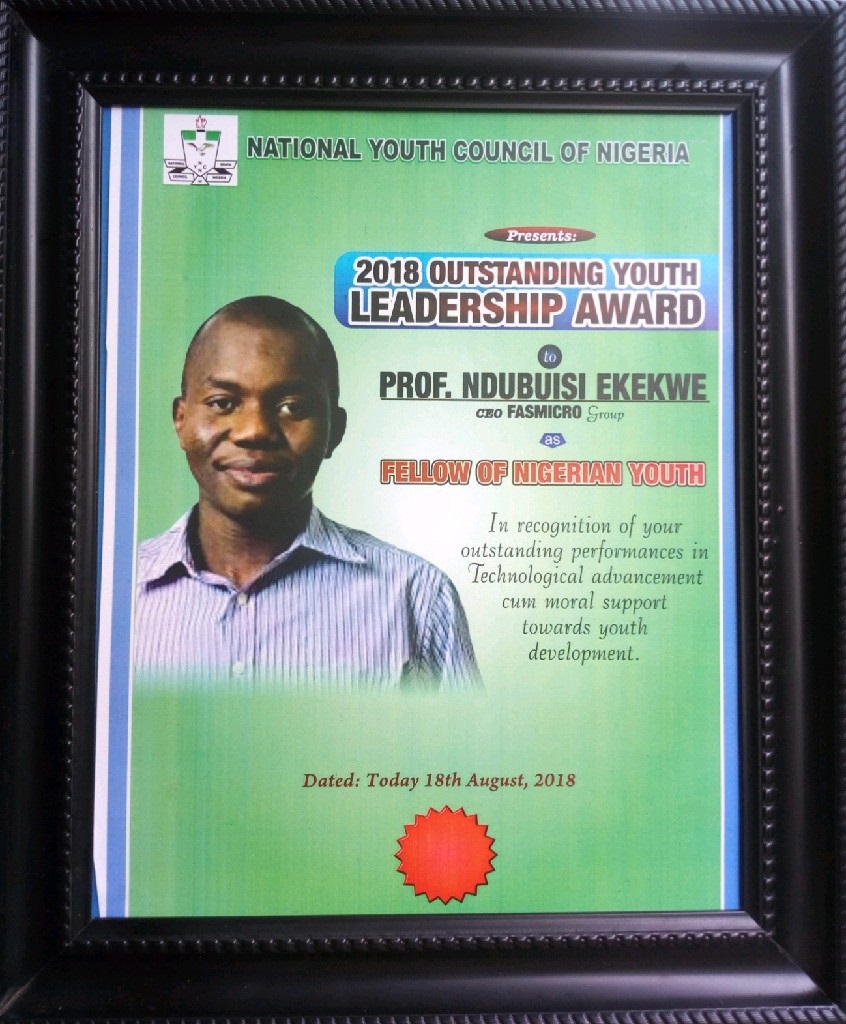
My National Youth Council Of Nigeria (NYCN)’s Outstanding Leadership Award

1

Let me begin my apologizing to the Executives and members of National Youth Council Of Nigeria (NYCN). Honestly, I did not treat them well and I apologize. Few weeks ago, they wrote me that they would honor me with the 2018 NYCN OUTSTANDING LEADERSHIP AWARD. I tried to lobby myself out of such an award from the umbrella of all the major youth associations in the nation. Simply, I do not know what I have done for them, the young people of Nigeria, for an award. Yet in Nicon Luxury Hotel Abuja, without me or any representative, they went ahead and bestowed the award to me. They followed with a press conference praising me, adding ’Fellow Of Nigerian Youth Honour’.

The day was saved as when they were calling me (and no show), someone who knew me went out and received the award.

He received the award for me

Good young people – I apologize, and I will like to meet the executives when I make it to Nigeria next month.

Meanwhile, the Federal Ministry of Youth and Sports Development through a rep has reached out for my profile for archival as part of the award.

The press release

NYCN HONOURS PROF. EKEKWE WITH OUTSTANDING LEADERSHIP AWARD:

The National Youth Council Of Nigeria has honoured Prof. Ndubuisi EKEKWE (Chief Executive Officer, FASMICRO GROUP) with the 2018 NYCN OUTSTANDING LEADERSHIP AWARD.

The organization described Prof. ekekwe as an humble man who does his business without any iota of corrupt practices, and also stand as encouragement to Nigerian youths.

Speaking to newsmen at the 2018 International Youth Day Celebration held at the Nicon Luxury Hotel, Abuja on Saturday 18th August 2018, the National Programme Officer of the Council Mr. JIMOH-GIWA AYYUB described the Awardee as a man of repute that should be reckoned with.

The Prestigious NYCN Award for this year has been given to Prof. Ekekwe based on his outstanding performance in the Energy sector, Technology and Innovation, not only that Prof. Ekekwe is an hardworking Man, but his love and moral support for the youths is also worthy of note.

The leadership of the Council also bestowed on him the ‘Fellow Of Nigerian Youth Honour’, this is to encourage him to continue to assist Nigerian youths in all ramifications and to also show that no matter how silenced people doing tremendous things to the youths are, the Council is seriously watching and will always use this means to encourage them and Prof. Ekekwe is not in exemption.

We also acknowledge the effort of the Nigerian Youth Parliament for collaborating with the Youth Council to make this year’s celebration a memorable event.

The Council also made it known that her search light will also be touched at persons who take the development and assistance to Nigerian youths for granted, such people would be disgraced publicly and it will serve as deterrent to others who take the youth development for granted.

While congratulating Prof. Ekekwe, we also implore him to continue to contribute his quota to youth development as much as he can, he said.

Ndubuisi Ekekwe at TEEP

Speaking in College of Medicine, University of Lagos, Next Month

0

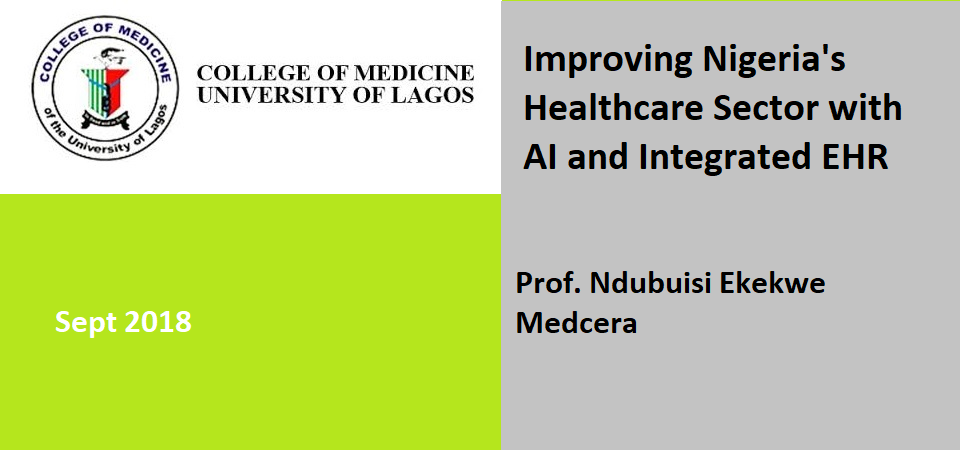
I will be speaking in the College of Medicine University of Lagos this September. My presentation will focus on improving the healthcare sector in Nigeria through the deployment of AI (artificial intelligence) and integrated electronic health record system. The date will be finalized this week. I expect to speak before 400 researchers and students of the College.

I have been speaking in University of Lagos for years (see photos). But this one will be different: it would be the first time I will speak in the highly respected College of Medicine.

Meanwhile, other universities are being scheduled. Connect to see if we can add yours in the schedule. Many Nigerian students always see me on campus but this one is not on electronics. Rather, we are coming with something new: AI and applications in healthcare.

By policy, I do not accept payment to speak in any African university. So, do not raise any thing on my name. I fund all our trips and expenses.

Topic: Improving Nigeria’s Healthcare Sector with AI and Integrated EHR

Venue: University of Lagos (UNILAG), College of Medicine

Date: Sept 2018 (Date and location TBD)

After my talk in University of Lagos