DD
MM
YYYY

PAGES

DD
MM
YYYY

spot_img

PAGES

Home Blog Page 7090

TStv Confesses on DStv

0
TSTV Nigeria

Everyone wished TStv well when it unveiled in Nigeria; we continue to wish it well. Nonetheless, I called that a Goliath challenge because it was going against a colossal empire on MultiChoice, parent of DStv and GOtv. Press releases do not win competitions: products and services do. Simply, TStv has gone through a wilderness as MultiChoice has out-competed it badly. But the company is coming back, offering even free HD channels, as it works to fight the battle in the pay TV sector: this confession is unmistakable (read below).

Speaking on the challenges the company has faced in the past, Echefu narrated that from the date it announced the launch of TSTV, it has been fighting all the way. “I doubt if a week passed without us quenching one fire or the other. We didn’t anticipate that there would be war. We were also not trained to fight in the arena, we were pushed into. The kinds of weapons our enemies would later contend us with, showed they had stocked their armory waiting for a time like now. We may not have their kind of money, neither their kinds of weapons, ”connections” and networks, but one thing I sure know we had more than them was a determined spirit and a steadfast God. A God who doesn’t fail.

“It has not been easy one bit. Our struggles drained us financially and pitched us against all good meaning Nigerians, subscribers and dealers that believed in us. We were wrestled even down to our satellite providers but our God is ever faithful.”

While TStv is battling the markets, DStv is fighting in the court with the consumer protection agency. I hope everything will work out well for the consumers as the tendency to over-regulate will hurt innovation. The world has since become winner-takes-all: one Google, one Facebook, one Twitter, etc.

I expect MultiChoice to continue to innovate, making it even harder for competitors. And if you want to severely regulate it, you will just stunt the experiences of customers in many ways. As it pivots to the web to compete against YouTube and Netflix, even iROKOtv should be concerned.

MultiChoice has unveiled DStv Now, an internet based service with live sports, live TV, shows and movies on Catch Up. It is now available via three new lean-back apps. These apps make it possible to turn any TV in the house into an easy-to-use DStv hub without the need for a decoder.

The new apps are available for Samsung smart TVs (selected models from 2015 onwards), Apple TV (fourth generation & newer) and media players running Android TV (Google certified devices only) Apps are also expected to be added shortly for additional brands of smart TVs.

Government should not stop it. Sure, MultiChoice must be fair on its pricing, but we cannot take away the reality that this company can lose 10% of its best customers to Netflix in coming years if it does not innovate. Most times, you need money to make better products. Even Netflix has been increasing price to acquire or produce contents.

Yet, the launch of DStv Now is demonstrating that DStv believes the future may not be TV alone. So, if TStv focuses on just winning on TV, it may thrive therein and still lose as the contest might have moved to the web or at least hybridized.

Nigeria’s Cambrian Moment

0
Nigeria's cambrian moment

“Digital start-ups are bubbling up in an astonishing variety of services and products, penetrating every nook and cranny of the economy. They are reshaping entire industries and even changing the very notion of the firm.” – Ludwig Siegele

From the lagoons of Lagos to the mangrove of Calabar, from the beautiful plains of Sokoto to the plateau of Jos, all the way to the rainforest of Owerri, there is an entrepreneurial explosion in Nigeria, and it is unprecedented. Powered by microprocessors, mathematics, the beautiful science of numbers, is being transmuted by software, eating everything on its path.

And in the process, it is making a better sense of the nation, as entrepreneurs pursue the grand mission – fixing market frictions. Unlike the golden decade (the 1990s) of Nigerian entrepreneurship when amalgams of new generation banks were born, seeding a new age in the nation’s financial system, this moment cuts across sectors. From energy to healthcare, agriculture to logistics and even financial services, Nigeria is being redesigned by the combinatorial powers of software to arrange, re-arrange and make sense of atoms and bytes.

With cloud computing, immersive connectivity, and mobile devices, a 21st century Cambrian moment is emerging in Nigeria: the data everywhere is meeting cheap, ubiquitous and intelligent digital systems to process them. This is our time: welcome to Nigeria’s Cambrian Moment.

This digital feeding frenzy has given rise to a global movement. Most big cities, from Berlin and London to Singapore and Amman, now have a sizeable startup colony (“ecosystem”). Between them they are home to hundreds of startup schools (“accelerators”) and thousands of co-working spaces where caffeinated folk in their 20s and 30s toil hunched over their laptops. All these ecosystems are highly interconnected, which explains why internet entrepreneurs are a global crowd. Like medieval journeymen, they travel from city to city, laptop not hammer in hand. A few of them spend a semester with “Unreasonable at Sea”, an accelerator on a boat which cruises the world while its passengers code. “Anyone who writes code can become an entrepreneur—anywhere in the world,” says Simon Levene, a venture capitalist in London.

In last week of October 2018, I will be speaking before investors in Boston, USA on (startup) investment opportunities in Nigeria. If you are around that side of America, plan ahead.

Digital Logistics Pioneer, Kobo360, Emulates “Ant Model” to Fix Lagos Port Traffic Congestion

0
Traffic Kobo360

Fixing Nigeria’s challenges will not involve bringing people from the moon [they do not exist]. All we need to do is do simple things: by having a simple order, Kobo360, a pioneering logistics company I wrote many months ago, plans to reduce 40% of the traffic wahala in Apapa. Kobo360 is not inventing anything – it is simply using what exists to fix market frictions. That is what innovation is about.

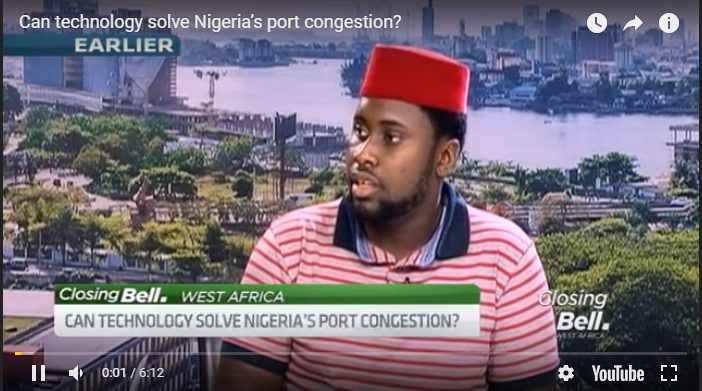
In a quest to put to an end the lingering port congestion in Lagos State, Obi Ozor, Chief Executive Officer of Kobo360.COM says technology can solve 40 per cent of the problem. He discussed this with CNBC Africa’s Kenneth

Watch the video for the plan. I think we can do this in many other sectors and force people to approach things orderly.


The Science Behind

What Obi and Team Kobo360 are doing is actually rooted in biology. If you go back to ants, it has been proven that only 30% of the ants do more than 70% of the work in a colony. Simply, instead of 100% of the ants working, causing traffic jams, having only 30% ensures the ants are more efficient in whatever they want to accomplish.

Ants are renowned for their industriousness. Ask the grasshopper in the story by Aesop. He had to come begging the hard-working ant for food when winter came because he had frittered away his summer.

But that is fable, the ultimate in what scientists call anecdotal evidence. And new research at Georgia Tech suggests that although ant colonies are very efficient, that may be because 70 percent of them are doing very little — at least when it comes to tunnel digging.

Daniel I. Goldman, a physicist at the Georgia Institute of Technology, and his colleagues, found that the secret to efficient tunnel digging by fire ants was that 30 percent of the ants did 70 percent of the work. They reported their fable-shaking finding in the journal Science.

The reason, it seems, is that the ants were working in narrow tunnels where traffic jams could easily clog up the entire effort to build nests. So it helped if some of them took a pileup in the tunnel as a signal to suggest that they take a break.

So, why have 100% of the trucks wasting 4 hours to get into the port when if you permit only 60% at a time, they could all do their things within one hour of arrival. The team would need to collect more data, and as they do that, they could actually reduce traffic congestion by up to 70% over time.

https://nyti.ms/2nJh3c5

All Together

This is certainly something that evolving AI model with constantly improving data will make better over time. It looks very exciting for the digital logistics pioneer. You do not go wrong when your model is based on biology – no wonder the wise man wrote “go back to the ants and learn”.

Ndubuisi Ekekwe to Keynote Abuja Blockchain & AI Round-Table

0
Abuja blockchain

I have accepted to keynote Abuja Blockchain & AI Round-Table in Abuja, Nigeria. The goal at Abuja Blockchain & AI Round-Table is go beyond the current hypes about cryptos, and provide a common framework for thinking about what the convergence of Blockchain and AI means to Nigeria’s economic prosperity agenda.

The event aims to bridge the knowledge gap by providing government functionaries, decision makers, professionals and practitioners with the resources they need to make key business-shaping decisions in a rapidly changing world.

I, on behalf of Blockchain Nigeria User Group sincerely request your presence, as Keynote at our upcoming  Abuja Blockchain & Ai Round-Table, a conference scheduled to hold from the 19-20th of October, 2018 at the Ladi Kwali Hall, of Sheraton Hotels, Abuja, Nigeria. This conference, the first of its kind, will feature a melding of the AI and Blockchain communities in Nigeria and across the world, exploring the possibilities and opportunities available at the intersection of these two technologies, with featured talks and panels encompassing some of the world’s top experts moving these technologies forward. The Conference will bring together business leaders, government and regulatory agencies, data practitioners, AI and Blockchain tech pioneers who are applying artificial intelligence to solve today’s problems and creating tomorrow’s opportunities, while leveraging available tools, to create entirely new values.

I am a fan of blockchain (working on the EU’s healthcare initiative). Simply, blockchain has value in our economy but we need to have the necessary frameworks and systems in place. I am honored to deliver this keynote towards architecting a future in this space in Nigeria. A trillion dollar Nigerian economy is a possibility as I have explained in this video below.

Consider This As You Go Into Agribusiness in Nigeria

3
agribusiness Nigeria

If you are into agriculture or broad agribusiness in Nigeria, be very careful as you go and raise money. The sector is very slow and decision making, by customers, takes time. As you work with cooperatives and governments (plus farmers), they think on months and not days. So, watch and shine your eyes what you promise any investor. It is not likely you can scale like hot cake because those you are working with are not in the business of scaling; they are cultural farmers and will be doing farming whether it makes them poor or rich. The transition into business-people, from being just farmers, is just starting.

Algorithms in the server analyze the data and tell farmers on what, how and when to farm. Also, as the crops grow, the system deploys special cameras to build vegetative health of the farm for drought stress, pest and diseases etc. The cameras can be mounted on long sticks or drones. The goal is to transform farming into a business by making it data-driven over guesswork.  This improves productivity, reduces waste and increases yields.

Yes, they were born into farming and will likely do it until they retire. It is totally irrelevant what the outcome is. So, with that structure in place, you cannot run. You have to walk with them. It is only an arrogant entrepreneur that will ask someone to throw away techniques which have been passed over generations for something which looks exotic and locally untested.

Besides, if you are into the hi-tech element of modern agriculture, it would make sense to decouple that business from the largely labor intensive component of African agriculture. Though you are not the farmer, the ability to support users of your product may require hiring many people. If you do just that – hiring many people – you would dilute the value your hi-tech firm is creating before your investors. The key is thinking strategically on how you can position that hi-tech firm to work with other entities which will do the leg work and interface with the end customers – the farmers.

As a farm boy in Ovim (Abia State, Nigeria), I worked in the farm with my grandmother. In JSS 2, second year in secondary school, my agricultural science teacher introduced us to NPK fertilizers. Also, she explained the shallow and deep rooted crops, and why fertilizers used in farms should be matched with the types of crops. My grandmother had never believed that inorganic fertilizers should get close to her yam farms. It was going to be a “poison” in the land.

But I had an idea – I made a deal with her. I asked her to give me a portion of the land for me to apply the inorganic fertilizers (the “white things”) which my teacher had explained could improve yield. She agreed. As the farming season went, she noticed that my section was doing well in terms of denser vegetation. And during harvest, the tubers in my section returned better sizes. The next year, she became a believer.

That is the typical African farmer: you must demonstrate and show value before they commit. I had a clear motivation to work on helping to improve farm productivity: with better yield, there would be money for my school fees, books, etc.

To do well in farming business, you need people that have natural patience. I like speed but speed does not work therein at scale. So, to avoid dealing directly with farmers and cooperatives, we have entities that work directly with them. In Atlantic Americas, we take Zenvus to communities. I do not get close to those discussions because they take too long. A meeting can last 7 hours just to make sure everyone is on board. That requires a special skill set which I do not necessarily have.

Consider this model: create the technology-enabled business which focuses on innovation, and then get people that have the natural skills of navigating local communities to take the technologies to them. In other words, the tech firm licenses its IP, remains focused on innovation while the other entity does the work of improving farms and engaging with partners.

In Nigerian agribusiness, depending on the category, if you decouple the hi-tech from the extremely slow-moving farming system contracting, it would be easier to explain anything you want to explain to investors. While the hi-tech could grow fast, the usual agriculture system should not be allowed to cripple it.

The key is having amalgam of partners who can help you establish linkages with farmers, governments and cooperatives while you focus on the innovation in labs. Sure, you can have a primary vehicle to drive adoption but make sure it is separated from the core tech innovator. Yes, hundreds of workers may be needed in Yola but your tech firm will not need to have as many because the operating firm is absorbing them. When such a structure exists in an extremely labour intensive business, you would not carry so many staff in your books, possibly making investing in your firm more exciting.