DD
MM
YYYY

PAGES

DD
MM
YYYY

spot_img

PAGES

Home Blog Page 7097

Winning Nigerian Customers

0
Nigerian customers

The National Broadcasting Commission (NBC) plans to shut down many radio and television stations due to non-payment of licensing fees.  Cumulatively, they owe NBC N4.3 billion (about $12.3 million). If you look carefully, Nigerians do not pay a lot of attention to many of those radio and TV stations except to watch religious programs.

The National Broadcasting Commission (NBC) on Monday said it would shut down radio and television stations owing the commission licensing fees.

The Director General, Is’haq Modibbo-Kawu, said that any broadcasting station that failed to come up with a payment plan before September 15 would be shut down.

Mr Modibbo-Kawu said this at a news briefing in Lagos after a meeting with the stakeholders in the broadcasting industry.

He said that the broadcasting stations are owing the commission N4.3 billion.

Yet, in the same country, a cable TV which people have to pay is increasing prices. Analyzing all, it comes down to value. When free products like our traditional radio and TV stations cannot make enough money to pay their annual licensing fees, and entities like DStv are doing just fine to increase prices, you will get the picture.

A Nigerian Court has stopped DStv from increasing its prices in the nation. In July, MultiChoice, the owner of DStv, announced new monthly subscription rates, jacking up the Premium package by 7.5%; the new rates took effect from August 1.

Our per capita income may be low but Nigerians will spend when they want to spend. The numbers from MallforAfrica always thrill me. It tells me that there are people who shop on Macy’s, Target, and other top American stores and get them shipped to Lagos and Abuja.  Paypal has a special feature to make that possible as Nigeria, before the recession, became one of the highest spenders on Paypal mobile.

PayPal has ranked Nigeria as the 3rd highest mobile shopper worldwide. We indeed are masters in spending! The online payment giant is the most popular medium among Nigerian cross-border shoppers, and estimated 55 percent of all oversea online purchases in the past 12 months were done via PayPal

People write about the benefits of “lowest price” but I am not an apostle of that in Nigeria. In my workshops and writing, I avoid the trap that strong competitive advantage in Nigeria will come from mere pricing (where that product is not designed for the bottom of the pyramid). I focus on value which of course includes pricing!

Yes, you can make it free and no one will care. But if you deliver value and price fairly, they will come. But the key is providing value. That is the message. We all get frustrated when customers do not patronize local brands. We accuse the customers that they like foreign things which are typically more expensive. Focusing on that misses the whole point: they want predictable value even when it costs them more. That explains why free radio and TV stations are going bankrupt and pay TVs which are increasing prices are winning more hearts.

Check that product and service: the problem may not necessarily be price. You have not offered any clear value to Nigerian users. You must fix the value paralysis to make progress. Offering great value is the path to winning Nigerian customers.
Zenvus Nominated for Aspirin Award

1

Bayer Foundations has nominated Zenvus, my agtech business, for Aspirin Award – an award honoring companies which are “innovating to solve humanity’s grand challenges in health and nutrition”. The foundation wrote us last week.  We are very thankful for the honor of being considered in this award from the makers of Aspirin. A powerful statement that brings humility: “We want to honor the most powerful social changemakers in the world – people with new answers for the challenges of society in areas connected to health and nutrition.”

I am so excited to hear about a farmer in Zamfara state who after receiving his Zenvus Boundary report made a special safe to preserve the document. Of course, we are not government but he was simply happy to have a piece of document recording his farmland. As we expand our agent network, using young people to map farmlands, we believe the formalization of informal assets will take hold step by step.

We want to honor the most powerful social changemakers in the world – people with new answers for the challenges of society in areas connected to health and nutrition.

Therefore, we organize the award in strategic partnership with non-profit organizations and leading entrepreneurship networks.

Carefully selected nominations will come from these networks. Self-nominations with the Bayer Foundations are not possible.

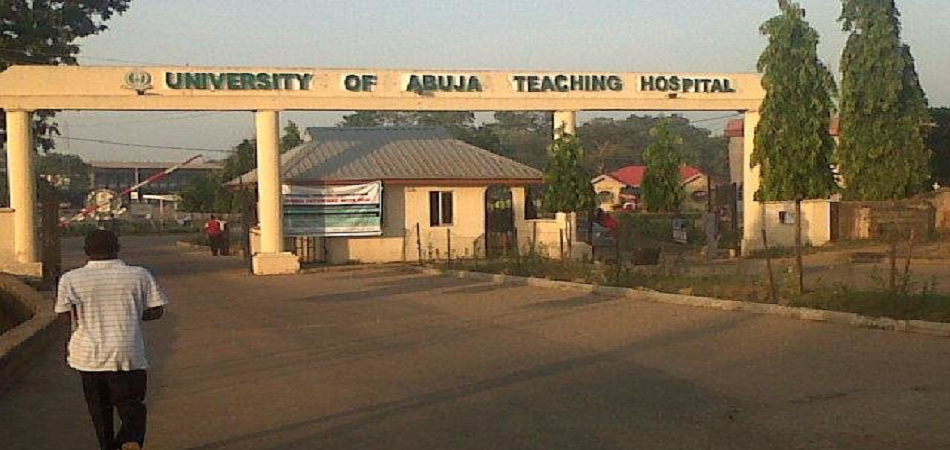
Dates Confirmed for Speeches in University of Abuja – College of Health Sciences & Teaching Hospital

0

The professors have confirmed the dates for my talks in College of Health Sciences, University of Abuja and University of Abuja Teaching Hospital. Both are within the University of Abuja system.

College of Health Sciences – Sept 19th

University of Abuja Teaching Hospital  – Sept  20th

The exact time will be communicated once the institutions are done with flyers.

Meanwhile, College of Medicine, University of Lagos date will be confirmed this week. It would be 3rd week of September.

These are going to be great talks on some of the most exciting things I have been working with my team on healthcare as it relates with artificial intelligence (AI) connecting our activities in Brussels (Belgium). They are pure academic talks but would be delivered in conservational accessible ways to anyone with secondary school education to appreciate.

Just Confirmed to Speak in Paris (France) on Oct 9-10

2

I just confirmed an invitation through the French Embassy in Nigeria to speak in an event in Paris. It is to speak in one of the biggest technology-focused events in France. The event holds October 9-10, 2018. I will share more details later.

Besides that, I also want to meet Africans in Paris during the trip. If you have a local community and can organize an event, it would be good we connect and share ideas. We have some good structures and can share one or two things to help people who want to do things back home.

Want to organize the event? Please connect with my community manager via email.

MultiChoice Nigeria (DStv, Gotv) Plans Ahead for Supreme Court Showdown on Price Hikes

0
MultiChoice Nigeria

MultiChoice asked for a tougher regulation in South Africa because it was losing some of its best customers to Netflix. It wanted Netflix to be subjected to the same local rules it deals with. Of course, that would not happen since the South African regulator does not have full control of Netflix. It is one of the new challenges local companies would face in the age of internet where the unconstrained and unbounded web distribution structure makes it very challenging for global portals to be regulated in their favors.  That was the thesis of my recent article in Harvard Business Review.

The pay-TV operator lost more than 100,000 premium subscribers in the previous financial year. It has lost a further 40,000 subscribers to date.

Whether we like it or not, MultiChoice, the parent of DStv and GOtv, is weeping. It may not be obvious but that does not remove the fact that the company is going through an industry redesign. Its market positioning is being challenged not by local competitors like TStv and KweseTv but by global internet portals like YouTube, Netflix and Facebook. In short, anything that engages people to avoid watching TV is a threat.

It is very intriguing when monopolies weep. It makes nice sound bites except that monetary values are lost, and jobs are always at risks. Many months ago, when TStv launched, with statements boasting of disruptions, I laughed. I called it a Goliath’s challenge, reminding Tekedia readers that TStv has no chance. MutiChoice through clusters of its properties are experts on dealing with distractions like TStv: it has GOtv to take care of TStv and if the Nigerian newbie elevates its game, DStv is there. But there is a competitor from the flank: Netflix.

Nigeria’s Consumer Protection Agency

MultiChoice increased the prices of most of its packages. The consumer protection agency in Nigeria took them to court in Nigeria. MultiChoice has been seen as a monopoly which means it cannot just increase price arbitrarily.  The logic makes sense but when you go deeper, you would notice that even MultiChoice will ask for help: can Nigeria’s regulator also stop Netflix from increasing prices for its (Netflix) Nigerian customers?

A Nigerian Court has stopped DStv from increasing its prices in the nation. In July, MultiChoice, the owner of DStv, announced new monthly subscription rates, jacking up the Premium package by 7.5%; the new rates took effect from August 1. The consumers cried foul and sought help from the Consumer Protection Council, a consumer protection advocate funded by government, making a case that MultiChoice was exploiting Nigerian consumers

There is a real argument here when you consider that a local competitor, TStv, has essentially confessed that it was thoroughly beaten by DStv. The implication is that many would think that DStv has a solid positioning that it has to be brought to order.

MultiChoice
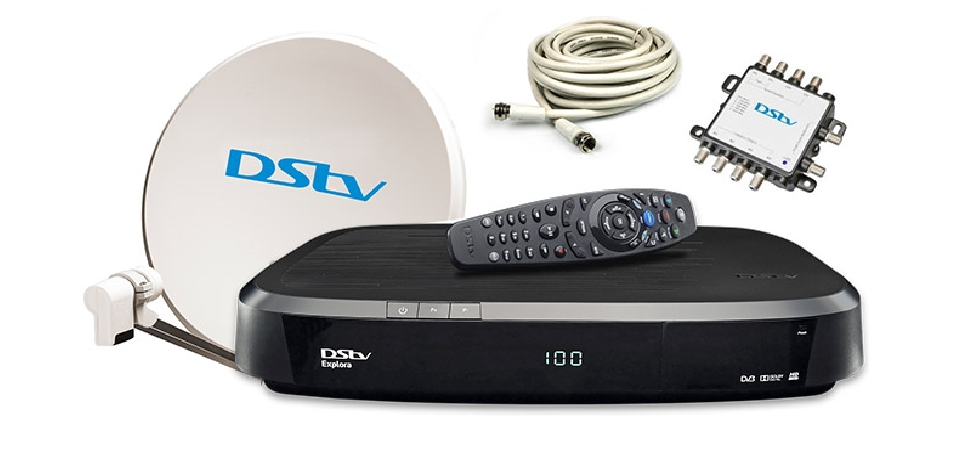
DStv decoder system

MultiChoice Appeals

MultiChoice Nigeria has appealed the temporary court injunction which froze its price hike. The company does believe that the new prices can stay (being the status quo, in its interpretation). Now, the Consumer Protection Agency (CPC) will have to argue in the Appeal Court. I expect this case to reach the Supreme Court of Nigeria.

Multichoice Nigeria, owners of DStv and GOtv, says it has filed an appeal and stay of execution following an interim court order from the Federal High Court directing the company to stop the hike in its subscription rates.

The company, in a statement on Sunday, said the Consumer Protection Council had also been joined in the suit.

The cable company described the order, restraining it from effecting price changes, as a slight on the free market economy.

This is going to become a very important legal battle and will help to shape the understanding of the new global economy in the Nigerian market for some of our regulators. Our regulation is still operating with the industrial age framework.

The Main Issue

If MultiChoice does not increase rates, it has no business in Africa. It is irrelevant if the price in Nigeria is higher than what it prices in Ghana. It has made it clear that running a business in Nigeria is higher because it runs generators and hires private guards unlike in other economies where those are readily provided by governments.

The key reason why MultiChoice is increasing the price is thus: it is losing its best subscribers and to cover and service the loans it took to pay for the TV rights which have made it the best Pay-TV product in Africa, it needs to ask existing customers to pay more, and because TV rights are always going higher it has to budget more for the next cycle of licensing.

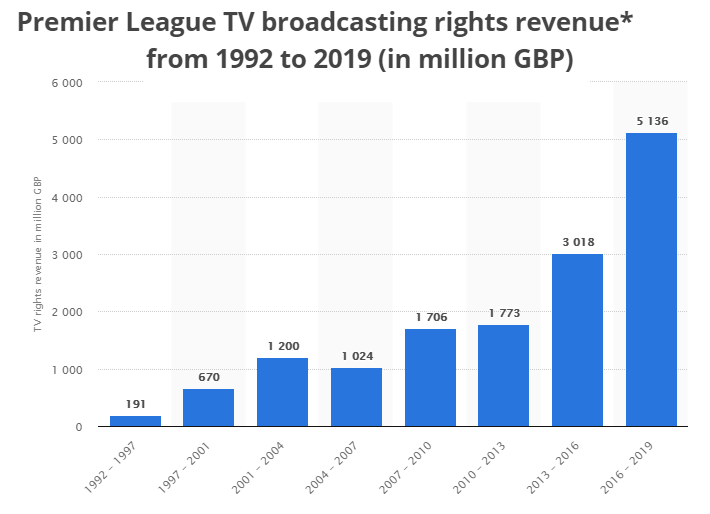
The statistic depicts the revenue from the Premier League television broadcasting rights from 1992 to 2019. From 2013 to 2016 the Premier League generated over 3 billion pounds in revenue from its marketing of TV broadcasting rights per year. (source: statista)

In other words, if it loses the most premium customers, it will not have enough money to pay for the TV rights. And if you ask it not to increase the prices on the existing customers, you have technically frozen its business. The product it sells was not created by it: England Premier League, Serie A, La Liga, etc decide their TV rights prices. As these brands continue to increase rights, and MultiChoice continues to see its customer base disintermediated, expecting it to keep prices static is not fair. What the court should have done is to demand that those selling TV rights freeze price increase and those leaving MultiChoice brands stop.

All Together

I expect this case to end in the Supreme Court, and during oral arguments MultiChoice will make its case clearer to the Justices. It needs to explain that its competition is not bounded within the Nigerian geography. And that it has to pay and save money to acquire the TV rights which attract people to it. I do think MultiChoice is working to take this all the way unless Appeal Court gives it a better landing. At the end, the court will side with MultiChoice though they would ask it to reduce the increase a little.