I wrote this piece – Integrated Circuit Design – around 2007 when I was in the Johns Hopkins University during my Engineering doctoral program. It was originally written for the Association for Computing Machinery. They had requested a general overview of microprocessor making phases for entry-level students in the ACM Magazine. They wanted me to think of gaming and entertainment hardware. Here is the piece (extremely non-technical). I also included a photo of an optical waveguide which I fabricated to move photons (over electrons) for faster on-chip communication. If you want to make a career in making microchips, you would be required to master some of the phases as noted.
The development of highly efficient and effective entertainment hardware has been fuelled by the enormous advancement in the semiconductor industry. With continuous efforts of chip designers to develop innovative techniques to make chips smaller, robust and cheaper, gamers would continue to enjoy thrilling entertainment experience. Understanding this crucial aspect of hardware development could be intriguing for all stakeholders in the entertainment technology, especially those that use these chips to control different functions ranging from vision to automatic control. In simple general ways, the processes involved in making digital chips have been presented in this discussion.
I got a call from a Nigerian politician who wanted some insights to shape his political messaging. I am apolitical; I work for all parties but for no one. This one was on power. I explained to the client that fixing Nigeria’s power would be hard. I used basic accounting and marginal cost to explain that no business thrives when the best potential customers are not interested in the services offered by the sector.
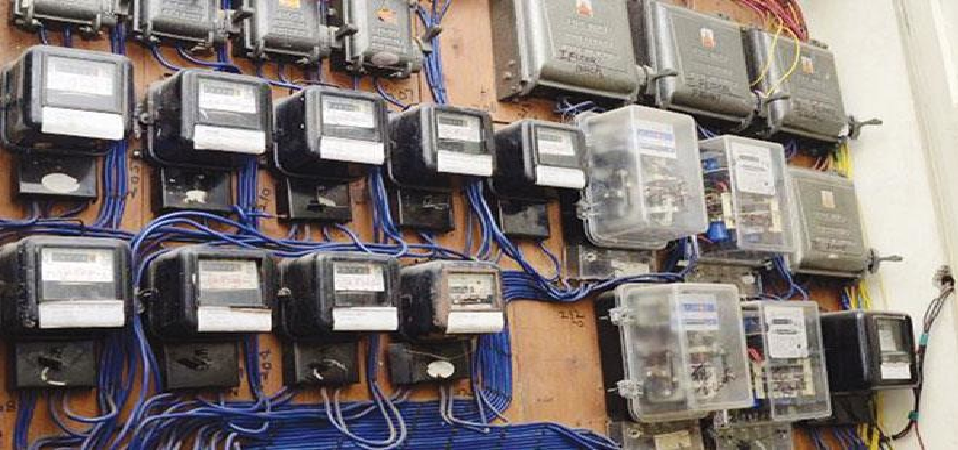
The very fact that most of the major electricity commercial customers are mini-power generators would remain a big challenge for most discos (distribution companies) in Nigeria. Yes, if companies like BUA and Dangote Group are generating their electricity needs, discos are largely disintermediated [we do not use that a lot in the analog world but if GE can supply power plants to Dangote Group, Dangote Group would not need power from discos].
So, instead of having 10 customers to bring $1 million, the discos have to look for 200,000 customers for the same revenue. And those 200,000 customers may not even want to pay. But those that can pay are not interested in the services offered by discos because they are generating their own power. For me, this is one of the biggest challenges in the industry: discos do not serve the customers they need to boost revenue and drive investments. They are left with the masses who command higher marginal cost making it tougher for them to break-even.
For this to change, the discos must first have to thrive, showing consistency and reliability before some of these big manufacturers would disinvest their power assets, and move their plants to be powered by national grid. If government does not look at the paralysis posed by the non-participation of the 5% top manufacturers to the revenue base of discos, nothing much will change. Becoming profitable without these top 5% customers would be hard.
The Paralysis
If you look at the numbers, it is extremely troubling: every major business in Nigeria generates its own power. From Dangote Group to makers of Indomie Noodles, these companies are mini-power companies. In short, Dangote Group produces about a fourth of Nigeria’s total distributed power. From Nigerian Breweries to Unilever, you would be shocked that some of our leading manufacturers are not even connected to the national grid.
Power generation: Dangote Group generates at least 1,300MW of power mainly for its business operations (Nigeria’s total distribution capacity is around 4,000MW). He did note though that he sells power to the government of Senegal.
So, as government provides N37bn grant for prepaid meter supply to discos, the discos should thank government. Government has to do what it has to do to help. But that will not amount to much.
The federal government of Nigeria said it has taken advantage of the new Meter Asset Provider (MAP) regulations to give a grant of N37 billion to a private sector operator to supply meters to interested Distribution Companies (DisCos).
The Minister of Power, Works and Housing, Babatunde Fashola, disclosed this at the 28th monthly meeting of power stakeholders in Kaduna.
The minister, who did not mention the name of the company, said the federal government provided the fund based on the demand for meters, given the increasing power generation, transmission and distribution in the country.
All Together
The SMEs need power to run the economy. But discos would need the help of some of the big manufacturers who typically are the cheapest to serve and usually most profitable to link into the network. But for this to happen, those major players would expect the discos to demonstrate reliability before they commit to national grid. If we do not manage this interface, what would happen is to expect discos to become profitable by serving the masses (typically expensive due to higher marginal cost). Most times, that does not happen. The business of power utilities is hard: only two utilities are profitable in Africa.
Yes, market forces can re-balance this when other companies that can tap into a reliable national grid to offer competitive products which are obviously cheaper due to lower power costs arise. When that happens, the companies which generate their own power may be challenged to abandon that practice and then connect to national grid. They would make those decisions based on market forces and nothing more.
If you can, register for YAS (Youth for Africa and SDGs); it is from the United Nations. Accenture is managing it which makes it even more awesome. From a copyright-free email sent to Tekedia, this is the announcement.
The United Nations Development Programme (UNDP) today launched a Pan-African Entrepreneurship Portal-Platform, facilitated by Accenture. The YAS! (Youth for Africa and SDGs) Portal-Platform is designed for young African entrepreneurs with the intent of cultivating an ecosystem that will promote mentorship, funding, information-sharing and networking.
According to UNDP Special Advisor for Private Sector, Tomas Sales, “YAS! is a much needed Pan African digital mechanism for youth entrepreneurs to access opportunities and contribute to the positive transformation of the continent through the United Nations Sustainable Development Goals (SDGs). The SDGs are directedto ending poverty, protecting the planet and ensuring that people everywhere enjoy peace and prosperity.” The Portal-Platform will be activated in East, West and Southern Africa.
The YAS! Portal-Platform was created to support the development and growth of youth entrepreneurship on the continent by providing four pillars of support categorized as Learning, Ecosystem Mapping, Challenges and Opportunities. Specifically, the objectives of YAS! are to:
Help entrepreneurs begin their journey by providing answers on the key concepts relevant to enterprise development. The Portal-Platform will provide support services to young African entrepreneurs such as business plan development.
Develop an ecosystem map for corporates and entrepreneurs, which will locate different entrepreneurial service providers across the continent.
Afford young African entrepreneurs the opportunity to acquire more knowledge about funding and specific information on how to implement innovations. Awarding funds to African youth is part of the United Nations Sustainable Development Goals (SDGs) to end poverty.
Function as a knowledge hub for virtual online master classes.
Act as a match-making support system for potential capital providers and suitable grant candidates through mentorship events, networking and pitch events at country level.
“YAS! will better serve the private sector with innovation, supplier diversification and talent on the African continent and in parallel accelerate the growth of the entrepreneurship eco-system,” notes Sandiso Sibisi, Accenture Africa’s Open Innovation Lead.
Attracting new entrepreneurs/start-ups, academics, venture capitalist, government and large multinational corporations is critical in establishing a successful platform. The YAS! Portal – Platform will be implemented on two levels, first for entrepreneurs and start-ups that want to create a profile on the platform and second, for private sector, donors, venture capitalist or incubators seeking start-ups already participating in an incubator or acceleration programme or those requiring financing. Young African entrepreneurs are welcome to register on the YAS! Portal-Platform by visiting www.YASDG.com.
In the return of the Tally Numbers, I noted how Nigerian banks have worked hard to move customers away from banking halls only for the customers to return because of service related issues. Yes, the customers come to fix issues they encountered in the digital channels. Certainly, the banks are working hard in challenging environments and we must commend them: they run generators, hire private guards, make boreholes, etc. But at the end, they have to send tax money to the government.
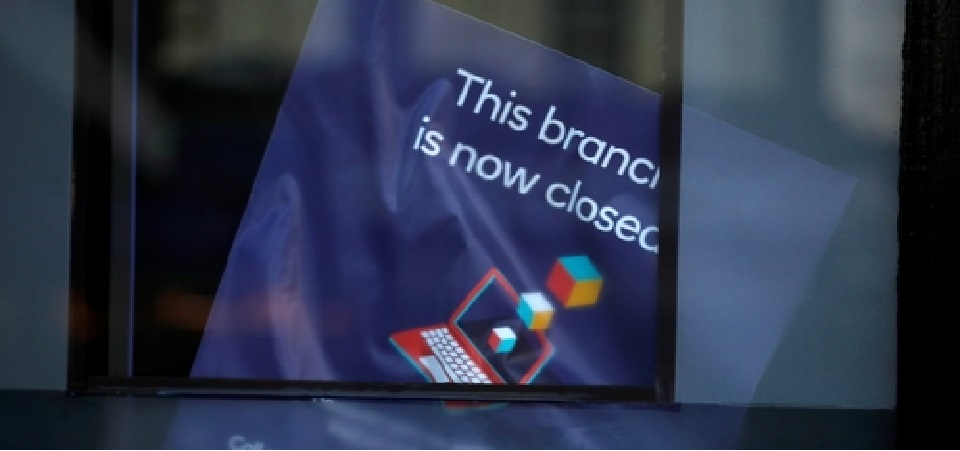
The redesign to digital is global because the future of banking is digital. And software will eat the world, they say. In the UK, since 2015, retail banks and building societies have closed (or will do so) 2,868 branches by the end of 2018. HSBC, NatWest, and Lloyds Bank top the lists with the most closures.
Banks are finally moving toward a digital future. Banks have been focused on enhancing their digital channels for some time, but it seems these efforts are now translating into meaningful changes. For example, BBVA recently announced that it aims to convert 50% of its customers to mobile banking by 2019, meaning that it many of its branches would likely be redundant by then.
And other banks have stated that they are focusing their investments on digital innovation to overhaul their services, which is likely to lead to fewer physical touchpoints for consumers. Moreover, this is a trend that is not limited to the UK, but is something that we are seeing all over the world. This could indicate the beginnings of a shift toward a cash-free society in the future.
The Opportunity
Digital certainly has immense opportunity in Nigeria. The glory will come via a truly pan-African digital remittance/transfer banking product which is agnostic of location or currency in Africa. Nigerian banks must play roles in that redesign including the emerging blockchain and cryptocurrency areas.
The Blockchain Future
The digital strategy must include how Nigeria could build a blockchain economy through a Central Bank of Nigeria blessed Nairacoin. It is very evident that cryptocurrency is becoming what many never imagined: decentralization may be on paper as actual technical capabilities are making few players lords over networks with quasi “regulatory” power. One of those new “regulators” is China-based Bitmain which controls most of the hardware and software tools for Bitcoin and other cryptocurrencies.
The promise of Bitcoin has always been about decentralization. No Federal Reserve (or central authority of any kind) was established to govern it. Despite that vision, Bitcoin does have its own 800-pound gorilla in the room.
Beijing-based Bitmain Technologies controls much of the infrastructure underlying bitcoin. The company, still 60% owned by its two founders, booked $2.5b in revenue last year – an extraordinary feat for a company founded in 2013 the same year as Coinbase). The company is now considering an IPO at a valuation north of $10b.
Bitmain is the leading producer of ASICs (“application specific integrated circuits”) and produces 80% of the world’s bitcoin mining hardware. The chips are incredibly powerful for the brute-force calculations that miners perform. The hardware is also used to power neural networks, challenging NVIDIA’s GPU as the incumbent hardware.
On top of its hardware dominance, Bitmain controls the two largest mining collectives (BTC.com and Antpool) which together have about 40% market share. The success of Bitmain has led many to question whether bitcoin is decentralized after all. (Source: Fintech Collective newsletter)
All Together
We would see branch closures at faster rate in Nigerian banking in coming years. There is certainly no other alternative if they hope to be competitive. Yet, we would also see more investments in non-digital platforms as I noted in what Diamond Bank is doing via human-platform banking.
Fast-forward, the bank is at a new game: human-platform banking. People call this agency banking. That is fair, but for me, it goes beyond agents if you read one of the key components of the CLOSA account …
So, we would see many branches disappear in our cities and neighborhoods. Yet, at the same time, banks would need many people to reach new customers as they pursue financial inclusion and deepen retail banking. Interestingly, a key component of this human-platform banking is anchored on digital tools which make it possible for associates and partners to connect from the “fields” into bank ecosystems at scale.
The irony is that as Nigerian banks close branches, they would create more non-digital jobs as digital technologies help them to pursue markets and territories they have ignored for years. The world has five hundred years of records: when new consumer technologies penetrate at scale, good things always happen on human welfare and standard of living. Say it another way, more opportunities emerge even though there may be labour displacement. So, let us not be fearful of the branch closures. Those farmers,artisans, villages etc banks are reaching will expand and make up for the losses associated with the branch closures.
In 2011, after a technical presentation in Johannesburg (South Africa), a man called me and told me “You blew me away. What can I do for you?” As he was finishing that sentence, he handed a card.
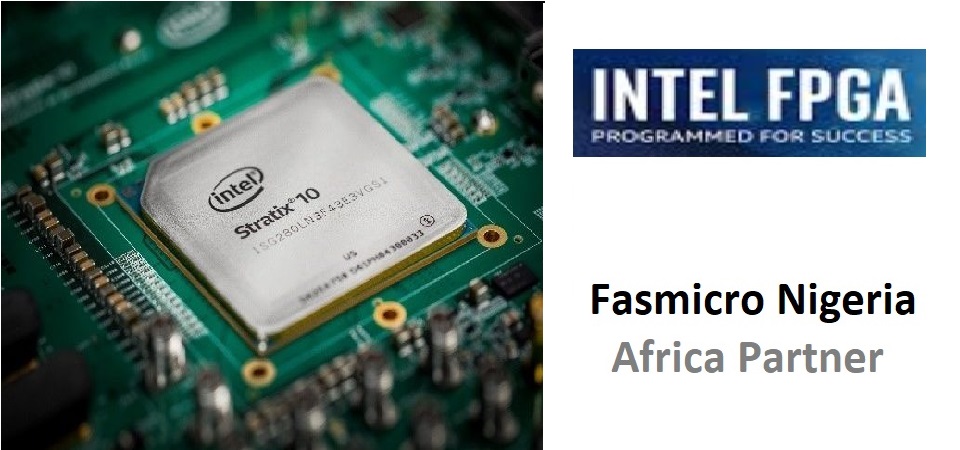
I simply replied “Can I get Altera Partnership from you”. (He was a Vice President in Altera, a global leader on FPGA, a special type of microprocessors. Intel Corp later acquired the firm for close to $16.7 billion.)
The man asked for my card. I gave him. Few days later, Altera contacted my Fasmicro. Over days, we were appointed Altera Africa partner. Today, there are only two companies in Africa that do what we do for Intel FPGA in Africa: Fasmicro and one South African firm.
Tomorrow is the 7th year of this partnership. My team has been to all parts of Africa helping clients fix frictions in their FPGA businesses. We remain the only certified institution in West Africa and one of the two in continental Africa.
We would continue to support clients as they solve the hardest FPGA problems. Please note that Fasmicro offers 15% discount on all Intel FPGA systems as an authorized partner.