DD
MM
YYYY

PAGES

DD
MM
YYYY

spot_img

PAGES

Home Blog Page 7111

Why Airtel Africa has a Record Profit Margin even as ARPU dropped

0
Airtel Africa

Few quarters ago, we received an email from an ICT operator and integrator from an African country where Airtel Africa operates. The CEO wanted to understand the implications of competing for one of the Airtel’s outsourced partner opportunities. A brilliant businessman but yet inexperienced, he needed guidance. We signed him up as a client and I was going to be his strategy coach [he has access to me on phone most times]. I had already explained to him that Airtel was not leaving Africa as Airtel’s home country (India) was becoming a Jio nation. With the unmatched pricing innovations that Jio had unleashed in India, it may be possible that Airtel may exit the Indian market to focus on Africa and other markets. The rumour of Airtel Africa exit did not make sense unless Airtel was planning to close shop.

So, we went ahead and the firm participated and won. Just like that from nation to nation, Airtel Africa has become a fully-outsourced telecom operator, shifting infrastructure risks to partners and freeing up cash to invest in customer service and experience. I knew that Airtel Africa was going to improve customer acquisition and profits (this does not debunk the global consensus that OTT like WhatsApp is reducing profits; Airtel could have done better without those OTT solutions. In short, its ARPU continues to go southward). It was evident because Airtel has ceased to become an (infrastructure) telecom company, transmuting itself into a quasi financial company focused on deals and partner management.

… Airtel upgraded its business model. Today, Airtel is leaving the infrastructure business, outsourcing all to partners across Nigeria. Typically, such enables companies to conserve cash. The impact is now visible in the subscriber numbers. Provided Airtel continues to find partners, it would continue to grow at a faster rate than its peers.

Telecom equipment leasing and outsourcing of critical infrastructure pose risks – your quality is determined by the capabilities of the partners. Most people like to be in charge of their destinies.

By doing that transition, Airtel Africa was bound to reap the kind of cost-to-income ratios typical in banking. Yes, moving from an infrastructure business into a pure service business, Airtel can add few percentages in its profit margins.

Of course, there is risk as I noted in the quote above: “your quality is determined by the capabilities of the partners”. But the good news is that most of these infrastructure integration jobs are matured which means it may not be an issue provided the relationships are properly managed. There are many good providers in the continent who can deliver with absolute quality, anytime and anywhere. My client was one of them. Unfortunately, they bear the risks as Airtel has no risk exposure in any way in most of its operations.

In a recent piece, tracking how Airtel Nigeria is adding users, I wrote: “I do believe that Airtel is well positioned at the moment to unlock more values in Nigerian telecom sector. Its business model is certainly better …”

The Record Profit Margin

Airtel Africa is having record profit margin. It made $155 million last quarter compared with $58 million in the last quarter of 2016-17. Its latest result is record profit margin since its debut in Africa about a decade ago.

Airtel Africa’s post-tax profit for the quarter that closed in March is $154.52 million, up from $57.5 million in the last quarter of 2016-17. This is a record profit margin in the eight years since the company commenced its African operations.

Airtel Africa CEO, Raghunath Mandava said, “Africa revenues grew by 10.7% year-on-year led by strong growth in data and Airtel money transaction value. Mobile data traffic has grown by 88% to 70 billion megabytes in the quarter as compared with 37 billion MBs in the corresponding quarter last year. Data customers increased by 48% to 24.9 million from 16.9 million in the corresponding quarter last year.”

The New Airtel Africa

Airtel Africa has a new strategy: move into service business, leave infrastructure to outsourced partners and then enjoy a great margin with good cashflow typical when assets are leased or financed. The company confirmed that in the statement credited to its Africa CEO.

“Our strategy in Africa is centered on strengthening our distribution model and enhancing the consumer experience via network modernization,” [Airtel Africa CEO, Raghunath Mandava] added.

Yes, the business is unambiguous: improve distribution model and enhance customer experience. That network modernization would be carried by those outsourced partners. With technology moving very fast, the risk goes to those partners to deliver continuous modernized infrastructure. If not, Airtel Africa moves on to something new. You can also see that vision in another part of that piece from the Global CFO.

Nilanjan Roy, Airtel global CFO said that the steady improvement  … by strict cost controls. “We have seen a net revenue growth of 13.4% year-on-year, while the operations expenditure has declined 5.4% in the past year. The business has entered into a sustainable positive cashflow era, …”

That summarizes the whole points: there is strict cost control, reduced “operations expenditure” and a business built on “positive cashflow era”. That “era” is indeed a new era because when you are improving revenue and experiencing record profits while reducing investments, you have a new era.

The ARPU Drop

Airtel Africa recorded marginal drop in ARPU (average revenue per user) of 1.8%. That number is very impressive (in a quarter) even though you can consider it a huge number if it keeps compounding over years. It is impressive because other telcos are seeing bigger drops. Airtel Africa managed that better because of its improved customer service which keeps getting better. In my village (in eastern Nigeria), at least, its services have improved that people are dropping competitors’ sim cards.

However, Airtel Africa’s average revenue per user fell by 1.8% to $3 year-on-year. At the end of March this year, Airtel Africa had a data customer base of 24.9 million, accounting for 27.9% of its total customer base compared to the previous year’s 22%.

The ARPU achievement is highly commendable if you see what OTT services have done to telcos. I noted here that MTN Nigeria has seen its ARPU dropped from $22 (in 2005) to $4.14.

MTN Nigeria Made N81.4B Revenue in Q1 2018; ARPU Dropped from $22 (2005) to $4 (2018)

All Together

Airtel Africa is growing and has become very profitable. Besides everything it has done, this is a testament that business model can be as impactful as technology-driven innovation. The way you structure your business and how you relate with partners and clients could be catalytic in your success. Do not make innovation to just focus on products (innovation), neglecting business models. Airtel is no more your regular telecom operator; its new business model (a quasi-financial service firm with telephony and mobile internet products) is the reason it is winning even as the products experience marginal improvements.
Nigeria’s Addressable Core Market – The Magic “30 Million People”

3
Nigeria's Addressable Core Market

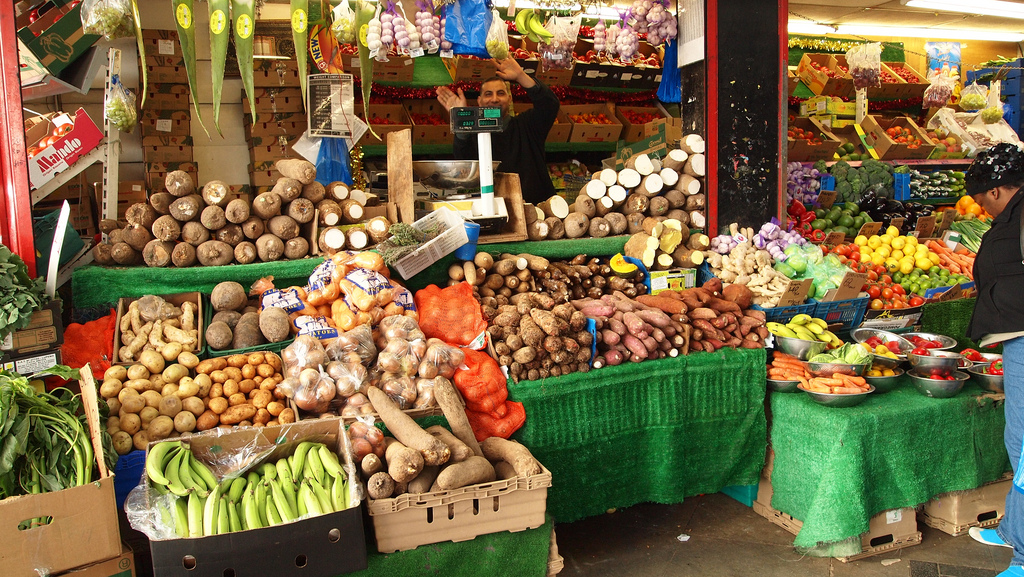
In most of my analyses when it comes to people that actually have money to spend or pay for (technology) solutions in Nigeria, I use 30 million people. Yes, despite 198 million human population, the effective addressable market in Nigeria is less than 30 million people. In Fasmicro Group model, these are people with decent incomes for anyone to craft solutions to their personal and business-related frictions. The remaining 168 million people are opportunities, nevertheless [they have to eat, shower, etc].  But we see them from the track of the core 30 million people who have the money to pay for tech things. For most technology solutions (think gaming, apps purchase & digital subscriptions and the platforms like smartphones, computers and connectivity required for them) where the buyers are usually the direct beneficiaries, the 30 million is rock solid. (Of course, on largely non-tech areas like food where everyone has to eat, the 198 million people become the addressable market.)

If we discuss broadband connectivity and the associated required investment without considering the earning capacities of the users, we would fall into a trap. That trap is similar to parading Nigeria’s 180 million in population (some have 200 million; others 192 million. I like 180 million) when only about 30 million people earn decent income with spending power.

For most analyses, across industries, I like to work with 30 million people since that number is close to the total unique bank account users in Nigeria. Technically, anyone that does not have a bank account in Nigeria at the moment is largely poor. And when I do models for markets, for most products, I rely on this 30 million because those are the full market potential at the moment, unless the product is free or in some sectors like food. Most banks excluding First Bank which has about 14 million customers have lower than 10 million customers. That is not what you expect in a country of 180 million citizens. Yes, everyone is circling around 30 million people

This number has been validated through many external indicators in our Practice. From the number of bank accounts in banks to many things, we have never seen a case where a specific bank exceeds 20 million customers in Nigeria. If you run the UNIQUE account numbers, it would be in that neighborhood, although higher. Of course that you have a bank account does not mean that you have money to spend. It could be that you need one so that people can have an account where they can pay in money for you to support your basic needs [think of many student accounts].

Today, a piece in the Guardian supports our 30 million number: the total number of people that pay taxes in Nigeria is about 19 million.

Of the 14 million taxpayers (pre-2016), 13.5 million are PAYE, meaning there were only about 500,000 voluntary taxpayers in the entire country.

It is gratifying to note that this has been updated and figure show that the taxpayer base is now about 19 million. There cannot be a clearer indicator of the challenge of trust.

Yet, that 19 million would include some state governments that battle to pay their teachers N18,000 per month (about $50). Do real modeling; you can cut that 19 million down to 12 million as the number of people that earn fairly decent wages with extra for most technology solutions. So, we have 12 million from the tax papers for the 30 million number; the remaining 18 million people are businessmen and women across the nation. You may even question if we have 18 million people in the largely informal economy since workers from organized private sectors are already included in the 12 million tax-paying workers [companies collect PAYE from workers and remit to government].

Update: Total Bank Verification Number (BVN)

Nigeria has a total of about 32 million unique BVN numbers, notes Vanguard. This strongly supports our thesis of 30 million people as the addressable core market. At least we know the number of unique bank account holders in Nigeria. As noted above, having a bank account does not mean that you have money to spend.

The Central Bank of Nigeria (CBN) has captured no fewer than 31 million account customers in its Bank Verification Number (BVN) project aimed at ensuring unique identifier in the Nigerian banking industry.

“As at December 2017, the implementation of the BVN Project recorded 31,426,091 registered BVNs and 43,959,282- accounts linked with BVN,’’ he said.

Read more at: https://www.vanguardngr.com/2018/05/cbn-captures-31m-nigerians-bank-verification-number-project/

Update with Extra Insight:

After this piece, I ran this one which noted that Nigeria has 38 million smartphone /mobile device users.

Of those subscribing to the four major operators, just 38 million are smartphone users, with MTN accounting for more than one third of the total. Airtel and Glo have almost equal number of subscribers falling into this segment.

Then someone made a comment on LinkedIn to support the 30 million addressable core market thesis.

The figure of around 38 million smartphone users isn’t still far from the 30 million ‘magic number’ of decent income earners in the land. Just subtract the smartphones with double SIM slots, and those having more than two smartphones in their hands, you still end up around 30 million unique users. This country’s economy really needs to grow and develop aggressively, for a while it has been more or less like recycling, with minimal entrants of those crossing the poverty threshold to the other side.

How about having a national budget in excess of $100 billion, stock market valued in excess of $200 billion, and decent income earners rising to 60 million? Suddenly there would be serious economic activities everywhere, with many businesses remaining alive.

Chasing the same ‘tired’ and ‘exhausted’ 30 million people won’t do this country any good. Somehow we need to find a way to bring more people to the party.


CNBC Africa Nominates Ndubuisi Ekekwe for “Innovator of the Year” Award

4
Ndubuisi Ekekwe Innovator of the Year CNBC

Good people,

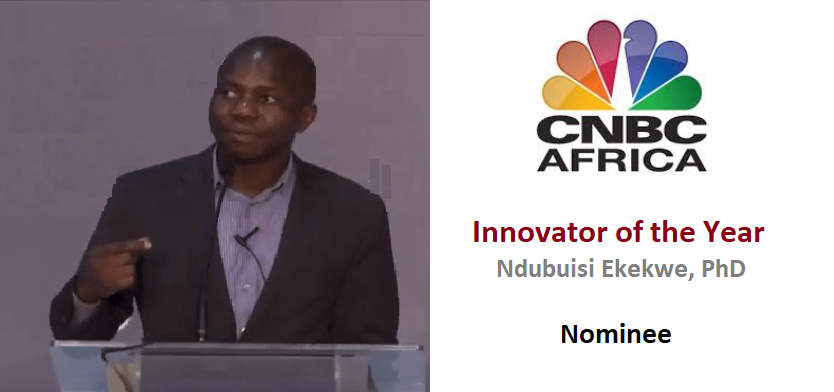
CNBC Africa has nominated me for its Innovator of the Year award. This is the zenith of awards celebrating the finest of African business leaders and innovators. In its letter informing me about this nomination, it explains the purpose of this recognition: “CNBC Africa honour[s] remarkable leadership and salute game changers of business on the continent for their continuing commitment to excellence, developing best practices and innovative strategies.”

I find joy in fixing market frictions and I love business. It is very delightful when my works improve the lives of people. I treasure the moments when I walk into rooms, and men and women hug me because my works have helped their lives and businesses. We would remain focused because Africa must innovate to thrive.

Sure – I have not won anything on this nomination. But I do know that my clients and customers are winning, and from Aug 1, 2018 those in the healthcare sector will begin to win as we launch Medcera across Nigerian cities to support everyone in the healthcare sector.

Thank you CNBC Africa and AABLA!

Nd

Part of the letter below

Dear Dr Ndubuisi Ekekwe,

On behalf of CNBC Africa and the awards partners it gives me great pleasure to inform you that you have  been shortlisted for the Innovator of the Year category

in the 8th All Africa Business Leader Awards in partnership with CNBC Africa (AABLA™)

The annual All Africa Business Leaders Award is set to honour business excellence and leaders who have made a considerable impact on their industry and community. The All Africa Business Leaders Awards (AABLA™) in partnership with CNBC Africa honour remarkable leadership and salute game changers of business on the continent for their continuing commitment to excellence, developing best practices and innovative strategies.

Now in their eighth year, the awards continue to recognise and celebrate the outstanding contribution made by business leaders across Africa.  They epitomize the core values of a successful leader and have demonstrated excellence in their career and elsewhere, women who make significant contributions in their community and their achievements make them leaders in changing the social and business landscape.

Innovator of Year, Ndubuisi Ekekwe

Samaila Zubairu appointed President/CEO Africa Finance Corporation

0
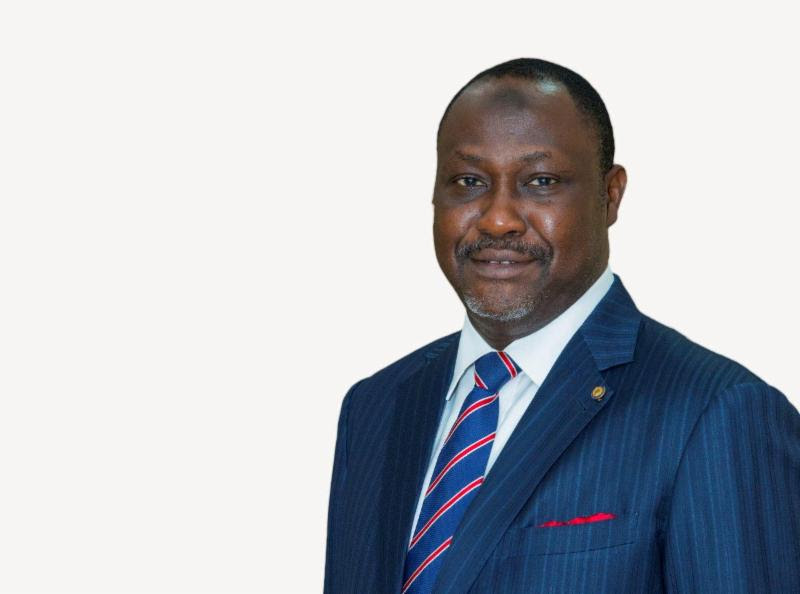
Samaila Zubairu appointed 3rd President & Chief Executive Officer o Africa Finance Corporation

Africa Finance Corporation (“AFC” or “the Corporation”), the leading infrastructure development finance institution in Africa, has announced the appointment of Samaila D. Zubairu as the Corporation’s 3rd President & Chief Executive Officer, succeeding Andrew Alli who comes to the end of his tenor, having successfully served in the position since 2008.

Samaila Zubairu is a distinguished Fellow of the Institute of Chartered Accountants of Nigeria (ICAN) and an accomplished Infrastructure development finance specialist with over 29 years of professional experience. He is the CEO of Africapital Management Limited, in which position he established a joint venture with Old Mutual’s African Infrastructure Investment Managers (AIIM) to develop the Nigerian Infrastructure Investment Fund1(NIIF1) for infrastructure private equity across West Africa. He also recently coordinated the US$300 million acquisition of Eko Electricity Distribution Plc.

He was the pioneer CFO for Dangote Cement Plc, during which he launched Africa’s largest syndicated project finance facility for a local corporate to actualize the Obajana Cement project and managed the watershed unbundling of Dangote Industries Limited to listed subsidiaries on the Nigerian Stock Exchange. He has led finance transactions for over US$3 billion covering: green-field project finance facilities, acquisitions, corporate transformation initiatives, privatization and equity capital market transactions.

Samaila is an Eisenhower Fellow and sits on the Eisenhower Fellowship’s Global Network Council as well as the President’s Advisory Council. He is also an Advisory Board member for KSE Africa a leading Operations and Management provider of captive power plants in the mining sector of Botswana and Nigeria and is the Chairman of MDSA Nigeria Limited, a fintech company providing micro loans across sub-Saharan Africa. Samaila is the Independent Director and Chairman Statutory Audit Committee as well as a member of Finance and General-Purpose and Establishment and Governance Committees of Aiico Insurance Plc. He also serves as an Independent Director and Chairman of the Finance Committee for New Nigeria Commodity Marketing Company.

The appointment of Mr. Zubairu follows a six-month search process that saw over 100 candidates apply for the role. Mr. Zubairu will formally take up the post imminently.

Dr. Okwu J. Nnanna, Chairman of AFC said: “On behalf of the Corporation, I am delighted to welcome Samaila Zubairu to AFC. In Samaila, we have identified an individual with the exceptional qualities across deal origination, execution, and capital raising that will continue to facilitate AFC’s ability to deliver transformational change through infrastructure investment as it moves into a new era.
“His track record of operational excellence will be of huge benefit to AFC and all its stakeholders as we build on a decade that has seen AFC become a market leader in Africa’s infrastructure space, positively impacting millions of lives every day. I would like to thank Andrew Alli, who over the last decade has turned AFC from a start-up into the world class institution that it is today. His departure is truly our loss, and I am confident in saying I speak for all stakeholders to AFC in wishing Andrew the very best in his future endeavours.”

Mr. Samaila Zubairu, AFC’s incoming President & CEO commented on the announcement: “Africa Finance Corporation is one of the most dynamic organisations on the continent. In the last decade, we have seen the organisation grow its balance sheet by a remarkable 400%, produce competitive returns, whilst transforming African economies through innovative infrastructure development and financing. I am therefore immensely humbled by the distinct honour of this appointment to lead such a distinguished organisation”.

“As the incoming President & CEO, I am confident of AFC’s market position as being best placed to surmount Africa’s multi-sectoral infrastructure challenges, and no doubt this success has been achieved in no small part, because of AFC’s outgoing President & CEO, Mr. Andrew Alli and his team of exceptional professionals. I therefore look forward to joining AFC’s highly reputable team, and together, enhancing AFC’s position as an extremely capable project partner, able to deliver sustainable development projects across the Continent.”

Mr. Andrew Alli, AFC’s outgoing President & CEO also commented on the announcement: “Serving at the helm of AFC has been the highest privilege of my career. However, having served my tenor, I am leaving assured that in Samaila Zubairu, the Corporation will gain a truly confident self-starter and an industry heavy-weight ideally suited to lead AFC into the next chapter of its growth story. I wish him, and the AFC family, all the success for the future.

“As I depart, I am proud to look back on all the things we have been able to achieve across the width and breadth of the Continent, none of which would have been possible without the incredible colleagues I have been honoured to work with, the shareholders who gave me the opportunity to serve and the Board, which has given me support and direction. I shall remain forever grateful to all of them.”

Abundance in Future, Nigeria’s Best Companies Are NOT founded Yet

0
Nigeria's Best Companies

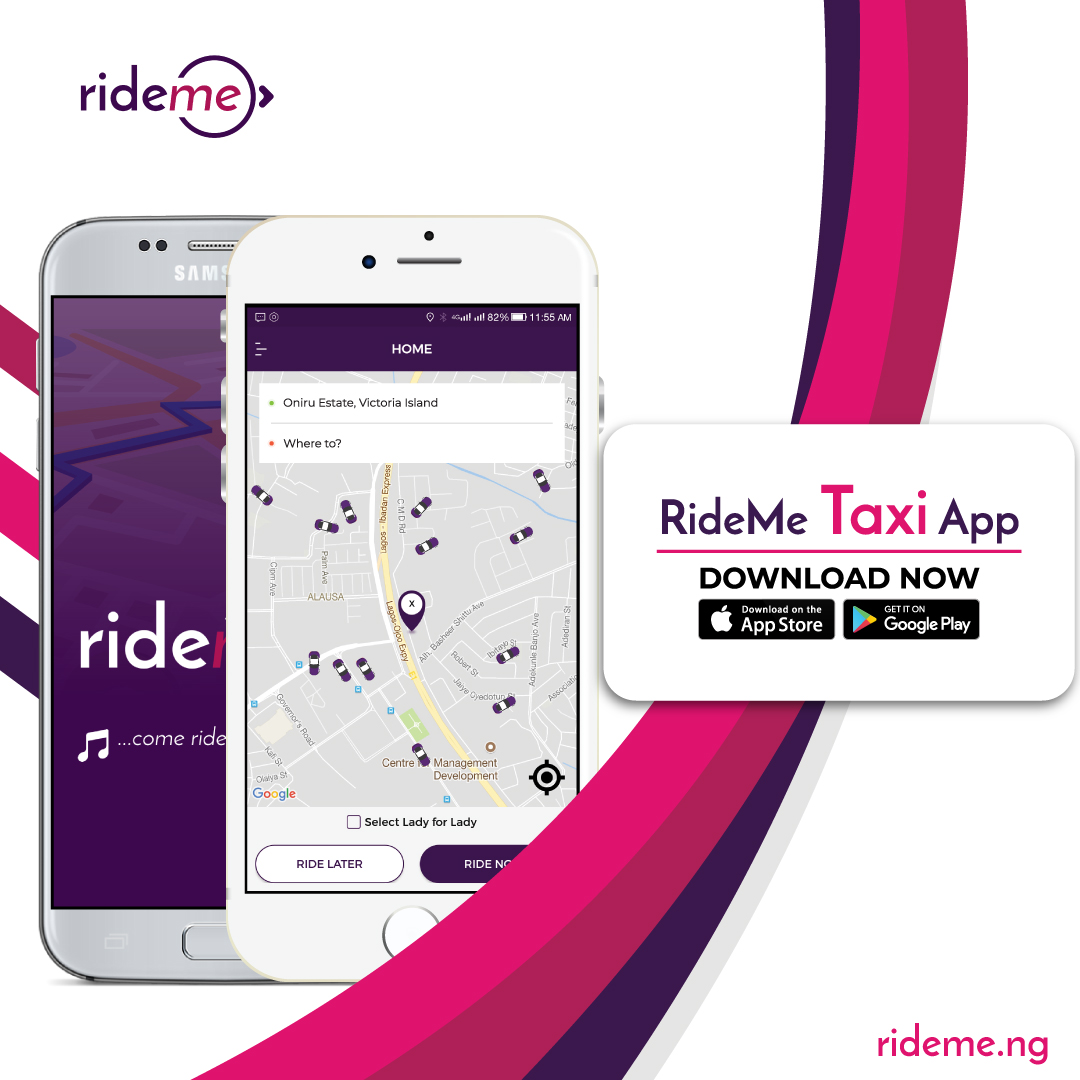
I shared the launch of RideMe, a new ridesharing startup in Nigeria, yesterday. RideMe is entering a highly congested and competitive market in Nigeria. The responses were mixed: some were excited while some were concerned on why a company would enter such territories when winners had already been concluded.

RideMe, a new ride-sharing startup, has launched in Lagos. Its value proposition is to help in reducing the level of frictions Nigerians experience as they move from one location to another across the nation. It connects drivers with riders giving the riders comfort, style and fair rates while providing the drivers and partners a tool for total business ownership. This is a platform business and one that is built on the Aggregation Construct where the technology of RideMe will anchor efficient linkages among different partners. This company will have to battle with old industry veterans like Uber and Taxify which are already operating in Nigeria. But with huge driver-benefits like pension, health insurance and housing schemes, it has a promise.

Reading the comments, I think I need to address one main point: the best companies in Nigeria are yet to be founded. Our market is still at infancy across many sectors. While the ICT utilities like Uber, Google and Facebook remain dominant as I noted in a recent piece in the Harvard Business Review, the reality is that an entrepreneur can engineer a total product differentiation to create a niche in some sub-sectors. In that HBR piece, I made it clear that there are many areas Google and Uber cannot just do fine; our Nigerian startups can win by doing those things better. Do not do frontal confrontation but find inefficiency where the ICT utilities can even help you in accelerating growth.

That is the paralysis we are seeing in telecommunications, in e-commerce, and across the broad ICT sector. When WhatsApp makes texting and calls free (in some cases with better quality), local telecom giants bleed cash. When Instagram provides an amazing gallery to display products, local newspapers struggle. And when Facebook makes it possible for merchants to reach millions of potential customers at no cost without the typical marketplace subscriptions or commissions, traditional e-commerce begins to fade.

I have noted that despite our 198 million human population, the effective addressable market in Nigeria is less than 30 million people. Yes, these are people with decent income to sell something to. The remaining 168 million people are opportunities, nevertheless. I do not expect Uber or other ICT utilities to find solutions to them.

If we discuss broadband connectivity and the associated required investment without considering the earning capacities of the users, we would fall into a trap. That trap is similar to parading Nigeria’s 180 million in population (some have 200 million; others 192 million. I like 180 million) when only about 30 million people earn decent income with spending power.

For most analyses, across industries, I like to work with 30 million people since that number is close to the total unique bank account users in Nigeria. Technically, anyone that does not have a bank account in Nigeria at the moment is largely poor. And when I do models for markets, for most products, I rely on this 30 million because those are the full market potential at the moment, unless the product is free or in some sectors like food. Most banks excluding First Bank which has about 14 million customers have lower than 10 million customers. That is not what you expect in a country of 180 million citizens. Yes, everyone is circling around 30 million people

The essence of every business on earth is to fix market frictions. I am not sure Nigerians have reached the level where they do not experience pains and struggles as they move from one location of a city to another (intra-city movement) or as they move from one city to another city (inter-city movement). Provided those frictions have not been solved, it is irrelevant that Uber pioneered that sector. Yes, there is a huge opportunity to find business models to improve the lives of our citizens, from ecommerce to transportation, and across all sectors despite the existence of big brands.

When we work with entrepreneurs in my Advisory, we try not to shape their elements which drive the confidence to compete. Yes, that despite the inherent advantages of any incumbent, we do believe that there are opportunities to thrive in a sector. Our focus is always to find ways to create a differentiation and niche. Usually, the local businesses respond faster and better since the foreign multinationals may not have the flexibility to adapt. Uber has a largely one global app which must be approved by the leaders in U.S. before it can change to accommodate any requirement in Lagos. But local entities in Owerri, Kano and Ibadan can evolve to meet a unique and localized market need within minutes if they are agile.

That flexibility and the very fact that Nigeria is not a place one can scale with reckless abandon because our infrastructure and market structures bound those possibilities provide opportunities for local firms. Yes, that you have won Lagos does not mean you can win Yola. That you have done well in Abuja does not mean that same business model can thrive in Opopo. The heterogeneous nature of local markets and disparity in development across cities make scalable advantages to be curtailed.

RideME- Beyond Ridesharing: Unlock New Markets

The company RideMe is working to get drivers and riders into its ecosystem, offering discounts. The CEO wrote to me and explained that “Riders can use promocode “freerides” to get N1,000 off their ride” (download app here). That is a way to create a buzz and get riders into the network. The startup must try different things until the team finds the winning formula.

Interestingly, since the piece ran, insurance companies, pension management companies and other related entities are contacting the firm to explore how to serve the drivers in the RideMe ecosystem. Despite any arrangement the company has, these entities want to get in. Even mortgage financing entities are interested to participate. There is a clear value proposition that you drive an “advanced taxi” and you are working to get a mortgage for a house. Or as you work, a government-approved pension manager is handling your pension. If RideMe accomplishes that as an aggregator and platform, that is a clear differentiation which unlocks many opportunities to shape not just ridesharing but pension, insurance and mortgage in some areas and cities.

All Together

We need to have confidence even in the age of Facebook, Google and Uber. The key is finding a localization strategy to win and fix local business needs. To my knowledge, ridesharing is still at infancy across many cities in Nigeria like Owerri, Aba, Yola, Jos, Uyo, Ife and more. If we just wait for Uber and Lyft to come and do those services, we would not be fair to our nation. And no one says that ridesharing cannot be a vehicle to provide health insurance, pension and mortgage to working Nigerians in the transportation sector. The Americans cannot do such because the local units do not have flexibilities to adapt. That lack of local agility is an opportunity for Nigerian entrepreneurs.

Sure – you need to examine market risks to thrive. But that does not mean that you cannot start a construction business because there are many construction companies in Nigeria. Internet companies in their duality of products and platforms are harder to compete against but yet we have an “unexpected advantage”: our infrastructure makes it nearly impossible for them to scale without huge marginal costs as they would have done in U.S. and Germany.

Go out there, have confidence, look at risks, develop your model, refine the model, and WIN. You can do it. Nigeria’s Best Companies have not been founded: you can establish them.