DD
MM
YYYY

PAGES

DD
MM
YYYY

spot_img

PAGES

Home Blog Page 7111

The Beginning of Starting a Startup

0

Starting a startup is not a vacation journey. It is a very high intensity call that requires many sacrifices. Before you decide to embark on this journey, you need to be prepared. It is far easier to join a mature company and earn wages than risk starting something new.

But yet, if you have a top-grade skill, there is no irreversible risk. The fact is this: if you are good and run a startup and fail, there are many entities that would absorb you. In short, having started something becomes an experience and differentiator, if indeed you tried hard enough before the failure!

The biggest mistake in the world is to see the opportunity pass by when you believe you can change a market and earn great returns for doing so. After all, most of these opportunities do not always repeat. That means if you miss them, by starting the company at the moment, you may never get the chance again.

NB: Startup in this content means going to create something of value with transformational impacts in the market. It is different from small business which could be barbing salon, selling corn along the roads, etc that rarely scales. You do not build such firms without focus.

“A company five years old can still be a startup,” writes Y Combinator accelerator head Paul Graham via email. “Ten [years old] would start to be a stretch.”…

One thing we can all agree on: the key attribute of a startup is its ability to grow. As Graham explains, a startup is a company designed to scale very quickly. It is this focus on growth unconstrained by geography which differentiates startups from small businesses. A restaurant in one town is not a startup, nor is a franchise a startup.

Yes, while you can start a bank in Nigeria today, the reality is that those that started in 1990s had it easier, at least the regulations, were not matured then. The same applies to university licenses. There used to be a time when government was begging proprietors to come and pick free university licenses. Today, you need to have built a campus before government would even consider your application.

The same goes for starting a telecom operator in Nigeria. Compared with 2002, it is far tougher now as most of the profitable customers have already been absorbed by the incumbents. Now is the time for fintech but say in 10 years, it may be harder as platforms would have locked the best customers. The same analogy plays across markets and industries.

In this video, I explain the beginning phase of starting a startup by examining the existence of friction in the market and the preparations required to have a great company.


This is part of a series which I will be expanding.

30 Agro and Agtech Business Ideas for Nigeria, Africa

0
agtech, agro

[Note: We’ve published exclusive mechanisms to move most of these ideas into products, and potential ways you can execute them locally. Our goal is to transition the ideas into product-opportunities in your local communities. Click here] There are many opportunities in the Nigerian (and indeed African) agriculture sector for entrepreneurs to unlock, starting from the […]

This post is only available to members.

Unemployment and Nigeria’s Poor Job Science

0
unemployment

Creating sufficient jobs for the citizenry is almost a ubiquitous problem among many nations. But the scale of the challenge and the criticality varies. Nigeria’s historical inability to create sufficient jobs for its people has been a major national challenge for successive governments. From an economic and national development perspective, rising rates of unemployment can be tetra headed. Nigeria’s situation could be a matrix of tens of problems, including skill/capacity gaps, macroeconomic limitations to doing business, policy gaps, infrastructural limitations, resource negligence and un-optimized potentials.

It should have become apparent that legacy approaches – which has hitherto failed – can no longer be applied going forward. Neither can the classic Schumpeterian or Keynesian formulas work excellently for Nigeria without modifications. Emphasizing “Pro-growth” “Pro-investment” perspectives alone have not and may no longer be relevant.

In the current ambience of a political transition – this problem like many others has to be frontloaded in our national political discus. It’s inevitable that an economically promising nation like Nigeria should now build thoughtful, sustainable and comprehensive mechanisms for job creation. It can be safely said, that unemployment in Nigeria is a challenge known to all but which has albeit received less than half the attention it deserves. This problem should now receive greater and renewed attention; firstly from the government who has the onus of building the right frameworks for job creation and secondly from the private sector which owns the vehicles required to drive job growth.

Is job creation a science? Could there be country-adjusted mechanisms for reducing unemployment rates and what is Nigeria’s own job science?

If job creation is a science we have not studied it and we do not understand it either. For a major economic and national problem, pockets of mention, siloed efforts domiciled at different levels of government and unilateral efforts within organization in the private sector will not deliver the level of inclusion needed. Nigeria is due to craft a faultless job creation science that demonstrates a deep perspective on the matter and which appropriately depicts the scale of the problem.

The horizon for this problem has changed significantly; because the population boom, witnessed in the last few decades, coupled with a predominantly young demographic is helping to highlight the critical essence of a water-tight job creation policy/approach. This country’s rapid population growth will arrive with even more worrisome levels of unemployment that will deeply shake its economic and social foundations.

We are still looking at the challenge predominantly from the “welfare perspective”; which measures the hardship or economic pain/losses faced by those affected. But the more worrisome perspective is the not yet so conspicuous “social perspective” which will measure unemployment-driven, social disorders; high crime rates; psycho-social degradations; civic hazard and physical displacement.

Amidst the envious and numerous economic potentials, as well as, the politico-economic challenges that Nigeria faces, it’s evident that the ability to provide meaningful work for majority of its population will remain one of the most critical problems in the future. While Nigeria is not new to the crises of unemployment, previous – and insufficient – efforts to solve it have yielded little results.

To chat a new job creation course is therefore inevitable, but several questions arise. Can Nigeria afford to properly rethink her job creation strategies? Is the science of building economic and social systems that lower unemployment rates known to those that ought to know? Within the complicated mixture of economic interests, challenging demographics and supporting policies, where is the motor that drives job creation for Nigeria and who are the fundamental drivers?

It’s therefore exigent that conversations in the next political transition be dominated by considerations of a new way of tackling the job crises. Maybe we may debate long enough; research deep enough; and model well enough, to evolve Nigeria’s own Job science. There are peer nations that have successfully lifted hundreds of millions of poor people out of poverty in a relatively short time frame (few months or years) through novel job creation strategies. That’s a commendable but not an easily replicable feat. Crafting a unique, long term, job science for Nigeria may call for attention to less conspicuous, less conventional focal points, where interventions may be less dramatic and minimally visible, yet with great promises of significant, incremental jobs and long lasting outcomes.

Admittedly, there are many dimensions to what might become our own unique job science. In essence the saving approach may be less conventional and less classical but they should be robust, long term and impact-driven. We should explore less popular and less celebrated job creation strategies such as taming rural-urban migration, prioritizing stranded resource and commodities, nurturing uncommon businesses, inspiring new forms of competition and the poorly explored virtual export of talents.

For example, campaigns for reviving rural economies & communities in Nigeria could deliver unimaginable job benefits. Nigeria is witnessing an unhealthy rural-urban migration with many negative implications. Firstly, the hordes of people leaving rural and semi-urban communities for urban centers and big cities represent the young demographic whose exit portrays the outright death of meaningful entrepreneurship in rural communities. Directly tied to this movement is the unfortunate absence of potential rural entrepreneurial drivers and the skilled rural-workforce that escalates abandonment of resources and commodities. Migration therefore depicts a loss of people and resources that would have otherwise constituted the kernel of economic growth and job creation in those places. This scenario is one of over a hundred possible points of intervention that appears less conventional but capable of delivering gains. All options should therefore be on the table.

Uruguayan Schoolkids Have Best Video So far of Russia 2018 World Cup [Video]

0
Uruguayan Schoolkids

This is why it is called World Cup. The Uruguayan  schoolkids show why football unites. In those days in primary school when the bell rang, we would all jump out, “liberated” from the teachers, to catch food at home. In this video, Gimenez scored a 90th-minute winner against Egypt and began a mass party in a school in Uruguay.

This is what the World Cup is all about.

Uruguayan schoolkids gathered around a TV as their country’s Group A game against Egypt headed towards a close. It had, frankly, been a stinker of a match, but you could sense their expectation as a corner was being lined up…

And then, when Gimenez scored a 90th-minute winner, they absolutely went off.

https://youtu.be/IKQKFZeZmJ8


This is awesome.

Hardware Startups Are Rising in Africa

0
hardware startups

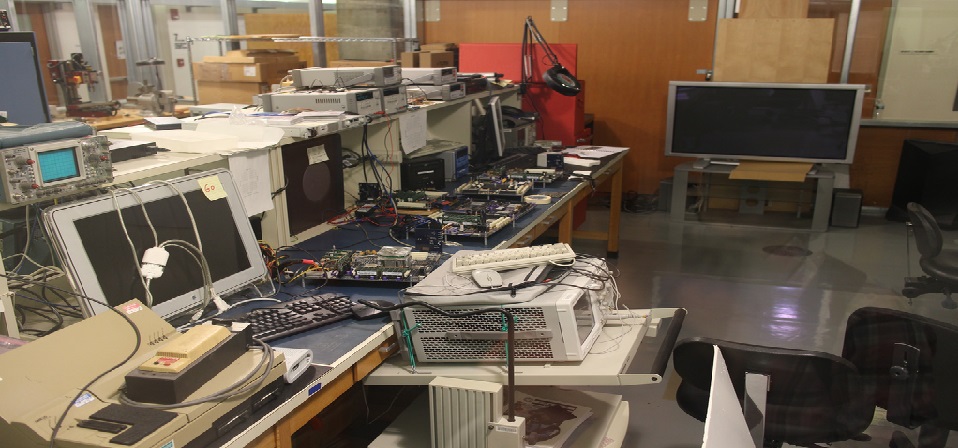
Some of Africa’s market frictions cannot be fixed by software alone: we need hardware startups. Yes, you may have the best software skills, but to help certain sectors, you would need to have a physical device. In the oil industry, software can help you in the reconciliation process, but before that can be done, you need sensors to collect the data. The same applies in agriculture and healthcare sectors where before the data can be processed and analysed, sensors must first collect them from the soil, land or humans.

Largely, the deal is this: without hardware, the impact of software will remain limited in Africa in helping communities and firms. Sure, software will eat the world, but hardware must first cook the world for it.

In this piece, I explain how hardware can become a moat, in Africa, at a certain level, to protect entities from the competitive voltages of the global ICT utilities which continue to take territories using the power of the positive continuum of network efforts and size.

Hardware is rising and I expect the 2020s to become even more promising as AI transforms markets, opening more use-cases. Just like Apple, you differentiate with hardware (iPhone, iPad) to sell exclusive and proprietary software (iOS). Snap is following that path with Spectacle. Amazon has invested on Kindle and Echo with that knowledge. Google has since moved into hardware with Pixel and Assistant box.

Cheaper computing systems, IoT (internet of things), broadband connectivity and drop in components costs will expand the nexus of these sensors into more areas. African hardware startups have real opportunities because without hardware, we cannot bring the power of information systems in facilitating catalytic transformations. For all the health tracking apps, across African technology hubs, they still need hardware sensors to collect the data. If the costs of those sensors do not drop (most are made abroad), the market penetration may remain limited. That is why opportunities exist to build some of these sensors right in Africa.

The video on hardware startups in Africa and the promising future is below.