DD
MM
YYYY

PAGES

DD
MM
YYYY

spot_img

PAGES

Home Blog Page 7123

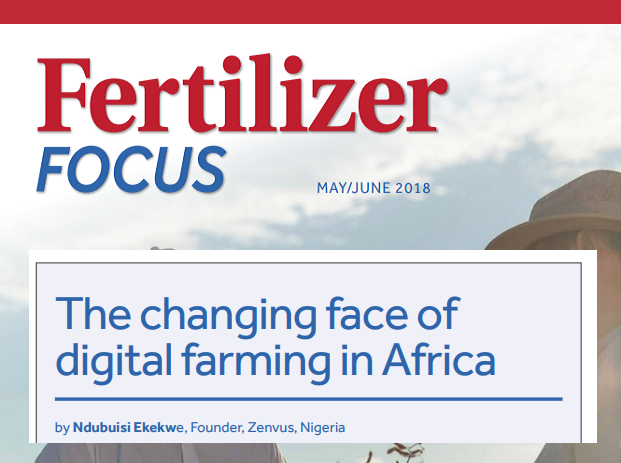
UK-Based Fertilizer Focus publishes my piece on Smart Crop Nutrition

0

Today, UK-based publisher, Fertilizer Focus, published an invited piece I had written on our work on smart crop nutrition. We are working to make fertilizer application data-driven, anchored on the real needs of crops, and correlated with the soil conditions. That work has brought the partnerships we have with fertilizer companies where we are working to help them engineer fertilizers so that farmers can save by systemically configuring fertilizer mix based on soil-crop needs.

In Ethiopia, earlier in the year, Argus Media, invited me to keynote a gathering of leading fertilizer companies in the world, including OCP, the world’s largest producer of phosphate. OCP had awarded us the 2017 “AgTech Startup of the Year”.

There is a fundamental redesign which must take place in the way fertilizers are designed and produced. Today, the same fertilizer sold in Uyo (Nigeria) is largely the same sold in Sokoto (Nigeria). That is not right because some parts of Uyo have urea which means the farmlands there do not need nitrogen at the same level as the soils in Sokoto. If the maker of the fertilizer has that information, it can re-engineer a minor production system where fertilizers shipped to Uyo would be cheaper because there may not be a need for too much nitrogen. Yes, you avoid wasting money blindly.

That cost reduction is saving to government which continues to subsidize most fertilizers used in Africa. Where government saves, the farmers would gain as the saving can be used to provide them with expanded farm inputs.

Using data from our sensors, we help farmers model the right mix of fertilizers in their farms. It is a very fascinating experience when we take guess work out of a very important industry.

Download the magazine here (PDF, page 43).


If you are a government or a cooperative and wants to work with Zenvus, please let us know.

“In our industry, we have a common threat…Fintech, is real” – CBN Governor, Mr Godwin Emefiele

0
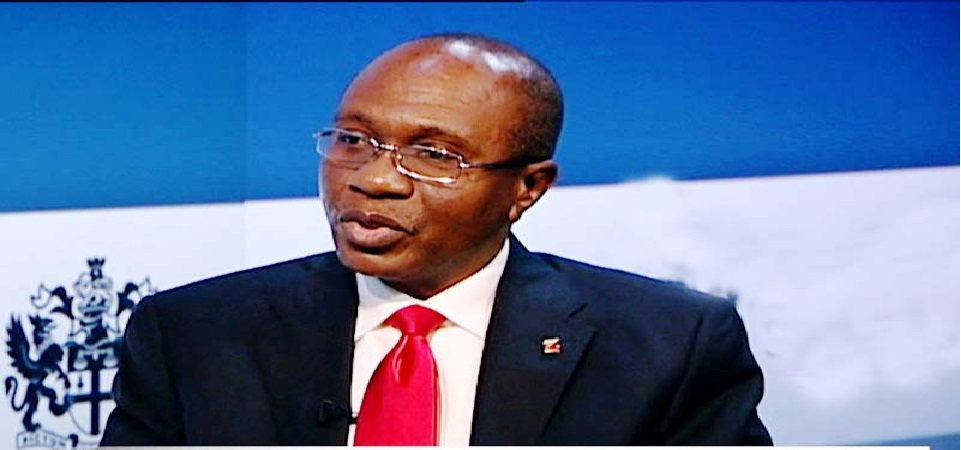
CBN Governorn, Godwin Emefiele

It is official – the Central Bank of Nigeria has clearly noted that fintech (financial technology) companies are indeed threats to Nigerian banks. The CBN Governor, Mr Godwin Emefiele, made the statement while delivering a goodwill message at the investiture of the Chartered Institute of Bankers of Nigeria (CIPN)’s 20th President and chairman of council in Lagos on Saturday.

The Governor, CBN, Mr. Godwin Emefiele, in his goodwill message at the investiture of the CIBN’s 20th President and chairman of council in Lagos on Saturday, said, “In our industry, we have a common threat. The enterprise management risk, particularly the threat posed by Fintech, is real.”

The message was delivered through the CBN Governor’s representative in the person of Dr. Okwu Nnana, the Deputy Governor in charge of the Economic Policy Directorate.

The participation of fintech is expected in the industry since it is evident that the opportunities are huge: “According to research done by The Fletcher School and Mastercard Center for Inclusive Growth, of the $301 billion of funds flow from consumers to businesses in Nigeria, 98 percent is still based on cash”. Simply, growth is ahead, and this market has not been completely won, at least on the digitization of payment front.

The Industry Redesign

There is no doubt that technology will play a significant role in future banking. Just as OTT solutions like WhatsApp and Skype have decimated revenues for telecom operators, we expect fintechs to affect the operations of banks. But these fintechs will include ICT utilities like Facebook and Google making the scenarios very consequentially.

This is the expected natural trajectory as the ICT utilities take over the lands. Once Facebook perfects the integration with MasterCard on Messenger, it would do same on Instagram and WhatsApp. Then, it would be opened to any financial institution that wants. MasterCard is a natural payment aggregator, agnostic of banking institutions. Facebook would be the platform while MasterCard would act as the “interface institution”[payment processing] and banks the hosts [the accounts]. The implication is that over time few would bother to notice the hosts, focusing more on the platforms [once you have set up an account and put your bank details, there is no need to even remember the bank again as the transactions would happen on Facebook while MasterCard handles the underneath processing with the banks].

The banks are doing what they have to do: with Facebook Corp, there is no other alternative – you either fall in line or you go extinct. This is going to be the future of banking in Nigeria. No one goes to a bank in China; most go to WeChat to do banking. Facebook has a plan for that in Nigeria. The plan is now under execution

Fintech (U.S.) Usage – UBS report (source, UBS)

All Together

The business of banking will remain with us. But the structure will certainly change. With the banks transmuting themselves into fintechs already, Nigerian customers would benefit. Yet, I do not see major competition against the banks over the next few years because they remain more capitalized and they also control most of the banking and financial system nodes. Yes, taking them out would be extremely challenging without direct access to those nodes.

Mr Godwin Emefiele has spoken and we do hope he would continue to allow innovation win without undue over-the-top regulation that would stymie the fintechs. The banks do not need help because they are already the premium fintech striking partnerships with Facebook and Mastercard. And if the indigenous fintechs evolve, the banks would also win as they would help in bringing more Nigerians into the banking sector.

Generally, it is good the CBN Governor has alerted his constituency on the threats; they need to take action because the challenges cannot be localized. The telcos slept into the OTT quagmire; CBN is shouting right now so that banks can see Facebook, Instagram and broad fintechs as threats. We hope they are listening.

Why Founders Fixing New, Hard Challenges Typically Succeed

0
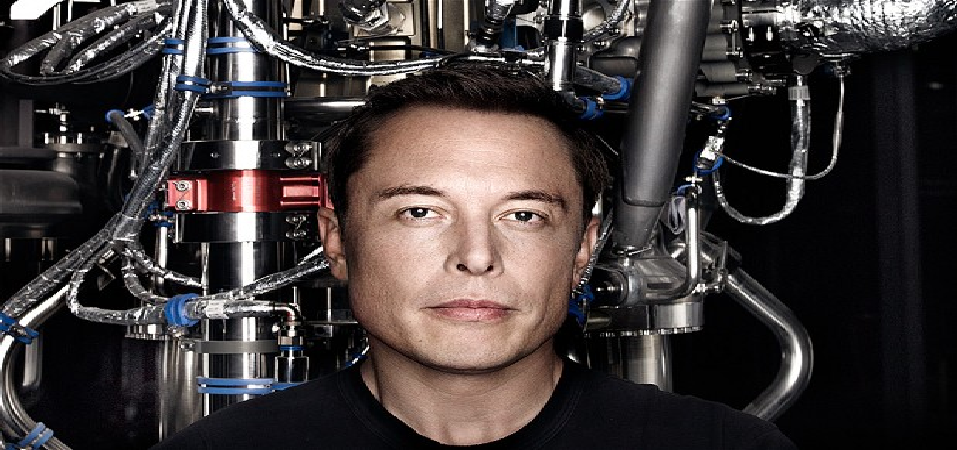
elon musk
elon musk

In life and especially in business, it is always easier to execute a new, hard and great mission than a marginal one. Men and women easily sign up for things which are GREAT than things which are ephemeral. Yes, it would be easier to execute Tesla mission than another typical car company like Ford or Peugeot. While great people will line up for Tesla, many would be unresponsive for another Ford or Peugeot.

At different levels, a Call to Mission requires extremely committed people. Even in your business, you must have that capacity to find and recruit people that can help you execute a great mission. You must prepare them. Equip them. And push them to come and get glory.

As a founder, that is your challenge. When no one wants to work with you, it means you could be trying to solve a mundane problem. Sure, you are fixing a friction and you are solving a business problem in the market. Nonetheless, it is not challenging enough to inspire the best you need to help you execute. If you have that talent paralysis, you may need to go back to the drawing board. Yes, you need to distill the vision further. That is the only way you can get believers for the mission.

Why do we need a business? We need a business because market is not friction-less. If markets have been friction-less, buyers and sellers will not need firms in between them. In other words, if a saver can find a borrower without going through a bank to put that money, and then the bank will go ahead to lend to the borrower from that money, we will not have a need for a bank. In other words, the reason we have a bank is because there is a friction for a saver and a borrower to do business directly. The bank comes in as an intermediary to reduce that level of friction. For doing that, the bank is paid.

When Mark Zuckerberg says he wants to “bring the world closer together“, via Facebook, he has put a great vision. It is certainly new and it is worthwhile. The newness and hardness are not necessarily a function of technology, but rather the aspirational quality of the mission at hand. When Google says it wants to organize the world’s information, it has something many people, across generations, would commit to help it execute.

In our age, you can sign up a whole village if you say you are going to the moon. But if you say you want to dig the ground, many will not show up. Going to the moon is new and harder; men and women would be inspired by that possibility. Digging the ground is easier and stale; few people would want that. The best talent would congregate for the moon business while the digging ground one will struggle.

It is counterintuitive – founders who typically succeed are those who go out for new and hard challenges! They easily mobilize the world to execute what they want done. The other founders [who play safe] struggle to find believers, and they typically fail because the best do not want to work on marginal problems.

The deal is clear: find a way to communicate a greater purpose with passion so that people can join to help you. I want to “unite African payment” is far better than I want to have a “platform for people to pay”. I want to “help people live fuller and healthier lives” is better than “I want to build a clinic”. That distillation anchors many things, and you must get the right message for your startup. You need that, if you want the best to wear your company badge.

The Vision from Patmos

3

He was exiled after he survived boiling oil. It was a banishment, a common punishment during the imperial period, to the Island of Patmos (Greece), about a 5-hour ferry trip from Kos Island. In downtown Athens, you would see the signposts pointing to the island towns and cities like Thessaloniki. 

John was sent to Patmos under the persecution of Roman emperor Domitian. There, John wrote one of the most important Books of the New Testament. As a Scripture Union kid in secondary school, it was the only Book of the Bible that I did all to avoid reading in the night. The Revelation is revealing and totally ecclesiastical: stars, horns, kingdoms, and more. I call it the Future Book because reading it tells me the possibilities of future science! 

Domitian was troubled. When boiling oil could not touch John, every attendee in the Colosseum accepted John’s message. From Rome, they sent him to Patmos, about 33 hours on a modern ferry. The emperor did not want to risk another loss of subjects; he could not predict the next miracle. 

It happens in some companies: the most brilliant staff members have strong visions. Many people are threatened. They could shine and the Boards would prefer them to lead. So, to stop them, the simpletons would conspire to send them to far away branches where they would be forgotten.  

Interestingly, like John, those great workers, right in those branches would see great revelations of the companies. Yes, from the branches, they would understand the companies better through better perspectives and insights. John would not have written Revelation if he had remained in Rome. In Patmos, he had all the time for the angel to work with him. Indeed, without the banishment to the Isle of Patmos, a largely forgotten island, the revelation to John would not have happened. And without his experiences in Rome, his mindset would not have been prepared to understand some of the most fascinating descriptions in Revelation. 

That is it – in the wilderness of those far away branches, we can see a future, unbounded by the noise of the headquarters. Like John who saw a big vision of the future more than anyone, we can do great things for where we work or in our sector. John who later served as Bishop of Edessa (Turkey) triumphed: the banishment promoted him to see a bigger world than Rome, and wrote the Revelation. 

Going to “Patmos” is critical in a globalizing world [we hope you go on strength and peace]. When they send you to China, Brazil and Africa [out of New York], or to Kano, Owerri and Uyo [out of Lagos], they may be plotting your path to a greater mission in your call. In “Patmos”, men have been picked in Walmart, Caterpillar, and Coca Cola to lead. Yes, in Patmos, and many years ago, UBA picked a man from its Port Harcourt branch (not from the headquarters) to run its New York branch. That man is an Executive Director today. 

Do not be frightened if Patmos comes: your great vision could be there. And that vision will bring glory through a successful career.

COMMENT FROM LINKEDIN

On the LinkedIn feed, the conversation is engaging. Here are selected ones.

A frightening and compelling piece, no doubt. As it happened with John in Patmos, same went for Joseph in Egypt, you cannot stop a destiny whose time has come.

There are many lessons here, depending on which side of the divide one sees things from. Two things are well pronounced: vision and conspiracy. The latter is employed to push the brightest and finest minds away from where they could shine the brightest. And in doing so, if there’s an element of the former (vision), those brilliant minds aren’t completely removed from the organisation, which would be a total catastrophe, but rather they are sent to less glamourous locations, with the idea of subduing them; only to discover later that it was actually a pathway to glory!

But there’s a challenge, especially in the public sector, where you may not even be allowed to be sent to the villages, rather your complete annihilation or destruction is sought, thereby denying the sector any chance of producing its own Johns and Josephs in the future.

For a determined individual, where you are sent is immaterial, a bright mind is always the same, irrespective of location. There will always be conspiracy, but we hope that vision will follow it closely, for survival of organisations.

The Best Possible Business Idea in Nigerian Telecom for Entrepreneurs

2

In a piece yesterday, I wrote that Nigerian telcos should build contract- subscription-based billing system to overcome the challenges of WhatsApp and other OTT solutions. Simply, if the user had paid a fee, under a monthly plan, the telco would become ambivalent to whatever the user is doing with his or her phone. That way, the telco would preserve its ARPU (average revenue per user). This is the idea as noted, and I do think entrepreneurs can make it happen, not the telcos themselves.

Telcos should invest in business model research and find ways to move from PAYG to subscription-based billing. That way, they would care less on what people do with their phones on their networks as the subscription must have covered those expenses. Regulating technology would be extremely dangerous. If we allow Telcos to succeed, the newspapers can ask for the same consideration since Facebook and Google are decimating their business models also. When you are dealing with aggregators, you rarely win because aggregators operate with near-zero marginal cost. Yes, their products are extremely valuable to the users even when they pay absolutely nothing [sure, I get it – privacy of data]. If you hit them hard, you would lose the soul of your business.

… You need contract subscription billing so that you become ambivalent to whatever the customer is using. That way, you preserve ARPU. Yet, an entrepreneur can help build the subscription ecosystem for the telcos. That would be a huge business in the land.

Interestingly, that is a very big business opportunity and the grandfather of any deal any entrepreneur could strike with the telcos. You can build that system, and get telcos to use them in their pricing and business modeling. Building it would require integrating the customer biometric data from telcos, NIMC (National Identity Management Commission) database and possibly BVN (Bank Verification Number). The telcos will pay fees to use your system as they develop their products to serve customers under subscription billing. These products will be monthly plans differentiated by data usage carefully tied to monthly fees.

I do not expect the telcos to do this, as if they do it, it would be a disparate world of silos [exactly what we have for the biometrics capture  with the SIM registration]. If an entrepreneur does it, great things would happen as adoption would skyrocket and the challenges of WhatsApp would be managed.

Yet, this would be a tough challenge. First, you would need the telcos in order to help them, and getting them to work together may be extremely challenging [MTN may not see any value helping 9Mobile by coming together]. Second, the government data has not evolved and no one knows for certain when that will be ready. Third, BVN is largely a private data for NIBSS which makes it nearly impossible for anyone to have access to the comprehensive database. Of course, the toughest things are usually the best opportunities. If you make them happen, glory awaits. So, if you can, go for it.