DD
MM
YYYY

PAGES

DD
MM
YYYY

spot_img

PAGES

Home Blog Page 7159

ALTON’s Telco Challenge and Solution to Nigeria’s OTT (WhatsApp, Facebook, etc) Issue

0

Nigerian government should do all necessary to avoid the temptation of trying to regulate the OTT solutions like Facebook, WhatsApp, etc despite the agitations from the industry players. The fact remains that no person can effectively stop the trend of innovation which is global.

“For example, the likes of YouTube, Facebook,Twitter, WhatsApp, Blackberry Messenger and many others are called over-the-top services that are not part of the core services for which operators are licensed.

“These over-the-top services have social, economic and security implications.“If they are not licensed, it means they are not regulated, and in that case, there is no limit to the scope of what they can do.“There is also no control over services and content they may provide,” ] Gbenga Adebayo, Chairman, Association of Telecommunications Operators of Nigeria (ALTON)] said.

According to Adebayo, nowadays people send messages mostly on WhatsApp and some other social media platforms than they do on the conventional SMS services.He noted that telecom operators were only licensed to supply voice, data and text messages for which they were charged on annual basis.“Over-the-top services don’t have those types of attraction, which I believe is a loss of revenue for both regulators and the country,’’ Adebayo said.

While one can understand the challenges these solutions pose to the business models of telcos, the fact remains that telcos still have options available if they want to work harder. For the very fact that users must have internet access to use WhatsApp and Facebook, telcos can move from pay-as-you-go (PAYG) billing to subscription billing. Once the user has paid the monthly subscription, it is largely irrelevant what he/she does with it within a bounded bandwidth/data transfer capacity.

But the telcos do not want to invest in research to invent new business models. And that is why they are complaining. They have the customer biometric data with all demographic data. The industry can create an equivalent of BVN [I would prefer they merge them] to pioneer subscription contract-based billing. So, at the beginning of every month, people have to pay for subscription to enjoy internet on their phones. They would categorize the products based on data transfer/bandwidth tiers. Indeed, the credit system that doesn’t exist in Nigeria can be built. Telcos are well positioned to do just that if they partner with banks.

The problems of OTT are not unique to Nigeria. It is global. Most global telcos which have moved to subscription-based billing are handling the challenges better.

OTT players, are unregulated; they don’t have to have a licence, they don’t have to produce local content, they don’t have to employ anybody in any country, and they don’t have to pay any taxes. Everyone loses with OTT

Aggregation Construct

ALTON’s thinking that “telecom regulators should no longer be neutral to technology regulation” is unfortunate. The fact is this: any telco that blocks YouTube, Facebook, WhatsApp and Twitter in its network would go out of business. And any regulator that tries to do that would not be effective doing it. It is a very complicated challenge that no one can solve in Nigeria through regulation because you are dealing with aggregators who are largely sequestered from your domains.

Twitter does not have any physical presence [I am aware, I must note] in Nigeria but its services are used there. How do you police them? If you push Facebook too much, it can simply abandon Nigeria – we do not have the scale of China to make these companies bend. I am not sure YouTube would change its business model because of Nigeria.

All Together

Telcos should invest in business model research and find ways to move from PAYG to subscription-based billing. That way, they would care less on what people do with their phones on their networks as the subscription must have covered those expenses. Regulating technology would be extremely dangerous. If we allow Telcos to succeed, the newspapers can ask for the same consideration since Facebook and Google are decimating their business models also. When you are dealing with aggregators, you rarely win because aggregators operate with near-zero marginal cost. Yes, their products are extremely valuable to the users even when they pay absolutely nothing [sure, I get it – privacy of data]. If you hit them hard, you would lose the soul of your business.

Comment from LinkedIn

This is a comment on my LinkedIn feed on this piece. You would like this further insight.

Interesting piece Prof. OTT’s are disrupting business model globally like you clearly stated. Evolving their business model could come in as a succor to the Telco operators, which comes with some further investment to really thrive. I also think the Telco operators in Nigeria are not really keen towards further innovations in generating new revenues streams. Preserving their existing revenue stream seems to be their best alternative by seeking for regulations over the OTT. Apparently you get better call quality using the OTT services than some of the providers network, still perplexed at this. The demand for more data to utilize the OTT services led some operators in other developed country to focus on their data services by improving the speed of connections, data plans, expanding the network reach and upgrading their Network to be LTE capable to grow the demands for data. Since Data usage will overtake voice calls at some point, there are specific number of calls or chat I can have per day or data I can consume per month. Innovation towards other value added services, especially content aggregations via the Telco with flexible plans and affordable data bundles packaged can complement for the revenue short falls on Voice.

Three Pillars Driving Amazon and Facebook Growths – Flywheel, Synergy and Vision

0

The Flywheel model is very important business concept in modern digital businesses. Amazon is built on that. This video explains how Amazon has grown using that concept, integrating synergy and vision in the whole nexus. I have already noted the One Oasis strategy which captures all at the higher level. Simply, if you run a platform business, you essentially have one product which is a platform. By doing all necessary to keep that positive continuum growing, you would continue to do well. The best product in Facebook is that it has many people. Every other thing is largely irrelevant. So, for Facebook, provided it can continue to feed that platform, bringing more people and making the product better, it would continue to find success. Physical flywheels store rotational energy; digital businesses built on flywheel concept improve future customer experiences by using past understanding of the customers.

“The Flywheel” is a very useful analogy for implementing business strategy created by Jim Collins. It describes how driving a new strategy is like getting a huge flywheel into motion. Initially, there is no movement – many people think that the strategy is absurd – it is almost impossible to imagine the flywheel at speed.


UBA Unveils Facebook Banking as Nigerian Banks Become the Fintechs

2

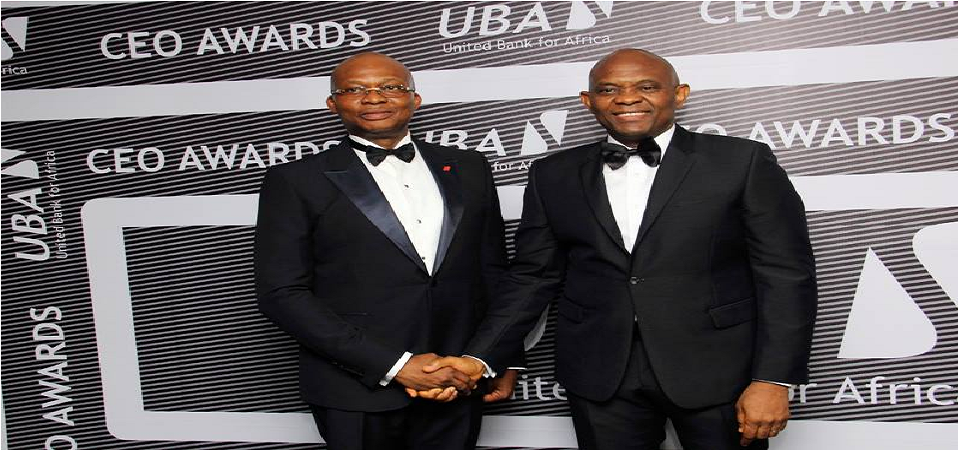
The United Bank for Africa (UBA) has gone Facebook Banking. Yes, you can do your banking while on Facebook Messenger. As Nigeria’s most expansive bank in Africa [by footprint], UBA is taking this feature to many customers in about 20 African countries in the continent.

Pan African Financial institution, United Bank for Africa (UBA) has again disrupted the e-payment space with the introduction of Master Pass ‘Quick Response’ (QR) Bot. The revolutionary solution enables the micro, small and medium enterprises (MSMEs) in Nigeria and across Africa to receive digital payments from their customers through scanning, using their Facebook account.

Developed by MasterCard International in partnership with Facebook, Master Pass ‘Quick Response’ (QR), allows payment collection by SMEs through Facebook Messenger and delivers unified and instant self-service across a range of interconnected payment solutions.

Like LEO, the acclaimed artificial intelligence payment solution introduced by the Africa’s global bank, UBA,  Master Pass ‘Quick Response’ (QR)is a a chat Bot, currently available via Facebook Messenger as Masterpass QR for Merchants.

Zenith Bank and other banks have already unveiled a similar product. Largely, the Nigerian banking sector, the most innovative in the economy, continues to redesign itself. That is why I do think no one is going to eat the banks’ lunches. They have proven to transmute and command their spaces when they need to. From Sterling Bank’s Specta to Wema Bank ALAT, we have seen these banks come up with products that would create envy in the eyes of the fintech entrepreneurs who dream to disrupt their businesses.

Today, I can say that Nigerian banks have evolved. They are indeed the best fintechs in the nation. If ALAT is a startup, it would be a category-king company. If the newly unveiled Specta is also one, we would debate the massive war chest of N10 billion for retail lending  that takes less than 5 minutes. From UBA to GTBank all the way to Ecobank (yes, Togo), we are witnessing a total redesign in the banking sector. Here, I explain how these banks have moved form the centers of the smiling curves to the edges while retaining those center pipes

MasterCard is winning a huge market base with these partnerships with African banks. The great winner at the end would be Facebook. Facebook is the platform and I expect this path to be the natural trajectory as the ICT utilities take over the lands. Once Facebook perfects the integration with MasterCard on Messenger, it would do same on Instagram and WhatsApp. Then, it would be opened to any financial institution that wants. MasterCard is a natural payment aggregator, agnostic of banking institutions. Facebook would be the platform while MasterCard would act as the “interface institution”[payment processing] and banks the hosts [the accounts]. The implication is that over time few would bother to notice the hosts, focusing more on the platforms [once you have set up an account and put your bank details, there is no need to even remember the bank again as the transactions would happen on Facebook while MasterCard handles the underneath processing with the banks]. Simply, there is nothing anyone can do but to join the ecosystem. That is the elemental feature of the Aggregation Construct.

The Future Remains Voice Banking

Yet, Facebook Banking is not the disruptive product that would redesign the sector [it is an important product nevertheless, and certainly part of the future]. Largely. Facebook banking offers only marginal value. I do not believe that many Africans would join the Bot which many banks are unveiling because we are not traditionally good on writing [Bot does not solve the illiteracy challenge in the continent]. We are “talking people” and I do not expect that to change. So, as the banks unveil Bots, they have to do what they have to do to avoid the narratives that fintechs did it before them. The real value will come when they begin to unveil voice banking. Yes, we are Africans – we like to talk. Banks need to find ways to get us to talk our banking needs.

I expect voice computing to continue to advance. Voice banking will be one of the main enterprise level applications that will be built on top of it for Africa. The banking sector in Africa must explore the opportunities. In Nigeria, for example, the BVN can be expanded to also include the voice capture. Bringing more citizens into African banking sector will require delivering services in ways they can understand. In the 21st century, one does not need to be literate to do banking.

All Together

Google is going to become the main driver of social media banking with products like Tez and Duplex. The Duplex which is an AI system that offers actual natural human-level phone calling capabilities will be the Bot that would change markets in places like Nigeria. It would handle the illiteracy equation which Bot does not have an answer because it still takes someone to read and write to use Facebook. But getting voice to work for Africa would require efforts and research investments on voice technology. That would be the challenge and also the path to the opportunity.

Vatability or Otherwise of Commercial Road Transport Industry

2

By Simon Obasi

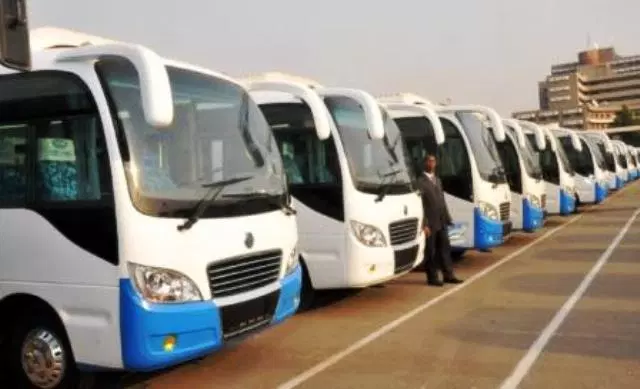
The road transport industry is huge. It is one of the most important industries in Nigeria. At the same time, it is one of the least coordinated industries that we have. This is due to excessive fragmentation and little to no regulation of industry players. Within this industry are structured and unstructured players. However, it appears that the unstructured players outnumber the structured ones. There are also big names covering most major cities of the country. It is almost impossible for a traveler not to find any of the major commercial road transport companies in the major cities. Truth be told, they have assisted the masses to get to their destinations at a fraction of airline tickets.

No doubt, you may have noticed that either at the front or side of each park of a major operator, there are over ten unstructured or unregistered operators who are loading for the same destination at significantly lower fare. Major operators complain of how much they lose to entities who they presume are not socially responsible and who pay almost nothing to the government in form of taxes. Interestingly, the existence of these other operators is a check on the excesses of the major operators as it is presumed that passengers are price-sensitive. And the reason the unstructured operators charge lower fare is not far-fetched; they carry a lot lower overhead cost, some are owner-driven while others are there for survival.

However, in my experience traversing different cities of the country from South to North, East to West, I am yet to see a single travel receipt from any of the commercial road-transport companies with VAT. My experience as an external auditor and financial adviser to one of the major players in the industry indicates that the existence of unstructured operators in this industry is a serious matter deserving attention. But this article is not to discuss the challenges of structured road transport companies but to address a critical issue of vatability or otherwise of the industry. Please note that this is solely a discussion around revenue from passengers (fares) and does not extend to haulage, carriage or courier services undertaken the industry players.

Yes, as noted earlier, I am yet to see a single travel receipt from any of the commercial road transport companies with VAT included in the fare. At the same time, I am yet to see a single unambiguous and/or unequivocal statement in the VAT Act granting exemption status to income from commercial road transport operation. In fact, in a recent reconciliation meeting with FIRS officials for one of my clients in this industry, the FIRS official stated that there is a challenge in determining the vatability or otherwise of this industry as the industry was not included in the list of vatable services as originally contemplated; at the same time, the act does not expressly include the industry as VAT-exempt or zero-rated service. More interesting about it is that most industry players do not remit VAT. While I discussed the vatability or otherwise of my client with this official, I challenged him to name even one player who pays VAT on passenger fares. The practice has been that for those who run haulage and courier services side-by-side with the regular passenger travels, they typically make returns on those other services (haulage and courier) and non for passenger fares. Unfortunately, my FIRS friend named the only publicly listed entity in this industry as compliant. Armed with 2015 and 2016 financial statements of this company, my team and I clearly demonstrated to the taxman that the company under question neither charges nor remits VAT on fares (the auditors of the company had made a statement pointing to this fact in the financial statements). And he got a whisper from his colleague when he asked that the file of that company be checked. Yea, my team concluded that he was informed that the said company is also in default (we might be wrong though). He also stated that he would surely be the last person to ask the public to pay VAT on fares if the practice has not been so.

As you may have observed, the taxman is using much illuminated torches in search of opportunities to shore up fiscal gap/deficit. And to be clear, they are going deep in this search.

While the scenario that I painted above shows the current situation, I want to make three points clear.

  • First, there is need for clarity on some of our laws. In our discussion with the FIRS official, we noted that he had had discussions with his senior colleagues in Abuja, including a director. He stated that the director was not clear of the vatability or otherwise of the industry at first, but later informed him that after escalating to experts in his office, they concluded that passenger fare is vatable on the strength of the non-exemption status in the Act. As such, where the custodians of the law are oblivious of the law, who will then know what the law states/requires? Thus, if the tax authority finds any gap in the laws, it is their responsibility to address it either via an executive bill for amendment of via relevant circulars.
  • Secondly, the commercial road transport industry needs some level of organization. As much as the fragmentation remains, structured entities in the industry will feel greater pains resulting from compliance with government policies than unstructured players. This in turn results in loss of revenue as they have to consistently price higher to keep afloat and meet government requirements. Additionally, collection of any form of taxes that is not evenly distributed among all industry participants will be considered as witch-hunting and might cripple those who comply in the long run.
  • And finally, there is need for a viable and strong pressure group for this industry. The pressure group will see that legislations and circulars that appear not to be beneficial to its members are ditched. So they have to do a lot of lobbying. It is clear that unity is indeed strength. I suggest that in response to the quest by FIRS to trigger vat collection by this industry players, the pressure group approaches the minister of transportation, have a discussion with him on key areas of concern and request for clear and complete waiver of VAT for industry players. After that, the minister can have a discussion with the finance minister for approval to waive VAT on road passenger fare. This will serve them well.

The truth remains that this industry is as important as the agri-space. It is a critical industry that is assisting the government and the masses. But if for any reason the government plans to collect VAT, the government must find a way to ensure that VAT is collected from all industry players. Anything short of that will take a lot of operators out of business as passengers will switch to unstructured players where more losses will be sustained by the government. This will be a lose-lose for all parties (except for the unstructured operators who will smile home each day).


Simon Obasi is a chartered accountant and an Associate Director at Uche Chigbo & Co. (Chartered Accountants).


Obasanjo’s Full Speech as his Movement adopts African Democratic Congress party

0

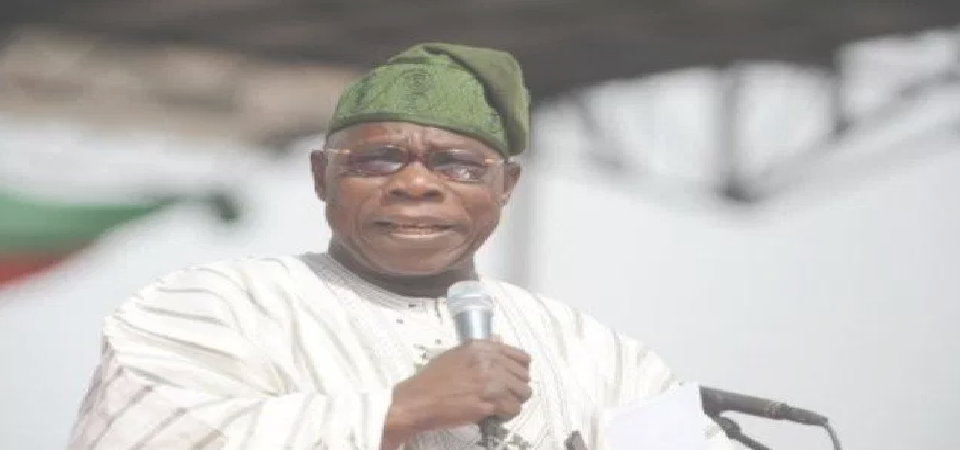
This is getting interesting – former president Olusegun Obasanjo’s Coalition of Nigeria Movement (CNM)  has adopted a party. The party is African Democratic Congress, ADC. While he may not have the resources to mount a serious political alternative, the fact remains that PDP and APC have another headache to deal with. This is happening the same day that Imo State governor, Rochas Okoroch, is accusing APC for practicing “Peoples Democratic Party kind of politics.” Add the fact that most PDP members who jumped ship to APC are now complaining, you will get the idea that ADC could be a destination. With no core values or principles, these politicians move at will: no permanent enemy, no permanent friend, just permanent interest.

Here is the full speech by Obasanjo.

Let me start by welcoming and commending the emergence of a renewed and reinvigorated African Democratic Congress, ADC, as a political party. Since the inception of Coalition for Nigeria Movement, CNM, many of the sixty-eight registered political parties had contacted and consulted with the Movement on coming together and working together. The leadership of the Movement, after detailed examination, wide consultation and bearing in mind the orientation, policies and direction of the Movement, have agreed to adopt ADC as its platform to work with others for bringing about desirable change in the Nigeria polity and governance. I congratulate the leadership of the Movement for their decision and their choice. The emergence of ADC is the beginning of hard work to continue to consolidate our democracy and to make development in all its ramifications real, relevant, accessible, popular and reaching out to all Nigerians wherever they may be.

Let me particularly thank and congratulate millions of Nigerians who harkened to my clarion call in my statement of January 23, 2018 that our anger against misgovernance, poor performance, condonation of misconduct, incompetence, destabilising nepotism, cluelessness, denial and scapegoatism, lack of understanding of dynamics of internal politics which have led to greater disunity, inequity, injustice, senseless killings and destruction, must not be like the anger of the cripple but a positive anger coordinated and directed to put an end to the era of impotence and for Nigerians to join hands to seek effective solution through coalition, cooperation and togetherness that will take Nigeria to where God has created it to be. You registered in millions for the Coalition of Nigeria Movement, CNM. Your actions, enthusiasm and commitment, with those of others and other organisations – political parties, civil societies, social and cultural organisations – have made possible the new dawn that the ADC will usher in. With the emergence of ADC as a political party for the Movement and its associates and in line with my clear position which I have often repeated, the first phase of my job is done and I will not be a member of the Party but as I have always done since I quit partisan politics in 2014, I will keep alive and active on Nigerian and African issues and interests and I will be open to offering advice to any individual or organisation for the unity, development and progress of Nigeria and indeed of Africa. I will, of course, continue to exercise my right to freedom of speech where and when I consider necessary in the interest of Nigeria, Africa and humanity. The second phase will involve galvanisation of all like-minded forces for enthronement of new order in Nigeria.

In recommending the CNM to join the ADC, let me give you some points that are of interest. From the beginning, CNM is not a political party but a popular grassroots movement to stimulate the interest and participation of youth and women in particular in bringing about change in democratic dispensation, governance and development in Nigeria in such a way that power addicts will be forced to yield places for new entrants and participants in the power equation in the country. They will sanitise the system. With the ADC, embracing the policy of 30% youth of under 40 and 30% women in all organs of the Party, a significant paradigm shift has been brought about in the power equation. The ADC is a reformed and reinvigorated party, it will embrace all the features and policies which make CNM attractive and a source of hope and inspiration to millions at home and abroad. The ADC welcomes associates, other parties, groups and civil society organisations such as cultural, township unions and social organisations and interests. No former political party, movement, social or cultural organisation should claim the sole ownership of the renewed ADC. In name, it is relatively old but in establishment, organisation, membership, policies, programmes, orientation and focus, it is new. If this is not understood, accepted by all and made the foundation and pillar of the political party, it will be starting on a very shaky foundation and it will soon fall. I will advise others to join this political party platform to usher in a new dawn for Nigeria, but I may not be able to advise anybody to join PDP or APC no matter what window-dressing reformation they may claim. Although PDP would seem to have realised its mistakes of its immediate past of the last eight years or so, its present evolution would, by itself, not give confidence to well-meaning Nigerians who are interested in a new Nigeria in the hands of God that will have leadership, governance, development and values within our culture as its guiding principles with the attributes of honesty, integrity, patriotism, love, unity, industry, incorruptibility, good neighbourliness, faithfulness, trust, courage and love and fear of God held aloft. PDP offered apology without disciplining those who set Nigeria on a course of ruin and some of them are still holding leadership roles in their party. Nigerians may forgive, but Nigerians should never forget; otherwise they will be suffering from amnesia and the same ugliness may raise its head again. APC, as a political party, is still gloating and revelling in its unrepentant misgovernance of Nigeria and taking Nigerians for fools. There is neither remorse nor appreciation of what they are doing wrong. It is all arrant arrogance and insult upon injury for Nigerians. Whatever the leadership may personally claim, most Nigerians know that they, Nigerians, are poorer today than when APC came in and Nigeria is more impoverished with our foreign loan jumping from $3.6 billion to over $18 billion to be paid by the present and future generations of Nigerians. The country is more divided than ever before because the leadership is playing the ethnic and religious game which is very unfortunate. And the country is more insecure and unsafe for everybody. It is a political party with two classes of membership.

Before I leave this point, it is pertinent to make the point that PDP and APC are not actually made of men and women who are totally evil. There are sprinkles of good men and women out there and among them. But as political parties and the government they led or they are leading in the last eleven years, they have failed and failure should neither be hoisted for embracement nor reinforced. What must be done is to take what is best from all to come together on a new alliance platform that will take us to the promised land. There must be basic and fundamental ground for change and for people to change. What is not desirable is to take the leprous hand of either PDP or APC as the instrument to clean Nigeria up. The clean fingers in either of them can and must be grafted to the clean hands of new entrants and participants to move up and move on and that is what I understand the reinvigorated party platform is all about – change, new order and progress.The party, ADC, as I understand it, is neither based on the immediate past, condemnable records of PDP as a ruling party in Nigeria nor on the present disastrous and distabilising performance of APC. It is a new platform and a new page in our political history. Some of us must hold ourselves as watchmen and watchwomen for the nation without necessarily belonging to any political party as genuinely concerned and interested citizens and statesmen and stateswomen beyond the ambition of office and enticement of grandeur of position or fortune.

Nigerians must keep their eyes wide open, their ears quite attentive, their minds very clear, their hands very clean and must not remain dumb in the face of atrocities and impunities of the governors against the governed. Those who govern us at all levels must be made to realise that it is our collective rights and sovereignty that they hold in trust for us and to be used for the good of all of us and with all of us having interest and having a stake in how we are governed. It is our God-given right and we must not allow the abuse of it. In the past, we have laid back and we have been taken for a ride. How did we allow Nigeria to be run by K34 without a murmur? Of course, that was followed by the running of Nigeria by Ijaw nation with four women and now by kith and kin and we are still jubilant in the face of atrocities, insecurity, disasters and degradation politically, economically and socially. When I was in school, tolerating what we have tolerated in the past twelve years with our tails within our legs like frightened dogs, we would be asking if we are collectively mesmerised and we needed to go to ‘aro’ for mental or psychological examination.

Some have asked cynically and skeptically if there would ever be change. I can understand their cynicism and skepticism. If we are doing the same thing and we expect a different result, we would be fooling ourselves. As I said earlier, I believe that what we are having is new with some paradigm shift in power equation involving youth and women. The grassroots involvement which CNM has advocated must be maintained consistently. Inclusiveness must take care of over 25 million Nigerians living with disability so that they can make meaningful contribution to societal discourse and development. They must be made part of popular participation. Elitism must be drastically reduced. All the political parties that have emerged since the present dispensation in 1999 have been too elitist, and have gradually lost internal democracy, leaving room for corruption and dictatorship. The greatest lacuna in political party administration in Nigeria since the present dispensation is the ownership of the political party through regular contribution of the members of the party for the upkeep of the party. Worse still is what PDP has now accepted as part of its failure and disappointment of the nation which is looting government treasury to finance individual and party elections. Unfortunately, APC has followed suit. To curb corruption, primary elections should cease to be by delegates but by all card-carrying and financial members of the party within their constituencies. This will save lives as many people have died by being shepherded to a central location as delegates to vote at primaries. It also introduced corruption into the system. At one of the PDP primaries within the last eight years, one candidate distributed $10,000 per delegate, the one who distributed $15,000 per delegate won the primary. It was not necessarily on merit but certainly, dollar talked.

Concluding my point on corruption in politics particularly at the primary elections level, there must be strict control of campaign funding and transparent accounting by the Independent National Electoral Commission, INEC, of all funds contributed and all funds utilised by individuals and political parties for campaigns. I was shocked when an insider in the PDP told me that the amount of money the party used for 2015 elections would be in the neighbourhood of $3 billion. It was all directly or indirectly from the government treasury.

The change we expect to be forthcoming, realistic and effective, will have to come from all of us – citizens, political parties, executive, legislature, judiciary and electoral organisations. We must stop the blame game and must all realise that Nigeria will be as good as we all make it to be – a good, effective, efficient, performing, equitable, fair, just, peaceful, secure, prosperous, united, wholesome and God-fearing country. I stand on the platform that change is possible and human beings are agents of change and we have seen that in our country both for good and for ill. I remain positive and optimistic. If we believe we can, we will. Political parties must do their own with a country-centered and value-laden philosophy, orientation and service. We should have one INEC for all elections at local government, State and national levels. We have all seen the ridiculous phenomena of local government elections conducted by States’ so-called INEC being always almost completely won by the ruling party in the State. We all know it is a sham. The National Assembly must rid itself of corruption; and it can do it. It must also make its remuneration relevant to Nigerian economic and social reality. It can also do it. Then it must make laws and amend the Constitution to have one INEC for all elections in the country, strict and scrupulous funding and accounting of all electoral campaigns and all elections. The INEC must be given power to supervise, control and regulate campaign funds and funds and contribution to political parties. The National Assembly must amend the Constitution to allow Nigerians in diaspora with current Nigerian passports to vote in all Nigerian elections at Nigerian Embassies abroad. The National Assembly should also legislate 30% youth of under 40 and 30% women into all organs of political parties and into all institutions of governments. It should be a great step forward.

The Executive which emerges on the platform of one political party must avoid ‘winners take all’ especially in utilising the best brains available in running the affairs of the country. While the government of the day must be run essentially by the political party that wins the election, there must be consultation and cooperation especially on national issues of unity, economy, security and foreign affairs. There must also be minimum acceptable national position on these issues and which will also allow members of other parties that are good enough to be utilised by the government without necessarily running a government of so-called national unity. Rather, all governments should be government of national common interest.

If we get the platform right, we will get the system right particularly in running the government which should be participatory and all-encompassing, not exclusive, discriminatory but talent-hungry and talent-targeting for the good of the country. Governance must not be myopic, restrictive and limited to circle of tribe, friends and blood relations but open-armed, transparent, open-minded, accommodating and seeking for the best wherever the best can be found to achieve the best for the country. We must all be guided and inspired by Nigerian Dream which must be inclusive, elevating and giving hope, great future and conquering spirit to all Nigerians.

In all situations, let us stand for good leadership, good governance, all-round development and enduring and authentic values within our culture. If we get it all right, our demography will be an asset and not a liability nor indeed a disaster. What is more, our democracy will move from strength to strength dynamically, inclusively, workingly, prosperously, equitably, communally and satisfactorily for all, by all and with all. When democracy goes symbiotically with development as they should, a happy, wholesome, united and inclusive society emerges which is secure, formidable, prosperous and respected within the comity of nations. That is God’s plan for Nigeria which Nigerians must make manifest. There is only one reason for where we are now, it is leadership failure.

My points are borne out of my experience, learning, knowledge and interaction with others. Let us use these ideas as the basis for discussing and debating the course for advancing democracy and development on a sustainable trajectory for Nigeria founded on good leadership and good governance with welfare, well-being and progress of all.

Once again, I congratulate all members of Coalition for Nigeria Movement, all the political parties and civil society organisations that have adopted ADC as a political party platform to move Nigeria up and forward and I wish them success for now and the future. The eyes of the nation and the world are on you to show that with people and organisation of like mind, a real difference is possible and you will make it. I wish you well. But always remember that Nigeria belongs to you as it belongs to those in power. If you fail to use the potent weapon democracy offers you and that is your vote, then you have yourselves to blame. You can move on to the next stage in the democratic advance for change, unity, security, stability, good governance, prosperity and progress. So may it be for Nigeria.

President Olusegun Obasanjo