DD
MM
YYYY

PAGES

DD
MM
YYYY

spot_img

PAGES

Home Blog Page 7162

Working or Living Abroad, Pillars to Build Thriving Business in Nigeria

15

You live in London or New York or anywhere for that matter. You have accumulated capabilities and want to start a business in Nigeria. But you do not want to return to Nigeria to run that business. For most people, when they follow through and invest back home, the outcomes do not usually turn out well. The cases of people cheating people, people paid but not working hard and sustained erosion of assets abound.

Yet, there are stories where things have worked. The interesting thing here is really the foundation you have built for that business. From my personal experience, the most important thing is Structure. That means how you have structured that company to give those workers a sense of belonging, as they say in Nigeria.

As I noted in a piece on my experiences in the Johns Hopkins University, you can indeed build a business in Nigeria while living in diaspora. The same applies to those that have jobs but also want to invest by founding a company by the side. It is not absolutely necessary that you must be the executor of a burning business vision you have.

Then I graduated, but I was very unhappy to be leaving. It was tough as there was no practical way to delay it as my advisor has noted that I was “ready” to depart having demonstrated scholarship in my area. I was making good money from fellowships and the extra went into funding Fasmicro in Nigeria. I had started it in Hopkins, hiring 13 bright young Nigerians remotely. In the day, I was a Hopkins student; in the night, I was a startup founder in Nigeria.

From my experience, here are 8 Pillars to consider:

  1. Structure: When I started Fasmicro, I did not want my team to work for me. I wanted them to work for themselves and their families. I did a very simple thing: I gave team members part of the company. I explained to them that if we do well, we would have great Christmas. But if we do not, everyone goes for Christmas with nylon bags. With that decision, I made them part-owners with correlated and aligned interests in the business. I knew they would do all to make sure we do well because if the company wins, they win.
  2. Bonus: I instituted a bonus system which ensures that a certain percentage of our income is shared among our teams. The implication is that everyone has an idea that a good year would be a good Christmas. That bonus remains till today and is a key motivator to my teams making decisions to do more with less. A graduate reminded another that wasting printer ink was an attack on his bonus – he wanted it stopped! The reasoning is that any money saved by the company is money that comes back at the end of the year.
  3. Leadership: Make someone a boss and clearly a leader. Do not try to micro-manage these graduates. If you do, you would struggle because you would cage their capacities to innovate and execute. Give them a little freedom. You would not regret it. Make sure you have someone that is answerable because that will help you to ascertain progress and improve things. We had an invitation few years ago from a major foreign oil company. We sent a 23-year old graduate to make the presentation. The MD of the firm noted that he was the youngest ever presenter he has seen in his position. We do allow guys opportunities to fail and win. We got the job. The temptation would have been to show presence because you may think only you can deliver.
  4. Execution Roadmap: Because you would not be around to run the day-to-day operations of the business, it is very important you articulate the mission and follow it with an operational manual on how to execute it. This is not a business plan. This is simply downloading your vision in a way that your leadership can easily interpret and execute it. Sure, you need to give them flexibility but setting up the stage makes things very easier. This will save you time and give you the peace of mind to continue to focus on your other things.
  5. Evolve the Mission: As you receive data during business reviews, look for things which are working. Then move deeper into those things and expand them where necessary. This means that where necessary, you can depart from the original business and move into something new. We have done that many times. When we noticed that making apps was doomed in Nigeria, we immediately pivoted to building solutions that solve real frictions in the market.
  6. Beyond Lagos: Everyone wants to be in Lagos. That is fine depending on the business you run. But some businesses do not need to be in Lagos. There is a very huge advantage outside Lagos, Abuja and Port Harcourt in Nigeria. A 3-bedroom flat in a choice area in Owerri goes for N350k while a similar one in Lagos runs into millions of Naira. When men and women start planning to raise families, those things matter. In Lagos, you need to pay more to compensate for the differences on house rents. So, based purely on housing, you can attract higher quality people because places like Owerri offer better value to whatever you pay them compared with Lagos and Abuja. Again, this depends on your business – there are some sectors you must be present in the big cities to thrive. We started with an office in Ikeja but moved to Owerri as our business does not require being in Lagos.
  7. Networks: When we started, we had business development managers in major Nigerian cities. They worked from their laptops. That helped us to save costs and made it possible to have the capacity to send a team member to client across major cities in the country. The saving we got from not opening branch offices went into paying people better. There was trust that team members would actually work. We measured things by asking for daily practical updates/reports.
  8. Invest in Training: The biggest challenge is that most team members may not be ready when they resume. We were one of the earliest companies that started making Android apps when everyone was for BlackBerry in Nigeria. We invested on all kinds of materials to help our team to acquire the skills. We also developed strong partnerships with Federal University of Technology Owerri (FUTO) and Imo State University.

Largely, you can build a thriving business in Nigeria even when not physically present in that office. You can live in diaspora and execute a mission back home. And you can be working in a bank and found an IT firm. The key is making sure that people come to work for themselves and their families and not just you. Yes, share the fun and people will connect to execute the mission.

Agtech Opportunity to Relocate to Switzerland with CHF 30,000

4

Zenvus was invited to apply for this – apply to move to Switzerland. We do get a lot of it. Of course, no one is moving it out of Nigeria. Buy hey, there may be people interested to get CHF 30,000 and move to Switzerland. It is mainly for companies in the agriculture technology, agriculture, food and biomass categories.


Are you a competitive company or start-up in the food, agriculture or biomass sector? Have a look at our 2 programs and choose your preferred option!

If you are you looking to set up business in Switzerland, then the Relocation Program is for you! Winners receive a cash prize of CHF 30 000, as well as access to free agricultural land, a new experimental greenhouse and state-of-the-art laboratories in Fribourg. Welcome to Switzerland!

If you are looking to expand your operations in Switzerland and strike up new partnerships with Swiss institutions and firms, then the Remote Collaboration Program is for you! The winners will enjoy access to an extensive network of professionals with the right contacts and first-rate inside knowledge of their respective industries. The prize also includes a one-week, all-expenses-paid exploratory trip to Switzerland. Swiss companies are lining up to work with you!

This is the link to apply. Deadline is May 31.


Agri & Co challenge is a call for projects initiated by the State of Fribourg, located in the heart of Switzerland. Aiming at fostering collaborations, creating new value chains and enabling innovative initiatives which will in turn contribute to a sustainable economic development, Agri & Co will support 15 promising projects, offering up to 500 000 Swiss francs in total alongside several other benefits. Companies from all over the world can submit their projects through one of our two programs; the “Relocation Program” or the “Remote Collaboration Program, which have been specifically developed to fulfill the needs of different company profiles and thus maximize the innovation and collaboration potential.

Zenvus precision sensors in farms


The Greatest Mistake – Attaining PERFECT Product Vision

0

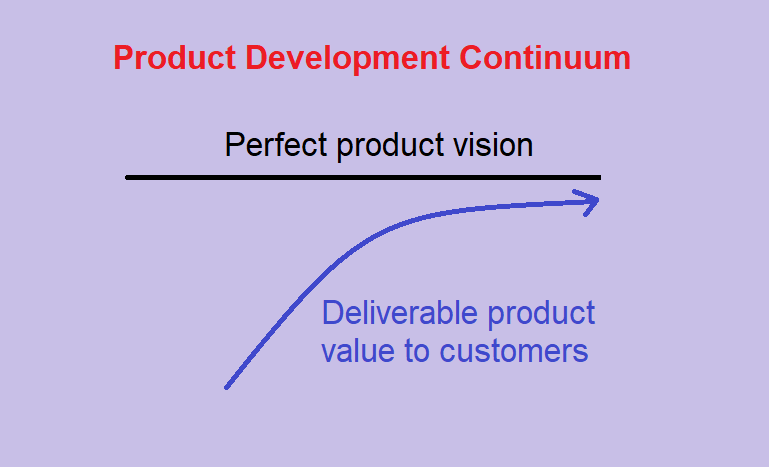
The greatest phase to attend in any product vision is PERFECTION. Reaching that point is a huge mistake. Yes, any company that does that dies. And because no great company ever does, they do exist to continue to serve customers. The whole essence of doing business is to perfect product visions on the way of fixing market frictions for clients and customers.

And if you think the product is perfect, it means you would cease to innovate. And doing that creates paralysis because the tastes of customers are not static. In the age of Customer Expectations and Perceptions, pursuing that “perfect product vision” is the element that should keep you working. Never imagine that you have a “perfect product” because if you do indeed think that way, you would lose your market. Why? You would not have iterations and new versions.

In this videocast, I discuss why organizations must focus on developing products and services that go beyond the needs of customers to their expectations and perceptions. Focusing on the needs of customers is a recipe for disaster. The whole desire must be to deliver products and services at the level of customer perception where they are offered products and services which they might not have even imagined would be possible. But the day they see the products they will say wow: That is the thing I have been thinking. This also explains the limitations of focus groups because focus groups are  tethered to what the customers think they need. Perception of customer level  service is offering something which could not have been requested during focus groups, because such products will not come into the imaginations of the people being studied.

How Two Nigerian Companies are Growing with One Oasis Strategy

0

In organizations around the world, resources are scarce. Firms have to optimize the factors of production as they create products and services while pursuing growth and profitability. The sustainability of any firm depends on the capacity to generate profit. Just as oases are very important in deserts for the survival of their inhabitants, products are vital for firms. Without products, firms die. Interestingly, the very essence of operating companies – fixing frictions in markets – rests on the notion that a company must create the right products to serve the needs of customers. Indeed, due to the imperfect nature of the relationship between demand (the buyer) and supply (the seller), companies exist as intermediaries to “remove” frictions between them.

In other words, if markets have been perfect, we would not need many industries and the companies that operate therein. There would not be a need for a bank, if a man that has $100, seeking 12% annual lending rate can seamlessly find another man that wants to borrow $100 at 12% interest rate. Suddenly, a bank emerges to “remove” the friction by collecting the $100, paying the depositor the 12% interest rate, and then lending it to the other man at 18%. The difference of the 6% is the market imperfection cost, which the bank earns for the services it has provided to remove the friction, primarily information paucity.

A company’s position in the largely imperfect market is determined by its products which help to remove market frictions. The best product in a firm anchors its survival, just as oasis does in a desert. And every business must discover its oasis, if it hopes to thrive. Discovering the oasis is very important because it would help the company to pursue optimal allocation of the factors of production.

For competitiveness, a company can allocate resources to support its best product (the oasis), providing a pipeline where other internal products can feed from the success of that best product. Simply, in some sectors, if you build your investment around the best product, you will find success, because those investments will have a clear internal “customer”, reducing market risks. In other words, if your new investments are geared to support the best product, and the best product is doing well, it implies the risks on the new investments will be easily managed. Provided the best product continues to flourish, good return on the new investment is assured (i.e. the customer exists, irrespective of the external market). That is the One Oasis Strategy which I have formulated in my practice.

In the One Oasis Strategy, the key element is to align business investment to favour the best product in the company on value and financial return which over time would help the firm compete better externally. It is firstly an inward looking management system, and offers a firm an opportunity to test strategies, models, business systems and production processes, perfecting them before they are launched for outside customers. Yet, the best product is not static. Firms must renew the evaluation process from time to time to discover the present best product. That would help drive business level strategies as investments decisions are made.

The One Oasis Concept

The One Oasis Strategy is the proposition that if the best product drives key investments in a firm, it has the capacity to help other products in the business. Other products would feed from the best product, and on overall, the company would flourish. By removing the inherent risk of external markets, the best product becomes the first and the most important customer for that new investment and in the process eliminates investment risks. It makes firms move very fast because you do not have to even consider external customer opinion since the products are not made for them. Indeed, the time wasted on surveys, focus groups and market research works are eliminated because there is a customer right inside the firm.

This strategy develops marketing positioning not by looking at external market forces but by understanding what is happening in the business, and how it could grow by first improving its best product, even as that new investment could result, in future, a product for the external customers. Anchoring on the best product, the other products are now like the animals that return to the oasis for water, or the humans that depend on the oasis for habitat. Provided that the oasis is there, and doing well, their survivals are assured. Yet, as those new products do well, they could find new customers, beyond the first customer (that best product). That means you can (later) introduce them to the external markets as independent products even when they are supporting the best product.

Finding the best product in a business would involve looking at many indicators like financials, market share and brand. In this age of hyper-competition, need to invest massively to have category-leading products. That requires deploying resources to make them the best.

Application Examples

Amazon: Amazon is an ecommerce company with a massive user base. It supports billions of transactions in a year and needs computing resources to keep its portal running. Amazon could have called IBM for cloud computing infrastructure for its ecommerce operation. Rather, Amazon decided to build one in-house. The ecommerce is the oasis and the cloud is like the animal (in a desert) that finds habitation from the oasis. Provided the ecommerce is growing, the investment in cloud has minimal risk. The first customer to the cloud business was ecommerce and that means Amazon does not have to worry if there is any external customer for the cloud services. Amazon does not need to check market dynamics to invest in cloud provided its ecommerce business is doing well.

But interestingly, after time, Amazon did find opportunities in the external market to sell its cloud services. Those services are now called Amazon Web Services (AWS). The oasis (the ecommerce) has been served by the new product (cloud) and now that new product is also serving external customers.

Samsung: In the global semiconductor business, Samsung is one of the most prominent companies. Others are Chartered, Intel, TSMC and GlobalFoundries. While Intel makes chips it sells to customers to be bundled in products, it does not have major direct customer-end products of itself. Others are largely pure foundries. But Samsung is different: it makes chips, fabricates them, and has products in the markets that use them. The Samsung Galaxy series is the best Samsung product, an oasis, which the semiconductor business is serving at the moment. Samsung can afford to invest in new semiconductor areas like memory chips and OLED display irrespective of what the market trajectories are. Why? The first customer to Samsung semiconductor business is Samsung mobile devices unit. This removes investment risks for the semiconductor as the major customer is in-house. And over time, those new semiconductor products are made available for external customers.

Application Cases

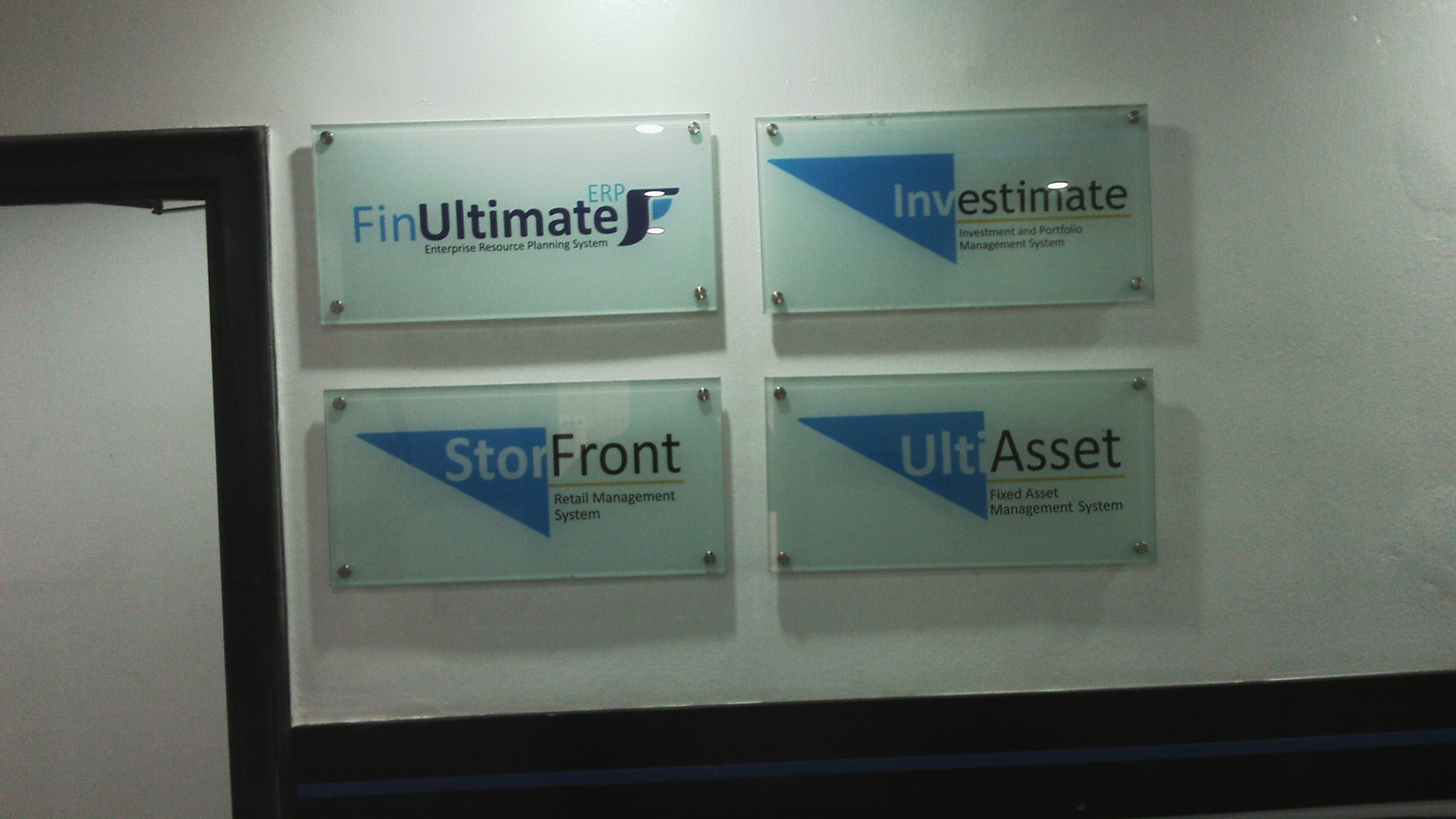
We have used the one oasis strategy in our works with many clients in Africa. For Lagos-based software company, ATB Techsoft Solution, we used the strategy to redesign its investments, pushing the company to focus on its best product (FinUltimate) by unifying developments and capital around it. The product has emerged as a category-king in the local software market. For Abuja-based asset leasing firm, Amaecom, we worked with the company to commit its services and future products to make its best product (BuyNow PayLater) the best possible. These companies have seen dramatic growths: Amaecom has grown to 30 branches with operations in two countries outside Nigeria while ATB Techsoft Solution has quadrupled revenue in two years.

ATB Techsoft Solutions

In summary, as we work with our clients in Africa, we have found that a focused strategy to make the best product better is critical. Driving investment decisions to anchor solely on the best product positions a firm to have the necessary capabilities to compete and win even though possibilities to exit those investments into separate products remain in future.

Amaecom plaque to me and my firm


Nigeria’s $22.3 Billion Migrant Remittance: The Real Economics

0

Does a growing migrant remittance inflow provide any insights on the economic and development state of recipient nations like Nigeria? To what extent does the state of the recipient nation stimulate remittance growth for a given period?

For decades, economists have used diverse metrics for measuring wealth creation, human development and economic growth for nations. Values like Gross Domestic Product (GDP) have been used for years but it has also come under serious scrutiny, as experts query its present-day usefulness and relevance. Globalization, technological growth and changes in lifestyle have now provided nations several new – albeit more efficient – measures of economic performance and state of development.

In 2017, the money transfer industry was excited about the growth of remittances to Sub-Saharan Africa, which peaked at $37.8 billion, led by Nigeria with $22.3 billion, according to the World Bank. While this is hailed as great news for Fintech and albeit the Nigerian economy at large; the conversation on the economic impacts of remittances (both financial & social remittances), is very double edged! In spite of the apparent economic benefits, high ranking recipient nations like Nigeria have many reasons to worry. This is because the seemingly good growth in migrant remittances is underlied by the equivalent growth in mass emigration that highlights a bigger problem.

I postulate that migrant remittances may be the new GDP in a distinct shape; a quasi-measure of economic growth and even development within a country.  If you don’t agree; compare the GROWTH in migrant remittance inflows from the year 2000  to 2017 in Nigeria (1,500%), to that of four random countries; United States (50%), Japan (253%), and South Africa (122%).

Furthermore, with Nigeria (190 million people) recording $22.3 billion worth of inflows in 2017 – one of the highest in the word – which other countries have huge numbers in absolute figure and how does their economy compare? Philippines with 103.3 million people (remittance = $32,795 billion), Pakistan with 193m people (remittance = $19,801 billion) Mexico with 127.5 million people (remittance = $30,534 billion).

Undoubtedly, migrant remittances stimulate local demand for goods and service, and often stand as a viable source of foreign exchange. However, if growing financial remittance over these years correlates with increased migration, and also doubles as a pointer to the steepness of the economic divide (income levels, social welfare and standard of living) between the receiver nation and the source nation(s), then large remittances may be a Trojan horse for recipient nations. This scenario shifts the strategic question for nations like Nigeria. It highlights the need for radical improvements in the standard of living, which would cob emigration, as opposed to the superficial concern of lowering absolute cost of remittance in order to increase, the volume. While savoring the many benefits of diaspora financial remittances made possible by emergent payment technologies, it’s also important to note that its continuing growth could be indicative of worsening economic conditions.

What of “Social Remittance”?

As the remittance blessing/anomaly is adjusted, there is also an exigent need to balance high financial remittance with equivalent volume of “Social Remittance”. As a top beneficiary of financial remittances, Nigeria should also champion Migrant Social Remittances, which is the reverse flow of ideas, skills, values and knowledge from migrants to their home country.

The Nigerian Ministry of Foreign Affairs recently launched a great initiative to support Nigerian Diasporas looking to contribute to the home economy. Broadly, that initiative resembles a channel for some degree of social remittances.  How sufficient could it be? It may be analogous to using a single Fintech platform for the $22. 3 billion remitted to Nigeria in 2017. I well believe that the potential social remittances to Nigeria, if quantified will be equivalent to or higher than the financial remittance of $22.3 billion and there should be market-driven solution for capturing that value.  As we strive to capture currently forgone social remittances, the pertinent question remains; why does Nigeria have one of the highest levels of migrant remittance in the world? And why has it been on the rise since the last 18 years.

A poverty Link? Yes!

 Wide spread, systemic poverty traps! The economic and development concept of poverty traps describes people who can neither “raise” (earn or save) sufficient capital to liberate themselves, nor ‘find” capital (through borrowing or aid) to support self-growth. They are therefore lost in a vicious, endless cycle of insufficiency. There are studies supporting the postulation that remittances rarely support meaningful investments in receiving countries, as they are typically geared toward consumption. One World Bank report supported the notion that remittances are counter cyclical (compared to foreign Aids and FDI), since they grow in times of economic downturn and natural disaster (and relatedly decline in times of boom in home countries). This is a pointer to the relationship between poverty, emigration and remittances and why Nigerian has been on a continuous growth trajectory for 18 years.

In Nigeria the Uperclass-middleclass-lower class social classification is appearing unsuitable for depicting the nation’s economic strata.  Rather we might have The Rich; The Poor and the “Trapped Poor”. Nigeria’s “trapped poor” are the hundreds of millions of people who are poor in Human Capital, Financial Capital, Infrastructure Capital and Knowledge Capital and whose chances of overcoming those barriers are extremely low. There have been some direct attempts at alleviating poverty in Nigeria, some of which were misguided and ill-designed. But the great tragedy is the politicians’ misconception that traditional efforts will be sufficient in rescuing the trapped poor. Since that misconception has consistently failed, the outcome has been mass emigration. The sheer inefficiency or insufficiency of decades of economic interventions in Nigeria – that breeds citizen frustration, emigration- and eventually remittance – will continue to instigate wide spread impoverishment.

Therefore, the hard questions for Nigeria amidst her booming remittance market are many. How can growing remittances help to inspire development at home and in turn, cub the emigration that feeds it? Also, how will the lost benefits of “Social Remittance” be properly harnessed?

From the impoverishment and frustration that inspires emigration, to the eventual remittances of foreign income to the home country and the ensuing argument on their costs/benefits; it appears Nigeria is entangled in a complex economic-development phenomenon that calls for a serious but presently absent debate.

Chijioke MAMA is the Founder of Meiracopp Nigeria Limited (MNL) and a Doctoral Researcher at the University of Port Harcourt (m.chijioke@meiracopp.com)