DD
MM
YYYY

PAGES

DD
MM
YYYY

spot_img

PAGES

Home Blog Page 7163

How Two Nigerian Companies are Growing with One Oasis Strategy

0

In organizations around the world, resources are scarce. Firms have to optimize the factors of production as they create products and services while pursuing growth and profitability. The sustainability of any firm depends on the capacity to generate profit. Just as oases are very important in deserts for the survival of their inhabitants, products are vital for firms. Without products, firms die. Interestingly, the very essence of operating companies – fixing frictions in markets – rests on the notion that a company must create the right products to serve the needs of customers. Indeed, due to the imperfect nature of the relationship between demand (the buyer) and supply (the seller), companies exist as intermediaries to “remove” frictions between them.

In other words, if markets have been perfect, we would not need many industries and the companies that operate therein. There would not be a need for a bank, if a man that has $100, seeking 12% annual lending rate can seamlessly find another man that wants to borrow $100 at 12% interest rate. Suddenly, a bank emerges to “remove” the friction by collecting the $100, paying the depositor the 12% interest rate, and then lending it to the other man at 18%. The difference of the 6% is the market imperfection cost, which the bank earns for the services it has provided to remove the friction, primarily information paucity.

A company’s position in the largely imperfect market is determined by its products which help to remove market frictions. The best product in a firm anchors its survival, just as oasis does in a desert. And every business must discover its oasis, if it hopes to thrive. Discovering the oasis is very important because it would help the company to pursue optimal allocation of the factors of production.

For competitiveness, a company can allocate resources to support its best product (the oasis), providing a pipeline where other internal products can feed from the success of that best product. Simply, in some sectors, if you build your investment around the best product, you will find success, because those investments will have a clear internal “customer”, reducing market risks. In other words, if your new investments are geared to support the best product, and the best product is doing well, it implies the risks on the new investments will be easily managed. Provided the best product continues to flourish, good return on the new investment is assured (i.e. the customer exists, irrespective of the external market). That is the One Oasis Strategy which I have formulated in my practice.

In the One Oasis Strategy, the key element is to align business investment to favour the best product in the company on value and financial return which over time would help the firm compete better externally. It is firstly an inward looking management system, and offers a firm an opportunity to test strategies, models, business systems and production processes, perfecting them before they are launched for outside customers. Yet, the best product is not static. Firms must renew the evaluation process from time to time to discover the present best product. That would help drive business level strategies as investments decisions are made.

The One Oasis Concept

The One Oasis Strategy is the proposition that if the best product drives key investments in a firm, it has the capacity to help other products in the business. Other products would feed from the best product, and on overall, the company would flourish. By removing the inherent risk of external markets, the best product becomes the first and the most important customer for that new investment and in the process eliminates investment risks. It makes firms move very fast because you do not have to even consider external customer opinion since the products are not made for them. Indeed, the time wasted on surveys, focus groups and market research works are eliminated because there is a customer right inside the firm.

This strategy develops marketing positioning not by looking at external market forces but by understanding what is happening in the business, and how it could grow by first improving its best product, even as that new investment could result, in future, a product for the external customers. Anchoring on the best product, the other products are now like the animals that return to the oasis for water, or the humans that depend on the oasis for habitat. Provided that the oasis is there, and doing well, their survivals are assured. Yet, as those new products do well, they could find new customers, beyond the first customer (that best product). That means you can (later) introduce them to the external markets as independent products even when they are supporting the best product.

Finding the best product in a business would involve looking at many indicators like financials, market share and brand. In this age of hyper-competition, need to invest massively to have category-leading products. That requires deploying resources to make them the best.

Application Examples

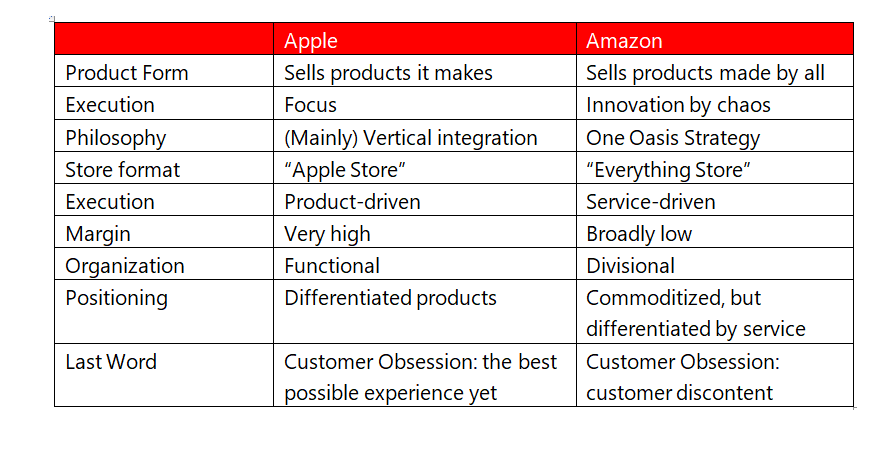
Amazon: Amazon is an ecommerce company with a massive user base. It supports billions of transactions in a year and needs computing resources to keep its portal running. Amazon could have called IBM for cloud computing infrastructure for its ecommerce operation. Rather, Amazon decided to build one in-house. The ecommerce is the oasis and the cloud is like the animal (in a desert) that finds habitation from the oasis. Provided the ecommerce is growing, the investment in cloud has minimal risk. The first customer to the cloud business was ecommerce and that means Amazon does not have to worry if there is any external customer for the cloud services. Amazon does not need to check market dynamics to invest in cloud provided its ecommerce business is doing well.

But interestingly, after time, Amazon did find opportunities in the external market to sell its cloud services. Those services are now called Amazon Web Services (AWS). The oasis (the ecommerce) has been served by the new product (cloud) and now that new product is also serving external customers.

Samsung: In the global semiconductor business, Samsung is one of the most prominent companies. Others are Chartered, Intel, TSMC and GlobalFoundries. While Intel makes chips it sells to customers to be bundled in products, it does not have major direct customer-end products of itself. Others are largely pure foundries. But Samsung is different: it makes chips, fabricates them, and has products in the markets that use them. The Samsung Galaxy series is the best Samsung product, an oasis, which the semiconductor business is serving at the moment. Samsung can afford to invest in new semiconductor areas like memory chips and OLED display irrespective of what the market trajectories are. Why? The first customer to Samsung semiconductor business is Samsung mobile devices unit. This removes investment risks for the semiconductor as the major customer is in-house. And over time, those new semiconductor products are made available for external customers.

Application Cases

We have used the one oasis strategy in our works with many clients in Africa. For Lagos-based software company, ATB Techsoft Solution, we used the strategy to redesign its investments, pushing the company to focus on its best product (FinUltimate) by unifying developments and capital around it. The product has emerged as a category-king in the local software market. For Abuja-based asset leasing firm, Amaecom, we worked with the company to commit its services and future products to make its best product (BuyNow PayLater) the best possible. These companies have seen dramatic growths: Amaecom has grown to 30 branches with operations in two countries outside Nigeria while ATB Techsoft Solution has quadrupled revenue in two years.
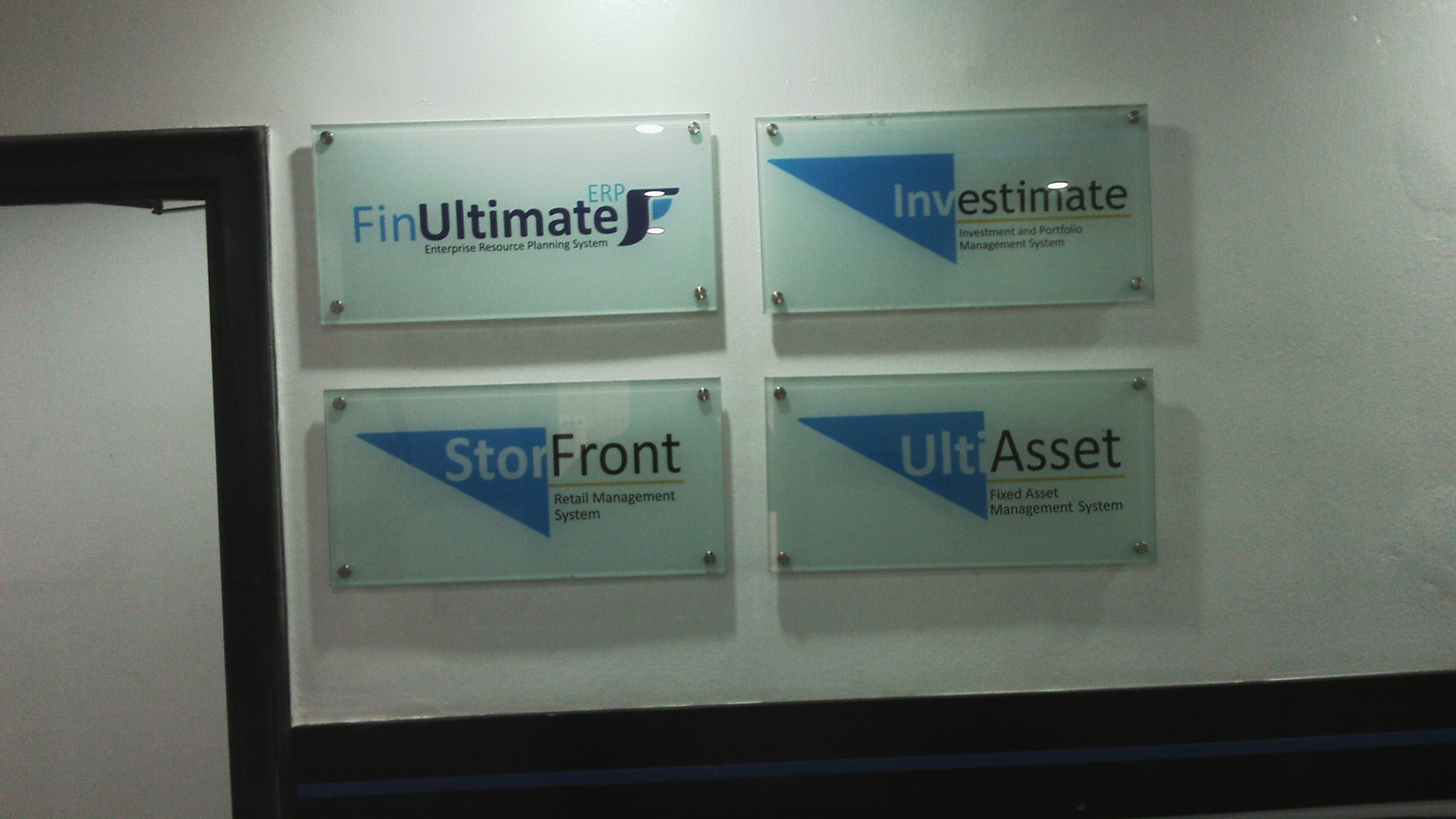
ATB Techsoft Solutions

In summary, as we work with our clients in Africa, we have found that a focused strategy to make the best product better is critical. Driving investment decisions to anchor solely on the best product positions a firm to have the necessary capabilities to compete and win even though possibilities to exit those investments into separate products remain in future.


Amaecom plaque to me and my firm


Nigeria’s $22.3 Billion Migrant Remittance: The Real Economics

0

Does a growing migrant remittance inflow provide any insights on the economic and development state of recipient nations like Nigeria? To what extent does the state of the recipient nation stimulate remittance growth for a given period?

For decades, economists have used diverse metrics for measuring wealth creation, human development and economic growth for nations. Values like Gross Domestic Product (GDP) have been used for years but it has also come under serious scrutiny, as experts query its present-day usefulness and relevance. Globalization, technological growth and changes in lifestyle have now provided nations several new – albeit more efficient – measures of economic performance and state of development.

In 2017, the money transfer industry was excited about the growth of remittances to Sub-Saharan Africa, which peaked at $37.8 billion, led by Nigeria with $22.3 billion, according to the World Bank. While this is hailed as great news for Fintech and albeit the Nigerian economy at large; the conversation on the economic impacts of remittances (both financial & social remittances), is very double edged! In spite of the apparent economic benefits, high ranking recipient nations like Nigeria have many reasons to worry. This is because the seemingly good growth in migrant remittances is underlied by the equivalent growth in mass emigration that highlights a bigger problem.

I postulate that migrant remittances may be the new GDP in a distinct shape; a quasi-measure of economic growth and even development within a country.  If you don’t agree; compare the GROWTH in migrant remittance inflows from the year 2000  to 2017 in Nigeria (1,500%), to that of four random countries; United States (50%), Japan (253%), and South Africa (122%).

Furthermore, with Nigeria (190 million people) recording $22.3 billion worth of inflows in 2017 – one of the highest in the word – which other countries have huge numbers in absolute figure and how does their economy compare? Philippines with 103.3 million people (remittance = $32,795 billion), Pakistan with 193m people (remittance = $19,801 billion) Mexico with 127.5 million people (remittance = $30,534 billion).

Undoubtedly, migrant remittances stimulate local demand for goods and service, and often stand as a viable source of foreign exchange. However, if growing financial remittance over these years correlates with increased migration, and also doubles as a pointer to the steepness of the economic divide (income levels, social welfare and standard of living) between the receiver nation and the source nation(s), then large remittances may be a Trojan horse for recipient nations. This scenario shifts the strategic question for nations like Nigeria. It highlights the need for radical improvements in the standard of living, which would cob emigration, as opposed to the superficial concern of lowering absolute cost of remittance in order to increase, the volume. While savoring the many benefits of diaspora financial remittances made possible by emergent payment technologies, it’s also important to note that its continuing growth could be indicative of worsening economic conditions.

What of “Social Remittance”?

As the remittance blessing/anomaly is adjusted, there is also an exigent need to balance high financial remittance with equivalent volume of “Social Remittance”. As a top beneficiary of financial remittances, Nigeria should also champion Migrant Social Remittances, which is the reverse flow of ideas, skills, values and knowledge from migrants to their home country.

The Nigerian Ministry of Foreign Affairs recently launched a great initiative to support Nigerian Diasporas looking to contribute to the home economy. Broadly, that initiative resembles a channel for some degree of social remittances.  How sufficient could it be? It may be analogous to using a single Fintech platform for the $22. 3 billion remitted to Nigeria in 2017. I well believe that the potential social remittances to Nigeria, if quantified will be equivalent to or higher than the financial remittance of $22.3 billion and there should be market-driven solution for capturing that value.  As we strive to capture currently forgone social remittances, the pertinent question remains; why does Nigeria have one of the highest levels of migrant remittance in the world? And why has it been on the rise since the last 18 years.

A poverty Link? Yes!

 Wide spread, systemic poverty traps! The economic and development concept of poverty traps describes people who can neither “raise” (earn or save) sufficient capital to liberate themselves, nor ‘find” capital (through borrowing or aid) to support self-growth. They are therefore lost in a vicious, endless cycle of insufficiency. There are studies supporting the postulation that remittances rarely support meaningful investments in receiving countries, as they are typically geared toward consumption. One World Bank report supported the notion that remittances are counter cyclical (compared to foreign Aids and FDI), since they grow in times of economic downturn and natural disaster (and relatedly decline in times of boom in home countries). This is a pointer to the relationship between poverty, emigration and remittances and why Nigerian has been on a continuous growth trajectory for 18 years.

In Nigeria the Uperclass-middleclass-lower class social classification is appearing unsuitable for depicting the nation’s economic strata.  Rather we might have The Rich; The Poor and the “Trapped Poor”. Nigeria’s “trapped poor” are the hundreds of millions of people who are poor in Human Capital, Financial Capital, Infrastructure Capital and Knowledge Capital and whose chances of overcoming those barriers are extremely low. There have been some direct attempts at alleviating poverty in Nigeria, some of which were misguided and ill-designed. But the great tragedy is the politicians’ misconception that traditional efforts will be sufficient in rescuing the trapped poor. Since that misconception has consistently failed, the outcome has been mass emigration. The sheer inefficiency or insufficiency of decades of economic interventions in Nigeria – that breeds citizen frustration, emigration- and eventually remittance – will continue to instigate wide spread impoverishment.

Therefore, the hard questions for Nigeria amidst her booming remittance market are many. How can growing remittances help to inspire development at home and in turn, cub the emigration that feeds it? Also, how will the lost benefits of “Social Remittance” be properly harnessed?

From the impoverishment and frustration that inspires emigration, to the eventual remittances of foreign income to the home country and the ensuing argument on their costs/benefits; it appears Nigeria is entangled in a complex economic-development phenomenon that calls for a serious but presently absent debate.

Chijioke MAMA is the Founder of Meiracopp Nigeria Limited (MNL) and a Doctoral Researcher at the University of Port Harcourt (m.chijioke@meiracopp.com)

The Brilliance of the New Konga Strategy

1

The Punch wrote a piece today where it quoted the CEO of Konga, Nick Imudia. The business leader revealed his strategy to redesign not just Konga but the entire Nigerian ecommerce sector.

Commenting on the acquisition, Chief Executive Officer, Nick Imudia stated, “Our mission is to revolutionise e-commerce, not just in Nigeria, but the whole of Africa and Kong is at the heart of this bold move.

“On the short term, we would re-position the business on the path of profitability. Our mid-term goal would see to the establishment of more stores across Nigeria, while our long-term plans will be focused on seeing Konga well established in many other African cities.”

The key sentence is thus: “Our mid-term goal would see to the establishment of more stores across Nigeria”. Yes, the new Konga would be opening physical stores across Nigeria. Certainly, that is a great winning business model. Besides the money being in the physical space, having stores will reduce the marginal cost challenges associated with pure play ecommerce. The piece quoted me as it argued the brilliance of pursuing this hybrid commerce for Konga.

An entrepreneur and professor of electrical and computer engineering, Ndubuisi Ekekwe, observed that “Online commerce is the future; it would keep growing and that is certain. In Nigeria, it has been noted that, ‘online commerce makes up less than N0.01 out of every N10 in Nigeria.

“In other words, for every N1,000 spent in Nigeria, only N1 is spent online. Again, I expect that number to keep moving north. (Please note that I said ‘online’, not ‘electronic or digital’. The distinction is very huge as you work on your strategy. The POS and the ATM are electronic but not online.)”

Simply, if the money is in the physical space, why must we build a business that is exclusively online? Unless for pride and fancy, it makes no sense. The new Konga understands this and is working to enter the race where the opportunities abound. With these stores, the new Konga will crash its marginal cost and that would help it to take advantages of the online elements to deepen its competitive capabilities in the physical. As it does this, Konga would become the most respected retail chain in Nigeria.  There is no other company that would come close because what we are witnessing is the birth of a new category and Konga will be the undisputed category-king. For years, Nigeria has failed to create a retail chain: Konga is bringing one with the unbounded and unconstrained capabilities of the internet fused with atoms of stores across Nigeria.

Simply, we need a hybrid commerce strategy in Africa if we want to be on the path to profitability. Marginal cost of ecommerce is dominated by atoms and not (direct) bits. (Sure, information is physical, but let us avoid that complexity here.) Hybrid commerce will require returning to offline partners, and we need to make that work for Africa. It may not be complex if our companies are open to work together and where possible merge

I hinted that need for merger in November 2017 and later called in December 2017 for Konga to sell itself. It did and now great things are happening in the sector.

We’re Fixing the Hosting Issues with Amazon Web Services

0

AWS.

I am having real issues with Amazon AWS on hosting. We have been unable to get decent help from AWS. They reply via email, once every 5 hours. My blog tekedia.com comes ON and OFF. It is just a WordPress and nothing more.

Can you offer suggestions? I really need to leave Amazon alone as it is stupidity to offer customer support via email in a world that is built on instant service.

Please contact my webmaster via Contact Section. They have checked the settings and think everything looks good. Yet, the issues keep coming up.

Automatic which owns WordPress has also confirmed that everything is fine. We backup all data via Vaultpress. But AWS seems confused – it does not have a clue why the server disconnects and returns even when THERE IS ZERO TRAFFIC.