DD
MM
YYYY

PAGES

DD
MM
YYYY

spot_img

PAGES

Home Blog Page 7166

The Brilliance of the New Konga Strategy

1

The Punch wrote a piece today where it quoted the CEO of Konga, Nick Imudia. The business leader revealed his strategy to redesign not just Konga but the entire Nigerian ecommerce sector.

Commenting on the acquisition, Chief Executive Officer, Nick Imudia stated, “Our mission is to revolutionise e-commerce, not just in Nigeria, but the whole of Africa and Kong is at the heart of this bold move.

“On the short term, we would re-position the business on the path of profitability. Our mid-term goal would see to the establishment of more stores across Nigeria, while our long-term plans will be focused on seeing Konga well established in many other African cities.”

The key sentence is thus: “Our mid-term goal would see to the establishment of more stores across Nigeria”. Yes, the new Konga would be opening physical stores across Nigeria. Certainly, that is a great winning business model. Besides the money being in the physical space, having stores will reduce the marginal cost challenges associated with pure play ecommerce. The piece quoted me as it argued the brilliance of pursuing this hybrid commerce for Konga.

An entrepreneur and professor of electrical and computer engineering, Ndubuisi Ekekwe, observed that “Online commerce is the future; it would keep growing and that is certain. In Nigeria, it has been noted that, ‘online commerce makes up less than N0.01 out of every N10 in Nigeria.

“In other words, for every N1,000 spent in Nigeria, only N1 is spent online. Again, I expect that number to keep moving north. (Please note that I said ‘online’, not ‘electronic or digital’. The distinction is very huge as you work on your strategy. The POS and the ATM are electronic but not online.)”

Simply, if the money is in the physical space, why must we build a business that is exclusively online? Unless for pride and fancy, it makes no sense. The new Konga understands this and is working to enter the race where the opportunities abound. With these stores, the new Konga will crash its marginal cost and that would help it to take advantages of the online elements to deepen its competitive capabilities in the physical. As it does this, Konga would become the most respected retail chain in Nigeria.  There is no other company that would come close because what we are witnessing is the birth of a new category and Konga will be the undisputed category-king. For years, Nigeria has failed to create a retail chain: Konga is bringing one with the unbounded and unconstrained capabilities of the internet fused with atoms of stores across Nigeria.

Simply, we need a hybrid commerce strategy in Africa if we want to be on the path to profitability. Marginal cost of ecommerce is dominated by atoms and not (direct) bits. (Sure, information is physical, but let us avoid that complexity here.) Hybrid commerce will require returning to offline partners, and we need to make that work for Africa. It may not be complex if our companies are open to work together and where possible merge

I hinted that need for merger in November 2017 and later called in December 2017 for Konga to sell itself. It did and now great things are happening in the sector.
We’re Fixing the Hosting Issues with Amazon Web Services

0

AWS.

I am having real issues with Amazon AWS on hosting. We have been unable to get decent help from AWS. They reply via email, once every 5 hours. My blog tekedia.com comes ON and OFF. It is just a WordPress and nothing more.

Can you offer suggestions? I really need to leave Amazon alone as it is stupidity to offer customer support via email in a world that is built on instant service.

Please contact my webmaster via Contact Section. They have checked the settings and think everything looks good. Yet, the issues keep coming up.

Automatic which owns WordPress has also confirmed that everything is fine. We backup all data via Vaultpress. But AWS seems confused – it does not have a clue why the server disconnects and returns even when THERE IS ZERO TRAFFIC.

Finding the Higher Mentors in the age of Career Dislocation

0

HIGHER MENTORS.

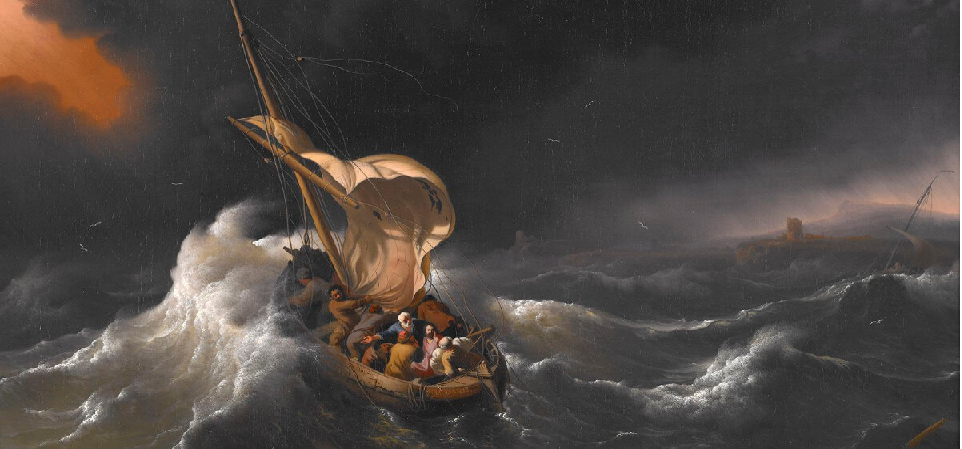
They were men of great capabilities. They excelled in their fields. They were masters of waters, having core competencies in navigating sea waves as fishermen.

But one day, they were on the Sea of Galilee, legendary for its shallow depth – the lowest freshwater and second-lowest lake on earth. Fed by River Jordan, with the Golan Heights by the side, a wave easily gathered momentum causing problems along the paths.

In the Bible, much of the ministry of Jesus occurred on the shores of Lake Galilee. In those days, there was a continuous ribbon development of settlements and villages around the lake and plenty of trade and ferrying by boat. The Synoptic Gospels of Mark (1:14–20), Matthew (4:18–22), and Luke (5:1–11) describe how Jesus recruited four of his apostles from the shores of Lake Galilee: the fishermen Simon and his brother Andrew and the brothers John and James. One of Jesus’ famous teaching episodes, the Sermon on the Mount, is supposed to have been given on a hill overlooking the lake. Many of his miracles are also said to have occurred here including his walking on water, calming the storm, the disciples and the miraculous catch of fish, and his feeding five thousand people (in Tabgha). In John’s Gospel the sea provides the setting for Jesus’ third post-resurrection appearance to his disciples (John 21).

On that day, the disciples, masters of waters, had their capabilities tested.  Four of them were recruited by Christ while working on that very Sea. The waves were ferocious but the men trusted their skills. Then, they gave up, and asked for help. “Peace be still” were words, and the storm stopped.

Our education, networks, and experiences are things we cherish. We use them to navigate careers. But there are things so powerful: preventing the possibilities of storms or when they do happen, having higher mentors (or plans) to stop them.

Today’s labour market is like the Sea of Galilee. Technology-driven dislocation and globalizations are major challenges. It requires Alternate Plan just in case the skills become momentarily unhelpful just as the fishermen saw themselves nearly imperiled in a sea.

We can’t out-plan all career storms.  That calls for the need of a higher mentor? Or alternatively, what is your alternate plan? You need to have the capacity to “hear” that Peace be Still in case a storm comes. The disciples were in the right company. You need to make sure you have one as you juggle the challenges of building careers in the 21st century.

Will Be Discussing Nature of Work in European Commission, Brussels Next Month

0

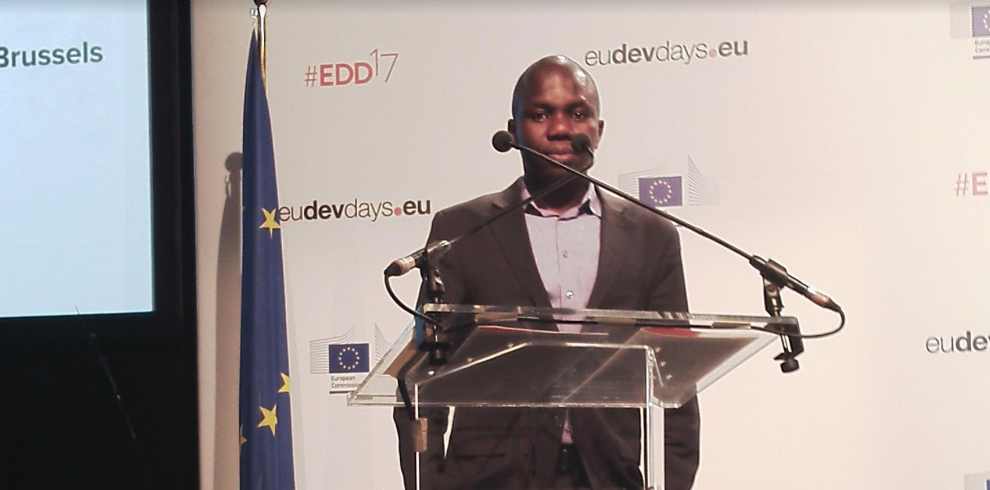
I will be speaking in the European Commission’s Joint Research Centre this June. We will discuss the changing nature of work. The organizers have drawn experts from around the world. I will attend as the Founder of the non-profit African Institution of Technology, a 501(c)3 U.S. charity. In the panel will include a professor from University of Oxford and experts from Chile, U.S. and more.

Session 3: The changing nature of work

By 2030, tech-savvy, hyper-connected millennials will represent 75% of the workforce, and older generations will work longer. Advancements in technology and automation are increasingly substituting both routine and cognitive tasks, while increasing the need for new skills and creating unprecedented opportunities.

[…]

Michael Schönstein, Federal Ministry of Labour and Social Affairs, Germany

Hector Casanueva, Chilean Council for Foresight and Strategy, Chile

Ndubuisi Ekekwe, African Institution of Technology, Nigeria

As the world examines the potential labour disruptions from new technologies, Africa will be affected but in a totally different way. Sure, ATM machines and web technologies will result to labour dislocations but the industries that really employ most Africans [for example agriculture which employs more than 65% of working population] may not see radical changes in decades unless fundamental redesigns take place on critical infrastructures.

We cannot leapfrog poor road networks with drones that deliver blood. We cannot fix electricity with apps. And certainly for all the farming apps, farmers still use hoes and cutlasses. Our labour model must be different from what they write on FT, NY Times, and The Economist because our situations are unique.

I expect this to be a great conversation in Brussels this June.