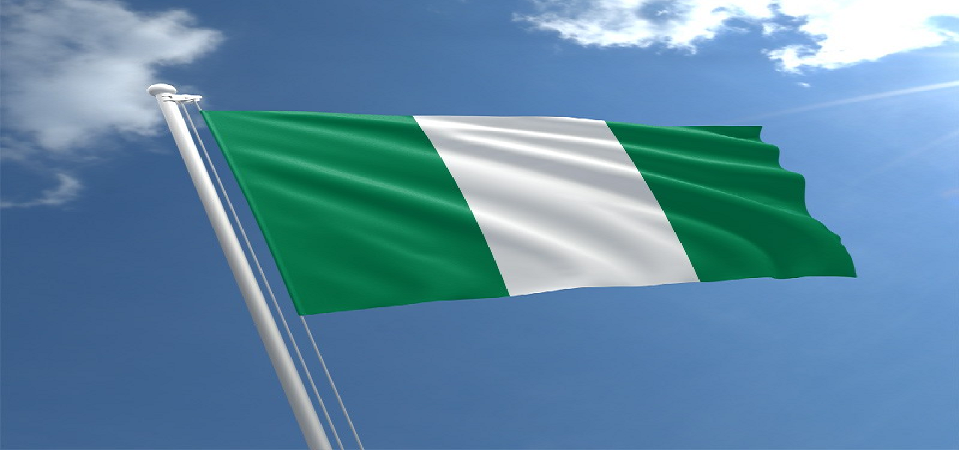
In 2019, I am looking for that President that will “restore the dignity of man” (and woman) [thanks UNN] with the “fierce urgency of now”: Unimpeachable, diligent, pragmatic, intelligent and visionary with traits of decency, honor and service. With him/her, Nigerians will rise to the mountain-top, experiencing the unbounded promise of Oct 1 1960 as the first mounting of the Green White Green even as Union Jack [British flag] was lowered. We yearn: The President for the Knowledge Century.
Our world is changing rapidly. Across the globe, many events, including the unexpected election of Donald Trump as American president, point to a world where nations are looking for fresh ideas to overcome severe economic crises and survive the onslaught of global competition driven by the advent of information and communication technologies. The evolution of knowledge workers (or brain workers) is changing many national policies, as countries device strategies to manage the impacts of globalization by developing infrastructures on education, industry, health and energy. It is a new world where nations that fail to develop or learn, acquire and adapt technologies will remain poor. The emergence of China, and the continuous threats to many established industries by new ones, enabled primarily by brainpower, are showing that this is a ‘knowledge century’.
Knowledge will rule modern man and this knowledge is new, fresh and combative. Since Adam Smith’s ‘Wealth of Nations’, there has never been a more urgent time in the history of man where innovative economic and political leadership is required of leaders. The reason is simple; globalization makes it difficult to control factors like trade and labour, which hitherto, could be easily controlled to the advantages of nations.
Indeed, a world of unbounded and unconstrained markets with internet as the center of new business models, enabling platforms which have become more powerful than some nations. These platforms are restructuring the very elements which have held economies for decades. And they are just starting with new disruptions and dislocations coming.
From American Wall Street to Nigerian Broad Street, leaders have come to realize that new ideas are needed because many old economics are falling. New ideas that accommodate emerging variants that technology has enabled in both the political and economic national models. Models based on the theme that every nation has a limit to national wealth without science and technology. It is an understanding that the era where natural resources dominate international trade is giving way to that of knowledge resources. Natural resources are still important, but unfortunately, the most stable and prosperous nations are those that create ideas with army of knowledge workers.
A vision of new Nigeria is very important for the future of our nation. Our educational system needs immediate improvement. The advancement of any modern superpower has been fuelled by its educational infrastructures. And the collapse of any great nation has always been preceded by the decay in its education. The old Greece was known for its fine philosophers, the Babylon known for its wisdom and the old Egypt, where civilization began was known for its knowledge.
In its age, Egypt was admired for knowledge as the land of pharaoh had some of the best thinkers. Moses of the Bible was highly respected partially because of his Egyptian education, which was better than his Israelite’s comrades. During the British industrial revolution, their education was the best, as no school on earth could be compared to Oxford and Cambridge. Today’s dominance of the United States is attributed to its education, which remains its best industry, at least at the university level. The schools drive the researches that translate to new technologies, which subsequently diffuse into the economy. America has the finest labs in the world and continues to dominate the roll call of Nobel laureates. It is believed that if America loses its educational superiority, it would lose its dominance in the world’s political and economic scenes.
How can Nigeria prepare for this century? We need leadership and fundamental changes in policies to modernize our education and industry. From electricity to road networks, Nigeria has the capacity to provide and sustain them; we are smart, ingenious and optimists. But our problem has been lack of 21st century level leadership.
Nigeria needs a leader with capacity to rally the nation in honesty, hard work and raise our imaginations beyond where we are today, and move us to believe in ourselves, and create the tools to make us build our nation. It must be a leader whose goals will not just be to keep government running, but one who can help the nation dream a bigger, larger and glorious vision that generations of Nigerians will unite for. A leader that besides running the nation will transform it.
A leader that can create a society to engage our brightest minds in government by evolving a new political system designed to seriously solve problems. A person who can engineer Nigeria into rebirth and restoration to offer a prosperous nation that is colorful, fluidic, vibrant and open for change. Yes, a person of immense intelligence, competence, pragmatism, and unimpeachable. A person of integrity, broad knowledge, enormous vision and solid experience; one that can stimulate more vibrancy in the private sector and move the public sector out of its stasis. With that leadership, Nigeria will witness changes in trade, education and commerce as battalion of knowledge workers emerges to give us the needed clout in the global arena.
Finally, Nigeria and indeed the whole world are faced with enormous challenges and opportunities. For Nigeria, the challenge is fundamentally developing the system to enable the emergence of new class of workers, the knowledge workers, and providing the economic environment where they can flourish. The opportunity comes by using the skills of these workers to grow the economy by diversifying the petroleum-based economy and move millions of our citizens out of poverty.
We yearn: The President for the Knowledge Century.
Like this:
Like Loading...