DD
MM
YYYY

PAGES

DD
MM
YYYY

spot_img

PAGES

Home Blog Page 7173

The Music of Business is CUSTOMER

0

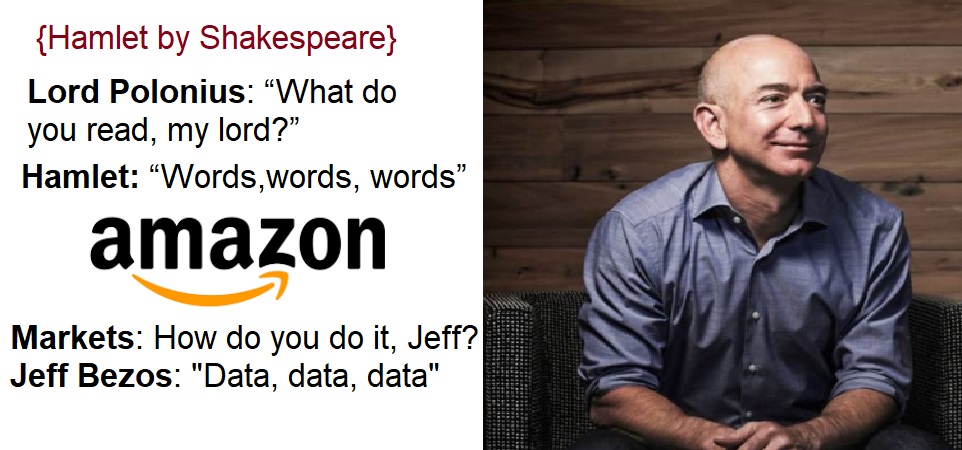
In Shakespeare’s Twelfth Night, Duke Orsino delivered one of the most memorable lines in the book when he said “If music be the food of love, play on”. Shakespeare did not stop there: in a scene in Hamlet, when Lord Polonius asked Hamlet “What do you read, my lord?”; Hamlet responded “Words, words, words”.

As I read Amazon Jeff Bezos’ annual letter to Amazon shareholders, those great works of Shakespeare came back. I had read Twelfth Night and Hamlet in secondary school. With due respect to Warren Buffet, Jeff Bezos is now the zen-master and the oracle of business excellence and value creation. Yes, in business today, entrepreneurs and business leaders fiercely wait for Amazon’s shareholder letters.

In these letters, you can read the mind of Jeff. For him, the music of business is CUSTOMER. To serve that customer with the fanatical commitment he has demonstrated in Amazon, he reads one thing: Data, Data, Data. As he plans to link Whole Foods, a grocery chain Amazon recently acquired, with Amazon Prime benefits, he is using customer data to make them better. Contrast that with aggregators like Facebook that sell customer data as part of their business models. I have written on the One Oasis Amazon strategy.
The Amazon part is Not a real play

The fact is this: people want to share data and Amazon Prime members are sharing a lot to Amazon. Because Amazon is using the data to make their lives better [over selling them to 3rd parties as Facebook does] no one is complaining. Fortune makes a similar point on how Netflix uses customer data to improve their experiences.

The beauty of this, as Aaron reported yesterday and Breakingviews analyzed, is how Netflix uses customer data. It collects a lot of it, for sure. But it doesn’t turn around and share any of it, as the formerly uninformed now understand Facebook does. Instead Netflix crunches the consumer data it holds to aid its recommendation engines and to decide what additional programs to commission. Netflix doesn’t want to share that data with anyone else. It sells no advertising and releases no ratings. It cares about finding an audience for its show, though. Not for nothing, Netflix is a lavish marketer, spending heavily on advertising across digital, print, and broadcast media.

Sure, Netflix charges customers. Amazon does the same. But Facebook does not ask people to pay. Largely, without monetizing customer data, it has no business. That is at the heart of the aggregation construct. Yet, there is a big lesson: customers do not revolt for using their data. They revolt when you use the data to make money and they do not materially connect how that benefits them [we easily forget that Facebook is free because of the data].

But irrespective, you need to read the data to have a great music in business; customers enable masterpiece.


 

Do Not Be Timid – Command Your Space

2

I get many emails regularly along these lines in various versions: [I run a company but I am afraid people will attack me if I promote or talk about it a lot. I am not sure I have done a perfect job to avoid being attacked. I hate criticisms on social media.  Also, promoting my work would make me look proud. I know that it is always good to allow others to promote your work].

My General Comment: First, note that the #1 trait in Nigeria is to criticize. We do that a lot. There is no success you can have that many will not have a “BUT” but they would celebrate foreigners for the same thing. There is always a reason why you did not merit that honor or award. Managing that noise is a key part of growing up in business. Now to my comment on the emails.

Simply, it is easy to be a gentleman and lady when someone pays you. If you are a banker, you have no reason to shout because the corporation does that through the communications department. If your business is mining diamond, LinkedIn has no space for you. But if you are in a consumer tech sector and you are afraid to tell your story,as a founder, you have no business in Nigeria.

Note this: before social media and the broad internet, information used to flow from few TV stations and newspapers. Today, there is a massive fragmentation making it harder to reach clients. You can pay for TV and get nothing. Getting values from newspaper advertisements are becoming harder. The implication is that Founders must be active. From Irokotv to Paga to Paylater, everyone is working to reach customers. Yet, those companies are well funded and could technically afford to buy ads. But Jason Njoku, Irokotv founder, does not believe in ads: he creates the momentum for his firms. Yes, he is always saying something. That is one of the reasons he is successful.

As I have said, your mentor must be someone who has (or closely) DONE what you plan to do. Your professor should not be your business mentor. Your cousin  that works in a big oil company should not be your business mentor. Find someone who is ahead in your line of work with experiences in navigating your path.

In Nigeria, you can start a company and operate it for three years and not have a single sale. Even getting web traffic is hard. Yet, those employed by banks and insurers will tell you to allow others to blow your trumpet. Nonsense! Do not listen to them. Find a small space and use that to tell your story. No one will blow your trumpet. It does not happen. Yes, CNN, Guardian and Punch will not come to you. You have to find a way to reach clients.

There is no need to be timid – make sure you add value to your readers and let people know what you do. One blog entry per week could help. Many will criticize but take it as a positive because they even read. Some may even attack you, stay focused. But do not disappear hoping that Google ads or Facebook will save you. Those things do not work in Nigeria: when you stop spending, the traffic stops.

Good luck.

COMMENT FROM LINKEDIN

You practically captured that Nigerian ‘thing’ in its entirety: both online and offline. We see it daily, even on LinkedIn, the so called ‘professional’ platform; still searching for what is ‘professional’ about many things that happen in this LinkedIn continent.

Yes, it’s very easy to be a gentleman or amiable lady, as long as you get paid at the end of the month, as an employee. But once you try running your own business, those ‘polite’ qualities of yours ‘disappear’, because at every turn, someone must have something to criticize you for. If you talk too much: you are proud, arrogant, blowing your own trumpet, and whatever.

And when you cannot talk: you are timid, incompetent, ignorant, don’t know how to do anything, invisible, and everything within that family.

Don’t allow anyone to tell your own story, or control the narrative, they do not know enough to do such on your behalf. Actually, when they are complaining that you talk a lot; please raise the decibels of your noisemaking, it shows that you are being heard, you are certainly doing something right!

Nigeria is a not place where you can be successful just by being gentle and likable, not at all; your success is imminent, once you make the naysayers uncomfortable.

Lagos-based ATB Techsoft Needs Software Engineers

0

One of my clients, ATB Techsofoft, is looking for software engineers. These opportunities are immediate. Please apply or share with people in your network.

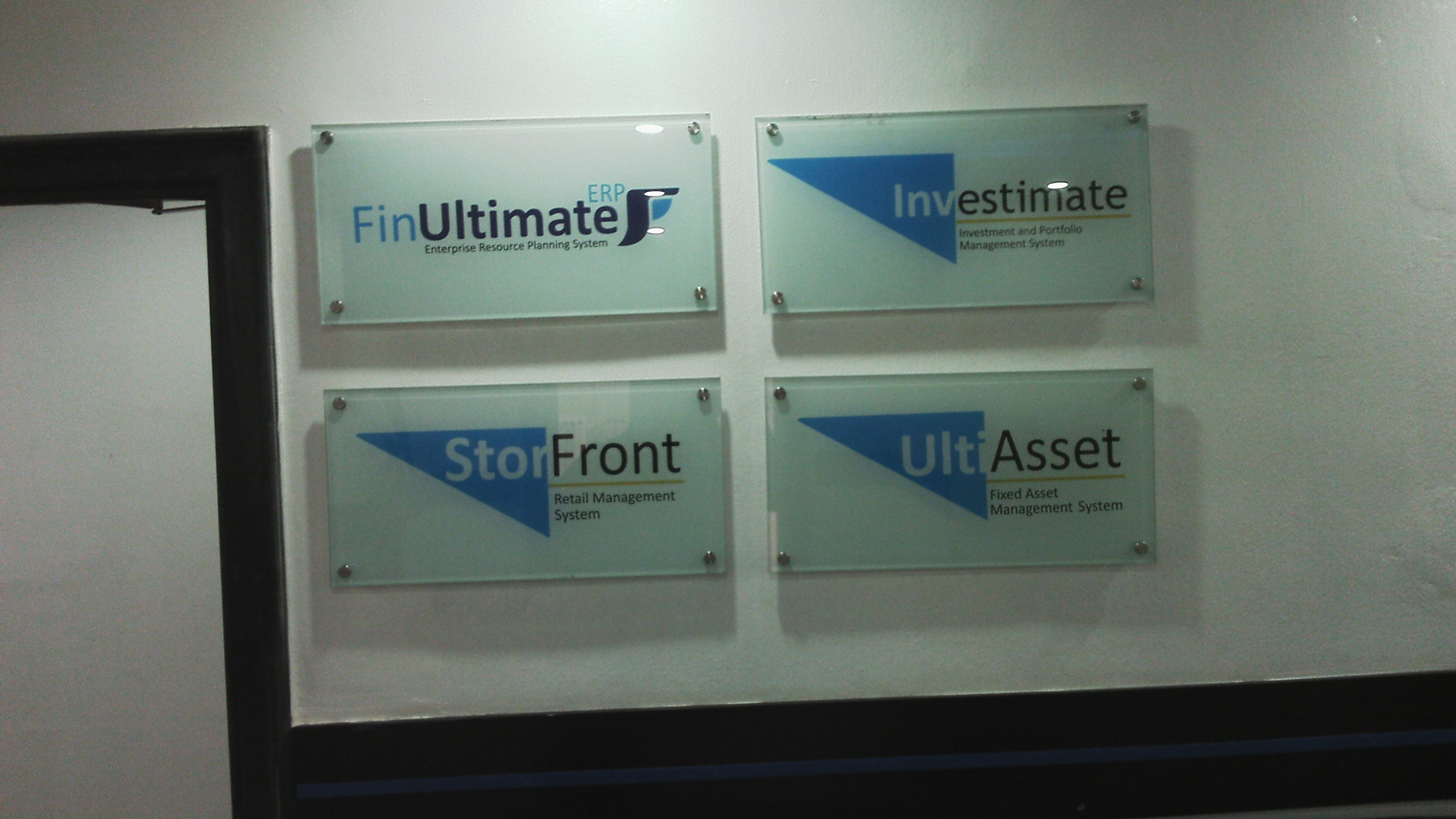
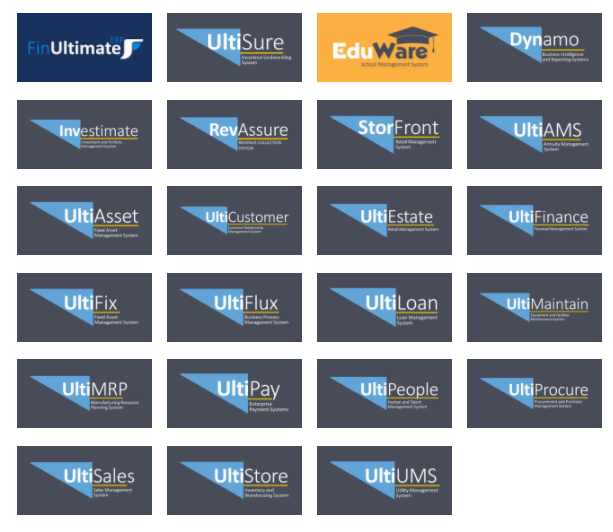
ATB Techsoft grand vision is to deliver a one-stop software solution across market sizes and industrial sectors in West Africa. All the solutions are packaged and promoted under its oasis, the FinUltimateFinultimate offers the most comprehensive portfolio of applications software designed to help companies improve operational effectiveness, profitability, product innovation, distribution / delivery channel growth, customer relationships and enterprise information management.

Skills Required

SQL, Phyton, SQL Server Integration Services, SQL Server Analysis Services (SSAS), Business Intelligence & Machine Learning.

About ATB Techsoft

You can read about ATB Techsoft here.

Apply to brains@atbtechsoft.com

ATB Techsoft Products

Moving That 1% On Mobile Money

0
Mobile Money

It is not easy to use debit cards in Nigeria online. You need a PIN besides the card number, cardholder name, and expiration date. You need the 3 digits at the back. You need in some cases a password. And at the end, the transaction is bounced. Why? You have not registered the card for online payment with the bank issuer. Yes, there is a different registration for the same card to be used on ATM (and physical stores) and online.

The fact is this: we have a trust issue. That is why Facebook will struggle if it puts a subscription of say N1 on its services in Nigeria. The problem is not the affordability of the subscription. Rather, the issue is the concern that paying that N1 could enable a bad actor to steal the whole bank account. The default is to simply abandon the service. It is very hard to sell things online in Nigeria.

Interestingly, many digital payment merchants like Paga are already hybrid, providing services online and offline. They understand that the money is offline, at least at the moment.

According to Fortune, “online commerce still makes up less than $1 out of every $10 in the United States”. Yet, online commerce is the future; it would keep growing and that is certain. In Nigeria, we have put that as “online commerce makes up less than N0.01 out of every N10 in Nigeria”. In other words, for every N1000 spent in Nigeria, only N1 is spent online. Again, I expect that number to keep moving north. (Please note I said “online”, not “electronic or digital”. The distinction is very huge as you work on your strategy. POS, ATM and such are electronic but not online.)

That brings the issue of mobile money which works very well in Kenya and Ghana with 40% and 60% penetrations respectively. In Nigeria, we are at 1%. The argument has been that in Nigeria, the program is bank-led, while in places mobile money has worked, it is typically telco-led.

After about five years of operation in Nigeria, mobile money has only been able to attract just one per cent penetration.

Unlike in Ghana and Kenya where penetrations have reached 40 per cent and 60 per cent respectively, only about two million of Nigeria’s estimated 198 million populations.

The implication of this is that despite the innovation that comes with it, Nigerians are yet to tap from the huge benefit it carries.

Market watchers have argued that the model operated in Nigeria, which is bank-led, has not been able to impact the initiative in the country adequately.

Largely, the telcos operate at better cost model than banks since banks have to warehouse capital to meet financial ratios required by regulators. Also, banks are always seen to be premium making it harder for them to hustle on sales [while MTN can use agents on streets to sell recharge cards, banks cannot do such without thinking of the implications on their brands]. So, it is always going to be more expensive if banks do it because they cannot open anything as an outlet. With telcos driving the mobile money, it is possible we can see faster penetration. Yes, their marginal cost will be lower than whatever banks can have there. Telcos have deep networks and experiences on selling recharge cards which will work well for mobile money.

But wait, if you allow telcos to do this, what would banks do? All the transaction fees and stamp duties on electronic transactions will go. Yet, if we believe on innovation and the power of market forces, government should ideally not care who runs this show. It should care that it is done to grow the Nigerian economy with value delivered to the citizens. There is no need of protecting anyone to a large extent. Until we do that, the penetration rate will not advance in Nigeria for mobile money.

Why the New Konga is Different

0
New Konga
A warehouse

commenter on a Konga update wrote: “So based in your previous article about the ‘impossibility’ of ecommerce to thrive beyond Lagos due to absence of proper logistics from Nipost in and outside Lagos, what has now changed, what have they got right? BTW, I smell tongue in cheek”.

You look very refreshed and energized. I just noticed that your style has changed. Wow – nice color. You look really better. And you have got friends with shops across Nigeria. Boy, you are ready to rock. You know what? I like all those pickups. You are now simplifying my life.

You got a great cousin but he said both of you would go with your name. Yudala is really a nice dude. He knew you are more popular in colleges and across major cities in Nigeria. But I also like that you are wearing his clothes even as both share a name. Konga is zen-like. I like it.

Let me apologize if my article came poorly. I am a teacher. We just talk. But I am very happy that you listened when I said you had no more stamina to stand by yourself. Happy you moved in to stay with a cousin. And boy, you look nice.

On that piece, nothing personal sha. I have invested in things that turned out bad. I do not really know a lot but I know how to defend what I know. Let us forget the past. I want to wish you a really good luck as you take the streets of Lagos. People, welcome the new Konga of Lagos

Response:  The New Konga has co-CEOs. One is for the offline (physical) business. The other is for the online business. Simply, the new Konga is now a pure-play hybrid commerce. It has seen that it needs offline component to have a CEO dedicated to physical stores. With Yudala outlets and Zinox branches across Nigeria, the new Konga is your typical supermarket with a top-grade online presence. Meanwhile, this is the referred piece where I suggested that Konga should sell.

Because of Jumia’s ambition, Konga could be attractive. Konga has been severely wounded for any further fight to make sense. I do think the best for Konga is to sell itself now that it can generate higher value. To win in this market, it needs not just revenue but manpower since it is running a logistics business, despite the pivot to subscription classified model. By constantly cutting down manpower, it means it is not taking the fight to the traditional stores like Shoprite and supermarkets. That is weakness that will further erode its capacity to generate more value to shareholders. It can save itself from these challenges by selling to Jumia.

This hybrid model has been at the heart of my point on ecommerce in Nigeria. Without a postal system, the only option is to have physical stores [your partner or you build them]. The new Konga has it. This means it can compete very well with supermarkets even when expanding its business online. This strategy will reduce the marginal cost making it easier to serve more customers. When you do that, your unit economics improves.

The path to profitability will pass through physical commerce. Why compete for 1% when 99% is out there? Amazon and Alibaba know that in 5 years as physical stores move online, their advantages will be neutralized. So, they are playing offense. If the world runs in the physical space. especially in grocery, you better go there to get the deals.

Simply, we need a hybrid commerce strategy in Africa if we want to be on the path to profitability. Marginal cost of ecommerce is dominated by atoms and not (direct) bits. (Sure, information is physical, but let us avoid that complexity here.) Hybrid commerce will require returning to offline partners, and we need to make that work for Africa. It may not be complex if our companies are open to work together and where possible merge.