DD
MM
YYYY

PAGES

DD
MM
YYYY

spot_img

PAGES

Home Blog Page 7191

Will Speak in European Commission, Brussels on June 4th

0

EUROPEAN COMMISSION INVITES

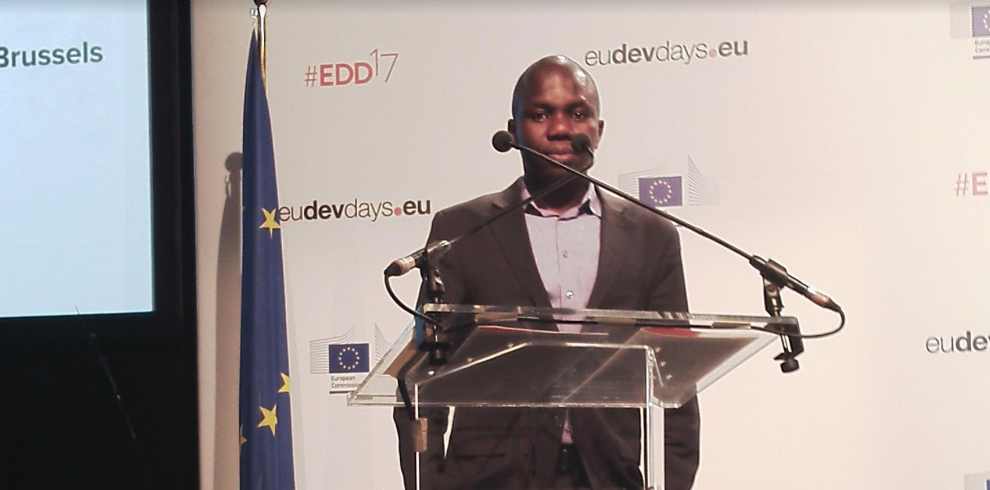
I just accepted an invitation from the European Commission to speak on June 4 2018 in Brussels, Belgium. The topic would be “The Changing Nature of Work”. In the invitation, the Commission noted “In view of your unique expertise and your perspective on innovation and job creation, we would like to invite you…” It is always great speaking in Washington DC and Brussels because they actually follow-up on good ideas.

European Commission has been working on many experiments on the best way to redesign its economy as technology restructures  the way we work. Yes, if AI takes over many jobs, what would happen to people? Indeed, the forms of employment, career models, and labour organisational structures are changing.

I do hope Nigeria will begin that conversation.  The EC Joint Research Center is also a model that the African Union should emulate as we move into the gray lizard of youth employment in Africa.

When the Jobs Are Not Available

0

I noted this morning that fresh graduates should endeavor to have work experiences before they move into the path of entrepreneurship. Largely, some on LinkedIn noted that people without jobs have to do something. Yes, they become “entrepreneurs” if there are no jobs upon graduation.

Entrepreneurship is hot. It is exciting. Many want to be entrepreneurs immediately upon graduation from schools. I have a word for you: NO. Yes, you are not likely to thrive in Nigeria if you start any business immediately upon graduation. Besides capabilities, you need to learn, build networks and test everything they have taught you in school.

While you can hire people as you grow, it is very likely you would do most things at the beginning. So, it makes sense to learn how to do those things while working for another person.

Entrepreneurship is a high intensity call – it is not a vacation. Do not be deceived by Americans that dropped out of college to build empires. No one would tell you that most have “mini-teachers” or executive coaches helping them. And the VCs that pump those millions into them are super-mentors which could be like teachers. We do not have these elements yet in Nigeria. That is why working for at least 3 years would help your vision.

Unfortunately, that is the confusion. It is not likely the fresh graduates are entrepreneurs. They are going to be “small business owners”. Yes, they would not be entrepreneurs. Entrepreneurs are more than registering companies in CAC and holding business cards. To become one, the business must have scalability and is practically an organic system that grows. That guy that started one, out of college, would likely remain a small business owner while the guy that has business experience would become an entrepreneur.

I have called that the Aba Paralysis [after a city in southeastern Nigeria with many artisans] where a shoemaker does the same thing for 30 years until he retires to his village. Yes, the business did not grow – same 5 people for 30 years. The shoemaker was a small business owner, not an entrepreneur. To become an entrepreneur in Nigeria, working for someone would make that path easier.

Interestingly, while being a small business owner can come because of lack of job opportunities, being an entrepreneur typically does not emanate because of lack of job. Entrepreneurs typically have great alternatives as they have special skills for the market frictions they are hoping to solve.  Indeed, there is that element that I know this so well that it is better I do it for myself than another person. Then you open a shop to build a business. That was a defined choice out of multiple alternatives. The small business owner had only one option: no job, do something to be busy.

Wema’s ALAT MINTs Nigerian Bank Accounts

0

Wema Bank’s ALAT is a paperless and branchless bank which provides services via web and mobile apps like Android and iOS [you can call it a digital bank]. ALAT was launched in May 2017 and has anchored 200k new accounts while capturing N1.1 billion in deposits as at February 2018.

Wema Bank was established in 1945. It has about 1.5 million customers in Nigeria. Under a year, ALAT has brought 200k customers. The implication is that it took the bank 72 years to acquire about 1.3 million customers [18k customers per year]. ALAT has generated 200k in ten months. You can see why businesses need to renew and refresh strategies and models.

ALAT would even get better with these new features it just launched:

Quick short-term loans: This is accessible to all ALAT customers through the apps. This means Paylater has a major competitor.

Virtual dollar card: A debit card designed for foreign online payments.

But the biggest innovation is MINTing Nigerian customers by making it possible for ALAT customers to “through their ALAT profile connect to their other Nigerian bank accounts, adding that this makes moving money around easier for people with multiple bank accounts”. Expect personal finance and money to evolve in ALAT with capabilities for budgeting, bill payment and credit scoring. In other words, in near future, ALAT could become a personal finance, budgeting and credit management ecosystem. The road leads to one destination: Platforms.

To the fintech companies, it is evident that banks can innovate and compete. If not that ALAT is part of a banking institution, it would be one of the finest fintechs in the country. Yet, being part of a bank should not diminish the brilliance of the team

The Greatest Cost Reward for an Internet Business

0

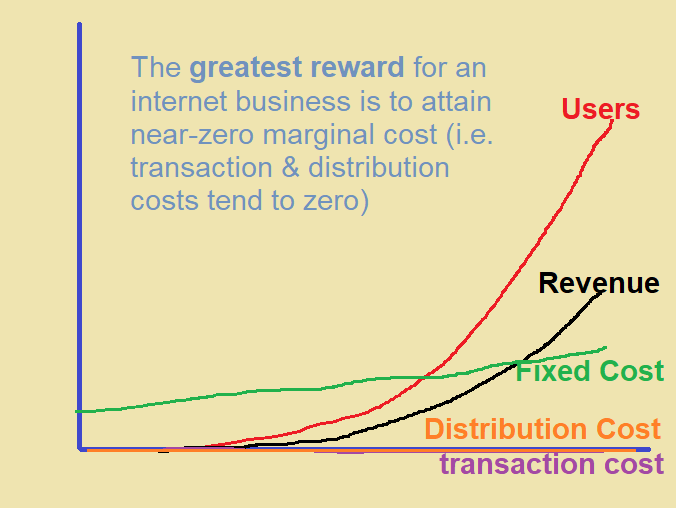
In a Harvard Business Review piece last week, I wrote thus: “These companies aggregate the data and scale massively with near-zero marginal cost, which is all made possible by the internet. Because they are ahead with an enormous number of users, they keep getting better, and the data they accumulate drives improvements in their algorithms. Changing this order is largely hopeless, and that creates a competitive stasis for local entrepreneurs”. Many have sent emails asking for the explanation.

The point is that if you can build an internet business where growth and revenue could grow without escalating marginal cost [transaction + distribution cost], you would have success. In other words, if the cost of serving an extra user is very small, you can scale very fast. It does not cost Facebook anything for adding an extra user in its platform. But it does cost an ecommerce firm operating in Lagos to serve an extra user in Yola [there is a limit you can ask a customer to pay shipping cost before he/she decides to choose a local supermarket]. To avoid that marginal cost, the ecommerce firm would just make its service not available in Yola. When that happens, it is no more a real internet business.

I try to explain this in a plot below (breaking this].


FUTO Visits Our Office

0

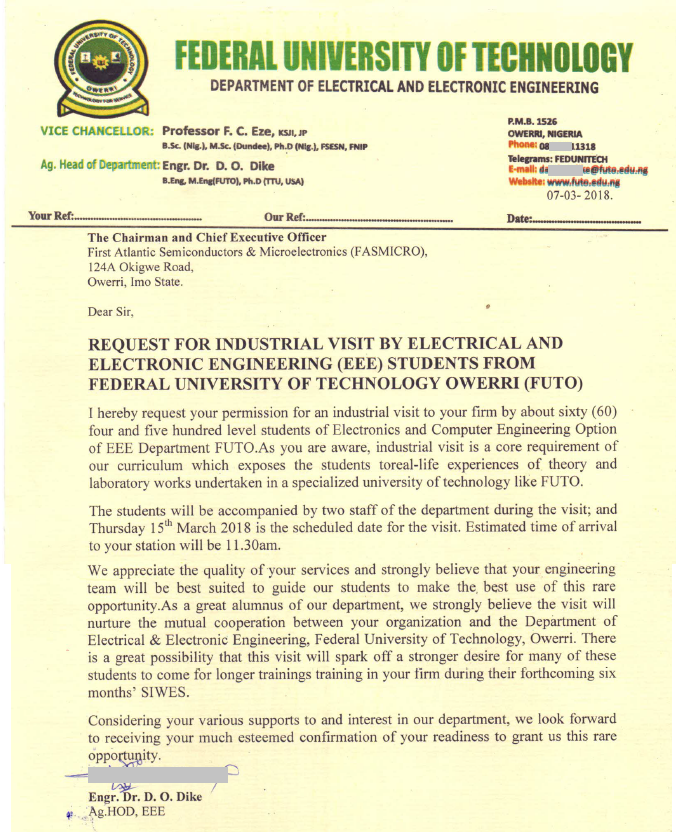
In our office in Owerri, Nigeria, we would be hosting students of Federal University of Technology Owerri, FUTO (my alma mater). Fasmicro Design Center in Aba (Nigeria) is coming and I hope many students will join. We remain the only FPGA partner to Intel Corp in West, East, North & Central Africa. Today, our works with law enforcement have saved lives and we want to feed people https://lnkd.in/dAaSG3Y among others