DD
MM
YYYY

PAGES

DD
MM
YYYY

spot_img

PAGES

Home Blog Page 7200

Why Six Sigma and TQM Are Bad for Your Web Business

2

From Six Sigma to TQM (total quality management), the industrial age world pioneered many management systems. But I can tell you that some may not be relevant in your web business.

Yes, I do believe that the concept of TQM and some of the old management systems used in the industrial age empires are not necessarily relevant in the knowledge economy. In the past, you built for absolute quality and perfection. [Case in point, Six Sigma: “set of management techniques intended to improve business processes by greatly reducing the probability that an error or defect will occur.”]

Today, you build for a balance between quality and quantity. Yes, you launch a half-baked web product in the day and wait for comments to fix it in the night. You make a video game in the day and wait for comments to fix it in the night. You make a hardware product (yes voice assistant like Alexa) but the development never finishes because the AI that powers it in the cloud is a continuum. The ways products are engineered are changing.

Largely, the nature of the product distribution means that you can succeed by producing and learning from your customers while on the fly. So, a product can be built within 24 hours and launched with bugs which can be fixed on the go.

While TQM and Six Sigma remain for the industrial age firms, pursuing them in knowledge age companies would slow you down. If Alexa had waited to improve its voice assistant product to the level it is now instead of launching it few years ago, it would not be in the leading position it is now. It came with defects and errors but with the web distribution, it has been fixing those issues. The Six Sigma would not have approved such a product for launch. Yes, Alexa would never be a completed product because the AI would keep evolving.

Always remember this statement from Google engineer as you develop:

To Luke Wroblewski, also a Product Manager, startups must measure the kind of design that works specifically for the task; focus on core features, grow critical engagement and ensure adequate ergonomics.

Wroblewski advised startups to stake a balance between quantity and quality to create a lasting solution.

Yes, you cannot expect to be absolutely perfect. Have some bugs and errors even as you move fast to win your markets. This is not about Six Sigma and TQM; it is about having the capacity to learn what customers want and pivot on the fly. Sure, you can apply Six Sigma and TQM in making sure what you want to accomplish are fine but do not overly be driven by the absolute demand for perfection.

You need quality but it must have a balance. In web business, your recall happens in minutes and can be fixed in seconds. That is different from making turbines and power plants where recalls could destroy a business. So, do not apply management systems designed for such businesses in your firm. Learn how they break things in Facebook, Google, Amazon and Snap and keep moving. You complain, they fix and tomorrow everyone has forgotten.
The GE’s Failing Management Factory

0
Management Factory

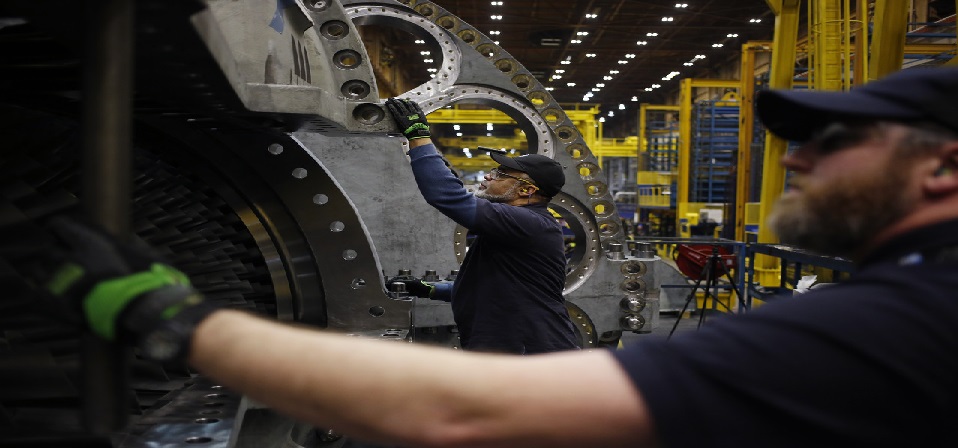
GE (General Electric) used to be the gold standard on the development of management systems and processes. At its zenith, GE was known as a factory where some of the finest business leaders were incubated, nurtured and prepared for leadership. With peerless business management and training systems, GE supplied a generation of CEOs to corporate America. The company pioneered and scaled many industrial age management systems and sold them across the world.  One of those systems is the Six Sigma: Six Sigma was invented in Motorola, GE through its former leader, Jack Welch, popularized it when the company adopted it. As Toyota perfected its Kaizen and Japan pursued Total Quality Management, GE gave America management systems for growth and success. But that was the old GE; the present GE is sick.

Last December, I offloaded on GE for many mistakes in its strategy. My conclusion was that GE should reach out to modern conglomerates like Amazon, Google and Alibaba to learn new things. I do believe that the concept of TQM and some of the old management systems used in the industrial age empires are not necessarily relevant in the knowledge economy. In the past, you built for absolute quality and perfection. Today, you build for a balance between quality and quantity. Yes, you launch a half-bake web product in the day and wait for comments to fix it in the night. You make a video game in the day and wait for comments to fix it in the night. You make a hardware product (yes voice assistant like Alexa) but the development never finishes because the AI that powers it in the cloud is a continuum. The ways products are engineered are changing. While that may not necessarily apply to making turbines, GE could learn from these modern firms.

Largely, the nature of the product distribution means that you can succeed by producing and learning from your customers while on the fly. So, a product can be built within 24 hours and launched with bugs which can be fixed. The “total quality” remains for the industrial age firms but not for many knowledge age companies.

I do think that GE needs to take management internships in Google (yes Alphabet), Alibaba or Amazon to have a better idea on how the world (knowledge) economy works. A “premier industrial company” does not mean that one cannot bring the knowledge business in the same economy. Alphabet runs any type of business today and finds ways it can build synergies across them. GE is simply fixated on making heavy equipment which may not be needed in the ways it has imagined. Everything is changing, including transportation, and GE is right to be thinking of leaving the locomotive business: with Uber, Lyft and others, locomotives may not be a really good business in the near future. Simply, GE lost the world; it has a lot of work to do, to recover. Its problems are severe, because it has sold some of its best assets, when it expected the world to align to its future, instead of adjusting to the emerging and evolving new world. A more agile Board may not be a bad idea: I need the badly beaten stocks to rise.

Yet, GE could still be fine if not for one of the worst strategic mistakes: exiting the financing business. That was the origin of its cashflow problems. The new businesses are not bringing free cashflow to compensate what GE Capital was providing.

GE wanted to streamline its business, cutting off GE Capital which was very important in deal financing and generating good cash flow. The cashflow has been critical in GE’s capacity to sustain its dividend tradition, despite the lack of growth in the stock. Selling GE Capital was also problematic in another angle: the GE Capital was making it easier for GE to sell its wares by providing easier capital to clients. Partly, GE could be struggling because of the absence of GE Capital.

Former CEO Jeff Immelt, left, former power division chief Steve Bolze and John Flannery, now CEO, left a 2014 Paris meeting about buying competitor Alstom. (source: WSJ)

This week, The Wall Street Journal tears the former CEO of the company, Jeff Immelt, down in a piece.

GE’s precipitous fall, following years of treading water while the overall economy grew, was exacerbated, some insiders say, by what they call “success theater.” Mr. Immelt and his top deputies projected an optimism about GE’s business and its future that didn’t always match the reality of its operations or its markets, according to more than a dozen current and former executives, investors and people close to the company.

This culture of confidence trickled down the ranks and even affected how those gunning to succeed Mr. Immelt ran their business units, some of these people said, with consequences that included unreachable financial targets, mistimed bets on markets and sometimes poor decisions on how to deploy cash.

Reuters has a piece also on the GE problem, making a case that Immelt mismanaged GE: “John Flannery, GE’s new chief executive, blamed the forecast, along with poor management and other factors, for the power business meltdown. In January, he warned the pain would continue this year “and potentially be worse than expected.”

All Together

For a company that prides itself as a center of management system to collapse in this way is unfortunate. The implication is that GE may be out of sync with the tenets of modern business processes. The industrial age time may be passing, and now it needs to learn what works. The strategic mistakes over the last ten years have been constant, and if GE does not stop making them, this iconic American company may go. Yes, it could be broken into pieces to salvage value for its investors.

MTN Nigeria IPO – This is My Projected Market Capitalization

0

MTN Nigeria plans to list on the Nigerian Stock Exchange.  I have done the numbers, and if the rumors remain, the stock would be cheap.  Yes, using numbers on what is happening on the sale of 9Mobile, I do think MTN Nigeria would be good for investors.  Here are the two techniques, relying largely on public information.

Method A: Using 9Mobile Value to Extrapolate

9Mobile is considering selling itself for $500 million which means the value is about $1 billion since the buyer would assume about $500 million of debts. This is still overly optimistic until the deal closes [yes, we cannot take it for granted that 9Mobile deal is done until the buyer pays].

On Thursday, PREMIUM TIMES reported that two of the interested bidders, Teleology Holdings Limited and Smile Telecoms Holdings, were submitted to the NCC as the selected preferred bidder and reserved bidders respectively on the recommendation of Barclays Africa, the transaction financial adviser appointed to monitor the sale of the company.

While Teteology made an offer of $500 million, Smile Telecoms reportedly offered $300 million, with their status subject to NCC’s final confirmation.

Teteology was however given 30 working days within which to pay the offer or forfeit its position to the reserve bidder. The deadline for the payment is expected to lapse sometime in the middle of March.

So, if 9Mobile which has about 17 million users command about $1 billion, MTN Nigeria with nearly 57 million users should command around $4 billion. I have taken the intrinsic value of the market positioning of MTN Nigeria when compared with 9Mobile. In other words, a user in MTN Nigeria brings more value than 9Mobile. So, largely, we can say that MTN Nigeria is worth about $4 billion.

According to the Guardian, MTN Nigeria would list around June 2018.

In Nigeria, MTN has set a June 2018 deadline for its IPO which is expected to be the biggest on the Nigerian Stock Exchange (NSE). The decision to list on the NSE was reached in June 2016 during negotiations on the industry record fine slammed on the operator after it failed to disconnect unregistered subscribers from its network as directed by the Nigerian Communications Commission (NCC).

The NCC recently disclosed that MTN has only paid one-third (N110bn) of the sum (N330bn). Regional media have reported that the company could raise at least N153bn through the local bourse – although the operator has refused to confirm this

[..]

Bloomberg reported that Standard Bank Group and Citigroup are advising MTN on selling 30% of MTN Nigeria on the NSE.

So, if MTN Nigeria should sell 30% of its value and MTN Ghana sells 38% and both generate $1 billion, I would see that as a discount. Let us assume that MTN Ghana brings in $300 million while MTN commands $700 million. Using that we can say that 30% of MTN Nigeria is $700 million. (Bloomberg noted $500 million for 30% though that was not the most current number on this).

But from 9Mobile sale price (not certain until it is done), I had modelled 30% of MTN Nigeria to command $1.2 billion. So, if they are going for $700 million, it means MTN Nigeria is coming at a big discount. If that is the case, investors would go for it.

Method B: Using MTN Group User Base

MTN Group has a market capitalization of $17 billion (around 244 billion rand).

MTN Group market cap (to convert Rand to USD, I am using 14 Rand to $1USD which is the open market exchange rate)

About 33% of MTN Group revenue comes from Nigeria. Also, Nigeria commands more than 25% of its total subscriber base.  Largely, Nigeria is perhaps the most profitable market for MTN Group. If you take the subscriber base alone, you can put MTN Nigeria at a market cap of $4.25 billion (25% of the $17 billion). By the time taxes are taken, the value of MTN Nigeria can down as $4 billion.

All Together

So, MTN Nigeria is worth $4 billion. If they sell 30% for $500 million-$700 million, it is coming at a big discount. That makes it a BUY.  I do believe that if there would be 1-2 telecom operators that would survive anything in Nigeria (WhatsApp, satellite Broadband, etc), MTN Nigeria would be among.

The Hottest Funding Sector Right Now In Nigeria

0

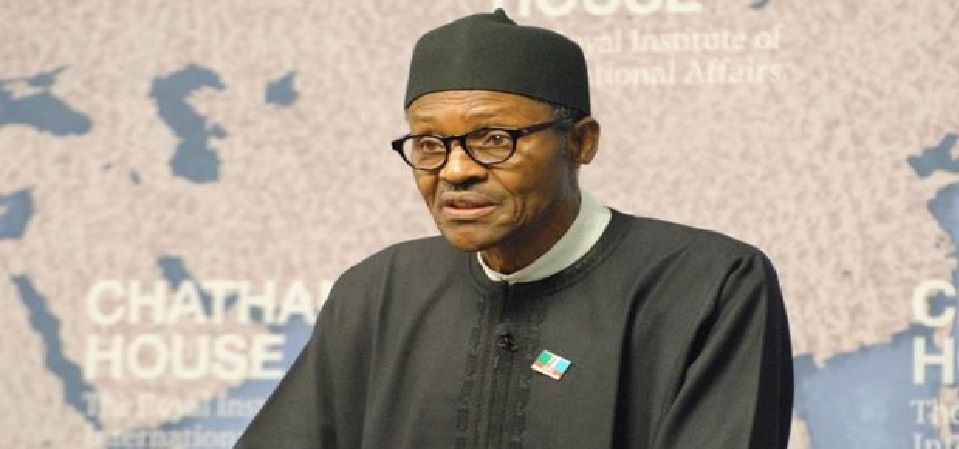
President Buhari did a good job this week, getting the Council of State to move funding for agriculture from $200 million to $1 billion. Sure, that is not really big, but it is a step in the right direction.

After a six-hour deliberation on the prevailing insecurity in the country, the economy and electoral matters, the Council of State meeting, presided over by President Muhammadu Buhari, yesterday reviewed the funding of agriculture from $200 million to $1 billion to cater for livestock and farmers.

The funds, according to council, would be disbursed through the Anchor Borrower and Commercial Agricultural Crédit Scheme (CACS) to boost the diversification agenda of the current administration and food security, among others.

Now that he has the funding, he needs to develop a better strategy to make sure the real farmers get this money. The National Identification Number (NIN) and Bank Verification Number (BVN) must be incorporated in any strategy the government adopts as it makes the funds available.

This Buhari’s call is coming when the President of the African Development Bank is also pushing for more funding in African agriculture. I do believe that the decade of 2020s would be one where Africa would have the turning point. Yes, we would have the capacity to feed more of our citizens.

According to Adesina, “For too long, Agriculture has been associated with what I call the three Ps – pain, penury, and poverty. The fact though is that agriculture is a huge wealth-creating sector that is primed to unleash new economic opportunities that will lift hundreds of millions of people out of poverty.”

[…]

The African Development Bank is also pioneering the establishment of Staple Crop Processing Zones(https://goo.gl/P8FvaY) in 10 African countries, that are expected to transform rural economies into zones of economic prosperity and save African economies billions of dollars in much needed foreign reserves.

“We must now turn the rural areas from zones of economic misery to zones of economic prosperity. This requires a total transformation of the agriculture sector. At the core of this must be rapid agricultural industrialization. We must not just focus on primary production but on the development of agricultural value chains,” Adesina added. “That way, Africa will turn from being at the bottom to the top of global value chains.” (AfDB newsletter)

Essentially, if Nigeria could double farm yield, we would reduce poverty by at least 30% since more than 65% of our working people are in agriculture. There is no other sector that holds the future of Nigeria than agriculture. I am very happy that President Buhari tabled that before the Council of State this week. You rarely discuss agriculture in Council of State. He made it happen, and they gave the blessing. Now, he needs to go and execute.

While we are talking of technology funding, the government has made a call that it has $1 billion to invest to seed farmers. It does not have to be in tech to be called capital. Nigeria has capital right now. If you want to farm, join cooperatives to access this funding which typically goes through Bank of Agriculture and cooperatives. Every LGA through the state State Ministry of Agriculture has a cooperative. You must join to tap into the funding.

University of Ibadan’s MSC Forum Discusses The One Oasis Strategy

0

Today, I received feedback that MSC (Agricultural Economics) students of the University of Ibadan are using the One Oasis Strategy to design new models for agricultural development. Yusuf sent me a solid presentation on how they have analysed the strategy and then integrated it into some core pillars in their MSC Forum programs.

A company’s position in the largely imperfect market is determined by its products which help to remove market frictions. The best product in a firm anchors its survival, just as oasis does in a desert. And every business must discover its oasis, if it hopes to thrive. Discovering the oasis is very important because it would help the company to pursue optimal allocation of the factors of production.

For competitiveness, there is a way a company can allocate the factors of production to make sure it supports the best product (the oasis which anchors the firm). If that is done, effectively, that best product will blossom, and other products in the business will also do well, as they will feed from the best product.

Simply, if you build your investment around that main product, you will find success, because those investments will have a clear internal “customer”, and that reduces market risks. In other words, if your new business investments are geared to support the best product, and the best product is doing well, it implies the risks on the new investments will be easily managed. Provided the best product continues to do well, demand on the new investment is assured (i.e. the customer exists, irrespective of the external market). That is the One Oasis Strategy.

The students extrapolated the work into competitive advantages of firms. The slide notes in parts “Although Prof Ndubuisi Ekekwe did not mention this, I suppose that the supporting node must be a strategic resource to prevent the drying up of the oasis (competitive edge)”. They went ahead to make new cases, focusing on agricultural chain. It is a very impressive work.

Sure, I cannot post the slides since this is possibly going to be part of postgraduate theses.

Meanwhile, I would be publishing the One Oasis Strategy Toolkit and also a Harvard Business Review piece is coming with research works we have done in three Nigerian companies on this.