DD
MM
YYYY

PAGES

DD
MM
YYYY

spot_img

PAGES

Home Blog Page 7209

WhatsApp Goes After Banks, Adds Payment

0

When Geopoll noted that Facebook has become the second largest ecommerce platform in Africa, after Jumia, many were surprised. But in reality, it should not be that hard to see: Facebook is a planet and any ecommerce company can only get a subset of that planet. In other words, most ecommerce players are only going to lure a small segment of the Facebook users to its platform. And that would require a lot of work. So, if Facebook makes it easier for people to buy and sell, it would dominate the category without a lot of efforts.

That explains why the news that WhatsApp has added payment in its services in India should concern many fintech players (and banks) in Nigeria.  India is always a test ecosystem for the developing market. Once perfected, in India, I expect WhatsApp to launch the product in other places including Africa.

WhatsApp has begun testing a new payments feature in India that will allow people to send money to other WhatsApp users, excluding merchant accounts. The feature is currently in beta, according to sources familiar with the company’s plans, but hasn’t been publicly announced because it’s not widely available at this time.

The company has been  working on support for a payments feature for some time, which would take advantage of UPI (Unified Payments Interface) and include support by a number of Indian banks, including State Bank of India, ICICI Bank, HDFC Bank, and Axis Bank.

Now, add banks to the list of entities which would be worried about WhatsApp. The telcos have hated the global messaging app; now the banks join the fray. The risk to banks is clear: if WhatsApp becomes very successful in payments, it may become a small bank of itself. In other words, if people decide to be leaving money in their wallets without moving them to their bank accounts, most banks would struggle [liquidity issues].

In other words, you can leave N100k in your WhatsApp account to handle basic things, and only move the money to the bank when you need hard cash. Under this scenario, the bank is merely serving as a dumb terminal which is good when you need to withdraw cash or pay in money. Once the money is in the wallet, you have no need of your bank. Think of what MPESA did to banks in Kenya: disintermediation which means the “removal of intermediaries in economics from a supply chain, or cutting out the middlemen in connection with a transaction or a series of transactions”.
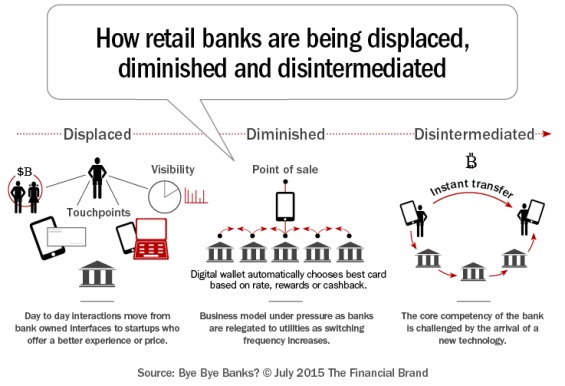
Most Nigerian banks are enjoying growing transaction-based fees with ATM charges and all kinds of charges including stamp duty on digital transfer. WhatsApp could help Nigerians to handle their financial transactions without hitting any bank server, and in the process avoid most of those fees. The excessive fees would push many people to adopt WhatsApp. Just load your WhatsApp wallet, and from there handle basic things of your life. Provided the money is leaving the wallet, banks would not access the stamp duty, SMS fees, etc.

And this would explain why bank apps may not add much value in coming years: they would be totally disintermediated. Who needs to leave WhatsApp to launch a bank app before he or she can send money to a friend chatting on WhatsApp? None, if WhatsApp supports payment and transfer. As that happens, watch out for Western Union, MoneyGram and other global remittance entities to begin to struggle as they experience a new level of competition in the market.

Some Comments from LinkedIn

  1. Another very insightful article from Ndubuisi Ekekwe I remember, about 13yrs ago, hinting Interswitch on the reality of disintermediation as they made type approval of POS terminals seem like a journey to space. Today payment aggregators have taken a chunk of their market share creating opportunities for agile companies like eTranzact International PLC AppZone Parkway Projects Ltd. Flutterwave Paystack to mention just a few. Similarly, mobile operators are stiffling a huge economic potential in the sector by failing to fully open their APIs for development of value added services that would generate new revenue streams and create wealth. Meanwhile, they are lobbying for the NCCto restrict use of WhatsApp and other OTT for eroding their revenues. Banks on the other hand are reluctant to evolve into the global trend #OpenBanking. They don’t seem to understand the importance of collaboration with FinTechs but see them as competition. We requested for mobile recharge API from a leading bank 5 weeks ago we’re still pushing emails back and forth today. I read few days ago PiggybankNG reached a milestone of mobilizing N1 billion savings. SureRemit raised ICO of $7m – the stories are endless. I hope banks would be smart & act swiftly

  2. Ndubuisi Ekekwe Online payments in China: In 2016, 500+ million Chinese used mobile payments and transacted 97 billion times on non-bank mobile apps valued more than US$8.51 trillion with Alibaba and WePay chalking 54% and 40% market share respectively. What the government has done to regulate online payment system is to have them route all transactions through a newly created Internet Clearing and Settlement Platform. A shift from current direct connection model which bypasses the Central Bank’s clearing system which makes it difficult for regulators to track and monitor the capital flow of those payments.


One Oasis Strategy – A Management Guide [PDF]

0

We have launched a store on Tekedia where I would be sharing frameworks, strategies, constructs, theories, cases, applications, books and other vital business and technology tools with focus on Africa in a globalizing world. We begin building that store with this management guide – One Oasis Strategy. All the documents would be concise and deep.

I am making this first guide free. Subsequent ones would only be available to Tekedia subscribers (past, present and future). We now have a single subscription interface ($20 or N7k in Nigeria per year).

Present subscribers you do not need to do anything; your active subscription covers this and future works.

To download the PDF, visit our store and click One Oasis Strategy [Free]. Download the PDF; please do not post online. The PDF is coming due to requests from subscribers who use some of our works in their companies and have asked for some contents in PDF format.

Consolidated Subscription. Posting First Short Management Guide Tonight

0

Working late tonight. I need to finish the first Framework for our new store on Tekedia. Later this night, I would post the One Oasis Strategy, fully developed, and expanded in PDF. This particular document would be made free. But subsequent cases, constructs, theories, etc would be under paywall.

$20 – 1 Year Subscription

[In Nigeria, it is N7,000 via bank transfer/deposit/Interswitch. Add to cart and continue].

This is our single point subscription for all contents on Tekedia. Once you make payment here, and subscribe, you would have an active subscription for one year. The active subscription covers all contents (past, present and future) including the booksexclusive articlescases, frameworks and more.

Our payment system supports PayPal (plus Visa, Amex, MasterCard, and Discover debit/credit cards) and Nigeria bank transfer/Interswitch

Nigerian Police for Rent; 38% of Police Protect 40k Citizens (0.022% of Population)

5

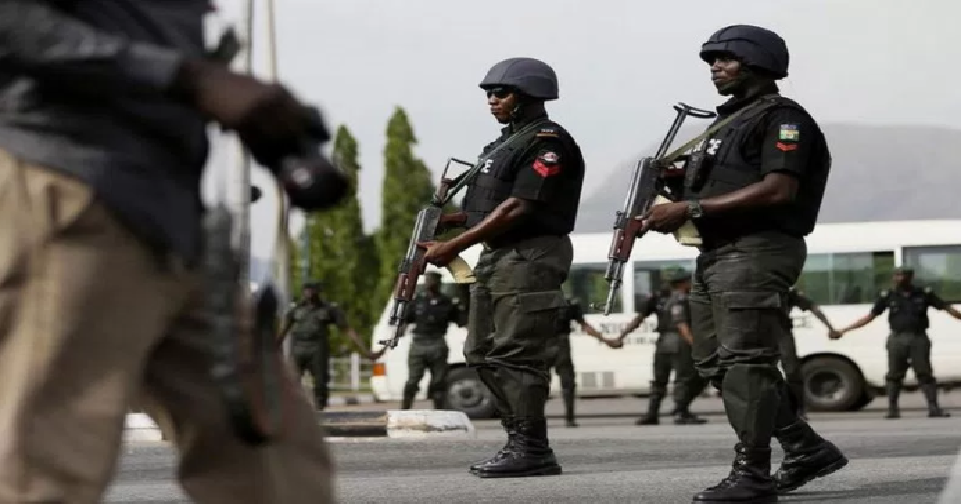
I see it at airports, homes, roads and everywhere: one citizen retaining a truck load of policemen to guard him or protect a trip of less than 10 minutes. It is always painful watching the elite of Nigerian Police guarding private and unauthorized citizens. It is simple: have few tens of thousands and the DPO can close the barracks and deploy all the officers to you.  The demand is huge, and for this to be happening, it means the police officers do great jobs.

Yes, our police guys are professionals when they are compensated and motivated. And even the Ogas know that. So, in a country of 180 million (take your number) people, with 400,000 police officers, about 40,000 of the citizens control 38% of the whole force. (The officers are sent in pairs, in some cases in truckloads. Some could go with two Hilux vans for one man. I expect the unique citizens to be 40,000). The implication is that the remaining 250k officers are now to police “180 million-40k people”. In other words, 38% of the police force guard 0.022% of the population

The Police Service Commission, PSC, said that more than 150,000 police officers were attached to VIP’s and unauthorised persons in the country. Nigeria currently has about 400,000 police officers.

[…]

“We cannot afford to have more than half of the population of the Police in private hands,” Chairman of the commission, Mike Okiro.

Nigeria is a puzzle indeed. That this happens is a shame: private citizens colonizing services we all pay for, converting the Police into their private properties. But why you may want to be hard on the private citizens, the fact remains that if they pay taxes, government should provide security. But where government is not there, you may not necessarily blame them for going for the best possible security they could afford.

So, at the end, you take this blame to successive governments which have refused to boost police capabilities on fighting crime [to reduce the need of this personalized police business] or simply outlaw it [let the rich buy their security from the private sector]. But I tell you – this commercial police force is not going anywhere. Yet, it needs to stop, if we believe in the equality of the Nigerian people.

Will Speak in NNPC on Tuesday on Fixing Fuel Scarcity

0

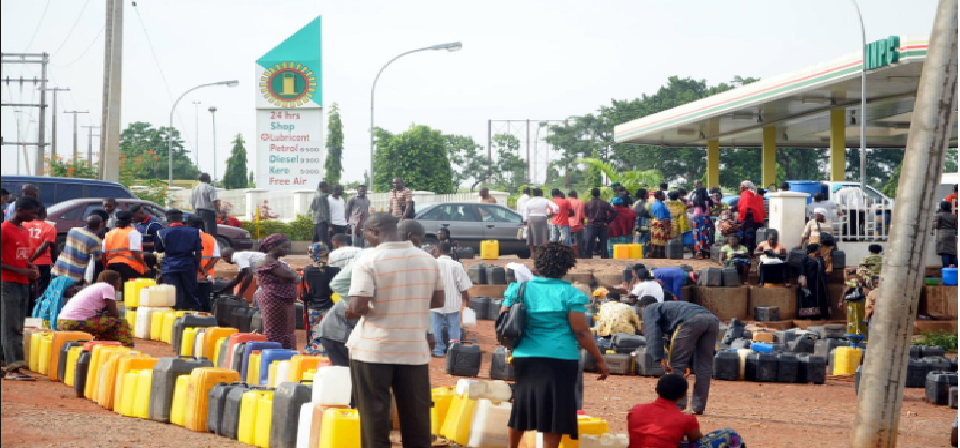
Some cities in Nigeria are experiencing acute fuel scarcity. It does happen in our great nation. It is a reminder that our systems are still at infancy. If not, there is no reason to run into troubles distributing fuel when the citizens are ready to pay. And the problem is not necessarily pricing: some are ready to pay at any price. The problem is Distribution & Logistics. Yes, the same issue that causes problems for ecommerce companies in Nigeria.

For ecommerce, you look at the marginal cost driven by geography. That marginal cost is composed of transaction and distribution costs. But transaction cost is typically negligible since it cannot be eliminated, and is not tied to distributive geography. But distribution cost is where the game is won, and it requires having a great process with solid pillars.

Though operationally it is at the lower phase of the chain, distribution in Nigeria is the upstream because that is where the knowledge base is uppermost, and the highest value could be created in ecommerce. The ecommerce portal is downstream; anyone can make a fancy site with nice SEO. The man that builds the best logistics system for the ecommerce companies would have more leverage than the sites.

The lesson: you have the goods in the warehouse but you cannot deliver to the customers because the distribution is broken. You cannot leapfrog that challenge. You have to solve it to have a great ecommerce operation.

That is the same issue with fuel scarcity. Fixing this must be uniquely Nigerian, and it would require a new architecture. I would be speaking in NNPC this week as we work on how to fix this national challenge. My focus would be looking at technologies that would enable our leaders to solve this problem. Please be guided on what you share; I am good in picking ideas from comments.