DD
MM
YYYY

PAGES

DD
MM
YYYY

spot_img

PAGES

Home Blog Page 7213

The Loop Management System for Innovative Firms

2

More than 2,500 years ago, Heraclitus, the Greek philosopher, postulated the timeless words: “Change is the only constant in life”. In business, change is what we deal with daily. We experience change and live change. Change brings disruption, dislocation and glory.

I know of only one insurance policy against the irrelevance change can bring in markets. The policy is Innovation. With innovation, you overcome commoditization and possibly outgrow your industry. Innovation unlocks new elements in firms, delivering better processes which drive productivity gains, at both public and private institutions.

Innovation hates bureaucratic institutions with their conformance working management systems.  Lacking organic renewal, those institutions with their systemic failures die, over time.

How do you build a firm?

Think of what happens in bureaucratic institutions. In those firms, one person makes most of the decisions. Ideas emerge from different quarters but they have to be ratified by one person who is the judge, the jury and the executioner. If he does not like the idea, nothing happens. Then contrast with how it happens in places like London, Silicon Valley and Paris. There, the idea could have many routes to funding and then products emerge. In that case, many people –thousands- would be making decisions on the ideas.

Management is nothing but “managing” things. The foundation of management is designed to give order in the industrial age economies where the management systems advanced. Bosses manage – they bring order, discipline, focus, efficiency, alignment and control. Interestingly, most management systems were not designed to help people to create, adapt and innovate.

Your challenge in leadership is to find a way to take out “management” (yes, the bureaucracy) which exists in your firm while retaining the great benefits of management which include coordination, order and control. I want you to unbundle the thinking where only you can be the jury, the judge and the executioner.

That was what killed Kodak which invented digital photography but failed to adapt. The management did what was supposed to be done [controlled resources to create digital photography], but it needed another layer to make the leap. That layer is unlocking the mindset out of products and services in order to critically understand the elements of the markets. Those elements are the frictions which the firm exists to fix.

The liturgy of management may put you into the loop of products and services but that layer would give you the higher call. Kodak thought the business was making film photography. Unfortunately, Facebook helped it to understand that the business was really about sharing moments and memories.

Build a business where your staff members are like the Silicon Valley entrepreneurs who have different paths to make ideas become products. They become innovators within the firm, helping you make great things. I call it the Loop Management System where everything revolves around all talents, irrespective of the levels of the positions. It is like a loop where every part matters. In that ecosystem, the jury, the judge and the executioner are now structured to be the team, and not just the boss.


All Hail the Category-Kings

0

Two cases:

Snapchat’s latest big redesign is really, really unpopular. Remarkably, a million people have signed a petition calling on the company to roll back the change, which separates branded content—including that from celebrities and “influencers”—from regular people’s updates. Snapchat says the change was important in order to combat fake news, but users say the new app is difficult to use (Fortune/BBC)

Facebook said it would prioritize local news. In yet another announcement about its News Feed, the company said users will see more posts from local sources “so that you can see topics that have a direct impact on you and your community and discover what’s happening in your local area,” as part of its ongoing efforts to “prioritize high-quality news.” (Quartz/Fortune)

Discussions

Starting with Facebook, I am not really sure it is its decision to make when it comes to contents for users: local vs. nationwide vs international. There is no correlation, in my opinion, between local news and high quality contents. Also, there is no reason why everyone should care for local news. In America, it is more significant unlike Nigeria where we do not have local news. Guardian is not local news; local news would have been a newspaper from your village or local government.

Now SnapChat has got one million people asking it to revert to old design. Yet, the company is saying it has made up its mind on what it wants to do. It is like, there is nothing you can do about it: get used to our new design.

This is the fact: the web business is unique because of network effect which makes it harder for competitors to break in. Social media giants can experiment with users because there is a huge switching cost since most times, there are no alternatives or substitutes. It is either you are in Facebook, for what it offers, or you are not interested in that particular category of service. You have no alternative for Twitter. So, it goes. Even though, it costs nothing to open another service, the reality is that you have none as a substitute.

In economics, we talk of substitutes [good for the old industrial age business]. The web offers us so much in terms of unconstrained distribution, and the category-kings have built products which deliver value that finding substitutes means giving up on the specific categories. Yes, you do not really have substitutes at category levels. That explains why SnapChat could boldly ignore a petition signed by one million of its users. An industrial age business would have come out with an apology, but in the world of web, it is not necessary. If you are a teen and you do not want to use SnapChat, it means you are leaving the category since Facebook is not SnapChat.

These firms have found success and they know they are positioned to do whatever they want. A U.S. telecom company, T-Mobile, employs 300 people purely for its social media management, notes Fortune: “The company’s social media team has 300 people committed to marketing and responding to customer concerns”. You do not commit such resources when you do not see value in that ecosystem.

So SnapChat and Facebook can readily impose their understanding of the world, because they have used Inversibility Construct, and they got everyone hooked. When that happens, you have category-kings in the land. When subjects revolt, not all kings change hearts.

Forget WhatsApp, Telcos have a New Basis Competitor

0

When does disruption happen? It happens when a competitor offers a new basis of competition. In other words, you elevate the game orthogonally to what the incumbents are doing. It goes beyond parallel competition where everyone is following the same trajectory. In the disruptive scenario, you chart a new path, different from others.

WhatsApp is a great substitute to some telephony/broadband-enabled services but WhatsApp would need telcos to be in business. Without telcos, there would not be any WhatsApp or WeChat in Nigeria. Home Wifi is not still common here. Yes, even though WhatsApp could destroy value, the telcos would always have remnants to pursue.

But hold on: something new is coming in town. SpaceX has the blessing to run satellite-based broadband services around the world. This one is not a substitute, this is creating a new basis of competition, and it is potentially disruptive. Simply, you do not need a telco to have access to SpaceX services. SpaceX broadband would displace services offered by telcos. That is a challenge which telcos must deal with.

A US regulator backed SpaceX’s plan for satellite internet service. Federal Communications Commission chairman Ajit Pai urged the approval of an application by Elon Musk’s rocket company to offer broadband access in the United States and around the world. (Quartz)

I noted this last June when I wrote:

The biggest threat will come from satellite companies like ConnectAfrica which will reach communities at cost model that can keep the terrestrial players looking for cover. Elon Musk, not Glo or Airtel or Etisalat, may be the biggest competitor to all telecom operators in Africa in 5-10 years, with satellite broadband. He can crash broadband cost by 90% and suddenly GSM will be recorded only in museums. But that will happen if MTN Nigeria and others do not take action today.

And this continues to converge to my prediction that by 2022, we would attain equilibrium in most enablers for online services in Nigeria. That is the year I am telling clients to wait before they launch most ecommerce and online operations in Nigeria. Data does not lie, and using my internal model, and how it happened in China, Brazil, US and selected EU countries, I concluded that 2022 would be it: a year of immersive connectivity.

The Buhari Paradox – My Social Experiment with Nigerians

0

Over the last two days, I did an experiment. It was nothing scientific; so do not start questioning me on my controls. I was just trying to understand the state of the nation. I provided two options to some of my friends, people in my network, cab drivers, etc, and asked them to make a selection.

Option A: You are given a house, with no money, but with top-grade security from army, navy, SSS, police, etc to protect the castle.

Option B: You are given an equivalent of the same house in Option A, but no security, but with truckloads of money in different currencies.

I asked them to make a choice: 100% selected Option B.

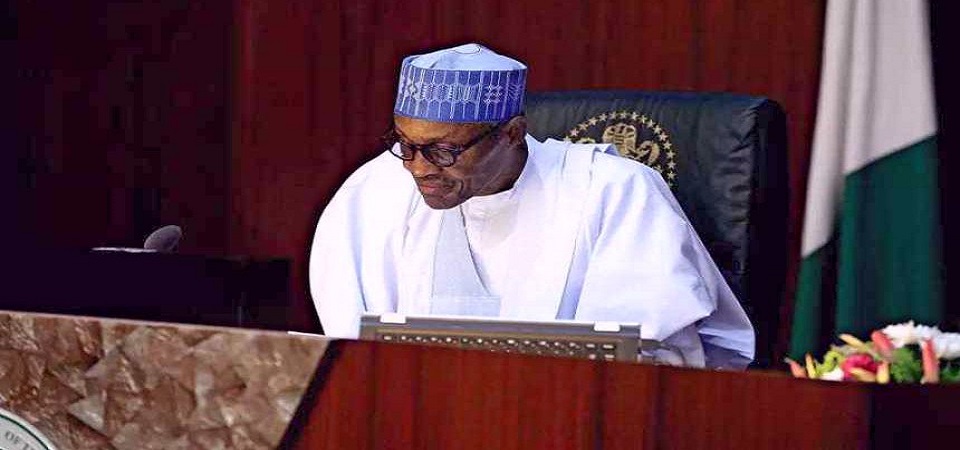
Now, I told them that President Buhari might have chosen Option A. He has more than 80% of his security appointees from the North and 80% of the economic appointees from the South. Yes, in Mr. President’s appointments, he might be (ironically) boosting the South than the North since security cannot buy economic power but economic power is security.

People, do not make too much out of this. But I would have wished that President Buhari balanced the appointments. Northern Nigeria needs more economic power than gun-power. I do travel there a lot. According to UNESCO, World Bank and other respected institutions, a child born in Umuahia (South) has a higher chance in life than one born in Kano (North). And Emir Sanusi did note, while a CBN governor, that Onitsha had more microfinance banks than the whole of Kano.

In Nigeria, our press must improve the game. Instead of talking about marginalization on security appointments, there is an opportunity to shape the conversation for Mr. President to think deeper on some of these appointments.  It requires looking at alternative elements in policy formulation. The North has no major newspaper and the implication is that we get more perspectives from the South. The top five newspapers – Guardian, Sun, Thisday, Punch and Vanguard – are largely southern. When that happens, the press could fail in providing balance on nationwide conversations. Why? Everyone writes based on his/her experiences, and if the southerners run the press, they would largely shape the contents from their views.

Again, nothing here is scientific.


This is the Summary from Francis’ LinkedIn Comment

@Kazeem, I guess you got the spirit of the piece wrong. It’s not even about the President’s performance, ofcourse some of us aren’t interested in discussing such here. We are talking about a disequilibrium or misalignment, whereby the northern part aren’t equipped for economic emancipation; but the media narrative centres on security appointments. Forgetting that the current setup isn’t a sound decision and it’s unfavourable to the North, but you have to look deeper to understand the implications of these things.

The way it is right now, the North is in bigger mess, but on the surface, it’s easy to believe that they are in charge. I think this is what the piece is about, it’s not so simple grasp the underlying and important message therein.

Why Jevinik is Cooking for Middle Class Nigerians

0

If you live in Abuja, Lagos and few other cities in Nigeria, it is very possible that you might have visited Jevinik. Jevinik is unlike any other eatery, restaurant or fast food joint in Nigeria: it is a place you want to be. Walk into the restaurant, and you would not smell anything food. They have taken care of that which usually makes eating Nigerian food a challenge for most. But the brilliance of Jevinik goes deeper: Jevinik created a new category in the restaurant industry. Yes, it pioneered what I would call “mid-luxury restaurant”.

Typically, fast food joints serve food really fast. If you go to Mr. Bigg’s for food, you expect to get it within 10 minutes. The same happens in Tantalizers. These entities have the food prepared and once you pay, they dish out the portions. But note that you have to line up, to get the food. This is Case #1

Also, if you go to the more affluent restaurant, you would take a seat, and someone would come and pick the orders. Later, the food is brought. Typically, the time is upwards of 15 minutes. This is case #2.

But in Jevinik, it provides the speed of fast food even when allowing you to take a seat. And at the same time, you are not going to break a bank account to pay. Yes, the waiters come to take order, and when the bill is written, it is not over the roof. The quality of the food is optimal, and the pricing is fair. You eat the food, pay the money and you feel generally good about yourself. Largely, Jevinik business process has merged the two cases of #1 and #2, taking the best of both.

The capability to offer optimal quality food, at high speed service, under a packaged “premium experience” is why Jevinik is cooking for middle class Nigerians in some of our big cities. The fact that you take a seat, and still get the food within 5 minutes at fair price, is a key differentiator in that entity. No eatery place in Nigeria comes close. Jevinik has created a new category in the industry. And Nigerians are responding along with foreigners who also come to eat therein.  The hygiene is great, and no customer comes with a mat.

I wrote a small case on Jevinik last month as part of our advisory services, using it to educate our clients on how someone can find value by coming up with better processes within a largely saturated sector [people with money, looking for what to invest on]. You do not need to build a rocketship to find alpha in Nigeria. With most sectors at stasis, novel thinking is what you need in Nigeria.

People, Jevinik is cooking; we are eating. I hope it continues to perfect this enviable process of excellence in the broad restaurant sector of our nation.