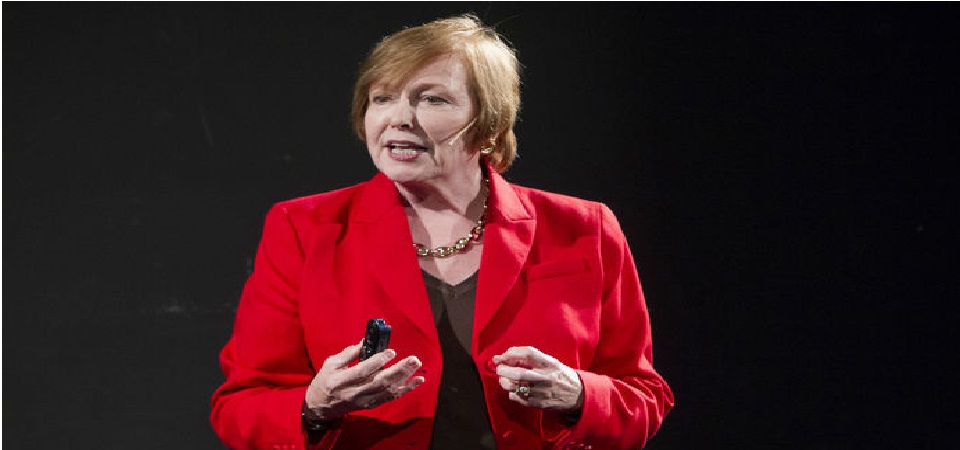
A woman resigned from her work, but this particular resignation was not typical. She was someone the world looks unto her agency to control and prevent diseases. Brenda Fitzgerald was the director of one of the most important agencies in the world: U.S. Centers for Disease Control and Prevention (CDC). Nearly every country derives its disease control and prevention frameworks from this U.S. entity.
But Brenda was a worker. Yes, just a worker – the people that go to work and leave values at home. All they care for is put 40 hours per week and wait for the glory in the bank account. Brenda bought stocks of tobacco companies. The woman whose main job was to battle tobacco was funding Tobacco.
Brenda Fitzgerald, director of the U.S. Centers for Disease Control and Prevention (CDC), resigned abruptly today. She stepped down on the heels of a report from Politico that she had purchased stock in a large tobacco company 1 month into her tenure leading the nation’s top public health agency, which devotes itself to persuading smokers to quit and warning kids not to take up the habit.
“On August 9, one day after purchasing [between $1000 and $15,000 of] stock in global giant Japan Tobacco, she toured the CDC’s Tobacco Laboratory, which researches how the chemicals in tobacco harm human health,” Politico reported.
The purchase preceded Fitzgerald’s 7 September 2017 signing of an ethics agreement promising to recuse herself from any activity that could pose a financial conflict, Politico reported. Fitzgerald, a former commissioner of public health in Georgia who took the reins at CDC’s Atlanta headquarters last July, did not sell the tobacco stock until 26 October 2017
I see her action as extremely repulsive not just for buying tobacco but even thinking that such could be normal. Thousands of CDC staff work daily to eliminate tobacco products in cities and communities, and yet we had someone as head of CDC so disconnected that she found favor with Tobacco. Her actions were unbelievably shameful. The good news is that she is gone, to possibly continue parking Tobacco. Yes, to make money. But thank Politico that she would not be near where decisions affecting the health of millions would be made.
From politics to healthcare administration, we have people like Brenda. They are workers, only connected to work, just for the money. They have no core values. They are paid to fight death but in the night they produce weapons for warfare. They see numbers instead of sons, daughters, fathers and mothers when they make decisions. We do not need them in public services.
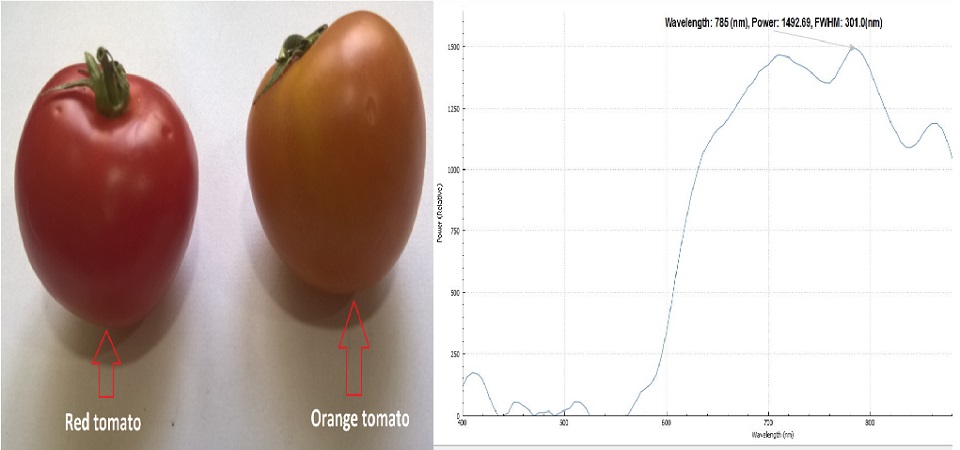
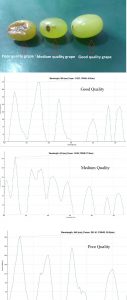
We waste a lot of farm produce in Africa, and knowing the quality of each produce remains hard. Due to quality asymmetry, the buyer and seller cannot close deals without physical inspections. Most times, things happen because a good orange for you may be average for me depending on prior oranges I have seen. For some, it may even be a poor orange. How do you make this science with the taste of Africa’s unique situations?
We have an idea: build a sensor which when you attach it to a smartphone, a farmer can make that process a science. That way, a merchant can pay for produce even when not in that vicinity. Instead of sending images in extremely challenging low networks, we send data points which can be reconstructed at the other end, explaining the state and quality of that produce.
I want farmers to focus on their works. I want merchants to help them find new markets. I want them to come into contracts largely based on science, not speculation.
That is what I am working on, to provide common sense tools that would help African farmers communicate with merchants, restaurants, families, etc on state of the produce. I want to remove the huge marginal cost where you expect merchants to inspect before they buy. Technology can do the inspection, providing reliable data on quality to make trade happen.
Of course, you can use our sensor when you go grocery shopping. It becomes your eyes and helps you make better decisions. You can eliminate non organic food because our sensors would tell you chemicals in that produce.
We are in the lab, designing, testing, validating and examining crops. We are getting close to this. The promise: advance new architecture in African agriculture.
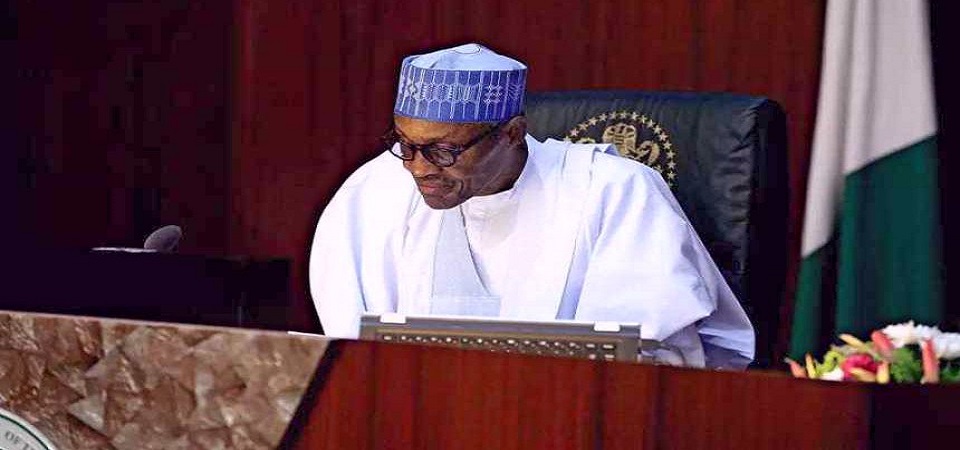
President Buhari signed Executive Order 5 today. It was not a typical one: this one has meat and bone. Simply, the order is designed to give local companies preference in public procurement of science, engineering and technology components. In other words, governments would be required to choose local companies like ATB Techsoft, SystemSpecs, and CWG over foreign behemoths like Microsoft and Oracle provided the local companies have competitive products that could match the foreign ones.
The Executive Order is expected to promote the application of science, technology and innovation towards achieving the nation’s development goals across all sectors of the economy.
The president, pursuant to the authority vested in him by the constitution, ordered that all ‘‘procuring authorities shall give preference to Nigerian companies and firms in the award of contracts, in line with the Public Procurement Act 2007.’’
[…]
In the proclamation entitled ‘‘Presidential executive order 5 for planning and execution of projects, promotion of Nigerian content in contracts and science, engineering and technology,’’ the president also directed Ministries, Departments and Agencies to engage indigenous professionals in the planning, design and execution of national security projects.
This is a real deal, and in a way Mr. President is challenging local companies. Yet, there is really nothing new in this Order if you read the Public Procurement Act 2007 where MDAs (ministries, departments and agencies) are expected to be biased to local companies. Unfortunately, we are not necessarily there. And without the capabilities, MDAs have loopholes and waivers to award contracts to foreign companies.
Former president Obasanjo tried the same strategy on laptops and computers, mandating government units to buy from Omatek, Zinox and others. Within months, the MDAs revolted. Just like that, waivers emanated on issues of quality. Yes, they became liberated to spend our money on HP, Dell and Lenovo.
Would this time be different? Possibly, if Mr. President has followed up with at least $250 million commitment to R&D funding specifically structured for growing private technology companies but administered by commercial banks. That is how he can make the Orders stronger, by having a clear roadmap to nurture local kings that would take advantages of them. I am very confident that if Mr. President promises that Nigeria would shop local, and provides that support, our entrepreneurs would be encouraged to meet the needs.
It is slam dunk: government is the largest customer any sector can have in Nigeria. If it commits to buy say local software, most local software companies would blossom through revenue growth. That would create a virtuoso circle as they become better by having resources to improve their products.
Executive Order is great; you have ceremonies. But they do not move electrons and atoms, or how they are arranged to make great technology products. The great Order for Nigeria is funding the pipelines to make the innovations happen. Why? Markets decide the best value and even governments want better deals. If Nigerian companies cannot deliver, any policy would fail. But where we do deliver, governments would congregate. We need to fund science, engineering and technology: yes, Executive Order would not fix the abysmal state of our university system.
Make a great Order: provide 24/7 electricity in all university labs. And within five years, we would see greatness out of Nigeria. That should be the Executive Order 6. I am confident Mr. President would pursue that.
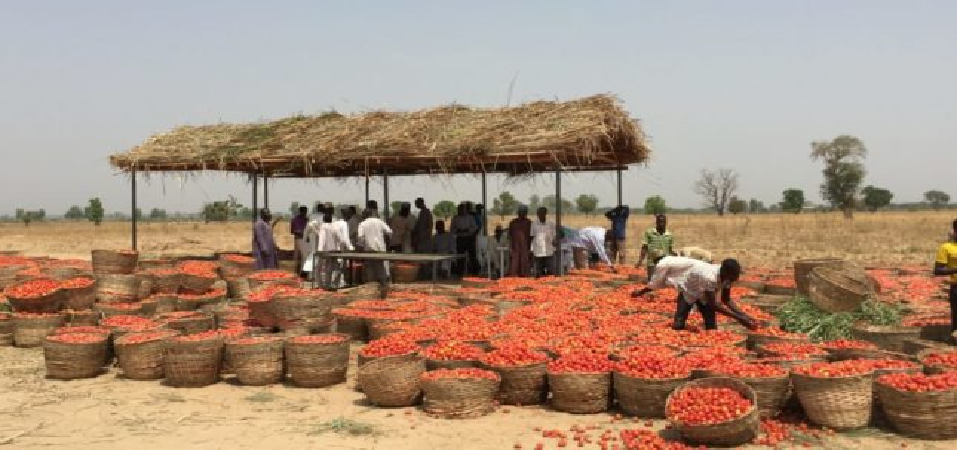
Agriculture is the lifeblood of Nigeria’s economy. Forget hydrocarbons; that one is for the money men. More than 60% of working Nigerians are employed in agriculture. Unfortunately, the agricultural practice in the land is heavily subsistence in nature with practically no productivity gain in years. The implication is a great stasis requiring government to feed farmers. Yes, you read that well: government needs to send food to farmers to prevent severe hunger.
But change is coming, and we are seeing a fundamental reboot in the sector. Government is working now to fix one of the root causes of the agricultural paralysis: limited agro-insurance. According to Punch, Nigeria plans to increase agro-insurance from the paltry current 500,000 farmers to 3.8 million farmers (too bad the reporting did not give timeline). Sure, the new target is still small, but that is progress.
The Federal Government is planning to increase insurance coverage for the agricultural sector from the current 500,000 farmers to 3.8 million farmers.
The Managing Director, Nigeria Incentive-Based Risk Sharing System for Agricultural Lending, Mr. Aliyu Abdulhameed,while speaking at a forum in Abuja, noted that the move would help increase the level of output for the sector.
To achieve this, he said NIRSAL had commenced discussions with Royal Exchange Assurance, Nigeria Meteorological Agency among others for the development of a technology-driven Hybrid Index Insurance product.
Most private insurance companies have not paid attention to agro-insurance because the process is extremely challenging because of the small sizes of our farms. Yes, when you put men and women on suits to administer such programs, finding profitability becomes challenging. The only strategy for decades was to ignore agro-insurance in Nigeria, leaving it mainly to NAIC (Nigerian Agricultural Insurance Corporation), the government agro-insurer. Of course, even NAIC does not have scale to do much.
So, we have remained where we are, focusing on mobile apps innovation when the most important innovation in agriculture remains elusive to farmers for decades. But modern technology is changing that. Yes, you can administer the programs and still find value even for small farms. If the government can unlock insurance, a catalytic element of modern commerce, it would reboot Nigeria by making farming a business.
We need that glory because if we can fix agriculture, we would fix poverty. And if we fix poverty, our democracy would be magically strengthened.
One of the best things that happened in Nigeria during the 2015 recession, and the associated foreign exchange scarcity, was Nigerian entities being forced to look internally to find solutions. With no foreign exchange, there was no option to even consider importation. As I explained in a Harvard Business Review piece, even paint makers were innovating. Of course, the recession was a very challenging time across our industrial sectors, from real estate to banking, insurance to pharmaceutical, as many lost their jobs. Yet, in the midst of the miry clay, something positive happened: our indigenous startups got second looks.
The paralysis was contagious; even banks struggled. Within months, they started engaging local companies to provide some elements of their software needs. Many companies benefited immensely on that industrial redesign, moving from foreign software to local ones. One of them is Lagos-based ATB Techsoft Solutions. It is a relatively young company that is yet to celebrate its fifth birthday, but it has blossomed in what it does. It has mastered the business of scaling innovation where great products, out of software R&D, are massively scaled across market segments. It generates revenue that would make most insurance companies in Nigeria envious.
ATB Techsoft Solutions Limited is an IT Solutions delivery Company incorporated … to undertake and provide various IT as well as advisory services to the banking and manufacturing sectors of the Nigerian economy including Government departments & agencies as well as educational institutions.
The founder, Abiodun Atobatele, saw a need (that friction at heart of free enterprise) in the market: Nigeria would be a market for indigenous software solutions that offer unlimited customization capabilities which are largely impossible with any foreign software. He left where he was employed and became an entrepreneur. Eminently brilliant, he started coding, not for fun, but for alpha. Yes, he wanted to fix frictions in the market and expected to be compensated by the markets. Doing that requires delivering excellent solutions to clients and partners. Today, ATB Techsoft is growing and providing employment to many Nigerian citizens.
Selection of ATB Techsoft team (by my right is the CEO of ATB Techsoft, Abiodun Atobatele)
The All-Industry Portfolio
Abiodun wants to build a local software powerhouse that could compete with any foreign brand in the Nigerian and broad West African markets. Unlike the complainers who delight in reminding us that Nigeria has no talent, he saw all he wanted in Nigeria. He hired tens of Nigerian graduates and gave them assignments to build technologies and solutions which their brothers, sisters, parents and friends would use in our economy. The nerds and the geeks responded.
Today, ATB Techsoft has one of the largest collections of indigenous software portfolio in Nigeria covering any sector you can imagine, for any need you can think. I mean there is no industry it does not have enterprise software. Its development process is supreme. That process is the reason it has achieved success within its short existence.
Selected ATB Techsoft Brands displayed in its office
ATB Techsoft grand vision is to deliver a one-stop software solution across market sizes and industrial sectors in West Africa. All the solutions are packaged and promoted under its oasis, the FinUltimate.
Finultimate offers the most comprehensive portfolio of applications software designed to help companies improve operational effectiveness, profitability, product innovation, distribution / delivery channel growth, customer relationships and enterprise information management.
FinUltimate is an African brand and would lead the future for ATB Techsoft. It is making software in ways that allows small companies to afford them, and get the benefits of productivity gains which software make possible. I am a believer; I love the software for my businesses. With ATB Techsoft, I do not have to worry on endless licensing fees with foreign companies. Call it pricing software in the old ways Africans used to break kola nuts: giving more to make your neighbor feel comfortable in your house.
ATB Techsoft has a multi-pronged growth strategy: it has a very profitable software business and a technology advisory service business. The business is built into four groups which include Infrastructure, Security, Networking, and of course the Software. All are closely integrated in the business. Through these groups, it serves tens of clients in Nigeria and beyond. Its services have also extended into central Africa.
My best part in the firm is the open innovation house where the geeks hang around as they plan the next industry to eat with software.
ATB Techsoft In-house Open Innovation Space
Software for Nigerian Companies
Abiodun plans to make its software to work for any business in Nigeria. It has built this end-to-end software solution that can help any business in Nigeria. Indeed, in anything software can do, ATB Technsoft would provide the necessary software. And because there are many things software can do, the company believes it has opportunities.
I asked him how he plans to make that happen. He explained that it makes sense for any company with a bank account in Nigeria to get most of its software largely free from the bank. He wants to be the one supplying the software to banks in order to make bank customers happier. This is what he is working on right now. That sound exciting that you can get your enterprise software from your bank, and with the software you can handle HR, accounting, taxation, supply chain management, fixed asset, inventory management and more. All that for free through your bank.
Indeed, he is providing a new level of customer engagement opportunity to his banking partners. That would be great for Nigerian businesses. The massive savings from importing foreign software would be catalytic to local companies. I have gone ATB Techsoft in my business and we indeed love the seamless integration that comes with its technologies. If my bank makes that possible, that would even be priceless. I think a synergy exists here between ATB Techsoft and our banking sector. If they integrate the banking transactions into the software, one would expect more productivity gains in how our local firms function.
All Together
ATB Techsoft has done well over a very short period. But the future is going to be competitive since every market share it wins, someone is losing. That is why it has to vigorously innovate. But looking at the faces of the young people at the heart of the firm’s mission, there is no need to doubt the promise.
Furthermore, the firm has to also deal with issues of software piracy and making sure that its intellectual properties are protected and respected. I feel so excited when I see some local banks solutions and I know that some of them are now created and supported by companies like ATB TechSoft. Getting Nigeria out of our stasis would come when companies like ATB Techsoft are supported not just by the private sector but by governments. That is how you turn a company with dozens of staff into one that employs thousands.
The promise of that Nigeria with optimism, opportunity and unbounded energy would only come when we look inward to find solutions to frictions that exist in our markets and economies. ATB Techsoft is a messenger of that redesign which is critically needed in our great nation.
Disclosure: ATB Techsoft is a Fasmicro Group Advisory Services client