

The internet is the fastest growing infrastructure in our contemporary time, and it continues to change the way we live and interact with organizations. As internet technologies permeate our lives, protecting some confidential and sensitive data becomes harder as cyber-attackers pry on them. Globally, cybercrimes are increasing day by day, and they represent a huge […]
Summary of APC Committee Recommendations – Fiscal Federalism, State police, etc
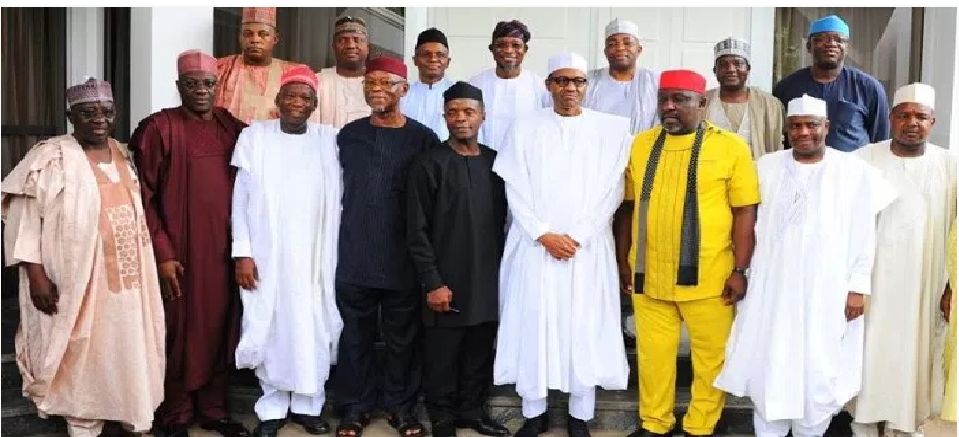
The All Progressives Congress committee on restructuring has submitted its report to the National Chairman of the party, Mr. John Odigie-Oyegun. The committee which was headed by Kaduna State Governor, Mallam Nasir El- Rufai, was set up in August 2017 to architect the position of the party on true federalism. Find below a summary of the report on key issues:
- Merger of states: So, the first recommendation for which we have proposed a draft bill for constitution amendment is the merger of states. Though there was no consensus from stakeholders on the merger of states, we felt that we should propose a bill that allows state to merge and it is up to the party, the National Assembly and the people of Nigeria to decide on that. But we drafted a bill that is there for the party and the government to move on with.
- The police: We are recommending that police should be both federal and state.
- Fiscal Federalism: This again is what we got as feedback from majority of Nigerians that the state should get more revenue and the federal government should slim down a little.
- Independent candidacy: … the committee still recommends that the party should support the demand for widening the political space by allowing for independent candidates. We believe that this will make the political party more honest.
- Local government: We recommend that the current system of local government administration as provided by the Constitution to be amended and the state be allowed to enact laws to local government that is peculiar to each of them.
- Revenue allocation: We have also proposed amending Section One of the Allocation of Revenue Federation Act to reflect this reality. We have also proposed amendment to section 40 to the Value Added Tax Act. They are in Volume Two. There is the question of what people call resource control. The committee noted the growing agitation by states to exercise control over natural resources within their respective territories and pay taxes and royalties to the federal government. If this recommendation is taken, then there will consequential amendment.
PRTimes has a detailed breakdown.
Global Executive Job Search – Join My Client Halogen Security Company

Preamble
Our client, Halogen Security Company, is one of the largest institutions in West Africa. It is an industry-king in the broad nexus of physical security. It places thousands of human professionals in key organizations across industrial sectors in leading markets in the region. Our firm has worked with Halogen Security Company to develop a new strategy geared to make it a leader in digital security, and enterprise security risk management, covering technology (cybersecurity, IoT, electronic security), advisory services, talent risk management, training and more. HSC desires to become a one-stop security leader where clients would find solutions for their physical and digital security needs.
“We [Halogen Security Company] are the number one provider of security solutions in West Africa. Having been in operation since 1992, we have been able to attract and retain several select clients some of whom have been retained from inception until date. We have acquired vast experience in virtually all facets of security and protection of lives and property….”
[…]
In an Open World for Innovation, Halogen provides the Future of Safety and Security Solutions, the management team are prepared to respond very fast to the unpredictability of the new world.
We operate dimension scenarios and forecast systemic interactions that are open to innovative thinking companies, by utilizing new bases of competition (e.g. smart, connected products & open ecosystems).
Our ‘Safety in An Open World’ proposition allows for an enterprise-wide innovation platform that will champion the future of safety and security in Africa.
With the conclusion of the new strategy, we are helping HSC to hire a business executive to lead the redesigned business division. This search is global.

The New Role
We now have an opportunity for a senior, experienced professional to join the company to execute the digital strategy. The job is based in Lagos, Nigeria and would involve leading about 3 new subsidiaries.
You Will
- Lead the business development across all business sectors
- Deepen market growths for the new subsidiaries which will operate under the new digital business group
- Constructively contribute to the development of talent pipeline necessary to execute the digital strategy
- Motivate, inspire, coach and develop team members to create a high performance work environment
- Optimize profitable revenue generation through revenue growth plans, and effective assignment
- Develop the firm’s digital security presence and profile in key markets in West Africa and beyond
- Deepen linkages with governments nationally through networking, speaking and thought leadership
- Work collaboratively with the non-digital part of the business to deliver comprehensive security solutions.
You bring to the role
If you are commercially mature, articulate, resilient and astute in dealing with clients, and you have experience in the broad domain of digital security, this is a fantastic opportunity for you. You will have:
- Entrepreneurial vision to understand changing industrial drivers, and capabilities to reposition business entities for new frontiers
- Sound technical mind with awareness of business operating environments
- Relevant tertiary qualifications, coupled with a strong background in complex business development environments
- Deep experience in enterprise digital security with a strong track record in profitable revenue generation
- Experience and success in team building and leadership
- A successful history of building client relationships of mutual benefit
- Ability to contribute to business strategy
- A collaborative-style and a reputation for acting with purpose, commitment and integrity.
Where to send documents
In confidence, send your resume with cover letter to dmccain@fasmicrogroup.com before Feb 5 2018.
About Fasmicro Group
Fasmicro Group is a young and dynamic company, and an African brand. Built on the tripod pillars of integrity, professionalism, and entrepreneurial spirit, Fasmicro Group delivers quality across its business segments and sectors with unparalleled insights. Our key focus is Africa, and we operate three main services – technology/engineering, investments and strategic advisory. Our clients include startups, multinationals, and governments, covering varying industrial sectors in key global markets. We have worked for some of the most influential business leaders of the 21st century.
Buhari Government Responds to Obasanjo, Praises N7.8B Remitted by JAMB
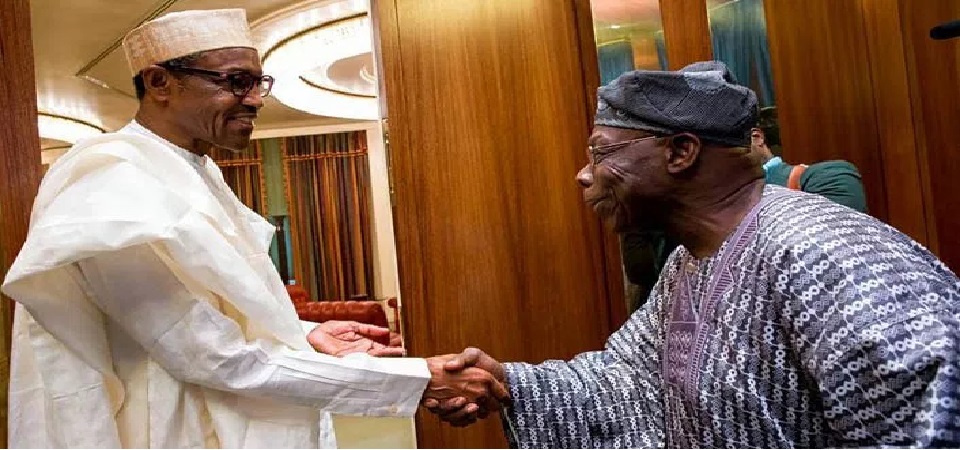
The Minister of Information and Culture, ALHAJI LAI MOHAMMED, has responded on behalf of the federal government to the blistering attack by former President Olusegun Obasanjo to the government of President Muhammadu Buhari . Mr. Obasanjo had noted that the government of Buhari had failed, and that Mr. Buhari should honorably “dismount from the horse”.
Nigeria’s former President Olusegun Obasanjo, on Tuesday, in an unbelievable and excoriating statement, commanded President Muhammadu Buhari not to seek re-election in 2019. The words were extremely unforgiving.
The statement entitled “The Way Out: A Clarion Call for Coalition for Nigeria Movement” notes that Buhari has failed in leadership, performed below expectation, and should honorably “dismount from the horse”. As at press time, APC has no statement and Buhari has entered emergency meeting with Tinubu and other APC kingmakers.
While the government listed what it has accomplished over the last few years, I was struck that it included making more money through JAMB as one. While JAMB should be praised for its efficiency which could have led to huge savings, I do hope that the federal tells JAMB to keep its money, and use it to further subsidize its exams. The goal should not be to make JAMB a revenue generating entity. I mean, JAMB is the gatekeeper which does determine the aspirations of many Nigerians, to attend universities and other tertiary institutions. JAMB as I have noted before is not Corporate Affairs Commission. Nigeria should not see collecting more money from its teens as a sign of success. The only thing a poor man gets from Nigeria is our largely affordable public education. JAMB is an extension of that, and must not be commercialized with remittance targets.
* Government agencies such as the Nigeria Customs Service are reporting highest-ever revenue collection, while JAMB, under the new management appointed by President Buhari in 2016, remitted N7.8billion to the coffers of the federal government. The total amount remitted by JAMB between 2010 and 2016 was a paltry N51 million!
This is the full statement.
PRESS STATEMENT BY THE MINISTER OF INFORMATION AND CULTURE, ALHAJI LAI MOHAMMED, ON WEDNESDAY, 24 JAN. 2018
We have read the press statement by former President Olusegun Obasanjo on the State of the Nation.
For the record, Chief Obasanjo is a patriot, and he has proven this time and time again. We appreciate what he said concerning the Administration’s performance in two out of the three key issues that formed the plank of its campaign: Fighting corruption and tackling insurgency. Specifically, the former President said President Buhari must be given credit for his achievement so far in these two areas. We thank him for this.
Apparently, the former President believes that the Administration does not deserve a pass mark in the area of the economy, which is the third of our three-pronged campaign promises.
We have no doubt that in the face of massive challenges in this area, this Administration has availed itself creditably. We believe that Chief Obasanjo, because of his very busy schedule, may not have been fully availed of developments in the government’s efforts to revamp the economy, which was battered by the consequences of over-dependence on a commodity as well as unprecedented pillaging of the treasury.
Today, most of the indices by which an economy is measured are looking up. Permit me to say, however, that Nigeria would not have exited recession through a mere order or if the Administration had not made use of ”good Nigerians” who could help.
This Administration is making steady progress in its determined effort to revamp the economy, and the results are showing:
* Foreign Reserves have peaked at $40b, the highest level in about four years, and up from $24 billion just a year ago, even though when we came in, the price of oil had crashed woefully.
* According to the National Bureau of Statistics (NBC), headline inflation has fallen for 11 consecutive months, standing at 15.37% as at Dec. 2017. This is the lowest inflation rate since Jan 2017, and it has met and surpassed the target set for inflation in the Administration’s Economic Recovery and Growth Plan (ERGP).
* Our determined implementation of the Treasury Single Account (TSA) has stopped the hemorrhaging of the treasury. Some 108 billion Naira has been saved from removal of maintenance fees payable to banks, pre-TSA. The nation is being saved 24.7 billion Naira monthly with the full implementation of the TSA.
* The elimination of ghost workers has saved the nation 120 billion Naira
* At about 1.8 billion dollars, the capital inflows in the second quarter of 2017 were almost double the $908 million in the first quarter.
* In the wake of a stable Naira and increased investment inflows, Nigeria’s stock market emerged one of the best-performing in the world, delivering returns in excess of 40 percent.
* Nigeria rose 24 places on the World Bank’s Ease of Doing Business ranking, and earned a place on the List of Top 10 Reformers in the world.
* According to Q3 2017 figures, agriculture export is up year-on-year by 25%, solid minerals exports are up year-on-year by 78%, raw materials exports are up 70% year-on-year and manufactured goods exports are up 22% year-on-year.
* Government agencies such as the Nigeria Customs Service are reporting highest-ever revenue collection, while JAMB, under the new management appointed by President Buhari in 2016, remitted N7.8billion to the coffers of the federal government. The total amount remitted by JAMB between 2010 and 2016 was a paltry N51 million!
These positive indices may not have immediately impacted positively on Nigerians, but Nigerians will definitely get a new lease of life a short while from now. This is because the good news from the agricultural sector, which is recording a bumper harvest, will bring down the cost of foodstuffs, especially such staple as rice, and our massive Social Investment Programme will ease the pain of the most vulnerable in the society.
When we assumed office in 2015, some 6 million farmers were involved in rice production. Thanks to the Anchor Borrowers’ programme of this Administration, we have grown that number to over 12 million farmers. The result is that our rice import from Thailand alone has dropped from 644 metric tonnes to 22,000 MT in just two years. This is phenomenal.
Apart from rice, Nigeria is also doing well in other grains, especially Millet, Sorghum and Maize. We are now the second largest producer of sorghum after the US, the third in millet after India and our breweries are now enjoying local sourcing of those commodities.
For maize, we are producing 10 million tons while we need about 13 million tons for both human and animal nutrition. Nigeria leads the world in the yam and cassava production. We account for 70% of the world’s yam production. In two years, we hope to be the world’s largest exporter of yam! Overall, our ambition is that agriculture should rise from 25% to 40% of GDP, so that we can banish poverty and overcome our economic anxiety.
Our Social Investment Programme is Nigeria’s most ambitious social welfare programme ever. Currently, 5.2 million primary school children in 28,249 schools in 19 states are being fed daily; 200,000 unemployed graduates have enlisted into the N-power Job Scheme, and a quarter of a million loans already distributed to artisans, traders, and farmers.
Finally, our investment in infrastructure is simply unprecedented. This is because infrastructure is key to faster economic growth and development.
Here is a synopsis of what we have done in this area:
* Power Generation at an all-time high of 7,000mw and all can be transmitted
* RAIL: Lagos-Kano Standard Gauge is on. Lagos-Ibadan sector ready 2019, Kano-Kaduna ready 2019; The entire stretch ready 2021; Negotiations on for Coastal Rail covering 15 cities from Lagos to Calabar.
* ROAD: 25 major highways being funded with the N100b Sukuk Bond, and all geo-political zones are benefitting equally
This Administration is not unaware of the enormity of the challenges facing the nation, but we are up to the task. We have taken the bull by the horns, and long-suffering Nigerians will begin to experience a new lease of life as our efforts yield fruits. We will not go into a state of funk for whatever reason.
On the Herders/Farmers’ clashes, this Administration is determined to end the crisis resulting from this once and for all, not minding the fact that the clashes predate us. we urge Nigerians to have faith in the Administration’s ability to resolve the crisis, and to watch out for concrete measures in this regard.
On whether or not President Muhammadu Buhari should run for another term, it is true that many Nigerians have been calling on the President to run again, while others are opposed to his return.
However, we believe this issue is a distraction for the President at
this time. This is because Mr. President spends every waking hour tackling the enormous challenges facing the nation, most of which were bequeathed to his Administration by successive past Administrations.
He is committed to fulfilling the mandate given to him by Nigerians in
2015. And that’s where we are right now!
Finally, we have no reason to believe that former President Obasanjo has any motive beyond the well-being of the nation in issuing his Special Press Statement. We have also taken his admonition in good faith, and we thank him most sincerely for taking time off his busy schedule to pen such a long statement.
Nigerian Banks’ N65 Shame
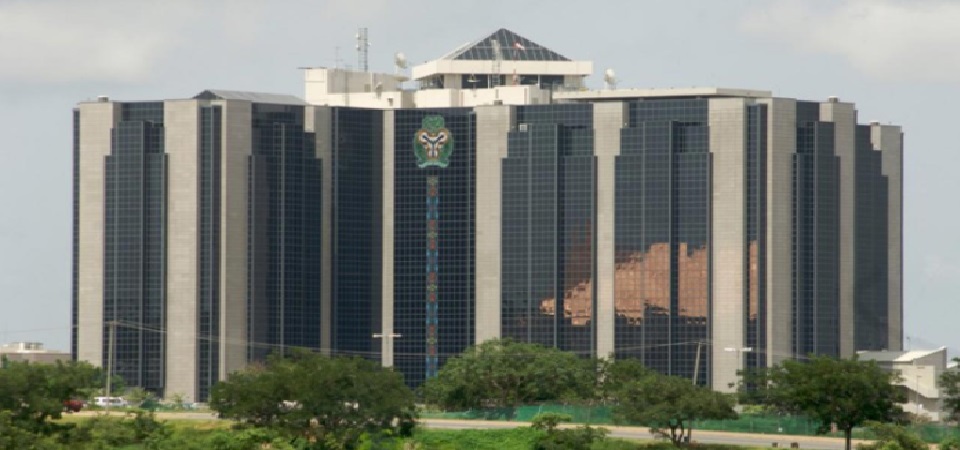
I am a big fan of the Nigerian banking industry. It remains one of the few sectors that continue to deepen our national competitiveness. A force for good, we are increasingly proud of our banks. Yet, there is paralysis in the sector. Yes, it is on stasis, and they need to correct the ills as quickly as possible.
Our banking sector is now a den of fees. There are amalgam of fees in all forms and formats. It is very nauseating that you pay fees to keep your money with your bank, and to take it out, you pay another fee. The ATM fee is a bad idea. Sure, I know that banks have bills to pay, and they are not charities. But the redesign in the programming of most ATM machines is fraudulent.
This is my observation: most bank ATM machines would not allow you to collect anything more than N10k in one transaction. And by the time you hit the three free transactions in non-domiciled bank ATMs in a month, the N65 fee kicks in. The N10k limitation is not because of ATM dispensing capacity; most of the ATMs are churning out N1000 bills. So, technically, the ATM can pay N20k (with N1K bills) in one transaction if it can pay N10k with N500 bills. (The thickness of the N1k and N500 is the same.) But there is no option for that; most ATMs would simply tell you that your maximum withdrawal limit is N10k. But it has no problem allowing you to use it five times for N50k.
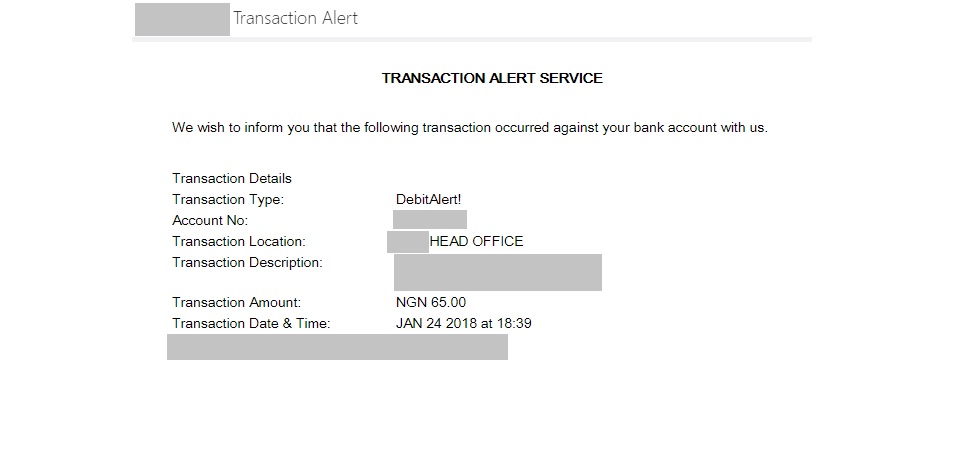
Do not tell me that they are using that to reduce fraud. Far from it, since the individual can withdraw five times for N50k broken into 10k fractions, and no one is stopping him or her. I see this as pure play for fees. It is unfortunate.
Clusters of Fees
The strength of our industry is how efficient it can remove frictions in its sector. Our banks are creating huge frictions with the clusters of fees. Without spending minutes, I can count more than five common fees in the industry:
- ATM fees for more than three transactions in non-domiciled bank in a month. That goes for N65.
- Debit card maintenance fee which is now very popular. Some banks charge N50 for that monthly. I do not have problem with the original debit card issuance fee. That is fine. While most banks in some economies do not charge such, it is fair for our banks to charge the issuance fee.
- Stamp Duty is now popular for digital transactions. In other words, if you process transactions digitally, government buys stamp and puts on them. That is unfortunate.
- Account maintenance fee is charged monthly. It is what you get for banking with some Nigerian banks. So, every month they collect small money from your balance.
- Over the counter transaction fee is a fee if you want to work with a bank human teller on some transactions. This fee is structured to bias customers to use digital channels. Of course when you have to pay all kinds of stamp duties on electronic transactions, some may like to go manual. Unfortunately, that would not help. There is a big fee, sometimes N500 to execute such transactions. The stamp duty still applies, of course.
- The VAT which is another fee you pay for paying bank fees. Sure, that goes to the government.
- SMS charges which the banks do not keep. They go to telcos. Of course, the average amount charged to customers is always more than the bulk negotiated amount they could have gotten from the telcos. In other words, if they get N3 per SMS on bulk pricing, and bill customers N4, that would be bad.
These fees are some examples and they make me to hate looking at Nigerian bank statements. They simply make one wonder if we have consumer protection institution in this country. People are devising schemes to rip one another. That is very unfortunate for a nation.

Financial Inclusion
As I have noted many times, the financial inclusion message that the Central Bank of Nigeria has been preaching would not happen if the apex bank does not help in curtailing these fees. How do you expect someone earning N18k per month to go through this financial torture of fees? There is a clear likelihood a person can lose N500 per month to bank fees. In some cities, that could be transportation budget for the week. Of course, those who are paid by the government have no chance. The real issue is those that make money in villages. When they hear such fees, they would make the pillow case thicker. They have no reason to listen to government to begin banking when they would lose a huge proportion of their incomes to bank fees.
New opportunities
The new generation banks in Nigeria must understand how they grew: they innovated and provided a new basis of competition. Nigerians responded and embraced them. What they did to old generation banks could happen to them if the fees continue unabated. I have been looking at the annual reports of our banks and the trajectory is not good: the transaction-fees are now increasing faster than interest-fees. Simply, it is a more lucrative business to extract fees from customers than to lend them money to do business. That is not how to grow income, and if they stifle the companies, banks would have none, in future, to make their banking missions worthwhile. The Bankers Committee must lead and find a way to tell its members to apply the brakes on fees.