There was blackout yesterday during the CES (Consumer Electronics Show) event. CES is the global preeminent ecosystem for showcasing the latest advances in consumer technologies and products. For two hours around 12 noon local time, lights went off. Just like that, displays from Samsung, LG and Sony had no juice and “displayed” nothing. The AI systems and voice assistants went silent: The most important technology in the arena – electricity – was not working.
That electricity may be stale, non-exciting, but its impact was evident to all the participants. Yes, the company that presented the most important product during the CES was the local electricity distribution company that powered the venue. Of course, American advancement has relegated that company from the limelight, but events like the CES blackout should remind us why electricity remains a solid infrastructure.
CES — the official name and former acronym for the Consumer Electronics Show — is an annual trade show organized by the Consumer Technology Association. (wikipedia)
CES is the world’s gathering place for all those who thrive on the business of consumer technologies. It has served as the proving ground for innovators and breakthrough technologies for 50 years — the global stage where next-generation innovations are introduced to the marketplace. Owned and produced by the Consumer Technology Association (CTA), it attracts the world’s business leaders and pioneering thinkers.(source: CES)
This is a clear reminder that there are things in life you cannot leapfrog. CES made it back to its planned programs because they have fixed the electricity problem. But imagine if that darkness is the normal; simply, all those exciting technological advances would be stalled.
So, when they tell you that AI, 3D, and the host of them would leapfrog Africa ahead of the world, please remind them that you cannot leapfrog some critical infrastructures that make the world of technology function. Those infrastructures include electricity, legal systems, education, health systems, etc.
The Las Vegas Convention Center is old. It was opened about 60 years ago and needs to be upgraded. That is the most important infrastructure in the CES event with its water systems, electricity, cooling systems, etc. Forget the AI, driverless cars and showers which work with Alexa voice. Without the core infrastructure, all those advances are muted.
CES show (Source: PC Tech)
Until Africa invests in infrastructures, our emergence would remain an illusion. You cannot leapfrog darkness; you turn on light to make darkness disappear. Yesterday, after two hours, the light came and the systems rebooted. The show continued. So, they got the blackout out. They did not try to create apps hoping that darkness would not matter.
Quartz in a newsletter said it all: “It all feels like a not-so-gentle reminder that, regardless of how great our technology is, some elements are out of our control and no great leaps forward can be made without a solid infrastructure”. The competitive advantage of the Western world is that solid infrastructures at scale exist. The Like buttons, AI and voice commands are simply the extensions of that universe.
If you think, as a government, that you can create apps for farmers without fixing access to markets through good roads, and expect those farmers to leapfrog the world, you have failed in your visioning city. Our AI and driverless cars right now is electricity, water systems and decent roads. If we cannot fix those, we have no reason to ever use the word “leapfrog” because it would not happen. Yes, you could see marginal progress but those are ephemeral with no core in advancing the welfare of the citizens.
The world’s richest man, Jeff Bezos, has fixed Washington Post which was largely struggling before he bought it. Now, the company is profitable for a second year in a row, and digital subscriptions more than tripled from last year. That digital subscription growth is impressive because the narrative has been that people would not pay for non-financial content. So, you expect Wall Street Journal and Financial Times to do well since financial news is a business tool and people would pay. Others like WashPost may not be lucky. But in this letter to staff, WashPost publisher presents compelling evidence that even in the era of Facebook and Google, a newspaper could build a content-platform people would pay.
Notice that WashPost is now selling IT solutions to other news organization. That was the same strategy Bezos used in Amazon where Amazon Cloud was originally designed and created for Amazon ecommerce business. But over time, he made it available for anyone with credit card.
The partnership between news and technology is powering our growth and, through Arc, our engineers are now delivering technology solutions to a growing list of leading national and international publications.
Arc is now a new business within Washington Post. Expect it to impose taxes to news organizations that would depend on it. As that happens, it would have more incentives to deepen the capabilities, growing unbounded. Then in 5-7 years, every major news organizations in the world would be paying taxes to Washington Post, just as most websites pay taxes to Amazon Web Services. As you read this content, on Tekedia, we are sending money to Amazon where the site is hosted. No wonder, the man is worth excess of $105 billion. He is peerless and builds products that anchor its best products. For WashPost, the best product, and the oasis, is washingtonpost.com; products like Arc are created to make it industry best.
In this age of knowledge economy, phrases like ‘our core business area’,’our area of specialty’ have been relegated to the background and are now moribund. Business intelligence is now redefined and deepened, with a constant evolution and great awareness to environment, trends and anticipated future. You must now deepen capability across my areas in order to remain relevant, just for the meantime, and continuously innovate to even stand any chance in the future.
Just take look: “Whether we are telling stories with text, video, audio, graphics, or the latest immersive technologies” and this, “The Washington Post can be the world’s only “140-year-old start-up.” What else can you call it?
Full memo from Publisher Fred Ryan to staff below.
Dear Washington Post colleagues,
As we prepare to enjoy time with our families and friends over the holidays, I’d like to thank everyone on The Washington Post team for your contributions to what has been a truly exceptional year.
In my view, Washington Post journalism has never been better. Our investigative, national security and political teams have broken many of this year’s top stories, with revelations about Alabama Senate candidate Roy Moore, key disclosures in the Russia investigation, and an examination of regulatory changes that exacerbated America’s opioid crisis. With thorough and meticulously sourced reporting, our politics team has consistently given readers an inside look at policy clashes and personality conflicts at the White House and in other corridors of power. In-depth, elegantly written narrative projects have come from every corner of the newsroom even as our journalists have responded with impressive speed to breaking stories in today’s non-stop news environment.
The Washington Post newsroom has been a laboratory for innovation, capitalizing on the latest advances in storytelling tools. It also has launched an array of new products, ranging from the Today’s WorldView newsletter aimed at an international audience to additional “202” newsletters that are building on the highly successful Daily 202 franchise.
Broadening the reach of Washington Post reporting, our journalists have appeared frequently on many broadcast and cable news programs, with an average of more than 800 appearances each month. Washington Post LIVE is convening newsmakers and thought leaders for conversations on critical issues of the day.
Our Editorial and Opinions team has expanded the number and range of voices, adding thoughtful perspective and unique context on issues at the heart of today’s especially vibrant public conversation.
Your exceptional work has been recognized with the highest awards in journalism, advertising and technology — from Polk awards to a Pulitzer and WAN-IFRA prizes to the National Press Foundation’s “Feddies.” But, more importantly, news consumers have demonstrated their appreciation evidenced by rapid growth in page views, video starts and other important metrics of reader engagement. This progress is encouraging as we continue to pursue our goal of serving more readers across the country and around the world.
In 2017, readers responded to superb Washington Post journalism by subscribing in record numbers, with digital subscriptions more than doubling since January and more than tripling since last year.
Our advertising team has exceeded its targets and all previous records. Digital advertising contributed a far greater share of overall revenue than ever. These gains, coupled with a surge in subscription revenue, position us for continued profitability and increased investment.
The exceptional team that prepares, produces and delivers our print product continues to innovate and develop additional revenue streams. We now print nearly every major publication in the Washington region.
Through Apple News, Snapchat and other new initiatives, Washington Post journalism is reaching more people, across many more devices and platforms, than ever before. Whether we are telling stories with text, video, audio, graphics, or the latest immersive technologies, we are committed to providing a superior Washington Post experience on all platforms and devices in use today and those yet to be invented.
The partnership between news and technology is powering our growth and, through Arc, our engineers are now delivering technology solutions to a growing list of leading national and international publications. In addition toWashingtonPost.com, Arc now provides technology for more than 50 other websites. Our technology team continues to push the boundaries of engineering, pioneering in areas like artificial intelligence and serverless computing.
As the newsroom grows to more than 800 journalists, and as we add to our technology and business teams, we will be acquiring additional space in our headquarters building in 2018. This expansion will meet our needs in the coming year and accommodate anticipated growth in the future.
Despite the many accomplishments of 2017, we must remain mindful that the modern media world changes rapidly and poses constant challenges. We cannot rest on this year’s success, but instead must build on it by relentlessly innovating, experimenting and disrupting even our own practices. With continued hard work and our naturally scrappy spirit, we can feel confident about moving forward in our aspiration of serving a broader national and global audience.
As mentioned in our Town Hall, this month marked the 140th birthday of The Washington Post. With our rich legacy and a forward-looking team committed to innovation and experimentation, in 2018, The Washington Post can be the world’s only “140-year-old start-up.”
Warmest wishes to you and your families for the holidays,
This is my response to a potential client that wants to establish a blockchain-based contract product in Nigeria. I sent this response few minutes ago. I have edited out names to hide the privacy of the potential client, but the whole thesis remains. It may be of value as you consider launching a blockchain-based product in Nigeria.
There are many things which must be examined before any entity in Nigeria can setup a blockchain-based contract product in Nigeria. As I have noted, the biggest problem is not the technology. The challenge is the legal admissibility of the contract. Recall that there used to be a time when Nigerian law did not recognize email as evidence in court. Do not take it for granted; I expect blockchain-contracts to be tested in Nigerian courts. Just as Supreme Court ruled that biometric voter ID cards were not recognized by law on many gubernatorial elections, someone can take you to court claiming blockchain contracts may not have been recognized by law. With that loophole, you could put a contract in jeopardy.
Recall when banks used to demand physical signatures on original documents. The law improved and now they allow scanned documents. They do those things to cover themselves in case some troublesome customers want to use legality to get out of loan contracts.
Besides, even if you want to setup a blockchain-based contract system, what “monetary domicile” is the token going to be tied to? Would that be Bitcoin, the one you create, etc. Any contract that needs a monetary value needs a token. Would you use Naira thereby defeating the whole purpose of digitization since there would be another paper contract required for the Naira? If you want it to be digital, it means you need a token to drive that. Which one would you adopt? Remember that the contract must be legally sound to avoid a perception that you are creating another currency and expect the Nigerian law to protect the contract. So, your company engineered token may not suffice. And if Bitcoin, Ripples, and cryptocurrencies around the world cannot be useful, your blockchain-contract product may have no commercial value in Nigeria. Yes, null and void.
The universality of blockchain-based contracts would be tested in jurisdictions. Because if a party backs out, you need REAL courts from govt to help you. The law is critical on this.
I would be happy to visit [your office] and give a speech. We can build the technology. But in Nigeria, the real deal is not the tech. Yet, we ensure that every engagement is based on sound legal elements. My talk would be paid even before we explore further opportunities. We can educate on this. We have three packages. The first part is [amount] and lasts about 2 hours. We do not give free talks. Depending on the Discovery presentation, then if there is opportunity, we can move to next package. Hope to read from you.
Possibly, you might have noticed that I have been writing on Bitcoin, Cryptocurrency and Blockchain over the last few weeks here on Tekedia. It happened for a reason: we have been working for a client, an investment club, which is exploring opportunities in the nexus of cryptocurrency and blockchain. They needed to know as much as possible to guide them as they allocate resources. I thank all the fans on LinkedIn who continue to share insights through comments: LinkedIn remains a lab since we discovered its real value.
Yesterday, I spoke to this awesome team. The challenge has been to know if Bitcoin (or others like it) is money, tulip, or gold. I would not go there in this public piece to avoid misunderstanding. But in the conversation, I provided analogies and elements, to provide guidance. When I wrote on modeling the marijuana business in U.S., post Obama era regulation, I was looking for a pattern into the soul of cryptocurrency if government indeed makes it wholly and completely legal. We got many insights from what happened in the marijuana legalization. It was a moment as the 37 men smiled!
In summary, the end goal is that once governments begin to regulate Bitcoin, it would be price-normalized. With that, it joins other currencies and the game is over. The growth will be predictable, taking out speculators. That will make it less appealing to some people even though it would attract new classes of players. While South Korea will not drive this game, it can serve as a live experiment into the future. The world is waiting for U.S. to take action and once it does, that will become the golden regulation guiding Bitcoin and other cryptocurrencies. I believe no matter what happens, the Marijuana Equilibrium Principle will follow Bitcoin once it is regulated. Yes, by looking at what happened to marijuana (yes, goof), one can predict Bitcoin, post-regulation.
Here are elemental insights to my presentation: the deepest are for the clients, of course.
Overview
Bitcoin and others like it could be our generation opportunity. It is an opportunity the next generation would not have, since by then, the price would have stabilized, making it a boring investment (for those investing). With blockchain, it could be as revolutionary as the Internet in changing the natures of states. U.S. Government is already taxing gains from Bitcoin investment which means it is not absolutely illegal. So, it is a quasi-legal instrument for wealth creation which is normal enough that governments make money on it. Also, if government taxes investments on Bitcoin, it does mean that it is not seeing it as a pure currency. (I will leave the explanation of that last statement here as it involves currency trading. Yes, you can think of Bitcoin as using Euro to buy Dollar hoping that one will fall; Bitcoin could be that Dollar.)
The use of Bitcoin as a currency would remain limited because of the speculation opportunity. Why spend a $5 that could become $50 in three years? So, you can see it as a store of value which has limited usage in payment. In that case, we call it a dig-gold. But it has an advantage over the metal because its “structures” can be changed unlike a metal which is already formed.
Bitcoin enjoys the Metcalfe’s law [“the value of a telecommunications network is proportional to the square of the number of connected users of the system (n2)”] with its first mover advantage. I do believe that this Bitcoin would be part of the Internet 3.0. Yes, it would remain dominant in its class provided cryptocurrency as a category survives governments.
Mining Cryptocurrency
We explain the processes involved in the mining and how investors could profit therein. We elevated the minds of the audience on the possibilities of the future via quantum computers.
Mining Bitcoin is solving the NP-complete maths problem. The Shor algorithm offers hope but would require a quantum computer with qubits. Classical Newtonian-based computers cannot do the work but quantum mechanics-based machines will.
If you use a quantum computer, using Shor algorithm, run on a polynomial (recall your Further Maths in secondary school, the section for Remainder Theory) time, you can take qubits of order O((log N)2(log log N)(log log log N)) under fast multiplication. In this phase, you are running a quantum Fourier transform which is supremely efficient.
About 80% of total Bitcoin are already mined, out of the available 21 million units. This means that in near future, mining investment would be worthless, as there is nothing else to mine, specifically for Bitcoin. And without a governing body, the only acquisition would be purchase. (Sure they could introduce transaction fees for managing the record keeping).
Money, Tulip, and Gold
We explained what money is, what gold stands for (store of value), and how Bitcoin could be either (or both), and in addition a tulip. This is the trio-nature of cryptocurrencies and what could happen in each scenario. Could Bitcoin be seen more as a “store of value” than a currency?
There is also the value for some nations without strong monetary systems. For example, Venezuela, Iran, Zimbabwe and some other countries can adopt a single treaty on Bitcoin. This can help in monetary system to avoid sanctions, and more. This emerging application nexus could delay any tulip moment.
If you think it is gold, then it has its own asset class. Big banks could build such in coming years, driving the value upwards. But if you think it is a tulip, it could be the biggest deception worldwide since it is a universal “investment” already.
Post Regulation
I do not expect any outright ban by U.S. government which can have a mortal impact on the currency. Though one may argue that banning Bitcoin in U.S. may not stop the movement, the fact remains that U.S. remains the location where the highest investment activity is happening. So what happens in U.S. is critical. China is another country of interest but I do not expect even outright ban by China to have a definitive impact on Bitcoin. It would slow it momentarily but it would recover. It is only the U.S. that could kill Bitcoin.
Banning it could be as simple as instructing all U.S. banks not to do business with Bitcoin exchanges. If that happens, exchanges would become largely underground businesses and they would fizzle from the mainstream economy. From Coinbase to others, their apps would leave Appstore and Google Play since they cannot be allowed to connect into U.S. financial system. That does not mean that Bitcoin would not continue to be traded globally. But do not expect momentum without America.
Here are some ways government regulations could affect Bitcoin:
Defeat of the Original Purpose: Government regulations will defeat the purpose why the currency existed in the first place. Sure, a government intervention will bring many new players into the cryptocurrency world but it would also stabilize the value of the currency. When that happens, Bitcoin would track typical currencies like US dollars, Euro and Pounds Sterling.
Core Advocates may exit: With regulation, Bitcoin value will stabilize. Some people may lose interest as the value will not be growing. Most are not there for 2% quarterly appreciation; they want double digit growths.
Stringent Rules: As government moves in, buying and selling Bitcoin would be harmonized. Channels would be streamlined and new trading classes could be created. Brokers could decide which investor categories can buy Bitcoin without guidance. The possibility may be that retail investors earning a certain wage level may be excluded [think of the Startup Act which prevents non-qualified investors to buy equities in startups in U.S.]. Government will put these rules to protect the small guy [it reasons] which unfortunately hikes the frictions for trading cryptocurrency.
Tech Risk / Exit
There are many ways cryptocurrencies can be deployed without necessarily causing problems. We noted the key element to drive that distinction where the central bank or reserve bank would not cause problems. In short, despite the “currency’ in the name, there are many applications which are legal. One is loyalty-program.
Yet, there are inherent technology issues with Bitcoin. The problem is that we can have Bitcoin 2.0, Bitcoin 3.0 and no one knows how the present ones could advance. Unlike gold which has attained its final formation phase (physically), a new guy can create something totally better that makes today’s Bitcoin diminished in engineering and investment value. Should that happen, people may ignore the present Bitcoin and move to the next big thing. That is a risk because I know that not all technologies are interoperable.
Besides, there are concerns on the privacy of transactions. It is not right to publicize all business transactions. Do you want to tell your boss that you have hired a job searching firm? As it gets popular, it would become challenging to keep some transactions private as solutions will emerge to decode those transaction paths. Besides hacking which remains a huge issue, Bitcoin network can handle about 7 transactions per second. That is not a network for the global economy. Visa and MasterCard can support thousands of transactions per second. And most importantly, who would pay for sausage with Bitcoin? The transaction fee could be more than the cost of the sausage. The future may be a digital gold and not a currency for exchange of value.
The last path was on EXIT – how do you get out, avoiding potentials risks while not leaving too much money on the table in case the value continues to go north. That exit has to consider that Bitcoin has a long way to go if it could be dig-gold. In short all the cryptocurrencies have a long way to go. The total value of gold is around $9.7 trillion; all major cryptocurrencies are around $500 billion. For Bitcoin specifically bounded by the 21 million units, you would need it to rise to $460k per unit from about $20k it is today to match the value of gold.
All Together
Bitcoin is inherently risky but is also potentially rewarding. I have none and have no appetite for it. But that does not mean I cannot find another way to make money from it: providing insights to clients. But I am a big fan of blockchain and to make that happen, my proposal is that Nigeria creates its own cryptocurrency tied to the Nigerian naira to help drive blockchain products in Nigeria.
We do not need Bitcoin but Nigeria needs a digital currency tied to the Naira that will enable the efficient functioning of the blockchain infrastructure which I expect to evolve in coming years in the nation. If the Central Bank blesses such a plan, we will experience a virtuoso innovation system in redesigning the architecture of some of our industrial sectors and make them more efficient even while being cost-efficient. As I noted in my entry on Blockchain Africa, blockchain has a promise for Africa. Nigeria just have to find a way to lead in that promise atleast in West Africa where its impact is huge.
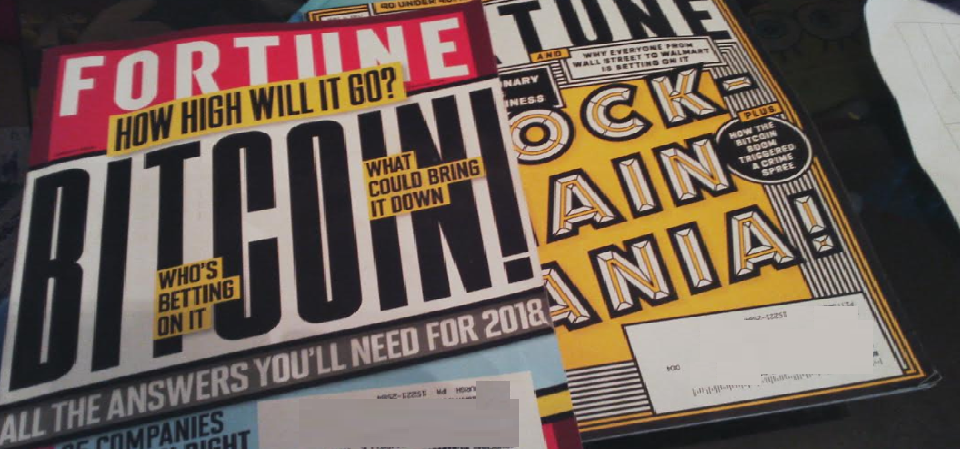
Acknowledgment: I have read many documents. I thank Fortune for the excellent editions on Bitcoin and Blockchain. Also, to my team that worked on our research.
Running a business in Nigeria is hard. The most difficult part is getting someone that would actually believe you, and pay for whatever you offer. Do not think because you can speak well, write well and possibly dress like a don that it would be easy. In an environment where supply of talent far exceeds demand, the competition is fierce and intense. Nigeria works, but you must have paid your dues before you have your moments (I am assuming that you do not have a special gene that cuts the corners).
I have advisory or consulting business in mind as I write this piece. Yet, the points could apply in other areas. The biggest hurdle is to get that first appointment. Brethren, it is not easy: some banks receive more than 100 proposals per week from consultants. And some of these consultants are from the elite global institutions. In other words, there is chance their logos would speak for them, as most people see those entities, and not necessarily the people, when they work into boardrooms.
Nevertheless, have confidence and believe because you have a real advantage over those consultants: you are not coming with tailored made frameworks which can be customized for every client. You are coming as a customer with newer insights and perspectives, unbounded from any framework or organizational liturgy. While you need order, you are an insurgent, seeing things differently. What happens is that your clients get grassroots insights only a grassroots consultant can provide to help win grassroots customers. Think about it this way: to fly from Lagos to Owerri, there is a template (in some big firms) for that problem, but if there is no Lagos-Owerri flight, the framework fails. But where you are a small firm, unaware of many frameworks, it is possible that you can fly Lagos-Port Harcourt, and then drive to Owerri. (I am boosting your confidence. Note that some elite consultants are rugged and brilliantly impeccable. But you must find a way to believe, otherwise, you would be roasted when you appear before clients.)
Here are five things to consider towards getting those paying customers:
Education: If you have an elite education, make sure you let the people know. You did not go through the torture for nothing. It turns out that most people in Nigeria could give you audience because of the school you attended. So, if that is the advantage you have, flaunt it and make it very obvious and clear. In a certificate-crazy society like Nigeria, if you have it, it works.
Work Experience: This one is even more powerful than education. If you have worked in some very fascinating places, make sure they know. Remember, no one doubts your capability. People are simply waiting to be convinced to hire you, and trust that you would deliver. You need that edge. I have never seen a career so useful as banking. Honestly, it remains the best job I ever had. When people know you were a banker, there is an element of order they form around you. That is what you need as you begin some entrepreneurial consulting venture: to be seen as a dependable person who was good to have managed other people’s money.
Special Skills: What is that skill you think you have that can help the client? Is there a verifiable 3rd party that can attest to that skill? You need to make sure they know. One of the best suggestions my Practice gave a client in Tanzania was to write a book in its industry. The client did not think it would work. But we insisted that the firm writes one. At the end, the client did. Then, when the company sends a proposal to some specific clients, it puts a copy of that book as part of the package. Within 9 months, it tripled revenue in East Africa. The book elevated the client before the press, trade association members and clients. The CEO was seen as a domain expert; knowledgeable to the extent he could write a book in that specific area. That is the separation to growth we wanted: he has special skills; the book authorship has validated them.
Networks: Networks are business enablers. You build them and people form opinions about you. If you have good ones, you can walk into an office and come out hours with the documents you had gone in for. You must nurture them even when you are not thinking of making use of them.
Competence: No matter the edge you have, the only thing that keeps you is your outcome. Yes, your degree can get you into the building but when the CEO sees you, does he see someone that can use his time for 10 minutes or one guy who thought he was taking his mother’s free cereals. If you do not have competence, it would be lonely and dry. So, it makes sense to open a shop where either you or your team can demonstrate capabilities in the area you sell brainpower and insights as a consultant.