DD
MM
YYYY

PAGES

DD
MM
YYYY

spot_img

PAGES

Home Blog Page 7239

How Nollywood Could Improve Revenue in 2018

0

Merry Christmas and Happy New Year ahead!

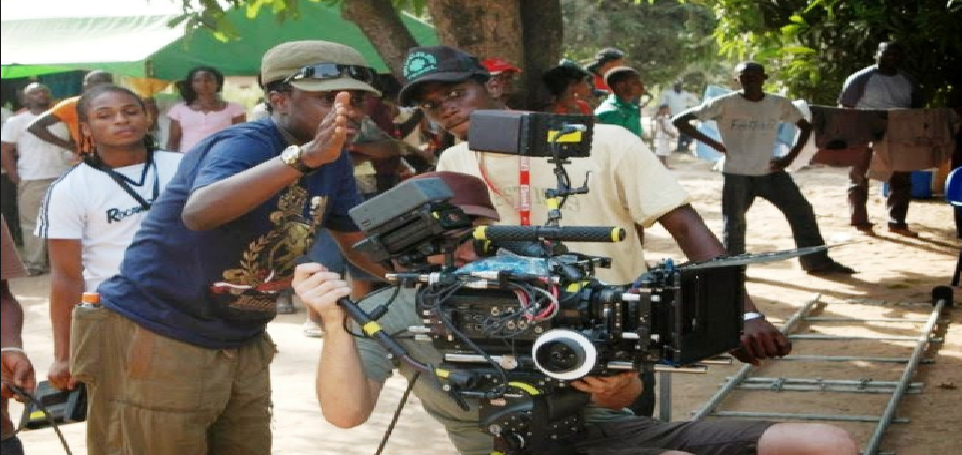
Today, I discuss how Nollywood (the eponymous Nigeria’s movie industry) can improve revenue.  I do not really watch the movies because of time, but in my family, there are fans: the TV seems perpetually connected to YouTube for Nollywood. I used to follow in the days of Living in Bondage, Circle of Doom, and Glamour Girls before I lost track of the amalgam of new productions which are released daily. With new actors and actresses, Nigeria has got a great sector there. The people that pioneered this industry, creating new sources of employment, deserve our commendation.

Nollywood is an enigma. I had expected they would run out of money because of piracy. Yes, I am always astonished how the producers make money with so much piracy happening on YouTube, illegal shops and elsewhere. On music, Facebook is not far, hosting “personal contents” with clear instructions not to distribute. Yes, users distribute copyrighted movies and music with little consequences. But to blame Facebook and Google will miss the mark: the law is on their side. All they need to do is to remove the contents, after alerting them, if you think the hosted contents are copyrighted. The problem is that policing ecosystems with billions of users is a lost cause. You have no chance.

This is my suggestion for Nollywood producers: do not bother asking YouTube and Facebook to be removing the copyrighted movies and music. It is a waste of time especially when the producers do not have resources to hire people to police the piracy within these platforms. Rather, the Nollywood association should approach Facebook and Google with a proposal. That proposal should be for Google and Facebook to pay their producers for the rights to movies and songs uploaded by their users. In other words, as soon as the users upload the contents, the rights go to Facebook and Google thereby making the process non-illegal.

This arrangement has two benefits: the producers would not have to bother asking Facebook and YouTube to remove the contents and the tech companies will not have to deal with legal challenges that may result for hosting digital wares they do not have rights to use. Of course, the more money for Nollywood is not bad.

While Facebook and Google may not initially like this plan, I am very sure if the association explains their challenges, the technology companies will listen. The key is making it clear to Facebook and Google that Nollywood can provide great contents in their ecosystems in the right way. That will be a win-win as the tech firms would improve user experiences even as the producers have more resources to make better movies.

For Nollywood to move to Nollywood 2.0 with better funded movies, they will have to deal with the revenue side of the business. Having a clear roadmap on how to deal with Facebook and YouTube will be fundamental to that future. Despite nearly 27 years of making movies, the improvement on movie quality has been largely incremental. Nollywood has to change that and advance faster.
The Trajectory of Success for Digital Companies

0

ICT provided productivity gains across different industrial sectors in Africa as governments and firms adopted technology to modernize their processes few decades ago. That adoption provided the platforms for new basis of competition as ICT cushioned efficiency in customer service and superior product offering, giving the early adopters opportunities to win market shares.  In banking, for example, new banking institutions used technology to compete against the older dominant ones, and in the process redesigned Africa’s banking landscape.

Without IT, we would not have GTBank, Zenith Bank, Diamond Bank and the other new generation banks in Nigeria. These institutions used technology to improve service and in the process brought new customers in the sector. Who needs a mat to his bank, as legendary Lomaji Ugorji would say in an Equatorial Trust Bank advertisement? You do not need one because from 6 hours, the new banks gave us 30 minutes for most transactions. And today, we need only 4 seconds for some of the same transactions via our mobile devices. IT has advanced industries, and the world is better through the productivity gains it unleashed, enabling improved human welfare globally.

I have written extensively on the need for the Nigerian insurance industry to use technology to redesign the industry. Everyone knows that technology brings productivity gains and our banks have done great works in the use of technology to redesign their businesses. People used to complain about our banks with the legendary comedian Lomaji Ugorji taking a sleeping mat to a shadow bank, just to illustrate how long it could take to get cash. The bank he was advertising for, now defunct, unfortunately, could allow you to get out within an hour. We have made real progress in that sector. Today, the queue is practically zero second as you do not need to wait for anyone on your mobile app to bank.

But with the advent of the Internet, many things are changing, owing to the unbounded and unconstrained nature of the web. The companies that relied on ICT to change their sectors are also now vulnerable. Indeed, ICT brought huge productivity gains, Internet is delivering disruption at scale.

The implication is that the way we run Internet companies must be different from the way we ran businesses pre-Internet and when ICT was the vehicle for productivity gain. There are key things to note:

First, nothing is more important in a startup than having the capacity to acquire new customers, easily. A startup must grow because without growth, the alternative is bankruptcy. So, over the last few years, we have seen companies introduce new roles like Head of Growth, and Vice President of Growth. In a network effect business, the most important product is “many users” because the more the users, the more useful the product becomes. That is the positive continuum that delivers a virtuoso circle.

But knowing that growth is important is certainly obvious, for every founder. The challenge is executing the growth strategy. Companies like Google and Facebook which can acquire customers at ease, even at low or zero costs, have huge scalable advantages. It means they can scale without much burdens, financially. When a startup has a huge scalable advantage, it becomes very exciting to investors. Also, its valuation moves up because the path to huge returns is very clear. Such companies have defined trajectories for success because there is nothing that is more impactful in a digital business than growing customers, at scale, and then doing so easily at low cost.

As a digital entrepreneur, the path to glory is lower marginal cost as that drives scalability. I have listed key frameworks which make that happen.

Uber and Lyft Will Merge Because of Didi Chuxing

0

Few months ago, I predicted that Uber and Lyft would eventually merge. My point is that most of these category-kings, after destroying value, pivot to eke out something at the end by combining. They need to because very soon both Uber and Lyft will have to battle a new enemy: Didi Chuxing, the China-based ride-sharing startup.

In this piece, I explain why Uber and Lyft will merge. The trajectories both are following show that they will have challenges with Lyft gaining on Uber, but the overall industry cooling. As soon as that happens, their margins, if they have any, will collapse. Once that happens, they will begin to talk of merger, with each other. Government will see their struggles, and will dismiss any anti-trust concern gone. The result: it will bless their union. Uber is today’s Category-King, but its  past behaviors have slowed it down, offering a window for Lyft to catch-up. As they become peer-competitors and rivalries, they will destroy the sector. I do see many close rivalry typical of others that ended together: Elance/Odesk (now UpWork),  Groupon / LivingSocial,  Sirius / XM and  Rover / DogVacay. Please add DraftKings and FanDuel in the list; I predict they will merge also despite any FCC ruling, at the moment. They will struggle, owing to wounds they inflict on each other, in coming years, and will be saved via merger.

Didi Chuxing defeated Uber in China, and absorbed Uber’s Chinese assets. The company just raised $4 billion to pursue a global expansion. That brings the year total to $10 billion. The company is now worth $56 billion, only behind Uber (2016; $68 billion) or ahead if you use the Softbank-led latest round (2017, $50 billion), in the most valued private technology startup category.

Didi Chuxing, the Chinese ride-hailing app that is Uber’s biggest rival overseas, has raised another $4 billion to aid its international expansion. Softbank and Mubadala Capital, a state fund of Abu Dhabi, both participated. Didi said it would use the cash to buy a fleet of 1 million new-energy vehicles (NEV) and the expansion of charging infrastructure

With this money, Didi Chuxing wants to move into Brazil, Latin America’s largest economy. It plans to take majority stake in 99, a leading ride-sharing startup that operates from Brazil. Didi plans to start operations in Mexico in 2018.It already controls the Southeast Asian market through Grab where with Softbank it invested $2 billion. Grab leads the Southeast Asian ride-sharing market. With 99 and Grab, Didi is holding two important regions. India’s Ola, which is the leading startup there, in the sector, has Didi and Softbank as leading investors. (Softbank is a Uber investor, so it will win irrespective of who survives.)

Interestingly, Didi has given up in U.S. (it has shut down its U.S. app), pushing its customers to choose Lyft to make life harder for Uber. Yes, Didi wants a stronger Lyft to weaken Uber at home and distract its global expansions. With multiple legal issues before Uber to deal with, Didi is expected to gain more grounds internationally. Lyft is gaining grounds on Uber already in U.S. Of course, Uber can manage the amalgam of bad press and distractions to evolve under its new leadership.

As Didi raises this unbelievable amount of money and Uber struggles globally and locally, even as Lyft remains largely a U.S. business, both Uber and Lyft may decide to combine. If they combine, Uber will be saved the trouble of fighting for its position at home (U.S.) and can then focus to challenge Didi internationally. On that premise, I believe that Uber and Lyft will merge to handle the challenges coming from Didi.


My Person of the Year – 2017

0

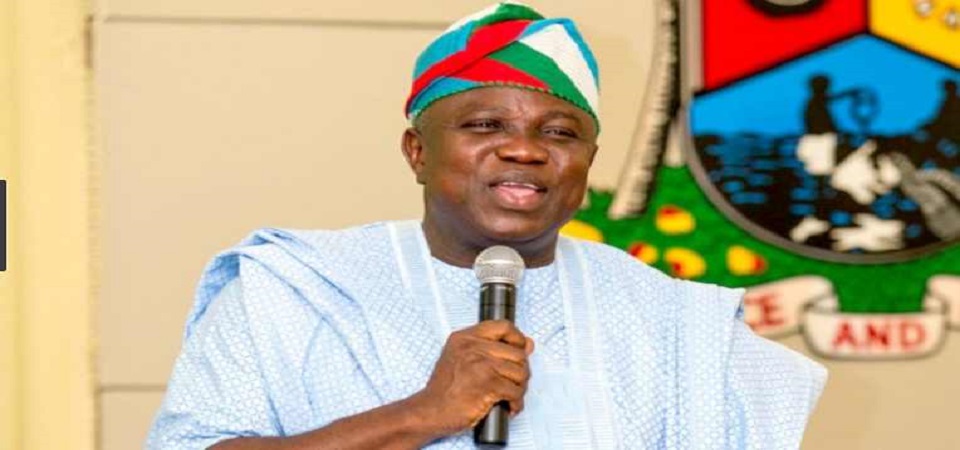
The year has basically come to an end. I am happy to name My Person of the Year – 2017. The Governor of Lagos State (Nigeria), Akinwunmi Ambode, is that person. Lagos state is one of the largest economies in Africa and a very strategic state within the Nigerian nation. With a population in excess of 24 million people, and gross state product of at least US $91 billion, it is the epicenter of the Nigerian economy.

In short, before Nigeria, there was Lagos, and over generations, the state has been blessed with some of the finest (pragmatic) leaders in the nation. These leaders continue to make Lagos the best state for business and an unparalleled place to be a Nigerian where your tribe will not necessarily hold you back. The excellence, the resilience and the entrepreneurial liberty of Lagos separate it from Nigeria. The center of excellence has seen the best political leadership in the nation for years.

I took this photo when I visited Oshodi construction
I took this photo when I visited Oshodi Market construction (2017)


Mr. Ambode continues on that tradition, and has managed Lagos fairly well. Lagos is a benchmark for other Nigerian states. He has brought a visioning system that looks into the future and continues to explore how to build an economic system that would be decoupled from the cyclical boom and bust of the Nigerian economy. Lagos is making progress across many metrics including primary health, primary education, road construction, and across industrial sectors. His efforts to deepen resources in the Yaba Valley will pay dividends in coming years.

He may not be perfect: some of the new roads are not top-grade. But no one can fault him for thinking big, acting bold and moving fast with fierce urgency of now. He is working hard to build and sustain institutions through balanced top-grade leadership system. He is My Person of the Year – 2017.


I had also noted my top four ministers in the Buhari Administration.


Nikki Haley and Donald Trump Need Nigeria’s Igbo Lessons

0

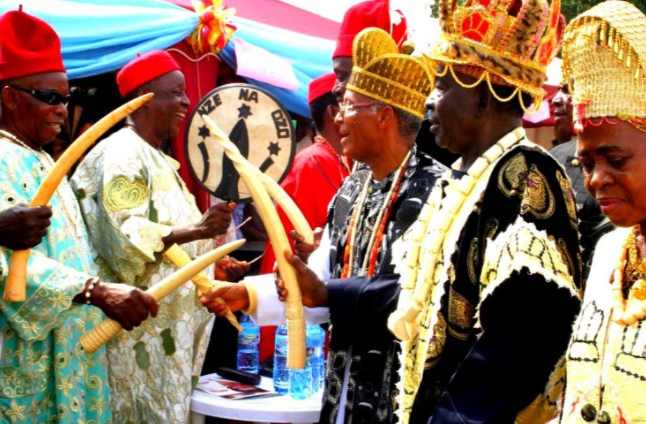
In the Igbo tradition (Nigeria), we have an axiom: when the village cooks for you, you cannot finish the food, but no matter what you cook for the village, you are sure the village will consume all. The essence of that axiom is to remind everyone that no matter your position, the community is always stronger. That is also reflected in names as the tradition puts communities above all, including the kings: parents name their children “Ezebuiro” (the king is the enemy), implying that while we honor elders and tradition, even the king cannot be stronger than the community. When a king tries to go beyond his bounds, the community will remind him that they own the kingdom. It does not mean that we do not respect kings, but our spirit of individual entrepreneurial liberty makes it clear that everyone is a king in his house (first), and the king must understand that because everyone is a king!

I have no opinion on Jerusalem/Tel Aviv as the capital of Israel or whatever [count me out]. But I have an opinion when United States UN Ambassador Nikki Haley threatened cutting off U.S. aids to any nation that votes against the U.S. By saying that, and the nations actually voting against the U.S., she has embarrassed herself, Trump and the nation she represents. The UN village had cooked for America and it was too much. That is a lesson Ms Haley would have mastered.

UN ambassador Nikki Haley warned that the US would be “taking names” of countries that voted for a resolution condemning President Donald Trump’s decision to recognize Jerusalem as the capital of Israel. Hope she has a pencil handy; she’s got a lot to write down.

The UN brushed off Haley’s threat and overwhelming approved the resolution 128 to 9, with 35 nations abstaining. Trump had threatened to cut off foreign aid to any country that voted for the resolution, and Haley said the US “will remember it when we are called upon to once again make the world’s largest contribution” to the UN. A State Department spokeswoman said the US would “explore various options” following the UN vote. (CNN Newsletter)

Leadership does not come by putting fears on subjects. It used to work when the world was unipolar with only the U.S. as the superpower. But we are in a duopolar (with China), if not a tripolar (if you include Russia) world, where if U.S. pushes countries out, they could run to China and Russia. Trump and his lieutenants are diminishing America by showing strength where it is not necessary. There was no need for the threat: it made Ms Haley looked tough, but now, she looks like a simpleton. I can assure you that if Nikki withdraws U.S. money to most of the countries that voted against U.S., the next day China will ship a truckload of money, making sure the leaders stay closer to Beijing. That outcome is not what America will like either!

Business Lesson

The threat from Ms Haley is one that even if she goes ahead to execute will not be a good outcome. If U.S. cuts all supports to countries fighting terror, America and the world in general will not be safer. This means that a threat whose outcome would even hurt you more is not a wise one. So, when the people decide not to align, and you punish them, you are not doing well to yourself: U.S. will not be better off withdrawing all funds in countries where it fights terror in Middle East, North Africa, and so on.