Team is closing for the year tomorrow (that does not affect Tekedia which will continue sharing insights all through the holiday and Christmas break. Yes, I will be here daily.) The accountants have run the numbers and they looked exceedingly great. 2017 is our best year ever in our business. Our Advisory Services business quadrupled in revenue. Zenvus broke every metric we set in multiples. And our innovation deepened across our businesses. Our Intel FPGA partnership brought huge growth in Eastern and Southern Africa. Our cybersecurity business grew 10x with licensing rights to universities and partnerships with companies.
I have also set a personal business development target for 2018: join a board of a public-traded company. I am in some private ones but I want the public one. I want to know what they discuss in those small rooms under the weight of compliance regulations. Those men and women run the world, and I want to experience it. I have no clue how that will happen, but we have 12 months ahead.
Yes, if your firm is traded in EU/UK, U.S., South Africa and Nigeria and you need a visionary in your Board, you can make this target come live. I have the multi-threat experiences: banker, academic, entrepreneur/businessman and designer. I want to learn and also share insights that will help a firm. This would be awesome. I am waiting for your emails via the Contact Us page here.
Amazon is estimated to have 90 million Amazon Prime subscribers in the United States. Many families share accounts. If you do the numbers hard enough, Amazon Prime may be covering more than 70% of American households. These are people who HAD paid for the privilege to shop on Amazon. As that happens, it is evident that “commerce search” has moved from Google to Amazon, because no one has Prime Membership and wastes time on Google, when you are certain Amazon will be cheaper, and you will buy from there. That is why companies like Sony, Panasonic and others are spending big money on Amazon because the people buying are there. Of course, Google remains the king of search with news and others; but I want you to remove ‘commerce search” from the categories.
This statistic shows the number of paying Amazon Prime members in the United States as of September 2017. As of the last measured period, the source estimated 90 million Amazon Prime subscribers in the United States, up from 63 million in June during the previous year.
Facebook has taken over the event search as searches for events continue to move to Facebook where they are promoted. The open, un-signed Internet which Google feeds on is increasing under-siege by Facebook. As more entities move their activities and promotions to Facebook, eliminating the need for event-only websites, Google will lose the capacity to be relevant on showing these events. This explains why Google has to fight. It has played nice for long, but not anymore. Here, it wanted to put Chrome in Microsoft Windows Store; of course, Microsoft took it down. Chrome is going to be fundamental, just as Android has been. But the operating system may not change much in the big ecosystems like Facebook and Amazon.
Google published a Chrome app in the Windows Store earlier today, which just directed users to a download link to install the browser. Microsoft isn’t impressed with Google’s obvious snub of the Windows Store, and it’s taking action. “We have removed the Google Chrome Installer App from Microsoft Store, as it violates our Microsoft Store policies,” says a Microsoft spokesperson in a statement to The Verge.
All Together
The business of the open web search is increasingly challenged as wall-gardens emerge. Facebook has taken its billions of people with it, locking Google out of the game. LinkedIn would have done a similar thing, but is happy because Google pays to have access to its open data. But where it matters like Amazon and Facebook, those entities do not need any help. The business model of asking Google to pay LinkedIn works for LinkedIn because it needs that extra money, and the risk is minimal. If you Google anyone that is not a celebrity, there is a likelihood that the person’s LinkedIn page will show top on Google. Google wants to make search relevant but that does not mean it controls what happens in the next step.
Google remains the king of search but it is very clear that if it does not arrest these situations, it may not be hosting the most relevant searches. Google understands that and is doing all necessary to fight for its future. The escalation with Amazon and Microsoft are signs great wars await. These digital entities may become the breakers of the net neutrality principle, even as the world looks to telcos like AT&T, Verizon and Comcast.
My prediction is that YouTube could become a wall-garden requiring members to login before they can watch contents within years. That is the only way to return the fire to Amazon, Facebook and others that have their walled contents while feeding on Google’s. Google’s challenge is that its services are free for all to use, but its arch-rivals have walled their services. How it handles that will determine how it can feed on the cached open internet with its robots.
As a boy growing up in Ovim (Abia State), I enjoyed one specific tradition: wake up in the morning, run to a local bakery for fresh bread, and experience enjoyment moment where tea goes with Peak Milk. I lived with Peak Milk and I grew with it. It is a peerless brand in its sector, and remains a category-king which continues to initiate a generation of young people into Peak Moments, through excellence packaged for families, as milk.
So, when the opportunity came few weeks ago to visit the makers of Peak Milk, FrieslandCampina WAMCO, it was a slam dunk. For me, it was an opportunity to visit an iconic institution I had admired from afar. I had expected to see a typical industrial age company with broken doors and unpainted properties. But what I saw blew me up: FrieslandCampina WAMCO is a technology company. They just happen to be making great milk for Nigerians. But the DNA, the ecosystem, the processes and people are typical of things I see in industry-leading tech firms.
For consumers in Nigeria, the Peak brand is synonymous with milk. Peak is the brand of our operating company FrieslandCampina WAMCO Nigeria, in which we work with local partners. FrieslandCampina WAMCO Nigeria sells evaporated milk and powder, and processes milk powder which is largely imported from the Netherlands.
Located in the capital city Lagos, FrieslandCampina WAMCO Nigeria processes a considerable amount of milk powder. Its products ultimately find their way to consumers via an extensive distribution network and open markets.
People, it was an excursion because my imagination was totally out of phase. I do not know where students of my alma mater, Federal University of Technology Owerri, go these days for tech excursion. But then, no one ever imagined that companies making milk would be as techie as I experienced. Largely, people could have missed great job opportunities by not looking wide enough. The fixation on companies that produce Likes, Share and Tweet is clouding our capacities to see beyond the clicks.
The i-Meadow
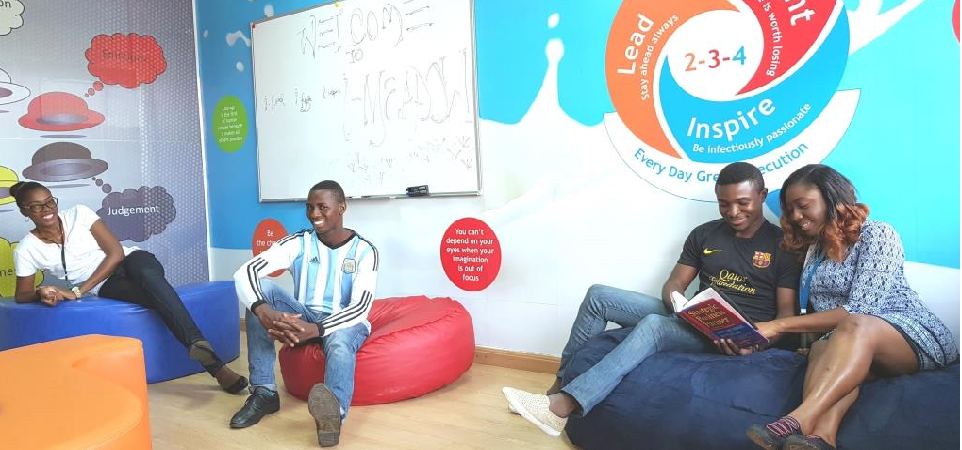
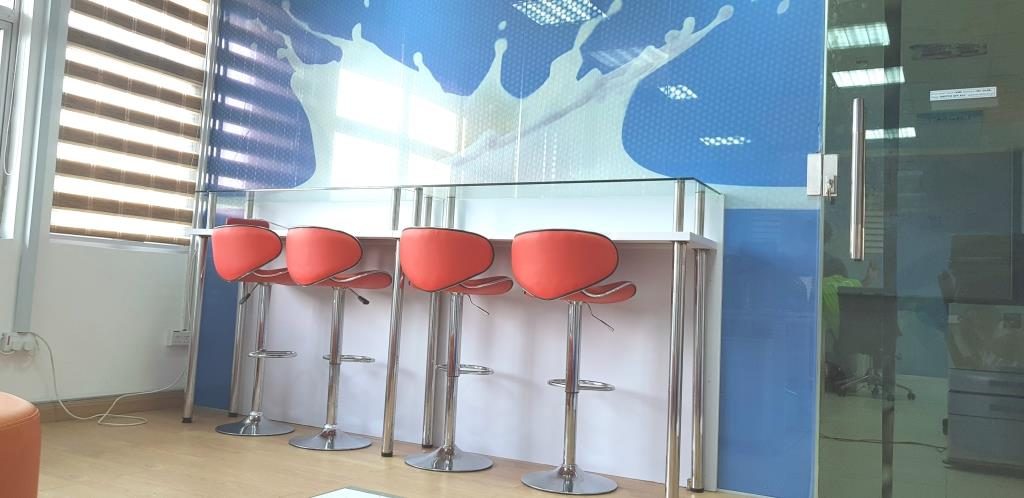
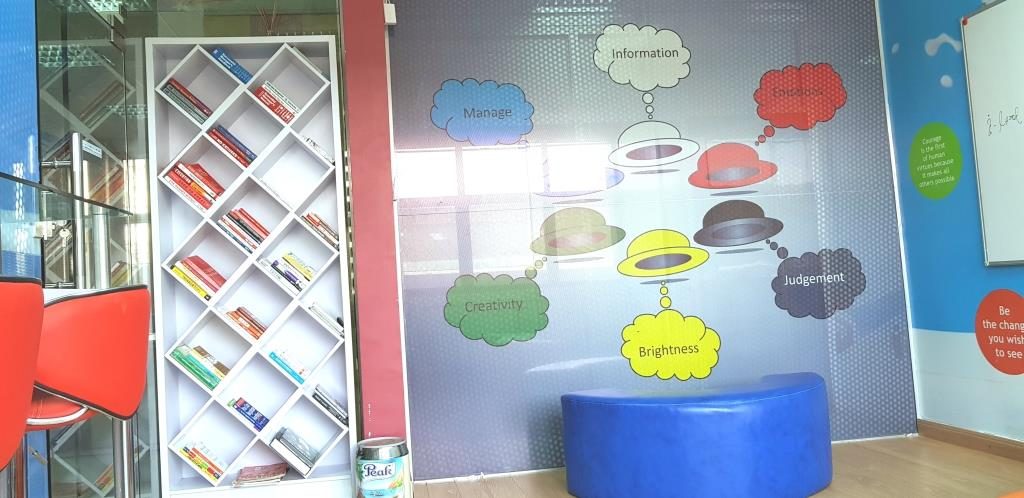
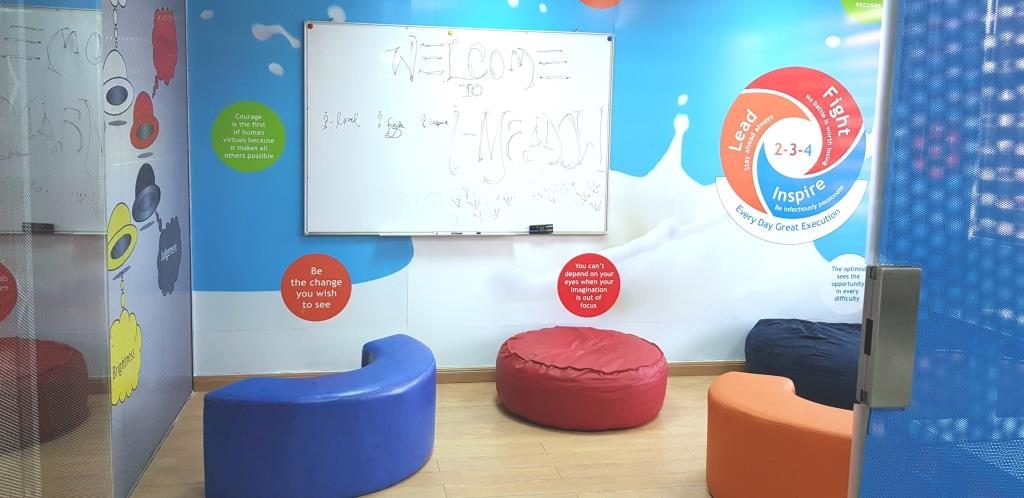
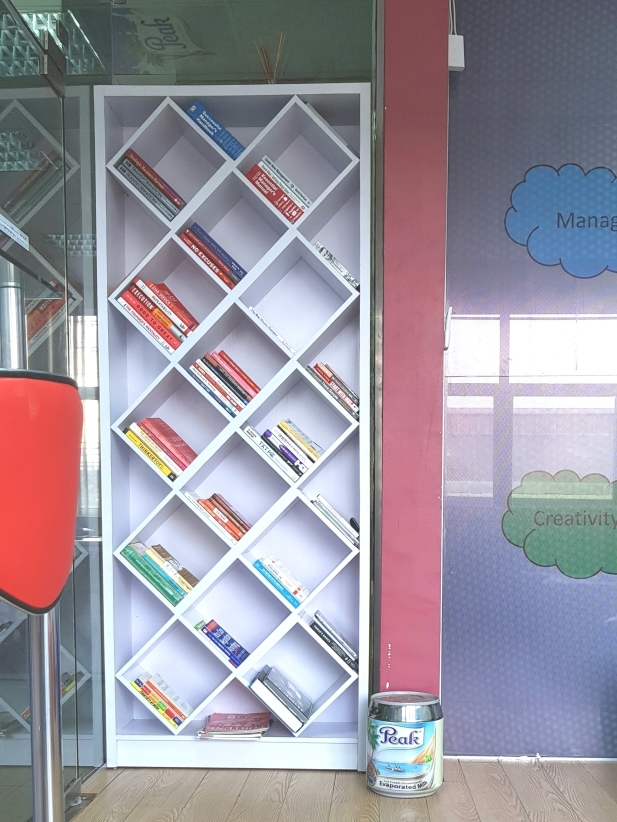
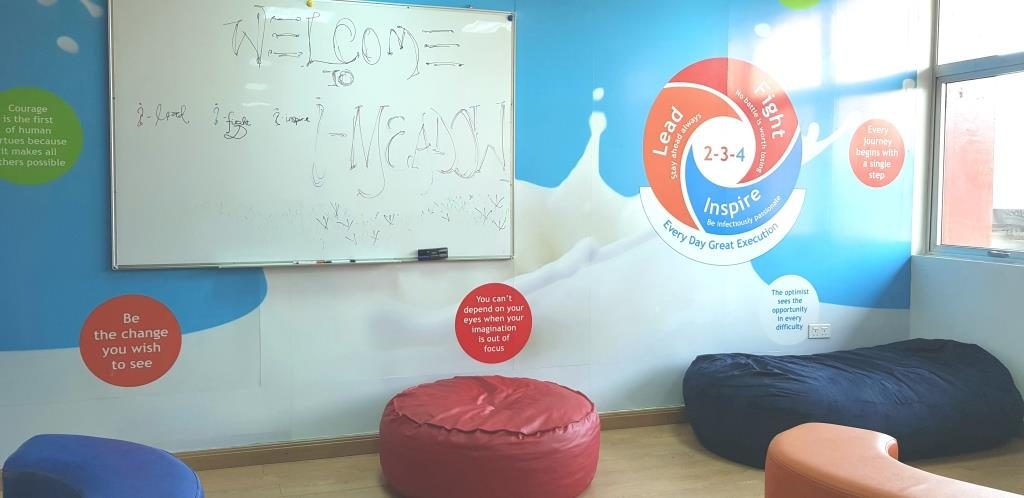
I visited a space in the business which is excellently named i-Meadow. The “meadow” without the “i” is an “open, sunny area that attracts and supports flora and fauna”. And that is what i-Meadow does, except that the flora and fauna are processes and ideas. It is an innovation space where team members spend time to improve the business of dairy. They have essentially taken the playbook of the mainstream (typical) technology firms to fuse discovery and innovation within the firm. You will find in this piece photos from i-Meadow. While the energy in the space cannot be captured with pixels, you can see that the modern tech office design has gone into a building where great daily product is made.
FrieslandCampina i-Meadow: an open innovation space
FrieslandCampina i-Meadow: an open innovation space
The Peak Ecosystem for Techies
Around industrial sectors, we are seeing companies modernize their business processes and technology capabilities in order to position themselves to compete. If the business of the modern age can be won with technology, it simply means that technology is the business. Technology improves productivity, making it possible to serve customers more effectively even at lower cost. There is no doubt that FrieslandCampina has increasingly redesigned its business processes to bring the innovation capabilities that technology brings. Ecosystems like i-Meadow with top-grade and tech-inspired office design is a testament to their tradition of bringing open innovation to engineer great products. Speaking with the team, they explained a vision to position the company as a place where the brightest tech talent in Nigeria would like to seek employment. Go figure; that is coming from a dairy brand, explaining the ambition to become an innovation leader.
FrieslandCampina i-Meadow: open innovation space
So, if you are looking for jobs in technology companies like Jumia, Interswitch, IBM and Google, FrieslandCampina should not be far. This is a place for the techies to make careers because the business of making the best dairy product is indeed a technology business. Technology will not just have to run the production of the Peak brand but also to transform it. The following are major areas it is focusing to drive innovation.
FrieslandCampina i-Meadow: an open innovation space
Our innovation, in turn, is focused on the growth categories dairy-based beverages, nutrition for children and branded cheese. Within these growth categories, research and innovation are mainly concentrated in these areas:
growth & development (of children)
daily nutrition
health & wellness and
functionality (structure)
FrieslandCampina focuses its innovation on producing healthy, nutritious, well-balanced and tasty food, in which the dietary advantages of milk in particular are made optimum use of and the costs and emission of CO2 are minimised.
My point is that engineers and techies must expand their horizons. It does not have to be registered in Crunchbase before a company can provide real opportunities in the technology space. Your AI and data analytics skills can find home in companies like FrieslandCampina besides the typical tech firms.
Opportunities in Technology
On the company website, it mentioned “technological breakthrough”. In other words, the business has elemental components of using technology to drive innovation and competitiveness. But this technology goes beyond just producing milk; it extends to marketing, distribution and customer engagements. From Three Crowns brand to the sachet technology, they continue to use technology to make daily products more affordable through pricing engineering, packaging and other techniques.
FrieslandCampina WAMCO Nigeria sells evaporated milk and powder under the brand name Peak, which has been a symbol of quality for fifty years. Peak enjoys extensive brand awareness, and brand loyalty is also high. The Peak products contain important vitamins and nutrients and are therefore beneficial to health. The range has recently been expanded to include evaporated (liquid) milk in sachets – a technological breakthrough.
FrieslandCampina i-Meadow: an open innovation space.
In the technology domain, there will be emerging opportunities as technology redesigns how every aspect of business is done. The distribution system, customer engagement, and the capacity to reach users of Peak brand are areas where technology will play new roles. Whether it is artificial intelligence to aggregate data across platforms, or deepening direct engagement through social and mobile, techies will find opportunities in entities like FrieslandCampina.
I see technology to play key roles in the following areas in what FrieslandCampina does:
Extending beyond milk to On-the-go Solutions. Nigerian startup community can technically build on top of Peak to make this possible. There are many layers on top of milk and there are opportunities in those spaces.
Efficient distribution of portion sizes: No one wants to visit a store only to be told that the store does not have the right size of a specific brand. So, there is a role for data analytics there by collecting data and predicting patterns to ensure customers always get the products in sizes they want. The real-time distribution insight will be critical for Peak to improve its scalable advantage and margins. The company has already invested in smaller portions but the optimality in distribution is where tech will help.
Flexible packaging needs to evolve in Nigeria. Nigeria needs the squeezability and the sippability but those can come by taking Peak to another layer. Think of smoothies and yogurts. Opportunities could exist for Nigerian food entrepreneurs to work with brands like FrieslandCampina to pioneer new areas through more flexibility packaging.
Data Analytics: Every business is a data business now. Firms like FrieslandCampina will provide new opportunities for data companies in Nigeria if the startups can think beyond the typical Click and Like metrics to deliver solutions that will improve key market indicators across the nation.
FrieslandCampina i-Meadow: an open innovation space
All Together
Companies like FrieslandCampina must find ways to engage the technology ecosystem as the world looks for better ways to improve nutrition especially in children. Unlike in the past where it was impossible to track (and correlate) how nutrition was affecting children, technology like wearables and mobile could have real applications.
Also, I expect more differentiation in ecommerce where hyper-focus sectors will begin to create separation in the industry. A man built an empire in U.S. by running a diaper-focused ecommerce, dairy in future should receive laser-focused distribution disruptions to reduce cost and get the products to families faster. Our limitations, as entrepreneurs, will be the scope of our visions. As I toured the firm, I saw opportunities for tech workers and startups: from logistics to direct customer engagement. Indeed, for FrieslandCampina, the industrial age is behind, the knowledge age is here.
Technology capability rarely wins markets alone. If tech can win without other components, Apple will not be the most valued company on earth. What wins is strategy with a solid business model. You need a strategy to succeed in any market, even when you think you have the best product. Interesting, without the right market strategy, you will never have the best product! As I noted, many years ago in the Harvard Business Review, Intel Corp won over AMD not necessarily because of technology, but because it “personalized” its microprocessor.
Yes, the “Intel Inside” campaign was an iconic show that orphaned AMD even before it was born. When people asked for computers and laptops with Intel inside, AMD lost trajectory. The brilliance of Microsoft is not really the Windows, but a recursive pricing strategy which demands annual licensing fees from corporate customers. In short, if not for the pricing, Microsoft would have advanced the world of PC industry.
We are witnessing uncommon things in a new infant sector: blockchain. It is hot and it is trendy. One company moved from $5 to $143 within days just for adding a blockchain product in its portfolio.
The financial market mania over digital currencies isn’t limited to digital currency prices, it appears. A tiny startup focused on financial tech called Longfin has seen its stock price skyrocket since it started trading last week.
Longfin, based in New York, started trading on the Nasdaq last week at $5. On Friday, the company announced it acquired another startup called Ziddu.com that uses the blockchain ledger accounting technology from digital currencies to make small loans.
That prompted an explosion of interest in Longfin, which saw its stock price more than quadruple on Friday to almost $24 a share. Then on Monday, the mania spread with the stock hitting a high of almost $143
I know that your institution wants to get into this game. That makes sense. But I have some words: it is not the technology that will drive the wins, just as it was not web technology that made Mark Zuckerberg a billionaire. The key thing that will matter is strategy – your company blockchain strategy. How are you going to approach your business using blockchain? Blockchain must work as a tool, enabling and anchoring the business strategic objectives. The business objective must be superior to anything that blockchain promises. It is only when you get the strategy right that you can structure how blockchain can anchor the technology element.
I want you to have a strategy, as you begin to think through this technology. We have looked at this technology, worked on it, and we like what we have seen especially as it concerns contracting and remittance. We would be happy to serve as Subject Matter Experts to provide guidance on strategy, technology and product evolution anchored on blockchain in your firm. We would come to any city in Africa and actually show you live how this works. Our expectation is to author the first draft of your blockchain roadmap, synthesizing your business with the possibilities of blockchain.
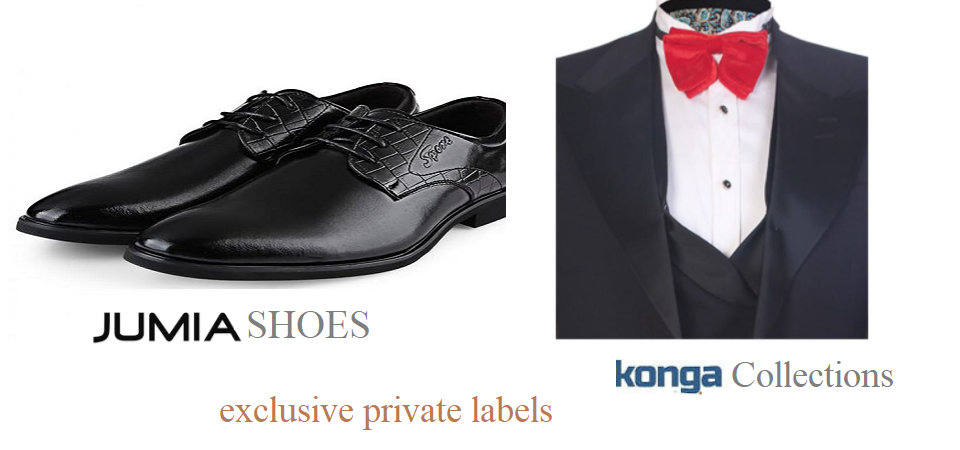
I am thinking that Jumia and Konga, two Nigerian ecommerce pioneers, can fix a major problem in Nigeria: the Aba shoe and leather business problems. (Besides Aba, we have similar issues in Kano and Oshogbo in other sectors.) For all the promises in Aba, Nigerian entrepreneurs are yet to unlock the latent opportunities therein. We do know that Aba has brilliant designers who are limited by their business visions, just as our farmers who remain keepers of ancestral traditions, over becoming businesspeople.
Both Jumia and Konga have invested so much on branding, and they are known in Nigeria. Each can pioneer a solid private label. So, I am hoping we will have things like Jumia Shoes and Konga Collections. They will have these businesses with pure elements of exclusivity in their respective portals.
Now that we are transitioning our economy, through diversification out of minerals and hydrocarbon, to a knowledge-based one, these ecommerce companies can play a critical role through commerce. Drawing my previous writings, these are ways they can create Jumia exclusive shoes on Jumia and Konga exclusive collections on Konga, and fix Aba shoe industry paralysis, using a pure aggregation construct:
Support some shoe designers and get them to produce under a unique label – Jumia Shoes and Konga Collections
Either will provide a shared infrastructure at scale to make it easier for makers and designers to have access to tools and equipment they need to design and make shoes
If either controls some of the brand rights, it will support the shoe makers to expand capacity in production. The firm will invest to boost capacity for the designers so that they can produce more shoes and leather materials
Either will help the shoe makers improve qualityso that the shoes can be sold internationally
Either will lead a pan-African structured advertising; the brand equity is there. Besides, Jumia, specifically, has deep experience in fashion through other entities in its parent Rocket Internet.
I am very confident that branding will unlock the opportunities in Aba, and the route to that will be having a differentiated label that brings some of the makers and players together. The fact is this: Jumia and Konga can give foreign shoe brands real heat in Nigeria if they build solid private brands by themselves through pure aggregation construct. They are not going to become makers, but they will set the standards, just as Uber does for drivers and Airbnb for homeowners, and the shoe makers will align.