DD
MM
YYYY

PAGES

DD
MM
YYYY

spot_img

PAGES

Home Blog Page 7242

Before Your African Bank Deploys Artificial Intelligence (AI)

0

Artificial intelligence (AI) is hot, but sub-Saharan African banks should get over the hype. There is need to do a thorough synthesis analysis before spending money on this new technology. Personally, at this phase of our banking development, deploying AI across different business units will have only marginal impacts when evaluated with the deployment costs. Practically, it makes no sense, for a bank to spend so much on AI because we are not ready. I understand the excitement that comes with leapfrogging challenges with technology; AI will not offer such benefits in our capacities to fix key banking business frictions, at scale, at this moment.

Sure, many consulting and technology firms are visiting banks across Africa running demos on how AI could magically grow revenues. That will happen but not anytime soon. Besides our lack of data and depth in understanding market patterns, AI (especially those engineered outside Africa) will struggle to add meaningful value.

Anyone that tells you that he has figured out how AI, especially ones created outside Nigeria, will trade stocks in Nigeria and return huge returns, you should tell the person to start a malaria treatment [AI can help in research, but not in autonomous trading]. No one has that capability because no one has the data to test such capabilities. The Nigerian Stock Exchange and the Securities & Exchange Commissions may not even have (complete) trading data that is more than ten years old in usable electronic formats. So, all these models are largely new and cannot be relied upon. Places like U.S. and some EU regions have data they have accumulated over decades, making it possible to build and test models with higher level of accuracy. Besides, their economic structures have largely matured – they are heterogeneous economies while most African economies are homogeneous economies which make us more susceptible to trade shocks, arising from price-gyration of commodities. With minimal exceptions, Germany and UK markets are more closely related than Nigeria and South Africa, or Kenya and Gabon, with our minerals and hydrocarbons playing dominant roles.

Some AI Applications in Banking

There are many ways AI can help in our banking sector. But in some of these areas, one does not need AI to deploy contemporary IT solutions in the noted business frictions. In other words, even before AI, we should have used current IT solutions to address them. The following are areas AI has promise:

Anti-money Laundering and Fraud Detection: The use of pattern recognition technology can improve anti-money laundering and fraud detection activities. Even though we like to throw AI into this, any bank not doing this now is not really using IT. Sure, it has to get better and AI can help. I do not see any risk in deploying AI in this  area. This is not a concern.
Besides AI, our banks should be using pattern engines to fight frauds (credit: Aditya)

Chat bots: A bank can use chatbots but I am not sure if customers are ready to engage bots with their financial lives on digital ecosystems. The trust is not there yet. Any bank doing this may launch it but most bank customers will not get close to using it. Yes, while the technology can be built, the customers may not use it.

Algorithmic Banking:  Data and analytics can help business leaders see business patterns, understand their firms, and drive allocation of capital. Any bank should be doing those things. But using autonomous algorithms as they do in NYSE to trade stocks and other trading services will be careless in Africa (except South Africa where they have data) today. This is where I have the biggest concern on the application of AI in the African banking sector.

Recommendation Technologies: Any bank with data today should use IT (even before the transition to AI) to drive its lending, mortgage business and more. AI can indeed help but no one should wait for AI  before it can use common IT tools to understand its business. Every bank has data of its customers, and using that data to make future decisions can be done with simple rudimentary solutions in the domain of IT. I expect every bank to be doing this at the moment.

All Together

Yet, while I do not see any promise in using AI to drive investment and market-moving decision including lending at scale, AI can help in improving customer insights. If you are a broker, AI can assist you to support customers by analyzing their portfolios, helping them to balance their portfolios through optimized asset allocation strategies. Yes, you should not be focusing on how to use AI to beat the markets because you cannot do such, as you have no data to test such models. Just as we cannot do (autonomous) AI-driven lending without massive datasets of customer credit histories, we will struggle in building trading models without trading data.

AI has a promise to connect business elements (credit: Udemy)

It will be irresponsible for any bank or financial institution to link products to its core general ledger expecting AI to execute financial transactions in Africa autonomously. The problem is not the capacity to make such algorithms, but the data to examine that they make sense. To build an investing system to allow AI to trade in any African exchange is reckless at the moment. I saw a promo by a company promising that its AI can beat Nigerian Stock Exchange. I was like: how did they test the model? Who provided the data? It is possible they have the data, and if they do, that may be the most important innovation because that data will certainly give them a great competitive advantage. But I doubt it – it is likely a product made for NASDAQ and NYSE massaged for the Nigerian Stock Exchange with some fudge factors.

Finally, I am not saying that AI is not useful: sure, it will add value in our banking. My point is that we are not there yet especially when it involves beating markets with models. We can continue to use information technology to improve our banking operations but the transition to AI must be carefully executed. There are many productivity gains which IT offers even without the elevation to AI. We have not totally exploited those gains. The time for AI will come, as we build data, and new opportunities will emerge.

The Limits of Big Data, the Strength of Small Data

0
Ndubuisi Ekekwe receives award from Richard Branson

We are in the data economy. Data is the new oil. We have to make decisions based on data. And data must drive everything we do. From one industry to another, we read how data analysis is improving decision making. There is no problem with using data to make decisions: I support it. The use of data in business is a tool of the time, deployed in different ways. But when entrepreneurs or business leaders begin to lose their intuitive capabilities because of the absence or paucity of data, reliance on data becomes a weak point in running a business.

Let me give two cases:

  • Gary Loveman was a professor in Harvard Business School who believed in data. He built business models on how better insights, driven by data, could unlock more value in the casino business and specifically Caesars Entertainment Corporation (then called Harrah’s Entertainment). He was brought to Caesars to apply the models; he later became the overall boss. But a moment came when opportunities were evolving in Macau, a Chinese administrative territory, for casinos and gambling companies. Many American casinos prepared for the moments and invested in the “new Las Vegas”. Gary looked at the data and decided that the data was not solid enough for him to invest. He passed the opportunity, one of the best in the sector, in the global casino industry. Largely, because of that mistake, Caesars lagged competitors and practically went into decline, even as some competitors that went into Macau flourished.
  • While Mr. Loveman was looking for data, Sheldon Adelson, an American business magnate, did not bother. He had the instincts that Macau, despite the lack of data, was going to be a refuge for rich Chinese to play games. He invested through his Las Vegas Sands Corporation and flourished. Later, Mr. Adelson mocked Caesars, explaining that those with more mathematics missed the opportunities, and that sometimes, numbers cannot show everything in business.

The Limits of Numbers

Yes, numbers cannot show everything we need in business. Sometimes you just have to go, and build the products and services even when there are no numbers, to support the thesis. If Steve Jobs had waited for numbers from Verizon, we would not have the iPhone today.

Richard Branson, the founder of Virgin, has the same business philosophy.  In an interview, he explained the futility of wasting time, and asking consultants to analyze business plans. He noted that sending a plan to two accounting firms would likely result to two different perspectives. Relying on them will be a mistake. For him, the key is not being totally driven by data, but making a decision as an entrepreneur with elements of risks to move in a territory that is simply not easily understood. The first-mover advantage becomes a huge opportunity.

While I am not saying that entrepreneurs should be careless to enter into new businesses without making efforts to understand the market opportunities through market analysis, my point is that there are many things market analysis cannot tell you. Sometimes, the analysis gives you what you want to hear. The key is to understand that success can happen if your entrepreneurial intuition is allowed to drive business vision, accepting risk, by overlooking some signals from data. Steve Jobs flourished on that by ignoring focus groups and surveys, trusting his instincts to shape a new world.

You need small data (the stories from customers, the one-by-one interface with clients, etc) but you must not always need big data (the massive human-less datasets) to drive everything you do in your startup. The capacity to use that small data is what will decide how far you could go. Small data wins in many ways over big data:

  • Small data makes it easier to understand individual customers instead of the averages of multitudes which big data does best. There is an insight you can get by talking to a customer that reports generated from massive datasets will never match.
  • By talking to some customers, over reliance on massive datasets driven by averages, you can get better understanding on why the data you are looking at looks the way it looks. Yes, small data answers the Why behind the data.

Simply, you need to go out and meet your customers because despite all the data in this world, that interaction is what will give you a clear understanding of your market. A product is whatever a customer says it is. It is when you interact with your customers that you will have that better understanding.

Our lives and what customers do are not really averages. Analytic solutions make them so. Two people are in a room: one man ate five burgers, the other none. In the analytics software, you will likely get that each ate 2.5 burgers by running the mean. Why that is an insight, it has missed the key element: the marginal outlier which can be gathered by speaking with these two people. Yes, by speaking with these two people, the startup could have seen that one is hungry while the other is fed. And based on that, the company could engineer better solutions for the outliers instead of the averages.

It turns out that products built on averages are mundane and typical. The opportunity for innovation comes by looking at areas no one has looked (or looked but ignored). That means knowing that one man has eaten while the other has not, in the example above.  With averages, the blue ocean strategy opportunity is gone because the analytics has normalized all the data to averages. You build transformational businesses by having insights which are not typical. They do not happen because you have averaged customers and markets. That will not create any new insight to bring change.

All Together

There is no human system that can be effectively represented with all-statistics. Statistics is nothing but averages and most times, it is not very perfect. The best insights in consumer business come from small data which is largely stories customers have told. You need to find ways to collect them, and make use of them, as a startup.

Delivering great experiences to customers will not happen unless you can answer the Why in the data you see. Most times getting that Why insights comes by meeting and speaking with the customers. The stories of the customers are the best insights you can use to shape your products.

The customer story is what drives the best disruptive products and solutions in the market. It is not the averages from the data analytics software. You need to invest to get those stories which are unfiltered and un-cleaned, but simply raw to help engineer the next big product. When you pass datasets from the field through a cleaning process, before feeding them into your analytics software, you are essentially removing the most important elements that will drive the blue oceans or activate the trajectories to disruptions. And because the small data cannot be handled that way, we then tend to diminish its importance. That has to change because for all the great things big data offers, it has a limit: customers are not necessarily averages packaged in nice graphics, sequestered from the Why.

The LinkedIn Revenge

0

For decades, the social contract of labour was to get a job in a company, grow on that job, and retire while working for that firm. Then, people spent decades in one company. The phrases “company man”, “company lifer”, and “one-company man” made sense.

Then in early 1980s, the redesign started: companies started killing that social work contract between employer and employee. Legends like Jack Welch of GE made it a management system – fire the bottom performers, promote the best. It went wild and just like that, there was no hiding place. American law evolved, the world followed: no human has any protection from axing managers. Labor was indeed labor, tedious and painful because jobs were offered as “as is”, uncontracted.

Before then, employees were loyal. Resumes or CVs were like classified documents: they were totally personal and secretive. But as the employees saw the dismantling of the work order, they revolted. They needed to, because they had lives and families to take care.

LinkedIn, a professional networking site, provided a cover, for these global employees. Simply, across industrial sectors, people felt it was normal to post their resumes publicly, for all to see, including the present employer and potential ones. The secretive resumes were gone. You can see the resumes unconstrained and unbounded on LinkedIn. That was a new world.

A local Nigerian proverb explains it all: “As hunters have learned to shoot without missing, birds will have no choice but learn to fly without perching”. In my local language which I share with peerless Chinua Achebe, he used the Eneke, a bird, to take home the same point, “Men have learned to shoot without missing their mark and I have learned to fly without perching on a twig.” We are the Enekes and we are flying on LinkedIn without deleting our accounts. That is the only way to survive in a world of firing managers.

If the bosses and managers could not honour the workers with secure and guaranteed employment, the workers have the rights to tell the world that they are available for work. It is evident the employers do not care, with episodes of mass sacks happening weekly across the world.

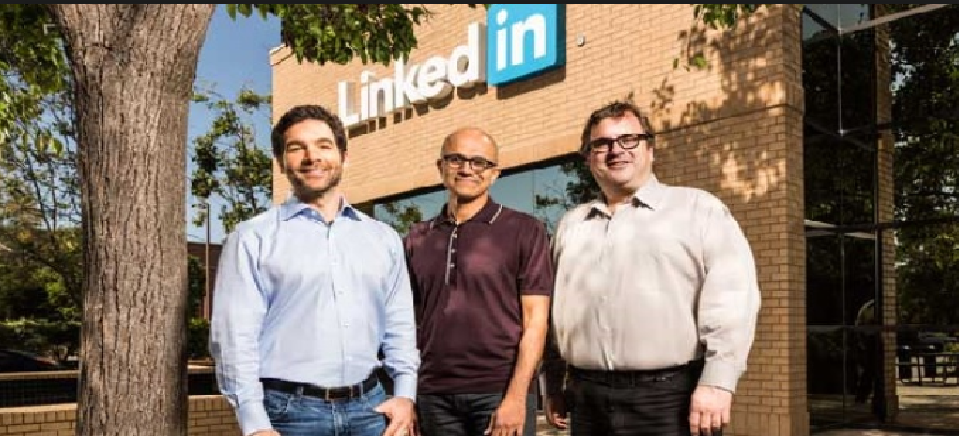
And unlike in the past, employees cannot say the workers are sharing resumes [to depart], because LinkedIn made it so cool, attracting even the employers to the ecosystems. It was the genius of a man named Reid Hoffman (a founder of LinkedIn) that you can share your resume publicly, and no one in HR will question your absolute loyalty to a current firm. Before LinkedIn, that was a big issue, a real revenge: tit for tit, and tat for tat. Game on.

Today, every employee is available and ready, reminding the employers that workers will not just wait for them to fire them. The LinkedIn revenge continues. But I am seeing something entirely new: employers are plotting the next one.

Standard Operating Procedures (SOPs)

I hate to write this but I am seeing African companies investing in documenting their business processes. It is framed that SOPs are needed for business continuity and organizational succession. It is indeed because you want the capacity for any process or job to be easily done by another person. It is one way of handling the key-man risk where if one guy leaves, a system struggles. But when everything is documented, that risk is taken away, on some jobs.

Yet, the fact is this: as companies perfect that, we will see a labour of plug and play where older and experienced people will make way for less experienced ones and evidently more affordable. Labour is going to be redesigned in the age of AI and many jobs will be at risk.

To employees, the risk is there: as firms document everything that you do, they can easily feed those in machines in near future or get people to do them. The escape, for workers, is to get new skills and continue to update the LinkedIn accounts because in this age, I am not sure employers see us as humans; most see us as numbers. That is unfortunate.

Facebook To Save The Taxman

0

Facebook is innovating on tax, and that will make many countries happier. In short, if the social media giant follows through on its new plan, Nigerian government will benefit: it will pay “full” taxes on ad sales generated in Nigeria. That is a good thing.

Facebook is making changes to its tax structure under pressure from U.S. and European authorities. CFO Dave Wehner said Tuesday it will in future pay taxes in the countries where it actually makes ad sales, rather than funneling international business through its Irish subsidiary, where it enjoys a disproportionately low tax rate. The EU is working on plans to force digital companies to book sales closer to the ultimate buyer, making it easier for tax authorities to capture the value-added (Source: Fortune Newsletter)

In the past, most technology companies have worked to reduce their tax burdens across the world by domiciling their effective businesses, for tax purposes, in tax havens where they pay low taxes. But with this move, the implication is that Facebook will pay full taxes in countries where the revenues are generated.

I think Google and Uber could follow this lead from Facebook. Doing that will be fair to developing countries, as paying full taxes will make their missions even more believable. It makes sense to pay taxes on the domains where the ad sales happened, and there is no better corporate social responsibility than that. They can setup the local selling structure which Facebook is working on.

Facebook Inc. is changing its tax structure so that it will pay taxes in the country where sales are made, rather than funneling everything through its Irish subsidiary.

The company said it will move to a “local selling structure” in countries where it has an office to support sales to local advertisers. Menlo Park, California-based Facebook shifted its international business operations to Ireland in 2010
[..]
“We believe that moving to a local selling structure will provide more transparency to governments and policy makers around the world who have called for greater visibility over the revenue associated with locally supported sales in their countries,” Chief Financial Officer Dave Wehner wrote Tuesday in a statement.

Mitigating the Dislocation

Nigeria’s Federal Inland Revenue Service (FIRS) wins if these companies adopt this tax paying paradigm. We need to thank the European Union for the heat on these companies. Nothing would have made Facebook to change its tactics, if not for the onslaught from the EU on Google and Apple. A new tax system is needed in the world because technology has changed the dynamic structures of firms and how they relate with nations, and their competitors.

The implication of this local selling structure is huge. Facebook makes money through ads anchored on aggregation construct. Increasingly, aggregation business which Google and Facebook are leaders will continue to disrupt newspaper companies, crippling their revenue structures. It is very obvious that this trajectory will continue in the near future, locally and internationally. But where Google and Facebook decide to pay taxes to Nigeria on the ad revenue made in Nigeria, the impact of this business dislocation, at least on tax purposes, will be manageable. It simply means that taxes government lost from Guardian and ThisDay are now paid by Facebook and Google.

Under the aggregation construct, the companies that control the value are not usually the ones that created them. Google News and Facebook control news distribution in Nigeria than Guardian, ThisDay and others. Because the MNCs tech firms “own” the audience and the customers, the advertisers focus on them, hoping to reach the readers through them. Just like that, the news creators have been systematically sidelined as they earn lesser and lesser from their works. But the aggregators like Facebook and Google smile to the bank. The reason why this happens is because of the abundance which Internet makes possible. Everyone has access to more users but that does not correlate to more revenue because the money goes to people that can help simplify the experiences to the users who will not prefer to be visiting all the news site to get any information they want. They go to Google and search and then Google takes them to the website in Nigeria with the information. Advertisers understand the value created is now with Google which simplifies that process.

The impact of the aggregation is that value, especially on ad revenue, will move from media companies to aggregators like Google and Facebook to the extent that companies like Guardian and ThisDay will experience diminished revenues, even when their products are making money for Google and Facebook. The new tax structure Facebook plans to implement will not redesign the business dynamics, but the Nigerian taxman will certainly get a relief because even if Guardian and ThisDay will not send the tax money, it is sure that Facebook and Google will. By doing that, this new model will save the taxman.

Facebook needs to be commended for this, and I do hope other foreign companies follow the lead and implement local selling structure. It makes sense for a fair and just world. You cannot deny Nigerian government tax money just to bread more millionaires in America through inflated earnings. But with this, it cannot be any better: pay the tax where the ad sales happened, so that in future you can have more ad sales, as the local economy will be supported with the taxes you have paid.

My Nigerian Ministers of the Year 2017 – Finance, Investment, CommTech, Agric

9

As the year draws to a close, the following federal ministers of the Nigerian nation are My Ministers of the Year – 2017.

  • Minister of Finance – Kemi Adeosun: She has tirelessly worked to reform the structure and nature of Nigeria’s finances. Her efforts on processes demonstrate a clear vision to build enduring institutions. From TSA to improving the nation’s tax revenue, this woman has served her nation, at the highest level, excellently.
  • Minister of Agriculture and Rural Development – Audu Ogbeh and Heineken Lokpobiri. Mr Ogbeh may not be fashionable, but he is building a system that connects a new generation of Nigerians into farming. He is pushing reforms to make it possible for farmers to become business-people, by phasing out elements of the broken Anchor Borrowers Scheme without clear enablers. A strong advocate for farmers, under his watch, the nation has pumped money into agriculture even as he mobilizes citizens to embrace agriculture. Mr. Ogbeh is strongly supported by his junior minister Heineken Lokpobiri.
  • Minister for Communication – Adebayo Shittu. Barr Shittu is the hardest working minister in the cabinet. There is nothing he has not touched. He is working to reform many government businesses under his ministry despite obvious challenges before him. But you cannot blame him for lack of trying. From reforming NIPOST to NigComSat to starting an ICT University, Barr Shittu is everywhere. The impacts may not be obvious because he is tackling all these without much budget. But you can see a man that is action-oriented, doing all to make real impacts.
  • Minister of Industry, Trade and Investment – Okechukwu Enelamah and Aisha Abubakar: The duo of Mr. Enelamah and Ms Abubakar are working to establish one of the most promising trade agreements in the history of Nigeria. As they do this, they are helping to dismantle all the ills of doing business in Nigeria. People just have to give them time. Anyone registering a company today will know that Corporate Affairs Commission works better. The recent uptick in the Ease of Doing Business in Nigeria is a clear sign both are working.

That is my opinion, as an entrepreneur and a citizen of Nigeria.