DD
MM
YYYY

PAGES

DD
MM
YYYY

spot_img

PAGES

Home Blog Page 7246

Improving the Performance of Your Digital Marketing

12

I do not have a Facebook account, though you may see some with my photos. I used to have a Facebook account. But I also wanted to share about my businesses on my account. In my Facebook connections are families, relatives, friends and others. I knew I wanted to share about my businesses, but I was concerned that it was not really appropriate for families to wake up only to read feeds about business and strategies. I had assumed that Facebook is for family moments and touting business there may be non-optimal, especially to kinsmen and close families. Since I could not manage the conflicts, I deactivated the account (temporarily).

But in LinkedIn, I felt we all come there to do business. It is a professional ecosystem, and we try not to add personal elements to it, unless on professional settings. While it is fine to share pictures of your baby learning to walk on Facebook, on LinkedIn, that may not be well received, unless in a closed group. Most people come to LinkedIn for business and professional connections, and discussing business strategies is certainly appropriate.

My business has business accounts (the pages) in Facebook including one for Tekedia, this blog. We automatically sync contents published on Tekedia to Facebook. Usually, when we login to Facebook account of Tekedia, we see the contents. However, few weeks ago, we noticed that Facebook had redesigned its algorithm making it impossible for others to see the contents. But when we manually share the contents on Tekedia Facebook page, it would be visible to other Facebook users.

Technically, Facebook was not really interested in web robots sending contents to its platform. It wants people to come in person and share. Contents which are automatically sync’d to Facebook cannot be boosted (or promoted through advertisement). You have to manually post a content on Facebook before Facebook will allow you to boost the content.
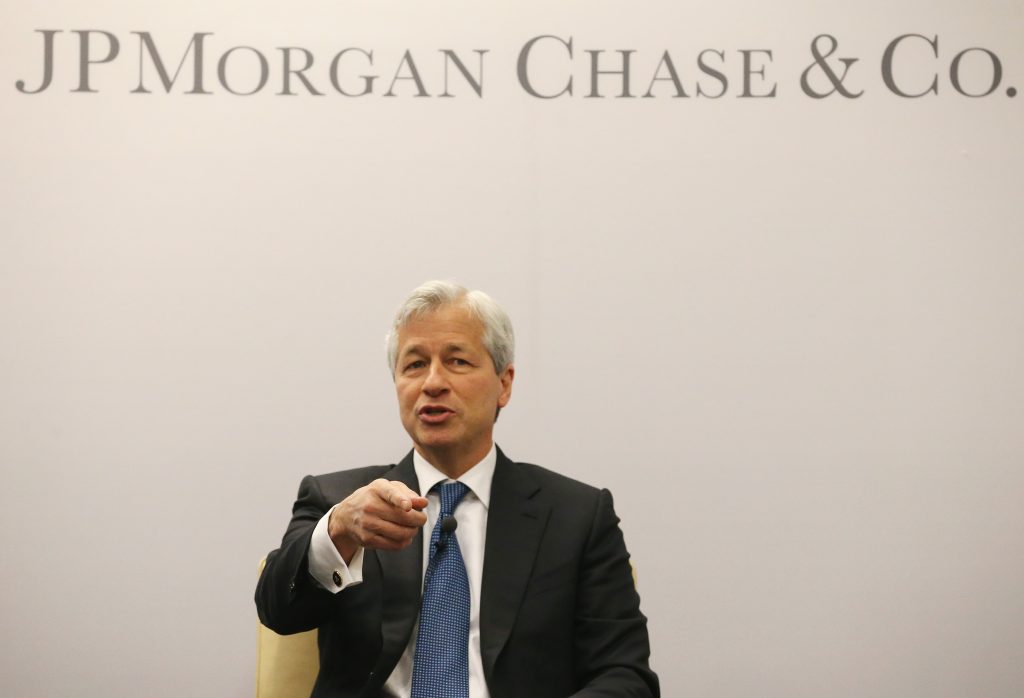
JP Morgan Chase puts contents through its CEO account, it goes viral. But the same content via JPMC account, no one cares (WSJ)

Small Experiment

When we noticed the absolute suppression of sync’d contents, on Facebook, my team decided to post contents, on Facebook, from Tekedia manually for some weeks.  As they posted, they tracked impacts. Then after days, it was clear that Facebook was not distributing the contents extensively: sometimes, Facebook puts the contents in the feeds of only five users. In other words, Facebook is not crazy in distributing the contents. But when the same contents are shared on personal feeds of my colleagues, Facebook distributes them to more users. Quickly, we noticed that Facebook prioritizes friends’ shares over those shared by media or company pages. Immediately, we stopped paying attention to Facebook from Tekedia account.

Sure – Facebook works, but for it to work on a company Facebook page, the users have to come to the page to read the content and where possible share it. Facebook by itself does not distribute contents from company pages that much. Where the users do not come, posting on pages may be a waste of time.

This Facebook experience is typical with LinkedIn. LinkedIn company posts are not well positioned. Fewer people see them compared to personal posts, other things being equal (similar number of followers, type of contents, etc).

The Emerging Model

Both LinkedIn and Facebook expect the company pages to pay so that their contents can be massively distributed. But since they need users, they still allow the personal connections to deepen as that is the business (both the company pages and personal accounts are run by humans, who make decisions). Yes, they cannot afford to annoy the users if they want to remain in business. So, the personal sharing and connections work well, even as they frustrate businesses, especially small ones that cannot afford to pay.

It is highly unlikely that you will get any attraction on Facebook and LinkedIn these days,, from company pages, without investing money. Even if your contents are great, they will stall. One has to improve the game considering that even social media entities have digital marketing for law firms and other domains.

But put $100 behind those (company page) contents on LinkedIn and Facebook, within hours, thousands of people will see them, as they will massively distribute the contents. Suddenly, the contents which have been ignored are now popular. There is nothing wrong with that: it is their business systems under free enterprise. But I want you to understand this as you structure your digital marketing engagement. Opening company accounts on social media networks like Facebook and LinkedIn and expecting that posting contents there (without ads) will do the magic is an illusion.
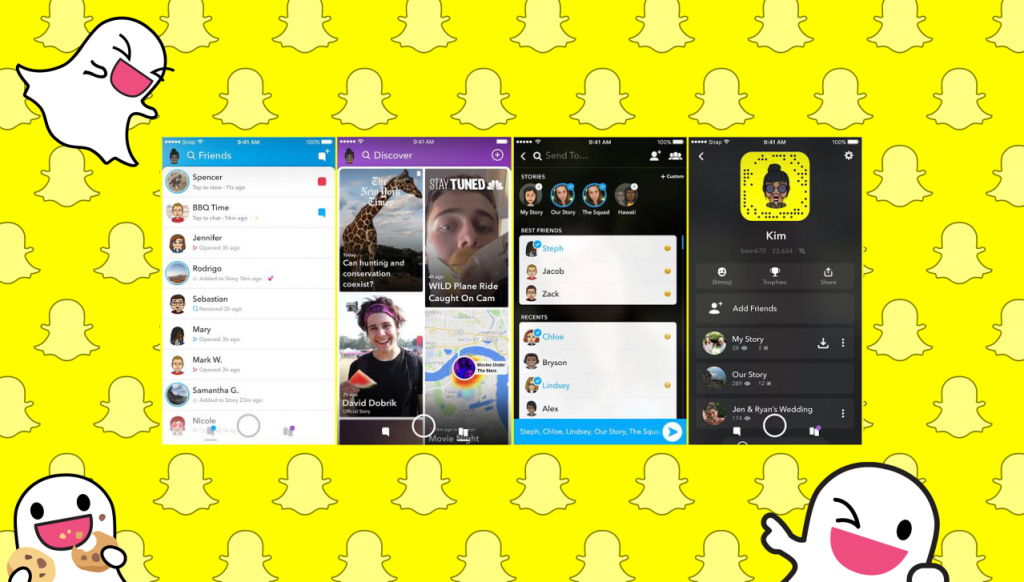
Snapchat starts algorithm-personalized redesign splitting social and media (credit: Techcrunch)

Snapchat Comes Clean

I have never used Snapchat to know how it works. But I liked this content from TechCrunch newsletter:

In an op-ed for Axios, CEO Evan Spiegel said, “We are separating the social from the media.”

More specifically, the redesign will place all messages and Stories from friends to the left of the camera (with content from your closest friends prioritized), while message and Stories from publishers and celebrities will show up on the right.

Essentially, Snapchat is going a step further by physically making it obvious on the prioritization of contents. The Left side contents are from friends and families while the Right contents are from companies/celebs. If Snapchat has company pages, similar to Facebook and LinkedIn, it would be expected that it would make contents on such irrelevant in its systems.

Understanding The Factors

You need a personal account to promote your business on social media. In other words, the best way to build organic social media marketing is to run it through personal accounts. The days of wasting efforts on branded company pages are about gone. One press release on partnership from your personal LinkedIn or Facebook account will likely get more traction than the one from your business social media page.

This observation is not new: most U.S. companies, upon hiring executives, ask them to surrender rights to their personal social media accounts or they will be given new ones through which they will “work” from. In other words, a CEO of company BBB will have a LinkedIn account with his name. But that account will not belong to him. Understand that the CEO will have staff working on his social media presence and the company invests on making sure it is right. If that CEO wants to leave, he/she cannot take control of that account. Why? He might have built 100k users but that was not because of his efforts: those users are for the company.

One CEO was fired and within minutes, he wanted to login into his LinkedIn only to notice that his password had been changed. Then he recalled that he waived the rights to keep the account, upon leaving the company. He had tens of thousands of users. The company will delete contents, and change the profile for the next CEO. For companies like CNN, they do create new accounts for staff. When a staff departs, CNN keeps the account: you do not move with the users.

If you have left the company, there is no need for contents shared in your capacity as CEO to be in your thread on that LinkedIn or Twitter account. (In some cases, part of disengagement negotiation can include leaving the social media account with the executive, but the company will wipe the contents).

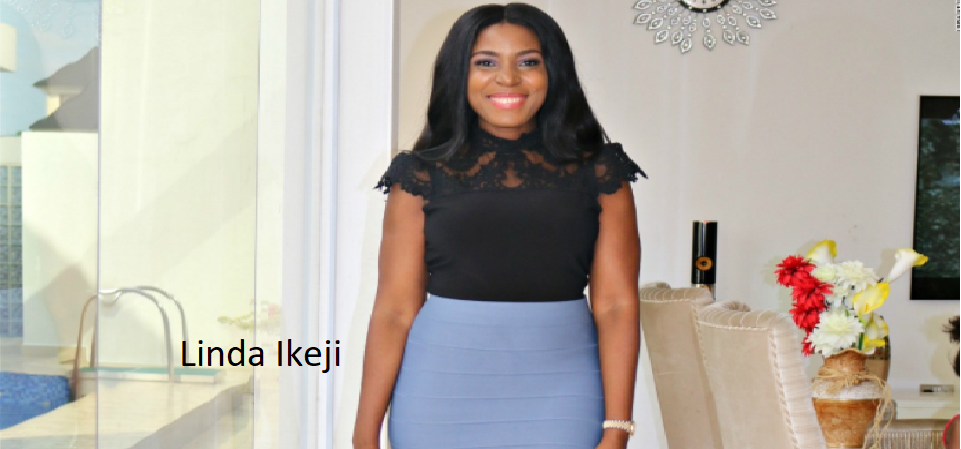
Linda Ikeji: The Queen of Blog

Linda Ikeji is peerless in understanding how social media and blogging work. She is better than any Nigerian including those that work for Google and Facebook. I do not read her works because the focus is not my interests. Yet, I wanted to know why she was successful. Most Nigerian companies put Linda Ikeji on their tags to get traffic. I spent time and saw an interview where she explained her minor secrets. The key two points are:

  • To succeed in blogging, you must reveal your identity.
  • You must write on things people will be interested on.

These observations look common until you put them in perspectives. When she started blogging more than a decade ago, most people blogged with pseudonyms or simply ‘editors’: Linda used her real name, and went ahead to name the blog after herself. She brought authenticity and connected with people, as they knew who was writing.

In the interview, Linda made it clear that without that real identity, you lose authenticity. She explained that contents have values due to the creator and not just the contents; anyone that wants to do well in connecting with readers must be open. Her other point was self-explanatory. Of course, some do click-bait. Yet, every person must find ways to understand what the audience wants.

All Together

A social media account is a business tool and companies have understood that speaking from the human element is more impactful. A post shared from the personal account of CEO of BBB will get more traction than one shared by BBB. With that understanding, BBB will put efforts to nurture the CEO social media accounts.

For you, as a small business owner or entrepreneur, you need to evolve out of your shells. If you think you will hide and run a good social media marketing, you will not succeed. All those nice contents on your company accounts are there but people do not pay attention, because no one knows the human elements behind them.

How many times have you visited a blog, maintained by nobody or no-name? I do not think you waste your time reading such blogs. You want to know the person writing and the person must disclose his or her identity before you care what the contents say. That is the same algorithm they have automated in Facebook and LinkedIn: there is the supremacy of friend connections over company contents. Linda Ikeji had implemented that algorithm in her business model a decade ago: she made everyone a “friend” by revealing her identity when others were hiding on the web.
How You Can Invest N20 Million in Nigeria in 2018

0

This is a question from Tekedia Forum. I like it and posting it as a piece here. Someone asked how she/he could put N20 million into work in Nigeria in 2018.

I have N20m which I have in Union Bank for treasury bill. The money was payoff from previous job. But unlike in the past where TB instructions could be in perpetual, now the bank does not reinvest automatically. I can’t be doing same monthly. I want to move the money and invest in something else. Any suggestions on good options in Nigeria. I look for max of 3 years with highest safe returns. Prof help

My Response


I am deleting the response here. Please visit the Tekedia Forum page to read it. I updated some minor typos and would want to maintain one version to save my time.


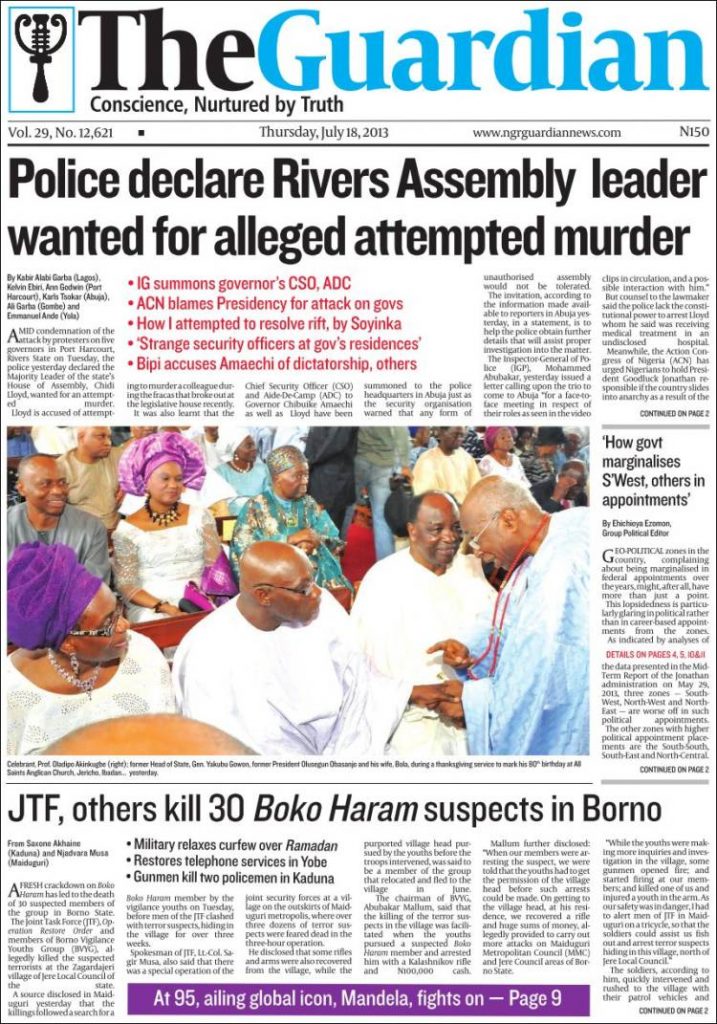
By 2025, Nigeria’s Guardian Newspaper Will Exit Print

0

One of America’s most celebrated media companies, Time Inc, is leaving the stage. Time Inc has struck a deal to sell itself to Meredith.  The New York-based Time publishes PeopleTimeFortune, Sports Illustrated, etc catering to affluent audiences; Meredith publishes Better Homes and Garden, Family Circle, and Allrecipes, among others. The latter is based in Des Moines, Iowa and focuses on largely Middle American women.

If you look at the brands that Time Inc controls, you would expect it to be in a position of strength to compete in this extremely difficult time for media companies. Time Inc has understood that its competitors are not Economist, Forbes or any of the global media brands. All these firms compete against new species of companies: the social media aggregators. Yes, Google and Facebook are the real competitors to the global media.

Under the aggregation construct, the companies that control the value are not usually the ones that created them. Google News and Facebook control news distribution in Nigeria than Guardian, ThisDay and others. Because the MNCs tech firms “own” the audience and the customers, the advertisers focus on them, hoping to reach the readers through them. Just like that, the news creators have been systematically sidelined as they earn lesser and lesser from their works. But the aggregators like Facebook and Google smile to the bank. The reason why this happens is because of the abundance which Internet makes possible. Everyone has access to more users but that does not correlate to more revenue because the money goes to people that can help simplify the experiences to the users who will not prefer to be visiting all the news site to get any information they want. They go to Google and search and then Google takes them to the website in Nigeria with the information. Advertisers understand the value created is now with Google which simplifies that process.

The trajectory to what happened to Time is global. Meredith will likely close some properties and move some fully digital, firing hundreds of staff in the process. US News & World Report has since become a website after it exited print journalism many years ago. We have all forgotten that print US News.

That brings me to the Nigerian media business: By 2025, the Nigerian Guardian Newspaper, the best brand in the sector, will go all-digital. As Internet penetration in Nigeria deepens, value will move from Guardian to companies like Facebook, and Guardian will fold in. (I do agree that some companies will keep moving, despite the evidence that markets have moved. So, you can see Guardian printing post-2025. But under the scenarios today, I do not think they will make money doing so. Already, most newspapers in Nigeria do not make money, but their patrons use them for political positioning, and that is why they keep printing even when losing money doing so. This piece has focused on Guardian as it is the best; others are even in more challenging territories. But note that brands like BusinessDay which focus on business could actually blossom if they redesign contents to attract startups, entrepreneurs, businesses etc readers.)

The following factors will shape the 2025 Nigerian media business:

  • Losing Gatekeeping Role: Guardian has since lost the gatekeeping role as the platform where anyone can read the best insights about the Nigerian nation. Most of its columnists and contributors can be read online, across different channels. That quality that defined Guardian has essentially been disintermediated. Guardian premium brand has been abstracted away by Google Search and its contents commoditized. Search for “marginal cost” in Nigeria, and this blog will do better than Guardian on the search engine. That tells you how Google has broken the hearts of media moguls: they are put to compete with “nobodies”. By 2025, this will only get uglier.
  • Localization of Aggregators: By 2025, localized strengths of Facebook and Google to attract ads in Nigeria and make them far easier for anyone to put adverts in their platforms will deepen.  Today, the minor friction on putting adverts in Facebook will be fixed. The implication is that people will choose these platforms more often.
  • Strengthening of Local Startups: Local startups executing freemium models with advertising as core revenue base will get stronger. That further challenges media companies as they compete for ad money.
  • Digital Consumption: With deeper Internet consumption, I expect more people to be receiving their news digitally. That puts pressure on print journalism
  • Advertisers Move Digital: Most advertisers will go digital, putting pressure on print.
  • Global Competition: It may not be obvious but that is the reality: Guardian competes against leading global brands like New York Times, Washington Post, etc. The unbounded and unconstrained nature of the Internet has made coverage global. The foreign media do break major Boko Haram attacks before local Nigerian media. When they have the right information they want to covey to the world, they are always first. Largely, Guardian does not expect to be the gateway to the world when big news happens in Nigeria.

In a perfect Internet market, the marginal cost is zero. Interestingly, companies like Google have attained that near perfect market position as their products are completely free. As contents increase, their positions as aggregators will get stronger, putting pressure on original content providers. The end result: expect mass media contents to be priced at zero.

Guardian will exit print by 2025

Options

The following are the options for mass-market media companies like Guardian in Nigeria.

  • Freemium Model: In this case, they offer everything free online. That is the most possible model because their contents are not specialized to command anyone to pay for them. Except the columns, there is nothing that is on Guardian that you cannot find in Punch and Vanguard. Interestingly, within minutes of publication on Guardian, the contents are in Facebook and personal blogs. The end game is junk display advertising everywhere as companies work to get revenue from Google.
  • Subscription Model: This is a scenario where Guardian asks readers to pay for access to contents. This will not work as I had noted above. The contents are not so exclusive to command people to pay. In other words, if you pay subscription to Wall Street Journal, that makes sense as you are reading business news which can be monetized. But paying subscription for Washington Post may not be that necessary when you have other outlets that can give you whatever they have in the Post free. But WSJ contents are exclusive and time-sensitive. Guardian is more of Washington Post than WSJ.
  • Others: There are media websites that ask for donations and all kinds of solicitations from users. None of those options can build a real media brand because the revenue cannot support top-grade journalism. So, at the end, it is all click-bait journalism that does not elevate the game.

My Recommendation

In this Tekedia, we generate now good revenue for the rants and contents we put across here. It tells me something: you can actually make people to pay, if you have decent locally-relevant contents. Yes, Nigerians can pay for media but it must align to the capacity to help them improve their lives or businesses. I see a future where the best media brand in Nigeria will be like Bloomberg Intelligence (without the terminal), producing market and business data, at city and state levels, which people will subscribe to consume.

Bloomberg Intelligence delivers an independent perspective providing in-depth analysis and data sets on industries and companies, as well as the government, credit, litigation and economic factors that can impact decision-making.

It goes beyond having the data: you must break them and make it easy for people to consume them. That is a business that will drive media in Nigeria by 2025.  You can take a specialty that is of mass interest, collect the relevant data, and then break that data, relating all on how people can use them to improve their lives and businesses. That localization becomes the differentiation. The political news has been taken over by Twitter and Facebook, and competing there is waste of time. The future will be won by exclusive time-relevant contents, geared largely to commerce.

What Happens When Sharks Swim Into Blue Oceans?

6

The blue ocean strategy is about non-disruptive innovation where growth comes, not by taking market share from anyone, but by finding new markets. Basically, the innovator is finding opportunities in uncontested markets which it is pioneering, and by default the category-king.

According to the Blue Ocean Strategy website, the book is based on a study of 150 strategic moves spanning more than 100 years and 30 industries. The authors argue that leading companies will succeed not by battling competitors, but by systematically creating “blue oceans” of uncontested market space ripe for growth.

The strategy represents the simultaneous pursuit of high product differentiation and low cost, thereby making competition irrelevant. The authors say it is successful because it attracts large numbers of customers while raising the cost of competition.

But what happens when other industry players have seen that the uncontested markets are awesome and profitable? Naturally, you would expect them to enter the waters. Just like that, there will be competition, in the previously uncontested market, and the power of full-monopoly will be gone. Now, the former pioneer has to find ways to overcome the sharks which have arrived to challenge its territories.

Two Cases

Viagra, the ED treatment drug, was a blue ocean when Pfizer accidentally created the drug. Viagra thrived and made a lot of money in the new sector. But over time, other players saw the massive opportunity in the sector, and joined the fray. Cialis became a competitor. But luckily for Viagra, it has remained the industry-king.
Contrast Viagra ability to hold its grounds with Etsy, an e-commerce company that pioneered handmade crafting of vintage items and supplies, at scale. Etsy created a new sector which was producing handmade crafts which were largely ignored by eBay and Amazon. It was a non-disruptive innovation as it did not directly compete with industrialized crafts. (I concede that Viagra is a better example of Blue Ocean as the industry never existed, even though the friction was there. In Etsy, there was the craft industry, though the company brought differentiation via handmade crafting.) From a Fortune Newsletter:

The New York Times spilled what used to be called a ton of ink Sunday on Etsy, whose new CEO, Josh Silverman, has the unenviable task of stabilizing a beloved if wobbly company. Etsy thrived for a time not so much because it deployed innovative technology but because it filled a niche ignored by eBay and Amazon . The latter, unsurprisingly, has come on strong in the crafts market, leaving Etsy a warm and cuddly but financially unstable company.

Etsy is feeling the heat, losing market share as Amazon has shown interests in the previous blue ocean which Etsy dominated. But unlike Viagra, Etsy seems to be losing grounds in the waters. The shark, Amazon, is pushing to take over the territory. Etsy is making many changes, including changing the class of its corporation, to give it more room to compete.

Lesson

The key lesson here is that there is nothing like making competition irrelevant, because sooner or later, competition will come to any sector. What happens is that you may enjoy a period of no competition. But as markets see that a new sector is promising, competition will come.

When Peter Thiel, an investor, wrote that “if you’re a startup, you want to get to a monopoly”, he was right. But of course, a startup must also learn to compete because very soon a lucrative sector will find competitors. This explains that no startup should expect to be a perpetual monopolist in a sector it pioneered: sure, other players can come, but the startup should work to win, despite the competition.

Yes, there is a first-mover advantage, but that does not guarantee success if the pioneer has not built moats around its business.

All Together

There is nothing in business that guarantees that discovering a blue ocean will mean that you will be the leader in the uncontested market, for long. For platform-based web companies, they build defenses by growing very rapidly to enjoy the benefits of network effects. But even with that, a new competitor can come with a new level of competition and disrupt the new market (think of Facebook and MySpace).

Generally, every day, a business must work to discover new customers and markets. And once done, must find ways to keep them happy, extrapolating Sun Tzu’s timeless classic The Art of War: you want to hold a territory after you have conquered it. That is one way to prepare for the arrival of the sharks: economies of scale can provide a huge advantage that reduces marginal cost, making it harder for new sharks to swim in the blue ocean.

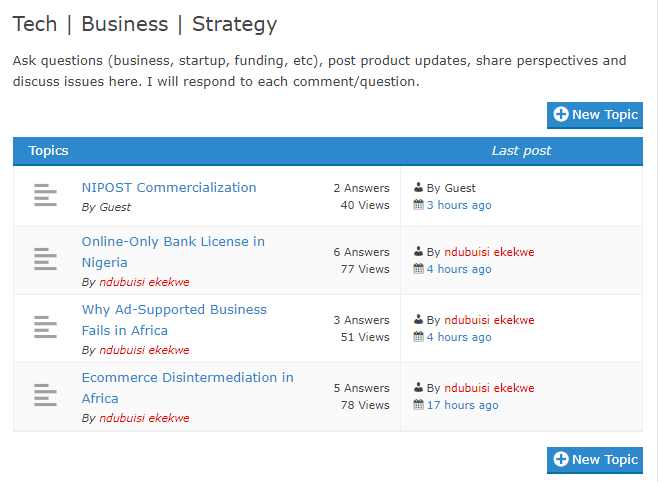
Tekedia Forum: Ask Questions, Post Product Updates, Read Perspectives, and Discuss Issues

1

It is going well in the beautiful Pretoria, South Africa. From 4pm today, we will begin an economic festival which is expected to be catalytic in redesigning the architectures of many global economies.

Meanwhile, we’ve added a Forum on Tekedia to simplify the process of engaging with stakeholders. Simply, the same reason that triggered me to be making videos is the same one that has brought the need for this Forum: I do not like to repeat myself. For some non-private questions, but with general-interest components, I will ask people to post them on the Forum. By posting them on the Forum, I can answer them, and when others ask similar questions, I can refer them to the answers. (In some cases, my team will answer them.) That saves everyone time and supports our African ecosystems.

You can ask questions (business, startup, funding, etc), post product updates, share perspectives and discuss issues on the Forum. My team or myself will respond to each comment/question.

Besides, I will be sharing shorter insights and perspectives therein. LinkedIn, while good, is transactional. You post something and within days the discovery becomes a nightmare. To find a past post is hard and with no efficient search system, it makes co-learning difficult. This Forum will fix.

Tekedia Forum