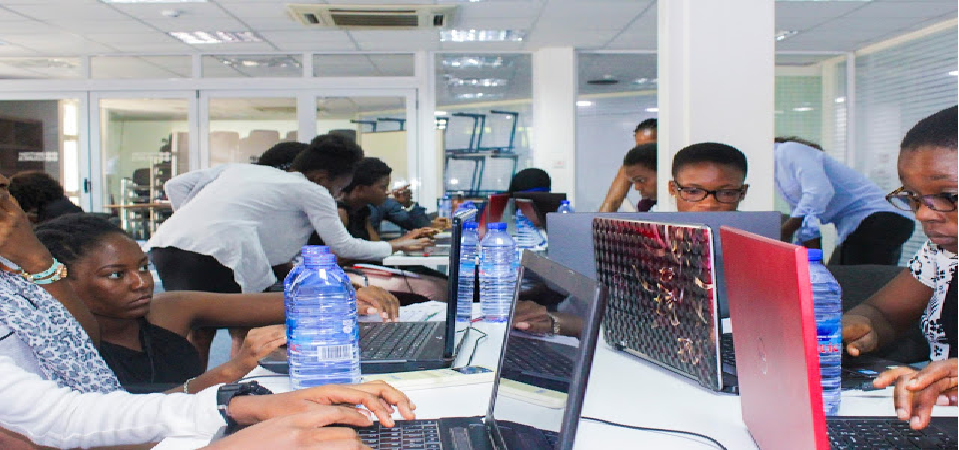
Google has opened applications for the Computer Science educators funding program for 2018. It is open to school districts, schools, and other education nonprofits around Africa. This covers primary schools all the way to university levels. I know some schools you know may benefit.
Over the past 10 years, Google’s programme for the professional development (PD) of Computer Science (CS) educators (formerly known as CS4HS) has funded close to $13 million in grants supporting teacher PD in CS education globally. In Africa, 61 universities and nonprofits dedicated to growing the confidence and skillset of new and future CS educators have received grants that have impacted 5,000 educators from more than 15 countries.
We’re excited to announce our funding cycle is open to school districts, universities, and other education nonprofits around the world for the 2018-2019 school year. Historically, Google’s CS educator PD grants have aimed to help secondary school teachers gain confidence to integrate CS and computational thinking (CT) into their classrooms. To celebrate the tenth anniversary of CS PD funding, we’re excited to announce that the programme will expand to include applications from PD providers for primary school and pre-service teacher education in Africa for the 2018 grant year.
If you are looking for a business model on how aggregation construct can help you, this is a real case study: Farmcrowdy. Farmcrowdy is an agric-tech platform that gives Nigerians the opportunity to participate in agriculture by selecting the kind of farms they want to sponsor. Farmcrowdy uses the sponsor’s funds to secure the land, engage […]
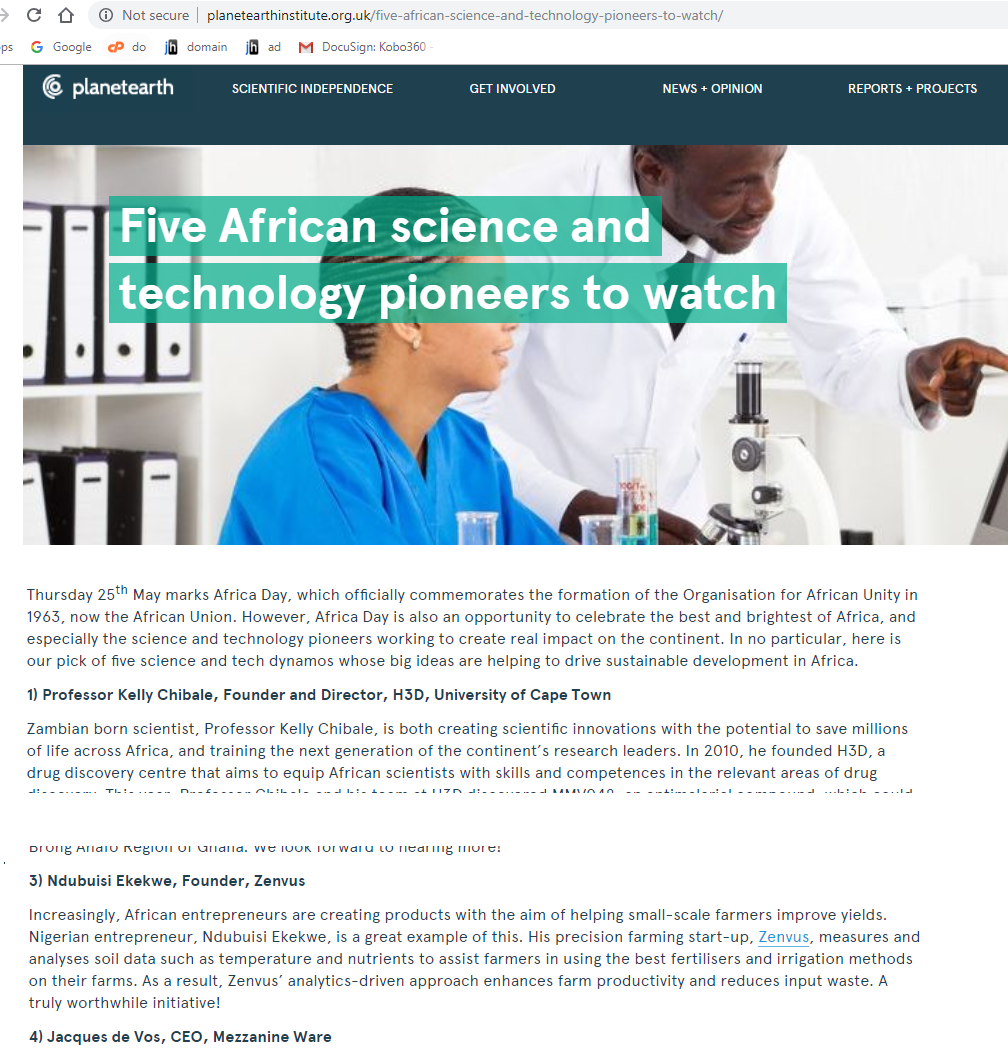
Yours truly was included as one of the “five African science and technology pioneers to watch” by London-based Planet Earth Institute, a non-profit chaired by a former Chief Secretary to the Treasury under ex-UK Prime Minister Rt Hon Tony Blair.
Africa Day is also an opportunity to celebrate the best and brightest of Africa, and especially the science and technology pioneers working to create real impact on the continent. In no particular, here is our pick of five science and tech dynamos whose big ideas are helping to drive sustainable development in Africa.
The recipients are:
1) Professor Kelly Chibale, Founder and Director, H3D, University of Cape Town
2) Bernice Dapaah, Founder and CEO, Ghana Bamboo Bikes
3) Ndubuisi Ekekwe, Founder, Zenvus
4) Jacques de Vos, CEO, Mezzanine Ware
5) Marcel Steinberg, Founder and CEO, Clean Energy Africa, and Nazier Marthinus
We still have antitrust busters in this world. They remain necessary as it is evident that many businesses do not play fair. As Disney tries to pick some parts of Fox, AT&T merges with Time Warner, and Meredith buys Time, we would see the regulators examining the deals. The goal is usually to prevent market dislocations that will negatively impact consumers. In other words, you do not want pricing power to concentrate in the hands of few, giving them the positioning to raise prices, when consumers have fewer alternatives.
That has been the spirit behind antitrust regulation, at least in America. In the European Union, it is a bit different, in that antitrust does not just work for consumers, it also considers the impacts of any merger or market positioning on other competing companies, which may not necessarily be part of a deal. For example, if Google makes its products free, and those free products cause many EU companies to struggle, the EU would be worried, despite the fact that consumers are better, as they are not paying more. In America, no one cares how the competing companies fare: provided the consumers are happy, and they are not negatively impacted by price, it is irrelevant if Google is the only one standing.
In my Business Law class in the University of Calabar (Nigeria), during my MBA, the professor explained that antitrust was based on the construct of discreet marketplaces across industrial sectors, and participating companies should not be allowed to have capabilities to impose undue price burdens on consumers. In other words, there are geographical elements, in some deals, which are considered by the regulators, as they make decisions, to ascertain the power of market leaders on price equilibrium. When I took that class, the digital platform economy was still at infancy. Largely, most things he taught have evolved: they remain valid, even though they have been severely weakened, as the key thesis of the antitrust was geographical dominance.
Facebook does not operate on isolated geography; it is the geography. The same goes for Google. Technically, there is nothing you can do to narrow their influences because they work across all domains. Now, because they have huge scalable advantages due to their near-zero marginal cost business models, they can fill the whole geography (yes, the world). The question becomes: how do you regulate Facebook and Google if you use the same playbook developed many decades ago? Simply, you cannot – you have no chance!
And that is the problem. With their high scalable advantages running on aggregation construct, digital empires like Facebook and Google can take up offline empires, and may still not be within the crosshairs of the regulators. No one can effectively regulate Facebook, for example, unless you want another company (not named Facebook) to take its position. The operating structure of the business is mutative, and that means that it can grow through network effects which reward the best: a better service brings more users, and the more the users, the better the service, setting up a positive continuum. So, if you break Facebook, one part could grow and over time could dominate other parts, provided that part is the surviving best. Or another company with stronger advantage, post-Facebook breakup, would take over the new market and become the new category-king.
In a perfect internet market, as I have noted many times, the marginal cost for a digital product tends to zero. Companies like Google and Facebook that get close to this zero cost find huge success. Others like Groupon and Blue Apron that may require incurring costs to add new users or serve them, cannot see big valuations. (Groupon employs many people to meet and market merchants on its mass discounting business, disguised as an ecommerce operation). While Groupon is limited by the physics of locations, Facebook does not have such burdens since the latter can add users easily. While it seems that Groupon has users as the main customers, the supplier base is more strategic for its business. So, I think it has to do more to handle the supplier (the real users, in my opinion) before the consumer facing side can do well. Facebook deals with publishers but the publishers largely come to it, and not the other way round. Facebook product is very appealing even without publishers, unlike Groupon, which must first perfect the suppliers’ side before value can be created for the typical consumer.
It would be very unfair to stop Disney from buying Fox when Netflix is growing with the whole world as its geography. Yes, regulators are not constraining Netflix by geography while broadcasting entities like Fox are curtailed. Disney-Fox is an opportunity to take up the asymmetric warfare posed by Netflix, in the digital space, which must be battled ferociously. If you kill the deal while allowing Netflix unfettered growth, in a redesigning market, the spirit of capitalism would be diminished, because over time Netflix would become stronger to consume Disney and possibly dominate the markets unchallenged.
The works of modern antitrust busters have become very complex because even when they have to deal with the potential short-term impacts on price, for cable subscribers, if Disney and Fox come together, they have to examine the long-term implication if Netflix has no strong competitor. Netflix belongs to the unbounded, unconstrained and antitrust-able empire group which can grow massively because of their high scalable advantages. Because they begin with the whole global geography, the web, constraining them does not seem workable. The only way to handle them would be allowing the typical playbooks used in the meatspace (offline) antitrust to fade: yes, even if antitrust playbook may not favor Disney-Fox deal, the presence of Netflix should allow the deal to go through.
Artificial intelligence (AI) is hot, but sub-Saharan African banks should get over the hype. There is need to do a thorough synthesis analysis before spending money on this new technology. Personally, at this phase of our banking development, deploying AI across different business units will have only marginal impacts when evaluated with the deployment costs. Practically, it makes no sense, for a bank to spend so much on AI because we are not ready. I understand the excitement that comes with leapfrogging challenges with technology; AI will not offer such benefits in our capacities to fix key banking business frictions, at scale, at this moment.
Sure, many consulting and technology firms are visiting banks across Africa running demos on how AI could magically grow revenues. That will happen but not anytime soon. Besides our lack of data and depth in understanding market patterns, AI (especially those engineered outside Africa) will struggle to add meaningful value.
Anyone that tells you that he has figured out how AI, especially ones created outside Nigeria, will trade stocks in Nigeria and return huge returns, you should tell the person to start a malaria treatment [AI can help in research, but not in autonomous trading]. No one has that capability because no one has the data to test such capabilities. The Nigerian Stock Exchange and the Securities & Exchange Commissions may not even have (complete) trading data that is more than ten years old in usable electronic formats. So, all these models are largely new and cannot be relied upon. Places like U.S. and some EU regions have data they have accumulated over decades, making it possible to build and test models with higher level of accuracy. Besides, their economic structures have largely matured – they are heterogeneous economies while most African economies are homogeneous economies which make us more susceptible to trade shocks, arising from price-gyration of commodities. With minimal exceptions, Germany and UK markets are more closely related than Nigeria and South Africa, or Kenya and Gabon, with our minerals and hydrocarbons playing dominant roles.
Some AI Applications in Banking
There are many ways AI can help in our banking sector. But in some of these areas, one does not need AI to deploy contemporary IT solutions in the noted business frictions. In other words, even before AI, we should have used current IT solutions to address them. The following are areas AI has promise:
Anti-money Laundering and Fraud Detection: The use of pattern recognition technology can improve anti-money laundering and fraud detection activities. Even though we like to throw AI into this, any bank not doing this now is not really using IT. Sure, it has to get better and AI can help. I do not see any risk in deploying AI in this area. This is not a concern.
Besides AI, our banks should be using pattern engines to fight frauds (credit: Aditya)
Chat bots: A bank can use chatbots but I am not sure if customers are ready to engage bots with their financial lives on digital ecosystems. The trust is not there yet. Any bank doing this may launch it but most bank customers will not get close to using it. Yes, while the technology can be built, the customers may not use it.
Algorithmic Banking: Data and analytics can help business leaders see business patterns, understand their firms, and drive allocation of capital. Any bank should be doing those things. But using autonomous algorithms as they do in NYSE to trade stocks and other trading services will be careless in Africa (except South Africa where they have data) today. This is where I have the biggest concern on the application of AI in the African banking sector.
Recommendation Technologies: Any bank with data today should use IT (even before the transition to AI) to drive its lending, mortgage business and more. AI can indeed help but no one should wait for AI before it can use common IT tools to understand its business. Every bank has data of its customers, and using that data to make future decisions can be done with simple rudimentary solutions in the domain of IT. I expect every bank to be doing this at the moment.
All Together
Yet, while I do not see any promise in using AI to drive investment and market-moving decision including lending at scale, AI can help in improving customer insights. If you are a broker, AI can assist you to support customers by analyzing their portfolios, helping them to balance their portfolios through optimized asset allocation strategies. Yes, you should not be focusing on how to use AI to beat the markets because you cannot do such, as you have no data to test such models. Just as we cannot do (autonomous) AI-driven lending without massive datasets of customer credit histories, we will struggle in building trading models without trading data.
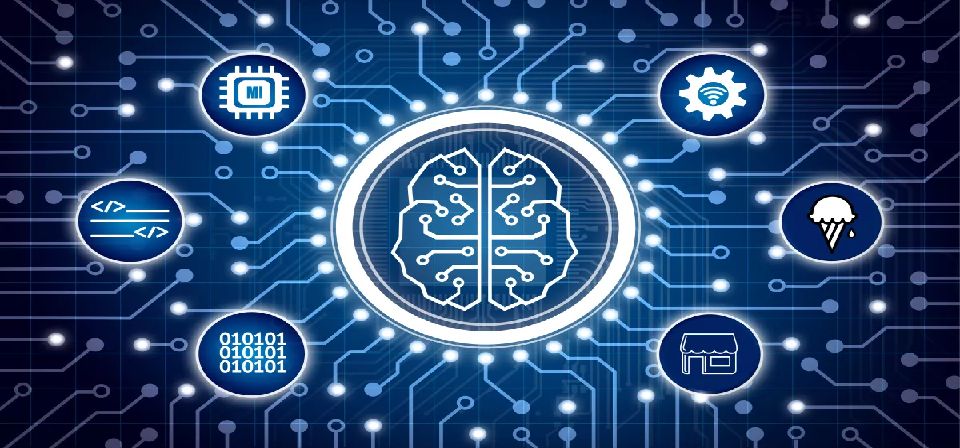
AI has a promise to connect business elements (credit: Udemy)
It will be irresponsible for any bank or financial institution to link products to its core general ledger expecting AI to execute financial transactions in Africa autonomously. The problem is not the capacity to make such algorithms, but the data to examine that they make sense. To build an investing system to allow AI to trade in any African exchange is reckless at the moment. I saw a promo by a company promising that its AI can beat Nigerian Stock Exchange. I was like: how did they test the model? Who provided the data? It is possible they have the data, and if they do, that may be the most important innovation because that data will certainly give them a great competitive advantage. But I doubt it – it is likely a product made for NASDAQ and NYSE massaged for the Nigerian Stock Exchange with some fudge factors.
Finally, I am not saying that AI is not useful: sure, it will add value in our banking. My point is that we are not there yet especially when it involves beating markets with models. We can continue to use information technology to improve our banking operations but the transition to AI must be carefully executed. There are many productivity gains which IT offers even without the elevation to AI. We have not totally exploited those gains. The time for AI will come, as we build data, and new opportunities will emerge.