DD
MM
YYYY

PAGES

DD
MM
YYYY

spot_img

PAGES

Home Blog Page 725

Tesla Awards Musk $29bn in New Stock Grant Amid Legal Wrangle Over Voided Pay Package

0

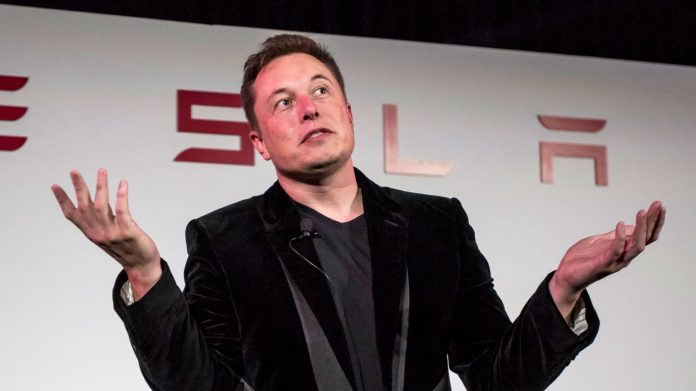
Tesla has approved a new interim stock award worth roughly $29 billion for CEO Elon Musk, reigniting debate over executive compensation and raising legal questions over whether this latest package will face the same fate as its predecessor—a $56 billion plan that was annulled by a Delaware judge earlier this year.

The new grant, comprising 96 million Tesla shares, was announced in a filing to the U.S. Securities and Exchange Commission. Tesla’s board said the stock is intended as a “good faith” incentive to retain Musk’s focus on the company, especially at a time when the EV maker is pivoting toward AI, robotics, and autonomous driving as future revenue engines.

In the letter to the shareholders, the committee members noted: “While we recognize that Elon’s business ventures, interests and other potential demands on his time and attention are extensive and wide-ranging…we are confident that this award will incentivize Elon to remain at Tesla.”

The board members also noted: “Losing Elon would not only mean the loss of his talents but also the loss of a leader who is a magnet for hiring and retaining talent at Tesla.”

The board added that a longer-term CEO compensation package will be presented at Tesla’s annual shareholder meeting on November 6.

But this move comes with significant legal baggage.

A Legal Backdrop That Shook Tesla’s Governance

In 2018, Tesla’s board awarded Musk a landmark $56 billion performance-based compensation package—one of the largest in corporate history—designed to be earned only if Tesla achieved a series of ambitious operational and market cap milestones. Musk eventually met most of the conditions, triggering large tranches of stock awards.

However, the deal became the subject of a lawsuit filed by Tesla shareholder Richard Tornetta, who argued that the board had failed in its fiduciary duty and essentially rubber-stamped a deal shaped by Musk himself. The lawsuit claimed the process lacked independence, transparency, and fairness, noting that Musk had deep ties to several board members who approved the package.

In 2024, Delaware Chancery Court Judge Kathaleen McCormick ruled in favor of the shareholder, voiding the $56 billion package and calling it “an unfathomable sum” not justified by standard corporate governance norms. The court found that Musk had wielded significant influence over the process and that Tesla’s board had failed to properly justify the award as necessary to retain or motivate him.

Musk’s Response: Exit Delaware

Following the court’s decision, Musk reacted swiftly. In April, he relocated Tesla’s corporate headquarters from Delaware—where it was incorporated—to Texas, a state seen as more favorable to executive-friendly corporate governance. The move was widely interpreted as both a rejection of Delaware’s legal oversight and a signal that Musk would not tolerate court intervention in Tesla’s internal affairs.

The new $29 billion award announced this week is not a formal replacement of the voided $56 billion package, but the parallels are already drawing scrutiny. While it remains to be seen whether any shareholder will challenge this new stock grant in court, legal analysts warn it could face similar challenges, especially if shareholders feel the award sidesteps the spirit of the court’s earlier ruling.

A Gamble to Keep Musk Close

In a letter posted on Tesla’s X account, the company’s board chair, Robyn Denholm, and director Kathleen Wilson-Thompson said: “We know that one of your top concerns is keeping Elon’s energies focused on Tesla.” They described the stock award as a “critical first step” to ensure the CEO remains committed amid his growing commitments to ventures like SpaceX, Neuralink, the AI startup xAI, and most of all, politics.

The committee said it “deliberated carefully” to grant this interim stock award to Musk “against the backdrop of the ever-intensifying AI talent war and Tesla’s position at a critical inflection point.”

Tesla’s share price rose 2% following the news, reflecting investor optimism that Musk’s renewed focus might restore momentum to a company that has lost over 20% of its market value this year.

However, some analysts believe that with Tesla increasingly betting on AI, robotics, and getting involved in politics, governance tensions surrounding Musk’s pay may linger.

Sanusi Blames Nigeria’s Economic Collapse on Years of Rent-Seeking and Policy Failures

0

Former Central Bank of Nigeria Governor and Emir of Kano, Muhammadu Sanusi II, has once again pointed to systemic governance failures and entrenched economic mismanagement as the core reasons Nigeria is reeling under one of its worst economic crises in decades.

Speaking during a recent interview on Channels Television, Sanusi said the country’s economic downfall was predictable — a result of rent-seeking elites and leaders who ignored sound economic advice.

“Look, I’m known to have spoken for a long time on the economy and to have warned over a decade ago that this is where we’re headed. I don’t think anyone who studied Economics is surprised that Nigeria is where it is today.

“We spent decades pursuing policies that were destined to bankrupt the economy,” he said.

Sanusi’s latest remarks revive lingering questions about the origins of Nigeria’s current economic woes, a crisis that has its roots in 2015, when Muhammadu Buhari assumed office as president during a collapse in global oil prices. At the time, oil, which accounted for over 70% of government revenue and 90% of foreign exchange, plunged to $50 per barrel. Coupled with poor economic policies, Nigeria, Africa’s largest economy at the time, was pushed into recession in 2016.

Rather than adopt structural reforms, Buhari’s government doubled down on heavy centralization and control. The Central Bank of Nigeria (CBN), under Godwin Emefiele, tightened forex restrictions, shut out investors, and printed trillions of naira to fund budget shortfalls. Debt soared. Inflation crept up. Investment fled. And yet, the leadership maintained that it was building a “self-sufficient economy” — a claim belied by the rising cost of food and basic necessities.

Sanusi, who had been ousted as CBN governor in 2014 for alleging a $20 billion graft in NNPC accounts, repeatedly warned that the policies under Buhari’s administration were unsustainable. His voice, however, was largely sidelined — not just by government officials, but also by powerful interests who benefited from the broken system.

By 2023, Nigeria was deeper in debt than ever before. Public debt surpassed N87 trillion, inflation stood at a 28-year high, and over 80 million Nigerians were classified as multidimensionally poor, lacking access to food, healthcare, and housing. The naira lost nearly 70% of its value following the floating of Nigeria’s foreign exchange market and the removal of fuel subsidy.

“We refuse to listen; every argument, every rational argument against the path that we were following, was met with resistance.

“Those who controlled the narrative were the beneficiaries of this system of rent seeking, and therefore, anyone who was seen as a threat to that system was a target.

He cited the late Head of State, Murtala Muhammed, as a leader who had a vision for economic sovereignty. According to Sanusi, Murtala’s nationalization efforts aimed to break foreign control of key sectors and empower Nigerian entrepreneurs, not perpetuate rentier elites.

“He was not a socialist. He was not a communist. He was a bourgeois nationalist to the extent that he pursued policies that did not really confront capitalism, but tried to ensure that the capital in the country was transferred to the hands of Nigerians.

“It was part of his anti-colonial struggle. So when you look at the indigenous decrees, when you look at opening up the economy to Nigerians, the idea was to create a Nigerian capitalist class that would take over from imperialism,” he said.

“And, and I think this was his major ideological shift from a neo-colonial system to a bourgeois nationalist system.”

The former emir’s comments come amid growing unrest and frustration across the country. Protests have broken out across the country over the rising cost of living. Food inflation reached 40%, amid the squeezed spending power of Nigerians, not eased by the newly negotiated minimum wage of N70,000 per month, which is considered too meager to change the trajectory.

President Bola Tinubu, who came into power in 2023, has tried to introduce reforms, including floating the naira and removing petrol subsidies, but Nigerians say his measures have worsened the hardship without delivering results. While Tinubu’s government blames the past administration for the economic chaos, Sanusi’s position is that nothing has changed, as the rot is systemic and deeply entrenched.

Apple Surges 7% After $100bn U.S. Investment Deal with Trump Lifts Tariff Pressure

0

Apple’s stock rallied nearly 7% on Thursday in a dramatic rebound, after the company sealed a landmark investment agreement with President Donald Trump’s administration — a move widely seen as a tactical retreat from a looming conflict.

The $100 billion U.S. investment pledge marks a defining moment in Apple’s years-long dance with Washington, especially as the Trump White House ramps up pressure on companies to shift production back to American soil.

The investment, announced Wednesday, expands on a previous $500 billion commitment Apple made in February. According to details released by the company, the new pledge includes a $2.5 billion fund earmarked for building a domestic facility to manufacture iPhone glass, a key component long sourced from overseas. Apple said the facility will help create thousands of jobs and deepen the company’s footprint across U.S. manufacturing, supply chains, and research.

The timing was crucial. Just hours later, Trump appeared in the Oval Office to announce a 100% tariff on imported chips and semiconductors — a sweeping measure targeting foreign-manufactured tech components. But in a move that stunned markets, he said companies like Apple that are building or have committed to building in the U.S. will be exempt.

“We’re going to be putting a very large tariff on chips and semiconductors,” Trump said. “But the good news for companies like Apple is if you’re building in the United States or have committed to build… there will be no charge.”

The market responded immediately. Apple’s stock surged 6.78%, recovering some of the steep losses it has suffered throughout the year amid trade tensions and supply chain threats. The Nasdaq Composite, dominated by tech stocks, rose 0.35%, buoyed by the optimism surrounding the announcement, even as other major indexes closed in the red.

A Deal Born of Pressure

Analysts say the deal is a calculated win for Apple, which had come under intense scrutiny from Trump throughout his presidency. Since taking office, Trump has repeatedly criticized Apple for manufacturing its flagship iPhones abroad, particularly in China, and called on CEO Tim Cook to move more of the company’s operations home.

Earlier this year, the Trump administration declared that Apple would face a 25% tariff on iPhones and other products assembled outside the United States. The threat triggered a sharp selloff in Apple shares and sowed uncertainty among investors, with many concerned about the company’s heavy reliance on its China-based supply chain.

While Apple has historically resisted political pressure to manufacture at home, citing costs, workforce scale, and infrastructure, analysts say this latest deal reflects a pragmatic shift. The company is choosing strategic investment over confrontation, using capital deployment as a shield against escalating tariffs.

Trump’s Tariff Leverage

The deal also underscores Trump’s growing influence over corporate decision-making through the threat of tariffs. The 100% levy on imported chips — one of the harshest measures yet — was immediately seen as a signal to other tech firms to bring manufacturing to the U.S., or pay up.

Trump’s administration has used similar tactics in the past, but the exemption granted to Apple was notable for both its scale and its political optics. The White House appears to be rewarding Apple’s cooperation with protection, a sharp departure from the confrontational tone that previously defined Trump’s relationship with Silicon Valley.

“This is a remarkable turn,” CNBC’s Jim Cramer said. “The pin action from the Apple deal with the White House reverberated through almost all of tech, making it a terrific sector to own.”

Cramer noted that Apple’s swift climb back into investor favor was not simply about the tariff relief, but a broader realignment of the company’s priorities in the face of geopolitical tension. He speculated on how rivals like Samsung would fare under the new policy, questioning whether they’d be subjected to the full 100% duty or benefit from South Korea’s recently negotiated 15% trade deal.

Beyond Tariffs

Apple’s pivot is not just about dodging Trump’s tariffs. The $100 billion pledge may also set the stage for a broader reshaping of its global strategy. Apple could be laying the groundwork for long-term supply chain diversification — an effort that gained urgency during the COVID-19 pandemic and the U.S.-China tech decoupling, by investing heavily in U.S. infrastructure.

There’s also a reputational benefit. At a time when tech companies face scrutiny for offshoring and tax avoidance, Apple’s massive investment in American jobs could help soften criticism, both from the White House and the public.

Still, skeptics warn that the company may be overextending itself financially. Some analysts note that Apple is committing enormous resources amid softening iPhone demand and growing competition in emerging markets.

But for now, the market is cheering. With tariff threats receding and Trump signaling approval, Apple appears to have defused a major political risk — and done so on its own terms.

“You need to think about the last 24 hours and where this Apple stock has come from,” Cramer said. “You need to know that this is why I say own Apple, don’t trade it.”

ViFi Labs Acquires OneRamp to Power Stablecoin Payments Across Africa and LATAM

0

ViFi Labs, a decentralized stablecoin protocol focused on building on-chain foreign exchange (FX) swap infrastructure, has announced the acquisition of OneRamp, a prominent stablecoin payments provider operating in emerging markets.

This strategic acquisition positions ViFi as the leading on-chain FX venue for emerging market consumer flow.

According to ViFi Labs Cofounder Tony Olendo,

He said, “The OneRamp acquisition will help provide distribution and access to the ViFi protocol at launch. We believe that stablecoins and FX trading venues that are fully on-chain will be the future.”

Also speaking, Varoun Hanooman Cofounder at ViFi Labs said,

“OneRamp is a source of customer acquisition wherever the markets are being made. ViFi’s goal is to be the best place for marker making in the future. But One Ramp is a distribution game. It makes it as easy to access all those venues from a single interface”.

OneRamp is a leading cryptocurrency payment gateway in Africa, proving that cryptocurrency infrastructure can effectively reach new customers by making stablecoin payments to mobile money and bank accounts seamless.

The platform makes it easy for people to spend crypto for day-to-day purchases, blurring the gap between the complexity of stablecoins and fintech payments. Founded by Ugandans Elias Hezron Opio and Jovan Mwesigwa, OneRamp currently operates across Kenya, Nigeria, Uganda, and Tanzania. With an annualized run rate of $1.2 million and over 25,000 customers, the company is focused on building compliant, sustainable infrastructure with strong KYC systems across multiple jurisdictions.

Tapping into a Growing Market

Crypto adoption in Africa and Latin America continues to grow, with stablecoin transaction volume in these regions reaching $540 billion annually—60% of which is institutional. Despite this growth, fragmented liquidity and volatile FX rates have pushed many users toward P2P platforms and OTC desks.

By acquiring OneRamp, a platform with deep market reach and experience in facilitating stablecoin payments, ViFi Labs can now combine infrastructure with distribution. This integration will allow users in fragmented markets to access real-time, cross-currency liquidity without relying on off-chain, opaque P2P or OTC platforms. Also, this will gradually pull volume away from unregulated P2P channels and toward a more secure and compliant environment.

Notably, the merged platform will be able to offer low-cost, high-speed, cross-border payment services using stablecoins and on-chain FX conversion. This is particularly valuable for freelancers, SMEs, and remittance recipients, who can now move money across borders without facing excessive fees or rate shocks

Strategic Expansion into the Base Ecosystem

With Coinbase’s recent launch of the “Base App,” OneRamp is positioning itself as a premier payment provider for African users within the Base ecosystem. By enabling payments to mobile money services and banks, OneRamp aims to become the go-to platform for stablecoin transactions on Base.

“While at its core, OneRamp will remain a platform-agnostic solution, the Base ecosystem provides us an unparalleled distribution opportunity to put OneRamp front and centre to users locally and abroad,” said OneRamp Cofounder Jovan Mwesigwa.

ViFi Labs is also launching OneRamp within the Base App and Farcaster, bringing together crypto-native infrastructure and localized payments in a single interface.

Looking Ahead

With this acquisition, ViFi Labs is set to accelerate stablecoin adoption and build the FX infrastructure needed to support the next wave of institutional and consumer crypto use in high-growth regions.

OpenAI Launches GPT-5, Its Advanced AI Model, Marking A Major Leap Toward Achieving AGI

0

OpenAI has officially unveiled GPT-5, its most advanced artificial intelligence (AI) model to date, marking a significant milestone in the company’s ongoing pursuit of artificial general intelligence (AGI).

The new model, which now powers ChatGPT, introduces major improvements in speed, accuracy, reasoning, and usability across a broad range of domains including writing, coding, health, and multimodal understanding.

Describing GPT-5 as a “significant leap in intelligence,” OpenAI highlighted the model’s ability to handle real-world tasks with greater precision and utility than any of its predecessors.

The company wrote via a blogpost,

“We are introducing GPT-5, our best AI system yet. GPT-5 is a significant leap in intelligence over all our previous models, featuring state-of-the-art performance across coding, math, writing, health, visual perception, and more. It is a unified system that knows when to respond quickly and when to think longer to provide expert-level.”

The new system is structured as a unified AI architecture, composed of three main components: a fast-response model for general tasks, a deeper reasoning engine (known as GPT-5 Thinking) for complex queries, and a real-time router that selects the appropriate component based on the user’s intent and the nature of the conversation. This router learns and improves continuously, based on signals like user feedback, model-switching patterns, and measured accuracy.

According to OpenAI CEO Sam Altman, he said that GPT-5 brings the company closer to achieving AGI, the theoretical threshold where AI systems rival human cognitive abilities.

Improved Performance in Writing, Coding, and Health

OpenAI has tailored GPT-5 to excel in the three most common ChatGPT use cases: writing, software development, and health inquiries.

In writing, GPT-5 acts as a highly capable collaborator, adept at translating rough concepts into polished, structurally sound pieces. It handles literary forms—such as unrhymed iambic pentameter and natural-sounding free verse—with greater fluency, and it performs reliably when assisting with everyday writing tasks like memos, reports, and emails.

For coding, GPT-5 stands as OpenAI’s strongest model yet. It demonstrates remarkable improvements in front-end generation, debugging large codebases, and designing aesthetically appealing websites and apps. Early testers have praised the model’s intuition in layout choices, spacing, and typography—traits that give it an edge in creative software development.

In the health domain, GPT-5 surpasses previous models on HealthBench, OpenAI’s evaluation framework based on real-world scenarios and physician-defined criteria. The model behaves more like a proactive thought partner, flagging concerns and asking clarifying questions. Its responses are now more context-aware, accounting for user location, background knowledge, and personal health data. While GPT-5 does not replace medical professionals, it is designed to help users prepare for consultations, understand diagnoses, and make informed decisions.

Smarter Instruction Following and Tool Use

GPT-5 has also made substantial gains in instruction adherence and agentic tool usage. These improvements allow the model to execute multi-step tasks more reliably, coordinate between different digital tools, and adapt dynamically to changes in user instructions. This evolution makes it better suited for complex workflows, especially those involving automation or layered decision-making.

Multimodal Mastery

The model excels across multimodal benchmarks, displaying stronger reasoning capabilities in interpreting images, diagrams, charts, and even video-based content. Whether summarizing a presentation from a photo or analyzing scientific visuals, GPT-5 provides higher-quality outputs with greater contextual understanding.

Efficiency and GPT-5 Pro Variant

One of GPT-5’s most impressive feats is its ability to deliver more accurate results with less computational effort. Evaluations show that GPT-5 Thinking performs better than OpenAI’s o3 model while using 50–80% fewer output tokens across areas such as visual reasoning, advanced coding, and graduate-level science tasks.

For users tackling the most difficult problems, OpenAI has introduced GPT?5 Pro, which replaces the previous o3-pro variant. This enhanced version of the model uses scalable parallel computing at inference time to deliver deeply reasoned, high-fidelity answers. GPT-5 Pro leads the family in challenging benchmarks, including state-of-the-art results on GPQA, a test of complex scientific knowledge.

Broad Availability

GPT-5 is now available to all ChatGPT users. Plus subscribers benefit from increased usage limits, while Pro subscribers gain access to GPT-5 Pro for even more comprehensive and high-quality responses.

With this release, OpenAI solidifies its position in the AI race, offering a model that not only advances technical benchmarks but also enhances real-world usability, paving the way for more intelligent, collaborative, and responsible AI systems.