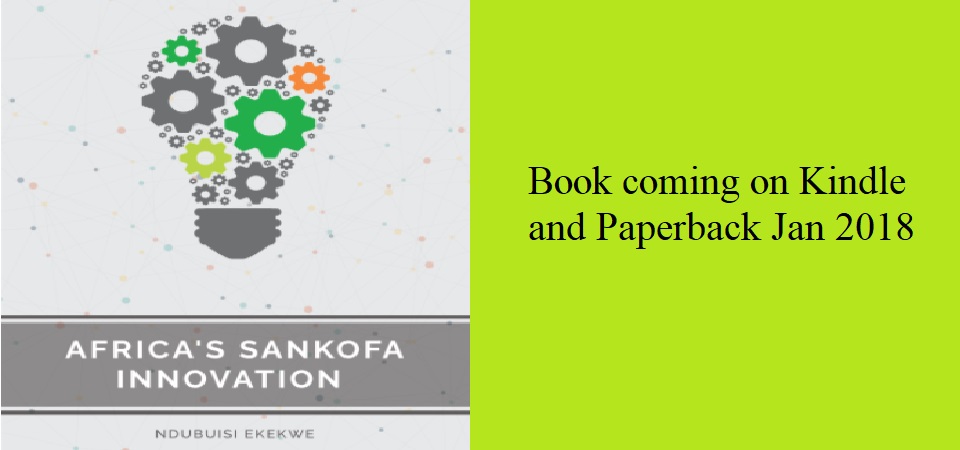
Our data shows that most African subscribers are not fully engaged, on the Tekedia version of the book, unlike subscribers from Europe, Canada and U.S. We understand the challenges associated with metered internet in the continent. So, the new book will expand into paperback and Kindle.
As I write this. I note a partnership we closed for this book. One of West Africa’s largest guarding companies is covering the cost of the change in strategy. We remain in control of all editorial elements but we will put the company logo on the cover of the book. It is a win-win for the Nigerian entrepreneur named Ndubuisi. With this deal, the book will be available in more locations across the continent. Besides, we retain all revenues.
Lagos is always kind. I am very happy that finding a partner was not difficult. We closed a deal from the first company we explored. The experience from my undergraduate days in FUTO (Federal University of Technology Owerri) where I edited and published FUTO Bubbles, a campus monthly newsmagazine, was handy.
We will finalize the agreement next week and a proper notice will be put out. This book will still be published on tekedia and that is coming soon. The paperback and Kindle books will come out in January 2018 for the same reason I stated here.
I spent the early part of yesterday exploring Lagos. I had arrived from Owerri, after a speech in Federal University of Technology Owerri. Early yesterday, I paid a cab to drive me from Ajao Estate through Anthony to Jibowo. Then, from Jibowo to Idi Araba (LUTH area) and back to Ajao Estate via Oshodi. Later in the day, I had a meeting in Ogba (near Ikeja) and from there to Island. All through these trips, I was noting changes in our country, especially how infrastructures were emerging. Two weeks ago, when I visited Lekki, I saw a new city. That gave me perspectives on how Nigeria is rising. This is part of making sure one understands the city.
In Abuja, early in the week, I noticed something: most banks are closing their branches. Due to the nature of my business, I have awareness whenever I travel. If you walk from the Central Bank of Nigeria Abuja headquarters all the way to the Cadastral zone (at the back of the Nigerian Defence College, yes War College), you will notice that most banks have closed their branches on that road.
Skye Bank had closed. Sterling Bank has gone. And at the extreme of that road which used to have one of the largest Union Bank branches, that branch is no more. Increasingly, the number of branches is dropping in Abuja, just as ATM locations are increasing.
In Wuse 2, along Adetokumbo Ademola, you will see many ATMs. But bank branches are now scarce commodities. Do not expect this to change due to the following:
Abuja is the most educated city in Nigeria with practically anyone living there possessing at least a primary school education. It means they can do digital and mobile banking without the physical elements of banking. The banks are taking advantages of this solid educated citizen base to streamline their operations, and save cost
Banks do not need branches in Abuja – they just need few for some special customer needs. The customers can use their digital platforms and ecosystems to do banking. However, that is not possible in some locations in Nigeria due to literacy issues. In Lagos, that business model may backfire since Lagos has the educated and nearly uneducated all living together. What is happening in Abuja will happen in Port Harcourt where we also have a high pool of educated citizens. Owerri and Ibadan will not be far: banks will close most branches, moving operations to their digital platforms.
Emerging Asset-Light Sector
As the era of digital banking evolves, this trajectory will be evident in the banking sector. The model will help them improve cost-to-income ratio because customers will do the banking by themselves. When customers do their banking services on the digital platforms, it means banks will not need to hire many people. Also, they become asset-light as they do not need to invest in branches with the associated expenses needed to run them. The key implication is that over the next five years, many Nigerians will lose their jobs in the banking sector. Those branches many banks closed along the CBN road to Cadastral Zone exited with most of their workers and staff providing auxiliary services. Those services include security companies and guards. Those Nigerians are now in job markets.
Change is in the land. This calls for entrepreneurs to understand that markets are evolving. Nigerian banks are already adapting and very soon, most will close more branches, sell their real estate holdings and become pure-play asset-light institutions. SunTrust Bank, a new bank, is banking on that model, with its digital-only strategy.
My observation is that some of the banks are now becoming fintech companies. GTBank’s USSD banking would have been a huge fintech if not that it is under GTBank. Wema Bank’s ALAT is a top-grade fintech. Diamond Bank App with its millions of users would be discussed in the range of emerging Afro-unicorn if it is an entity with no bank affiliation. That these products are run by banks should not diminish them. I truly like the pace most of the banks are redesigning their businesses: they will hold their grounds against most fintech companies.
Fintech Connectivity Fee
I predict that in coming years, the CBN will approve connectivity fees on fintechs (non-banking institutions), forcing companies like Paystack, Flutterwave and Paga to pay banks to connect into their ecosystems. So every transaction processed by fintechs will require a percentage of the earned revenues reserved for the banks. In a country where government takes N50 stamp duty for digital transactions, I do think fintech connectivity fee is just around the corner.
The same argument from Telcos on WhatsApp will be made, but banks are well ahead because they control their ecosystems far better than telcos. Unlike telcos which charge customers fees to have access to the web, and then turn around to complain that customers are using their services to deprive them more revenue, banks will not be dealing with customers. Rather, banks will take the fees to fintechs telling them that they would be required to pay a percentage of any fee the customers pay, for them to have the ability to connect to their platforms, automatically. So, if Paga charges say 1.99%, the bank may ask for 20% of that revenue. I call this Bank Tax imposed on fintech and this will begin in 2022, in my model.
Note that this Bank Tax is already in Nigeria. Remita pays it to commercial banks for them to work with it.
In a letter reportedly written to President Muhammadu Buhari by John Obaro, Founder and Managing Director of SystemSpecs, developers of the Remita application, the allegation that SystemSpecs pocketed 25 billion Naira was refuted. Obaro explained that the one per cent commission was negotiated prior to the signing of the contract; and the one per cent commission was shared by SystemSpecs, participating commercial banks and the Central Bank of Nigeria in the ratio of 50:40:10 respectively. According to findings by PremiumTimes,’Remita’ is not “an agency” but an application/software for executing payment instructions and collection of government revenue
It will be institutionalized with clear CBN support very soon. This will change most of the elements in fintech today, in Nigeria, unless the fintechs can lobby for such fees to be aborted, even before they are introduced.
Due to popular demand and data we have collected after few weeks of publishing Africa’s Sankofa Innovation, we will be releasing both Kindle and paperback versions in Jan 2018. We have heard loud and clear from many Tekedia readers that you would need a hardcopy. Also, many have also noted they would like an electronic version via Kindle over reading on the site. Yet, some like the web version as they can comment and ask questions to me for explanations. We will make all options available.
While we continue to welcome subscribers who pay to have access to the subscription-only articles, besides the books, we will unveil paperback and Kindle. It will be in January to have 2018 (as the publication date) since it does not make sense to have a book published in November. It becomes an old book after a mere two months.
We are making this decision based on data. More than 85% of the subscriber engagements are coming from EU, Canada and U.S. We think that the cost of broadband (with metered Internet) is affecting those in Africa to engage, even after subscriptions. Since we do not want to have a PDF document, we will offer a paperback.
Amazon will handle the printing and all logistics. They currently sell my other books. This will be priced very affordably. We will let you know when the book goes on sale.
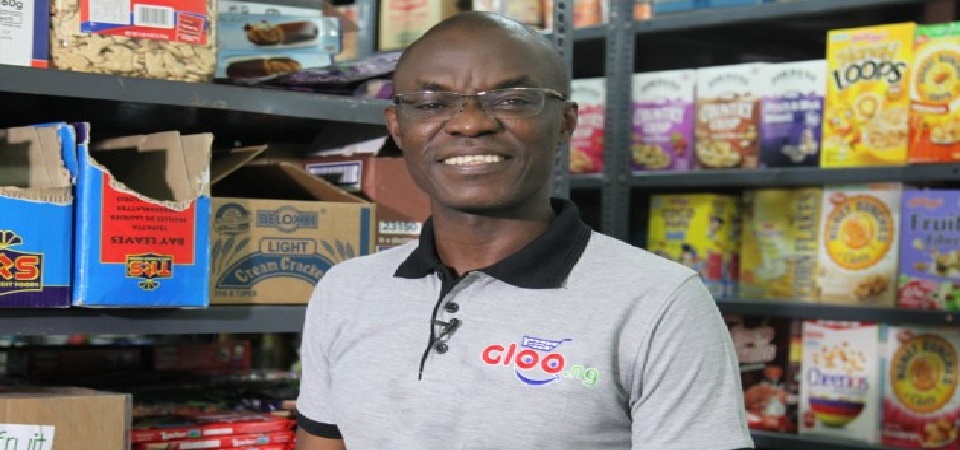
Gloo.ng and Supermart.ng are the two leading food-focused ecommerce companies in Nigeria. They are doing businesses in one of the most difficult sectors to execute any type of ecommerce operation. It is very hard to standardize grocery, and also the quality element is not a pure science. Yet, these two companies are accumulating capabilities to serve customers, find growth, and flourish.
Supermart is a grocery delivery service that enables shoppers to buy grocery from different supermarkets and stores, and then deliver the purchased items to the customers. This company essentially does not carry any inventory. It is an aggregator. The implication is that it can enjoy high scalable advantage digitally. However, since it runs a delivery company, in a nation with no postal service, it has a huge marginal cost in the physical part of the business. No wonder, it has a geographical boundary where its services are available. By this location restriction, Supermart cannot be considered a truly digital company since its marginal cost is largely in the meatspace: web business typically serves all locations, unconstrained by geography.
Gloo is largely similar. From its Crunchbase entry:
Gloo.ng is an electronic procurement engine dedicated to delivering direct to the doorsteps of her clients, on a same-day basis and at very affordable prices, a wide variety of high quality brands of supermarket goods. Gloo.ng provides her clients very convenient, very efficient and very affordable means of shopping for supermarket goods, saving them irreplaceable time, needless stress and valuable money, thereby enriching their lives with the happiness these savings facilitate.
These two companies are running a really brilliant business model: aggregation which could have made them asset-light companies. However, since Nigeria does not have a postal system, they are quickly flipped to become asset-heavy since investments in bikes, vehicles, and associated equipments, are necessary to run logistics in places with no postal services. The logistical arm is the weakest link of the business vision. As they grow, they have to increase capacity to serve more cities. As that happens, the inherent reduction in marginal cost which could have benefited them for scalability will not flatten rapidly. It means that both Gloo and Supermart cannot simply scale as digital companies because the marginal costs are dominated by the meatspace operations. I do expect them to remain in locations like Lagos, Port Harcourt and Abuja for years. The challenge to cover all major Nigerian cities will be daunting.
Distrust: Rich Africans have yet to embrace online shopping, due to online fraud. In Nigeria, for example, where phishing is common, people are skeptical about putting their credentials online.
Cost of broadband: Africa enjoys tremendous growth in mobile internet which is the popular means for people to access the web.
Logistics: Amazon.com and eBay are great companies that depend on the U.S. postal system to serve their customers. I sell my own books online in U.S.; once a buyer makes payment, I drop the book off at the post office to close the transaction. In Africa, it’s more complicated with nonfunctioning postal systems. Online businesses operate delivery motorbikes, which increase the cost of doing business there.
African open market: In Africa, there are “markets” everywhere, starting with the security guards who run stores in front of their masters’ mansions. There are open markets, supermarkets, and even unemployed youth selling things at traffic stops in major cities.
Literacy rates: Even if all the infrastructure and integration issues are fixed, illiterate citizens may be unable to participate directly on e-commerce sites that require reading and writing skills. .
Every ecommerce firm in Africa (except South Africa) will deal with some of these challenges. Gloo and Supermart are experiencing some already. That is the main reason why they have bounded their geographical locations. And they are smart to do so. Providing grocery delivery services to someone in Opobo will not make good business sense.
Why They Need to Merge
It is always hard to ask Nigerian companies to merge. We are not good in that. But when you look at the operations of both Gloo and Supermart, you will quickly see where the bulk of the money is going: logistics. Since they do not really carry inventory, their main cost model goes to logistical operations to deliver very fast once clients buy the items. To do that, it means they have to keep expanding logistics as they expand. Scale will bring higher efficiency in asset utilization. And that is why I think both should merge. That will give them the opportunity to combine their resources, and reduce distribution cost which is the main driver of the marginal cost in the business.
In ecommerce, there are three components of marginal cost: cost of goods sold, distribution cost and transaction cost. Only the distribution is relevant for these two companies. And it is the cost that clearly shows that to win, these companies have to combine resources.
There are three major marginal costs which are consequential in the broad ecommerce business: cost of goods sold (COGS), distribution cost and transaction cost.The distribution cost is the most challenging in Africa because that is the cost that turns an ecommerce operation into a traditional physical business. The first, COGS, is incurred irrespective of the nature of the business. It is the cost of production, i.e. the cost of producing the product which is being sold. The last, transaction cost, is mainly the fees incurred as part of the commercial transaction activity. This can include a merchant fee for accepting credit/debit card from the payment processor. Here, I explain how the distribution cost can be handled.
Shoprite Acquisition
The future of commerce is digital. That means even if companies like Shoprite are not interested in digital businesses now, they will in near future. Hybrid commerce requires the elemental composition of atoms and bytes to win. Shoprite may like to acquire a strong Gloo/Supermart post-merger to run its delivery business. Executing this model will help Shoprite enjoy benefits associated with invertibility construct.
All Together
The business of grocery will remain challenging because of the fragmented nature of the sector. There are also open markets everywhere. But as the days pass, digital grocery business will find its space. Unlocking the opportunities will require more investments. If Gloo and Supermart combine, they will have higher scale to redesign a sector they have pioneered.
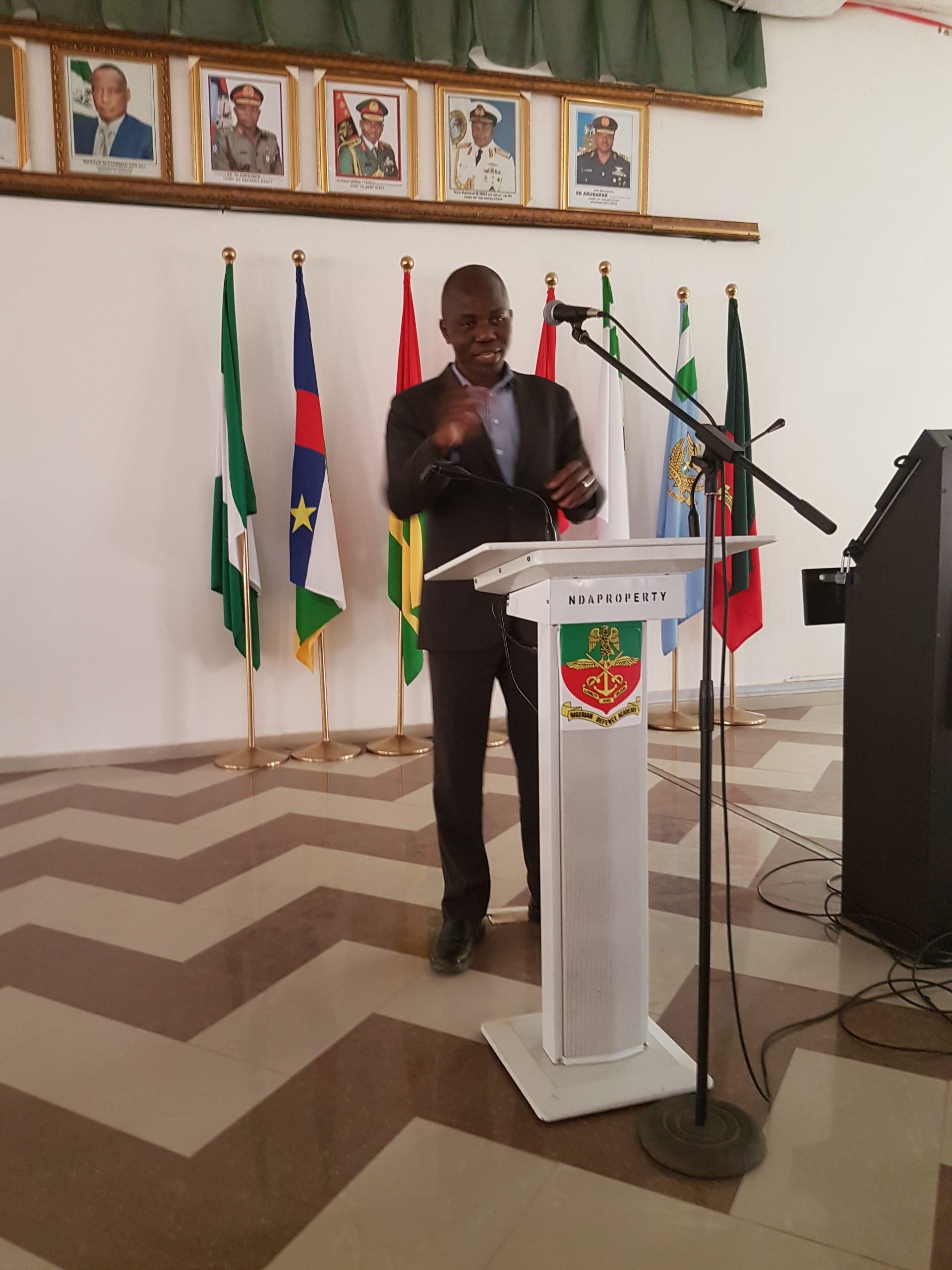
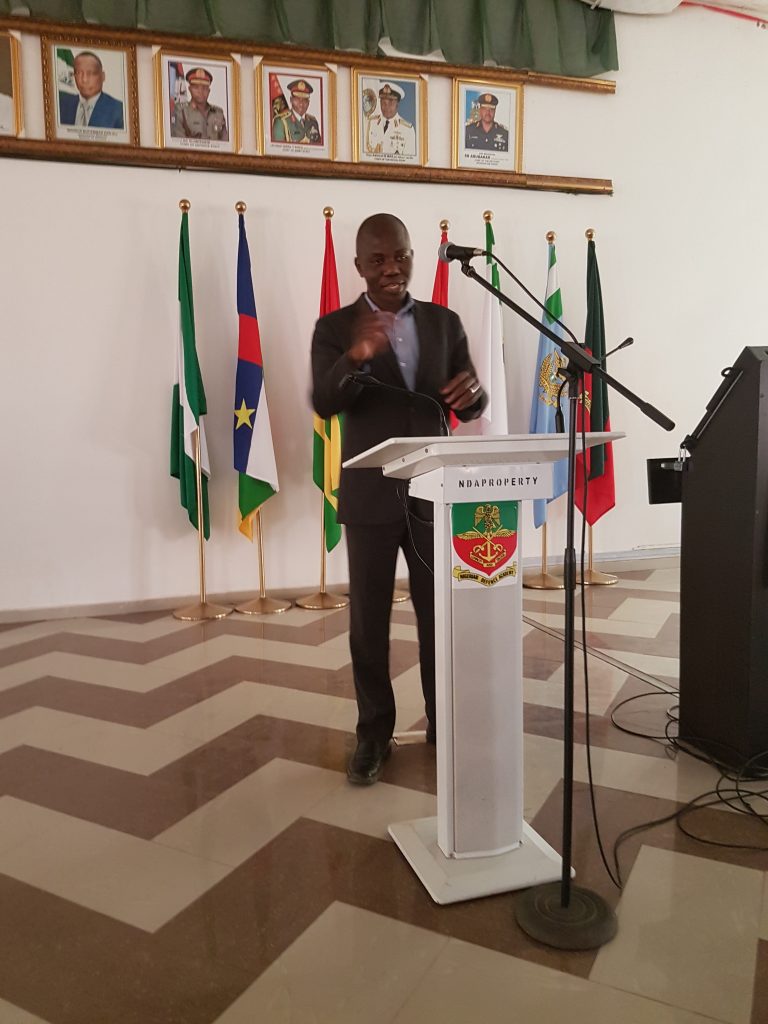
Recently, I gave a major speech in the Nigerian Defence Academy Kaduna. Speaking behind the emblem of the NDA with photos of military generals and the President behind was a moment.