DD
MM
YYYY

PAGES

DD
MM
YYYY

spot_img

PAGES

Home Blog Page 7257

A Major Opportunity in Nigeria’s InsureTech Sector

0

We have a very exciting fintech (financial technology) sector in Nigeria. But that fintech has technically equated to bank-tech as startups are focusing on what the banking sector is doing, neglecting other areas in the financial industry. Startups have left on the table a latent opportunity in the insurance sector. As I have noted many times here on Tekedia, the insurance sector has more opportunities than even the banking sector. While the insurance companies are lethargic on their capacities to unlock the opportunities in the industry, blaming Nigerians for not patronizing insurance policies, the banks are ready for whatever you throw at them. Yes, the banks can be fintech or bank-tech if they want because they have the capabilities to execute at the highest level.

But when you come to insurance, the lack of productivity gain through information technology is truly unfortunate. The sector has not found how to unlock new vistas despite the opportunities in front of them. I see moments of glory for founders with guts to attack the sector.

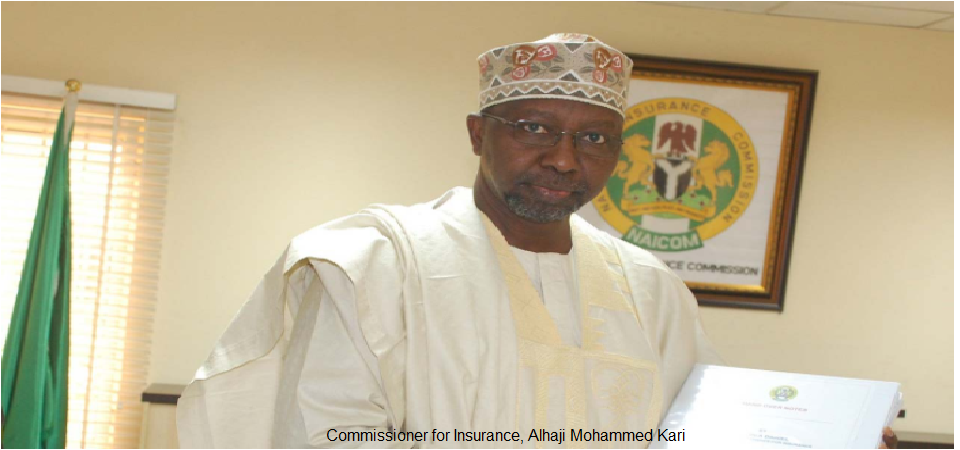
But be warned, the insurance industry regulator is extremely tough to deal with. The National Insurance Commission of Nigeria (NAICOM) is not like the Central Bank of Nigeria which publishes policy documents to provide guidance which startups can operate. (I do think that NIACOM is doing a good job. It has to be tough to police and sanitize the sector. Nevertheless, it has to evolve and create a balance to allow innovation.) Also, the layers in insurance with brokers below the insurers, and the insurers under the re-insurers, create a highly complicated pyramid. You cannot be a good insuretech if you are just a broker. Yes, I do not think having a brokerage license will add any value to any serious insuretech. You need to have an insurance license to do this disruption in Nigeria.

Here is why: no matter any product you can conceive in Nigeria, if there is no insurer that will insure it, it is dead on arrival. And many of them cannot insure because they are extremely conservative in their risk models. How do I know? I know by working with farmers. If not for the federal-owned Nigerian Agricultural Insurance Corporation (NAIC), most farmers will not have any place to insure. The private sector participation in the agro-insurance is largely negligible.  Again, you may not have to blame the insurers: the farmers have attitudes. So, at the end, that trust element is broken and insurers are right to be cautious.

That trust element is why the sector has not grown as one could have expected. The sector is tough and I will not diminish that.

A fresh recapitalisation in the nation’s insurance industry owing to its low capital base and penetration has spurred mergers and acquisitions to reposition the sector for a new era of efficient operations.

The move, according to stakeholders, is part of efforts by the National Insurance Commission (NAICOM) to make the sector once again attractive to Nigerians.

Following the apathy for the industry, mainly caused by acts of omission and commission manifest in the forms of non-payment of dues to policy holders and the shirking of other obligations over the years, the citizens now avoid insurance products. To reverse the trend, it has, therefore, become incumbent on the regulator to win back the confidence of Nigerians by strengthening the financial base of the sector. If the sector comes fully alive again on the basis of the new policy, the incidental benefits are many. Jobs will be created and the contracting national GDP may experience a breather and an opportunity to expand.

Broadly, I do not really blame the insurers. It is very possible that Nigerians are not interested in insurance. However, that excuse remains lame: most times, people are not interested in things they do not see any value. Nigerians were not interested in banking, until they became interested in new generation banks. The new banks in early 1990s brought many new people into the banking sector through better services. That is a possibility in the insurance sector today. We need our new generation insurers and I do think the insuretech will lead there.

The Opportunity

Specifically today, I present one area we need a pioneering AI-driven insuretech in Nigeria: cybersecurity insurance. I see three keys areas:

  • Private Sector: No one is insuring most of our businesses in the domain of cybersecurity today. The foreign players will not do so because they do not have much presence locally. With largely no product in the market, an insuretech can create a new sector, even without any disruption, in the cybersecurity sub-policy category. I also do think that in near future, banks may be asked to carry cybersecurity and data protection coverage as part of the Securities & Exchange Commission regulation. Banks do transport customer data just as oil tankers which move oil; the oil tankers carry insurance in case bad things happen. To get that insurance, the banks will have to secure their networks and stay up-to-date on the latest data protection systems. This makes sense as the Central Bank of Nigeria has noted that Nigerian financial sector has lost more than $470 million to cyber-related frauds.
  • Government: Though the opportunity may be limited in the public, I do believe that forward-looking institutions like Corporate Affairs Commission, Securities & Exchange Commission and Nigerian Stock Exchange may be in play here, if there is a credible product.
  • Credit Bureaus: I have noted some key points before Nigeria ratifies many elements of its credit bureau system in our fledgling credit system. Traditionally, looking at what is happening in U.S., credit bureaus do not really care about customer data. They profit by selling data which banks and other sources send to them. So, irrespective of their actions, their customers (the banks, mortgage lender, etc) will always come to them. The customers whose data are sold are never in the picture. That is very bad and needs to change. I expect the Nigerian credit bureaus to under-invest in cybersecurity and broad data protection: naturally, people want the easier path. Insuretech can provide insurance products for the credit bureaus to take insurance. The regulator, NAICOM, will mandate that for all Nigerian insurers. For the credit bureaus to get the insurance coverage, the insuretech will then require that they harden their networks and systems with up-to-date security systems. Through that, there will be an alignment on what the bureau does and what the overall interests of the customers will be.

All Together

The insurance industry is still on stasis. It needs the innovation capabilities of agile insurance technology companies. I do believe that we need to have founders who can lobby NAICOM to open up the industry by giving license to carefully vetted insuretech firms.  I am expecting a truly online-only insurance company in Nigeria that is asset-light, but very strong on the key ratios because it will save money on buildings and other old artifacts of the industry. Insuretech can help to unlock insurance value in Nigeria and grow the sector. But that can only happen if the entrepreneurs step up and NAICOM blesses them. Government must find a way to enable insuretech participation besides any policy it is engineering to reshape the industry.
Zenvus To Present During Wellbeing Economy Festival (WEF) in South Africa

0

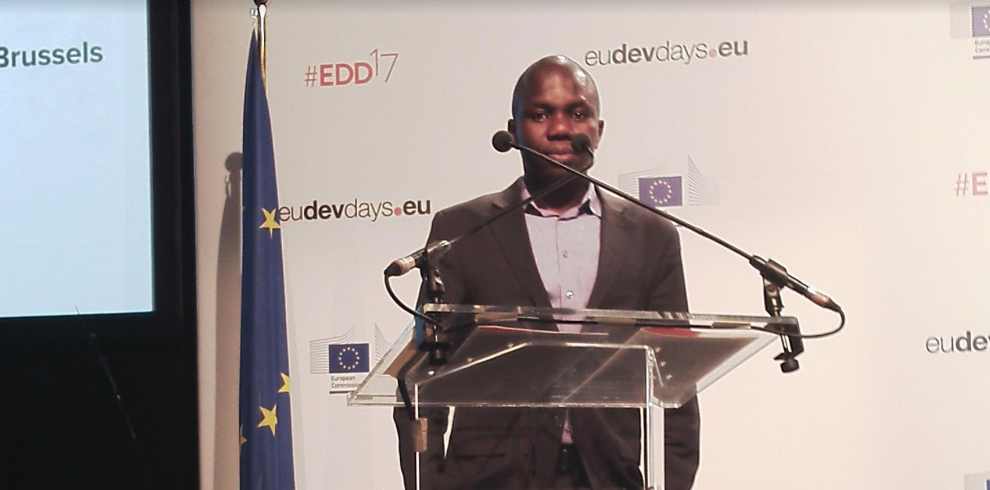
Zenvus, my agtech precision farming pioneer, will take center stage during the Wellbeing Economy Festival (WEF) in Pretoria South Africa later this month.  My talk will focus on how technology is revolutionizing small-scale farming in Africa.

Zenvus is a pioneering precision farming technology company that uses computational algorithm and electronics to transform farms. Zenvus collects soil fertility and crop vegetative health data to deliver precision agriculture at scale. It then uses the aggregated and anonymized data to deliver financial services to farmers.


My talk will begin at 11am and the venue for the talk segment is at

CSIR International Convention Centre, Pretoria (South Africa)

The WEF will host an incredible line-up of innovators, entrepreneurs, technology experts and academics discussing how to change policy, business and society.

Join me at 2018 Africa Trade & Investment Global Summit, Washington D.C USA

0

Join me in Washington DC at the World Trade Center next June. Last week, I accepted to deliver a major speech during the 2018 Africa Trade & Investment Global Summit (ATIGS). I am hoping to learn, share and connect as business leaders continue to build our continent.

Kindly find attached, an invitation to speak at the Africa Trade & Investment Global Summit (ATIGS) on June 24 to 26, 2018, in Washington, D.C at the World Trade Center Washington, DC – Ronald Reagan Building. ATIGS amplify trade, investment, & economic development in Africa, with the 2018 edition projected to gather 2000-plus key economic players from more than 70 countries including government delegations, high-profile African leaders, project developers and international investors. 
The Summit is at the heart of what we do in Fasmicro Group and JPL Financial Group where we continue to accelerate the deployment of quality capital in promising  major African public projects.

Nigeria’s Paylater Should Buy Piggybank or Build a Saving Business

4

Paylater, the Nigerian online lending ecosystem, continues to grow. It noted few days ago that its app has been downloaded more than 500,000 times. I wrote a comprehensive piece about its operations and opportunities few weeks ago. Indeed, Nigerians want money and they are following the easier path since banks will keep asking for collateral which the very people that need the loans do not have. The banks are right to ask for same because they are keeping other people’s money. That problem will be solved when Nigeria has a credit system to ascertain credit worthiness of borrowers.

Paylater brilliance is that it can offer very fast loans to people without collateral. Though the loans have above-banking interest rates, at least the people have the money.

Paylater is pioneering a new area in fintech along with other lending startups in Nigeria. Though their annual interest rates can vary from “31% to 213%”, for most people, it is better than nothing. Simply, they are meeting the needs of customers, left behind by banks. For the very fact that they are CBN regulated, it means that they have to disclose every element of their loan terms in ways that customers will understand.

For Paylater, the firm is totally online, away from the bulk of the people that need its loans. That is the main weakness but also the strength since the Internet gives its unbounded distribution channel to scale, even while excluding the millions of Nigerians who are not yet online. Most of the excluded people are the people that desperately need the product. But Paylater has to start from somewhere and succeed first. It cannot serve everyone. The Internet helps it to operate lean with positioning to serve its desired customer segment efficiently. I see brilliance in this company and its mission.

But as this firm expands, this company will have to deal with one major irony: it may need collateral itself to get funding from banks, before it can lend. Yes, it can make its own loans without collateral but getting that money to lend will be hard. Of course, it can overcome that challenge by selling equities to investors. That is probably the best capital for the business. I am really surprised that it has not done that already, based on the apparent traction with its app. Sure, app download is not the key indicator of financial health for a fintech.

Borrowing and paying help clients borrow more

The fintech lending business in Nigeria and Africa will be won by four things:

  • Ability to have cheap capital to lend: You need cheap capital for this business. Equity will be an optimal option when families and friends cannot help. But where such options are not possible, companies like Paylater will have to take debts which is usually at high interest rate
  • Ability to lend that capital as fast as possible. You do not want to keep expensive capital in your bank account. It needs to start working immediately. And that means lending it out to customers.
  • Higher lending rate: You need to make sure that the interest rate paid by the borrower is higher than the cost of capital, plus expenses. Yes, you need to lend at a higher interest rate to have a chance. This is catalytic to the business survival: making it clear that your interest rate is what it is (yes, very high) without freaking people to forgo the loan.
  • Near single digital default: This is the heart of any lending business. You need to make sure that you are lending to the right people. That is one way you can have a good business to service your loan from a bank or even grow as a business. By keeping default low, you can engineer profitability. This is the most important aspect of the business in a country with minimal credit score.

Warren Buffet Strategy and Marginal Cost

To have a sustainable business in this sector, lending fintech needs to follow the business philosophy of Warren Buffet: have access to cheap capital to finance growth. Yes, Warren Buffet’s business controls Geico, an insurance company, which provides cheap funding through insurance premiums paid by customers. With that cheap capital, the company can put capital in businesses that will take very long to deliver great results.

I do think that startups like Paylater have to consider that model: it needs a way to attract cheap capital which will be needed to lend to customers. Even if it can borrow from a bank, that does not change this insight because if it has cheap capital, its margin will improve. Here are ways it can do this:

  • Acquire Piggybank: Paylater needs to acquire Piggybank, a Nigerian online saving platform. Upon acquisition, it must keep it as an independent operating company, under Paylater’s parent company OneFi. Piggybank is in the business of getting customers to save their money with it, offering largely above-banking saving interest rates, which is fair. And it has the incentives to entice these customers to keep the money for longer. That is the key, you want customers to come and save for longer period since Piggybank has to put that capital to work. It cannot just keep the money in the bank. By acquiring Piggybank, Paylater will have access to those funds to lend to the other side of the customers. Here the Piggybank is like the Geico to Warren Buffett and that means Paylater has access to cheap funds.
  • Partnership: There is also a possible option for partnership where sharing data could help companies like Paylater to work with Piggybank. Yet, that partnership can be on user data and should not necessarily include Piggybank funds since Piggybank cannot unilaterally risk client funds to support an external company like Paylater without collateral. The Central Bank of Nigeria will likely not approve such plays. This means that partnership will not unlock the saved funds in Piggybank for Paylater. However, Paylater can borrow under regulatory terms such funds to invest.
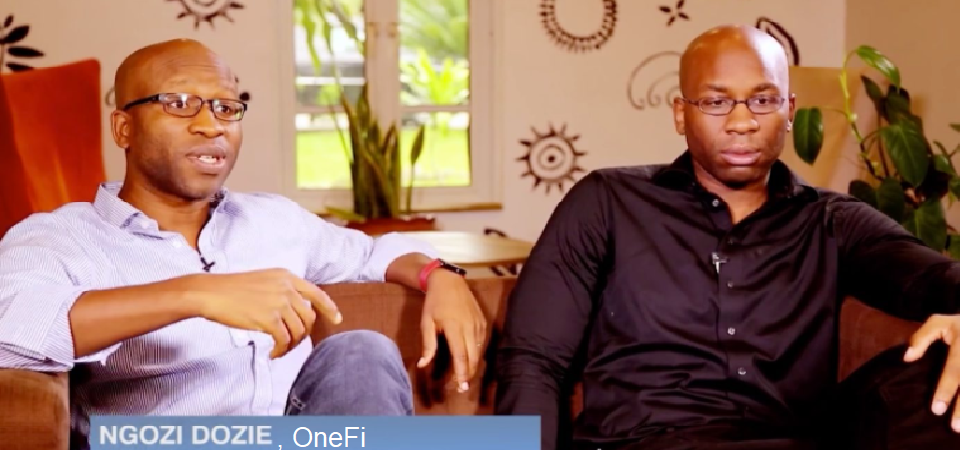
  • Build a Savings Business: Where it cannot acquire Piggybank, it needs to find a way to build a savings business. But this savings business must be operated independently despite being a unit in its OneFI holding company. This savings business will help to generate the cheap capital for lending.

Besides, for Paylater to do well, its marginal cost must be low. The digitization of its operation has taken care of the operations. It costs largely nothing to add a new user. However, the capacity to lend to a new user becomes where the business will win or struggle. What is that marginal cost? It cannot answer that question until it has a clear roadmap on how it funds its loans. I do not think that debts will be a sustainable path. But without equity, that may be the only option. I have also noted in their website a reference to DFIs (development finance institutions) like African Development Bank. It remains to be seen if DFIs in their typical natures will support high interest lending business to largely non-wealthy citizens.

All Together

Building an online business in Nigeria will remain challenging for a long time since the rich citizens are not yet online.  The implication is that size will play a role, and what works in places like U.S. and Europe may not work here. For online lending startups, the arbitrage between cost of capital and lending rates (with default rates) must be well structured, otherwise liquidity issues could happen. The key to this business will be the players coming together so that they can have scale to compete in the marketplace.  Industry-leaders like Paylater (lending) and Piggybank (saving) could set the stage and come together.  If that happens, even the banks will notice that fintech is on the march. I am very confident that size will play a role and M&A(mergers and acquisitions) in the Nigerian fintech sector will unlock more capabilities to accelerate innovation in the land. Paylater should acquire Piggybank.

iPhone X Begins the Era of Facial Behavioral Biometrics

0

We are all humans. Our faces define our identities. When you see a man on the street, the face is the most important element that personifies that person. From school year book to Facebook, our faces are our lives. They initiate us at primary schools where most of us take our first passport photos for entrance examinations into secondary schools. When we get jobs, they ask for photos for badges. At immigration services, they want to see our faces. Indeed, our faces are our journeys in life.

Now, Apple wants to use those faces to secure our digital lives. The iPhone X facial recognition feature is not new because Samsung has already implemented a face-based technology in Galaxy S8 to unlock phones. What Apple has done differently is the immersive use of 3-D topology of a face as a password. That 3-D is the key innovation. Apple uses infrared lights with advanced AI (artificial intelligence) to correlate a person’s face with the one already stored in the iPhone X memory. If there is a match, the phone is unlocked. The Face ID feature in the iPhone X will make it into other smartphones in coming months, with varying levels of efficiency.

But the value of the face is not going to stop with Apple. According to the South China Morning Post, China is developing a facial recognition technology with the capability to match the faces of about 1.3 billion Chinese to their ID photos with more than 90% accuracy. As they build this massive dataset of faces, they will connect them to surveillance camera networks powered by cloud computing solutions across China. Go figure: the same human face, now a national symbol of tracking everything a citizen does. With the requirements that citizens use their real identities in their social media networks, before they can comment on things, China is sure to have a good grasp of what is happening in the lives of every citizen. And the fact that China also wants to take about 1% of equity in many Chinese technology companies, you will understand where that country is going. From Fortune Newsletter:

Chinese internet regulators are looking into taking 1% stakes and management roles with corporate decision-making powers in social media giants Tencent, Weibo and Alibaba Group’s Youku Tudou, as the tech companies rapidly expand beyond their niches into finance, health care and transportation services that affect hundreds of millions of Chinese citizens.

From Apple to China, using our faces is now part of the digital lives. Facebook ran some algorithms which made it possible that someone can pick a photo, put it in Facebook ecosystem and using that image, Facebook will tell you whom that individual is. That is the same technology that makes it possible to auto-tag your friends when you are in a group photo. It saves you time, but it also confirms that Facebook knows you really well. That is the new age we are now.

The Future of Face in Tech

What Apple has done with its Face ID is unleashing AI and advanced 3-D microprocessors in our pockets. To all the possibilities, this is at infancy. In coming versions of iPhone, I expect the deployment of these tools and technologies to drive facial-based behavioral biometrics which make it possible for people to use their facial movements to shop, initiate phone calls, and do banking.

In coming models, I expect Apple to link this facial technology to how we use our phones. That includes how we navigate menus, scrolls, close pages, and more. Those elements which are certainly unique in the way we use digital systems can be used to detect fraud. To make that happen, you may be asked to use your phone for two weeks and after the two weeks, your bank app will activate the feature since it has collected enough data about how you use your phone.

If someone is trying to impersonate you, it is not likely the person can easily construct the subconscious movements which the phone and apps have built about you. This application will work even if you are using a different device. All you need to do is to log into the bank app, and they will use the already stored insights about your behavior, to ascertain if fraud is about to happen.

All Together

Voice and face will drive a new dawn in computing and security. Amazon Alexa is pushing the envelope on voice, to create a new operating system which will be pivotal to the new age of computing. Apple’s iOS will introduce us to more behavioral biometrics as it continues to integrate the face, and subconscious human usage of mobile devices and commerce. The zenith will come when they can use these fascinating datasets to extrapolate our thought processes. In other words, by looking at your face, and how you are moving your cursor, Apple could determine what you are thinking or about to do, and help you finish it up. Calling a taxi, or calling sick for work, or calling a doctor could in future be outsourced to our phones: they look at our faces, piece together subconscious movements on our devices, and using both make the calls on what we are thinking. Our faces can go far indeed. Yes, it will be a key element to Thought Computing, after we are done with perfecting Voice Computing.