
DD
MM
YYYY

PAGES

DD
MM
YYYY

spot_img

PAGES

Home Blog Page 726

Nine Casino Loyalty Program

0

Introduction

Step into the dazzling world of casino loyalty programs, where every spin, every hand, every wager unlocks a treasure trove of rewards. In this landscape, the allure of a well-crafted loyalty program is undeniable. Of course, variety of casinos are offering their rewards, but you should pay attention to the casino Nine. Savvy players understand that a casino loyalty program is more than just accumulating points; it’s about elevating the entire gaming experience. These programs have evolved dramatically, becoming sophisticated systems designed to recognize and reward player dedication. From personalized bonuses to exclusive events, the perks can significantly enhance your play and your chances of scoring big.

Having explored numerous casino loyalty programs, including the standout Nine Casino, it’s obvious to see the benefits of loyalty program. This article peels back the curtain on how you can maximize these programs. Get ready to discover actionable strategies and insider tips that will transform you from a casual player into a loyalty program pro.

The Allure of Casino Loyalty Programs

The Psychology of Loyalty

Casino loyalty programs are designed to tap into the way people think and feel. The endowment effect makes players value what they’ve already earned within the program more highly, leading them to continue playing to avoid losing their status or benefits. Loss aversion also plays a role; the fear of losing points or a tier level can be a powerful motivator, encouraging players to keep gambling even when they might otherwise stop. This emotional investment keeps players engaged and coming back for more.

The Economy of Loyalty

Casino loyalty programs aren’t just about keeping players happy; they’re also smart business. By rewarding frequent play, casinos can reduce their marketing costs. Loyal players are less likely to be swayed by competitors’ promotions, leading to a higher customer lifetime value. For example, a player striving for “Gold” status might concentrate their gambling at one casino, generating significant revenue that would have otherwise been spread across multiple venues. It’s a win-win: players feel valued, and casinos secure a consistent revenue stream.

Decoding the Tier System

Points and Requirements for Each Level

The Nine Casino Loyalty Program utilizes a tier system designed to reward players based on their engagement and activity. Progressing through the casino tiers unlocks increasingly valuable benefits. The entry-level tier, typically “Bronze” or “New Member,” requires minimal points to attain, often achievable simply by signing up for the program. As players accumulate more points through wagering and other casino activities, they ascend to higher loyalty levels such as “Silver,” “Gold,” and “Platinum.” Each subsequent tier demands a higher points threshold. The exact number of points needed for each tier varies, but generally follows a progressive scale, incentivizing continued play. Keep an eye on Nine Casino promotions, sometimes they gives extra point to jump to another tier.

Benefits for Each Level

Each tier within the Nine Casino Loyalty Program offers a unique set of benefits tailored to enhance the gaming experience. Lower tiers often provide basic perks such as exclusive email offers, small discounts on dining or merchandise, and entry into tier-specific drawings. As players climb the casino tiers, the benefits become more substantial. Higher loyalty levels unlock benefits, like increased cashback percentages, complimentary free play, priority access to casino services, invitations to exclusive events, and personalized VIP host services. Ultimately, the higher the tier, the greater the rewards and the more personalized the experience.

Earning Points: A Strategic Approach

How different games contribute to points

Not all games are created equal when it comes to racking up those valuable Nine Casino points. Slots generally offer a higher point accumulation rate compared to table games like blackjack or roulette. This is because slots have a higher house edge, meaning the casino earns more from them on average. However, keep an eye out for specific games that might offer accelerated point earning periods or special promotions attached to them. These opportunities can significantly boost your points balance in a short amount of time, so take advantage of them when you spot them!

Bonus and promotion Strategy

Nine Casino regularly rolls out bonus point promotions and points multiplier events – and these are your golden tickets to points heaven. The trick is to be strategic about how you use them. For example, if there’s a 2x points multiplier on slots, that’s the perfect time to try out those new slot games you’ve been eyeing. Also, pay attention to the terms and conditions. Some promotions might require you to opt-in or have wagering requirements. By strategically aligning your gameplay with these promotions, you can seriously amplify the number of points you earn per dollar spent.

Redemption Realities: Getting the Most for your Points

The Nine Casino Loyalty Program unlocks a world of possibilities with your hard-earned points, offering diverse avenues for redemption. From thrilling free play to luxurious hotel stays, gourmet dining, and coveted merchandise, understanding your options is key to maximizing value. However, not all redemptions are created equal. Let’s dive into how to make the most of your points!

Compare the value of different redemption options

Decoding point value is crucial. Free play often presents a solid return, offering a direct conversion of points to credits for your favorite games. Hotel discounts can provide significant savings, but consider the actual cash value compared to the points spent. Dining credits offer a tasty way to indulge, while merchandise rewards can be tempting, but often deliver the lowest point-to-value ratio. Always compare the “cost” in points versus the actual dollar value you’re receiving. Smart redemption means stretching your points further.

Restrictions or limitations on redemption

Before you get too excited about that penthouse suite, be aware of potential limitations. Blackout dates during peak seasons might restrict hotel stay redemptions. Minimum redemption amounts could prevent you from using smaller point balances. Certain promotions might exclude the use of redeemed free play. Investigate the fine print to understand applicable restrictions. Planning ahead and being flexible with your dates can help navigate these limitations and ensure you get the redemption you desire.

Maximizing Your Nine Casino Loyalty Program Benefits

The Nine Casino loyalty program offers a tiered system of rewards, unlocking increasingly valuable perks as you ascend. But regardless of your current level, you can strategically maximize your benefits for a superior experience. It’s about understanding the nuances and exploiting every opportunity.

Level-Specific Strategies: Even at the entry tier, carefully consider bonus multipliers on specific game types. Focus your play where these multipliers are highest. As you climb, prioritize redeeming free play during promotional periods – often yielding a larger value. Higher tiers unlock personalized concierge services; leverage this for priority dining reservations or show tickets, ensuring you secure prime spots and avoid queues.

Insider Tips and Tricks: Don’t underestimate the power of a friendly conversation with casino staff. They often hold inside knowledge about upcoming promotions or unadvertised perks. Monitor your email and account regularly for exclusive offers tailored to your play history. Accumulate points strategically, considering redemption thresholds – sometimes waiting for a slightly higher value reward is worthwhile.

Leveraging Benefits for an Enhanced Experience: Use your loyalty points to access amenities that elevate your visit, such as spa treatments or gourmet dining. If your tier includes complimentary hotel stays, plan your trips around special events or holidays for a truly memorable getaway. Remember to use your discounts, that are a good advantage. By actively managing these benefits, you transform a simple casino visit into a curated luxury experience.

Common Pitfalls and How to Avoid Them

Casino loyalty programs can be tempting, but it’s easy to stumble. One common loyalty program mistake is chasing higher tiers. The allure of better rewards can push you to spend more than you initially planned, digging into your bankroll faster than anticipated. Another pitfall is overspending to earn points. You see those points accumulating, and suddenly that extra bet seems worthwhile, even if it stretches your budget. Always remember to gamble responsibly.

Avoiding these loyalty program mistakes starts with understanding program limitations and reading the fine print. Those terms and conditions aren’t just legal jargon; they outline the true value (or lack thereof) of the program and any catches involved. Responsible gaming is paramount. Set a budget before you even step foot in the casino or log in online, and stick to it, regardless of how close you are to the next tier. Don’t let the perks cloud your judgment; the goal is entertainment, not financial ruin.

The Future of Casino Loyalty Programs

Casino loyalty programs are no longer just about earning points for free play. The future is all about creating experiences that resonate with each player on a personal level. Expect to see a surge in personalized offers, driven by data analytics that understand individual preferences and playing habits. Imagine receiving a bonus tailored to your favorite slot machine or a dinner voucher for the restaurant you always visit.

Gamification is also poised to play a significant role. Casinos are exploring ways to incorporate game-like elements into their loyalty programs, such as challenges, leaderboards, and virtual rewards. This can significantly boost player engagement and create a more immersive and entertaining experience.

Furthermore, the walls between different reward systems are coming down. Look for more integration of casino loyalty programs with other travel and lifestyle rewards, like airline miles or hotel points. The future of loyalty is a seamless ecosystem where players can earn and redeem rewards across various platforms, enhancing the overall value proposition of casino loyalty programs.

Conclusion

Navigating the world of casino loyalty programs, particularly Nine Casino’s, doesn’t have to feel like cracking a complex code. The key takeaway is simple: understanding how the program works, from earning points to redeeming rewards, unlocks a world of potential benefits. Think of it as leveling up your casino experience, transforming routine play into opportunities for free play, exclusive perks, and unforgettable experiences.

Now it’s your turn. Armed with these expert insights, it’s time to put your knowledge into action. Log in to your Nine Casino account, explore the loyalty program details, and start strategizing how to maximize your rewards. Every spin, every hand dealt, every wager placed is a step closer to unlocking the full potential of the program. Consider this your call to adventure, a challenge to elevate your casino game. And if you ever feel lost in the sea of points and tiers, remember, expert guidance is available to help you chart your course to loyalty program mastery.
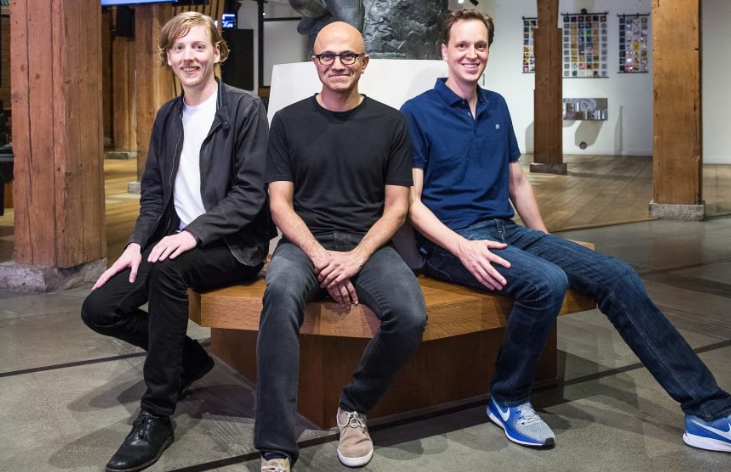

GitHub CEO Thomas Dohmke to Step Down Amid Fierce AI Talent War — Speculation Grows Over Possible Poaching

0
GitHub Microsoft

GitHub, Microsoft’s popular code-hosting platform and one of the pioneers of AI-assisted software development, is set for a major leadership change as CEO Thomas Dohmke announced his resignation on Monday.

The surprise move comes at a time when the global AI industry is in the middle of an aggressive talent hunt, with tech giants — particularly Meta — offering lucrative packages to lure top AI leaders, fueling speculation that Dohmke may have been poached.

Dohmke, who joined Microsoft in 2015 through its acquisition of his startup HockeyApp, took over as GitHub’s product chief in mid-2021 before replacing Nat Friedman as CEO later that year. Microsoft had bought GitHub in 2018 for $7.5 billion, betting on its role as the go-to platform for developers worldwide. In his farewell memo, later posted on GitHub’s blog, Dohmke said he is leaving to “become a founder again” but will stay on through the end of the year to “help guide the transition.”

“I am more convinced than ever that the world will soon see one billion developers enabled by billions of AI agents, each imprinting human ingenuity into a new gold rush of software,” he wrote, adding that when that day comes, “we’ll know where the path began: with GitHub.”

The leadership change comes just months after Microsoft restructured GitHub into its newly created CoreAI platform and tools group, headed by former Meta executive Jay Parikh. CEO Satya Nadella announced the group in January as part of Microsoft’s plan to invest tens of billions of dollars annually in AI infrastructure and development. Dohmke noted that “GitHub and its leadership team will continue its mission as part of Microsoft’s CoreAI organization,” with further details to come.

A GitHub spokesperson declined to elaborate on succession plans or operational changes.

Copilot’s Growth and AI Competition

Under Dohmke’s leadership, GitHub has leaned heavily into AI, most notably with Copilot, its AI-powered code suggestion tool launched in 2021 in collaboration with Microsoft and OpenAI. Copilot quickly became one of the most widely used AI tools in the developer community, allowing engineers to generate, refine, and complete code in real time. Nadella said last month that Copilot now has 20 million users, with Copilot Enterprise customer adoption rising 75% quarter over quarter.

GitHub’s scale has also surged, with registered developers jumping from 73 million in October 2021 to over 150 million today. But that dominance is being challenged by a new wave of AI-first coding platforms such as Anysphere’s Cursor, Replit, and Windsurf — the latter making headlines when its CEO was hired by Google as part of a $2.4 billion AI talent deal.

AI Talent Hunt Intensifies — and Meta’s Role

The AI sector has entered what analysts are calling an “arms race for minds,” with companies offering unprecedented salaries, research freedom, and equity packages to attract key technical leaders. Meta, in particular, has been at the forefront of this push, aggressively recruiting talent from rival firms to accelerate its own AI roadmap. Given that Jay Parikh — now Microsoft’s CoreAI chief — previously served as a senior executive at Meta, industry watchers are drawing a line between the intensifying AI talent war and Dohmke’s sudden departure.

The belief that Dohmke might have been poached has been amplified by recent moves in the industry, where high-profile executives have quietly exited established positions to take roles at companies offering them leadership over cutting-edge AI projects. While Dohmke has not confirmed any such move, the timing of his resignation amid Meta’s aggressive recruitment efforts has raised eyebrows.

The leadership gap Dohmke’s departure creates comes at a delicate moment for GitHub. While Microsoft still holds a commanding position with Visual Studio Code — used by 76% of developers according to a Stack Overflow survey earlier this year — rival tools are rapidly gaining ground. Cursor is already used by 18% of developers, Anthropic’s Claude Code by nearly 10%, and Windsurf by 5%, despite none of them appearing in last year’s rankings.

If Microsoft cannot move quickly to name a visionary successor, analysts warn that GitHub could risk losing its momentum in an industry where the cycle of innovation is speeding up. Still, the platform’s scale and integration into Microsoft’s AI strategy give it substantial leverage.

For now, Dohmke’s next role remains a matter of speculation. But whether he is joining a new AI venture, aligning with a major player like Meta, or indeed founding his own company again, his exit underscores a simple reality: in today’s AI boom, leadership talent is as hot a commodity as the technology itself.

Trump Delays Snapback of High Tariffs on Chinese Goods as Beijing Seeks Easing of U.S. Chip Export Controls

0

President Donald Trump on Monday delayed the reinstatement of steep U.S. tariffs on Chinese goods for another 90 days, a White House official told CNBC.

Those tariffs, set to resume after midnight Tuesday, were rolled back hours earlier when Trump signed an executive order extending the deadline until mid-November. The move followed last month’s round of U.S.–China trade talks in Stockholm, Sweden, where negotiators sought to keep tensions from escalating ahead of potential high-level engagement.

Without the extension, U.S. duties on Chinese imports would have reverted to their April levels, when the trade war between the world’s two largest economies was at its peak. At that time, Washington had imposed blanket tariffs of 145% on Chinese goods, and Beijing retaliated with 125% duties on U.S. exports.

The two sides agreed in May to scale back those measures after their first meeting in Geneva, Switzerland, reducing U.S. tariffs to 30% and China’s levies to 10%. Monday’s extension underscores the unpredictable nature of Trump’s trade policy, marked by abrupt escalations, pauses, and revisions. Tariffs have been announced, delayed, or modified repeatedly with little prior warning, creating a shifting landscape for businesses dependent on cross-border trade.

The “reciprocal tariffs” Trump introduced in early April were quickly paused and then delayed multiple times before taking effect in a revised form last week. On Sunday, Trump signaled his desire for Beijing to significantly expand agricultural purchases, urging China to “quickly quadruple” its orders of U.S. soybeans.

“This is also a way of substantially reducing China’s Trade Deficit with the USA,” he posted on Truth Social.

Chicago soybean prices rose on Monday, though it remains unclear whether China has committed to ramping up purchases in response.

Meanwhile, Beijing is pressing Washington to ease export controls on high-bandwidth memory (HBM) chips—critical components for artificial intelligence and advanced computing—as part of ongoing trade negotiations. The Financial Times, citing people familiar with the matter, reported on Sunday that China wants this concession included in a potential deal ahead of a possible summit between Trump and Chinese President Xi Jinping.

HBM chips, which stack multiple layers of memory for faster data processing and lower power consumption, are vital for powering cutting-edge AI systems, high-performance servers, and advanced graphics processors. They are also used in military applications, including defense simulations and surveillance technologies, one of the main reasons Washington placed strict export restrictions on them.

The HBM push underscores a critical shift in the U.S.–China trade standoff. What began in 2018 as a dispute over trade imbalances has evolved into a deeper contest for technological supremacy.

In recent years, U.S. policy has moved from tariff pressure toward targeted technology controls aimed at slowing Beijing’s advances in strategic sectors such as semiconductors, AI, and quantum computing. For China, gaining access to HBM chips would be a major win for its tech ambitions, potentially accelerating its domestic AI industry and reducing reliance on U.S.-allied chipmakers like South Korea’s SK Hynix and Micron Technology.

Washington’s reluctance to ease chip restrictions is rooted in concerns that such technology could bolster China’s military modernization goals outlined in its “Military-Civil Fusion” strategy, which integrates civilian tech breakthroughs into defense capabilities. U.S. intelligence agencies and the Commerce Department have repeatedly warned that loosening export rules on advanced semiconductors could undermine national security.

The timing is also politically charged. Trump, who has built his economic platform on being tough on China, faces a balancing act: securing a politically favorable trade agreement before a potential summit with Xi while avoiding concessions that could be painted domestically as weakening U.S. security. The HBM chip question could thus become a bargaining chip—offered in exchange for agricultural purchases, tariff rollbacks, or other economic concessions Beijing might make.

From Beijing’s perspective, the stakes are equally high. China’s tech sector has been hit by U.S. export bans on advanced lithography equipment, AI processors, and chip design software, prompting a nationwide push for self-sufficiency. While Chinese firms like Yangtze Memory Technologies are developing domestic alternatives, HBM chips remain a bottleneck due to their complexity and the dominance of a handful of foreign manufacturers. Securing access—whether through eased U.S. restrictions or alternative supply routes—would help close that gap.

The broader geopolitical context makes the negotiations even more complex. The U.S. is simultaneously rallying allies like Japan, the Netherlands, and South Korea to align their export rules with Washington’s, while China is courting partners in the Global South to resist what it calls “technology containment.” Any deal on HBM chips could ripple far beyond the trade talks, influencing global semiconductor supply chains and the alignment of countries in the ongoing tech Cold War.

Whether Trump and Xi can find middle ground before their possible summit is unclear. But the convergence of tariff talks, agricultural demands, and high-tech chip controls illustrates that the U.S.–China rivalry is no longer just about trade flows—it is about who will control the foundational technologies of the future.

Akwa Ibom Air: The Flight That Took Her Dignity

0

When Comfort Emmanson boarded an Ibom Air flight from Uyo to Lagos, it was meant to be an ordinary trip. By the time she stepped off the plane at Murtala Muhammed International Airport, however, her dignity was in tatters. Public reactions on Twitter paint a vivid picture of an incident that unfolded in full view, a clash that moved from the cabin to the terminal, leaving behind viral videos, heated debates, and a nation divided.

What began as a disagreement between Comfort and the Ibom Air crew quickly escalated into a physical struggle, public stripping, and her swift arrest. Instead of being resolved calmly, the situation turned into a spectacle, raising questions not only about the individuals involved but also about the values and standards we uphold as a society.

Punishment Turned into a Public Show

No one disputes that attacking a flight attendant is unacceptable. But the question many are asking is whether the punishment matched the offence. Comfort was not only restrained but also publicly stripped in a way that many described as degrading and unnecessary.

Instead of being quietly escorted off the aircraft, she became the centre of an airport drama. Her exposed body was not just an unfortunate accident, it became part of the punishment. Critics argue that no matter what she did, there is no justification for exposing her to such humiliation, and that in a fair society, the airline should face consequences for allowing it to happen.

When the Internet Extends the Sentence

In an earlier era, public embarrassment faded once the crowd dispersed. Today, the internet makes sure it lingers. Videos of the altercation spread rapidly on social media. Strangers dug up old photographs from Comfort’s personal life. She responded by releasing her own footage in an attempt to show her side of the story.

Once an incident like this is online, it no longer belongs to the moment. It becomes a permanent record, replayed and re-shared long after the court hearing ends. For Comfort, the consequences will likely extend far beyond any legal ruling.

From Victim to Moral Example

The conversation quickly shifted from the airline’s actions to Comfort’s personal choices. Commenters advised women to always wear bras in public to avoid similar embarrassment. In their view, the lesson was not about the treatment she endured, but about how she should have been prepared for it.

This kind of thinking quietly shifts blame away from the people who exposed her. It also encourages women to constantly monitor their appearance, not out of self-expression, but to avoid becoming the next viral spectacle.

A Justice System with Two Faces

The most striking criticism to emerge was about double standards in justice. On the same day Comfort was stripped, taken to court, and remanded, another passenger in a different case who had endangered an entire flight faced no arrest. Government officials even called for him to be forgiven.

This uneven approach reveals a justice system that comes down hardest on those without connections, money, or influence. Comfort’s case became a national lesson in how the powerful and the powerless are not judged by the same rules.

Public Opinion as Enforcer

While many condemned the airline’s handling of the incident, others defended it. Some argued that anyone who misbehaves in public deserves to be treated harshly. Others praised the flight attendant for remaining composed while being assaulted, presenting her as a model of professionalism. In both camps, the public became an active participant in the disciplining process. Every comment, every judgment, and every share reinforced the idea that bad behaviour must be met with visible punishment.

The Real Cost of Humiliation

The Uyo to Lagos flight is now remembered less as a transport route and more as a cautionary tale. The public stripping served as a warning about what can happen if you cross certain lines. The viral videos made that warning available to millions. The moral commentary ensured that the humiliation was not just about one woman, but a reminder to anyone who might be tempted to challenge authority.

When humiliation becomes a tool for enforcing order, it does more than punish the person in the spotlight. It sends a message to the rest of us: you are always being watched, and if you step out of line, you could be next. And when this kind of treatment is not applied equally, it stops looking like justice and starts looking like control.

Choosing Fairness Over Spectacle

Airlines have a duty to protect their crew and passengers, and sometimes that means removing disruptive individuals. But removal should be done professionally, with dignity preserved. Authorities must hold everyone to the same standard, regardless of status or influence. And as citizens, we must resist the temptation to turn someone’s worst moment into entertainment.

Comfort Emmanson boarded a flight expecting to reach her destination in peace. Instead, she left with her dignity torn apart. If we do not question the way such incidents are handled, the next journey like hers could be ours.

Signs You Should Hire a Personal Injury Lawyer Now

0

Ever been injured and asked yourself, “should I get a lawyer?”

It happens to millions of people every year, and there’s rarely a simple yes or no answer. Sometimes you know you need legal help, and other times it seems like overkill.

What if we told you the wrong choice could cost you thousands, if not tens of thousands of dollars?

What you’ll discover:

  • Let’s start with the real talk
  • Serious Injuries (Or Worsening Ones)
  • Insurance Company Games
  • Multiple People or Parties Involved
  • Losing Work (And Income)

Let’s start with the real talk

Statistics show about 91% of people with attorneys actually get paid a settlement. Only 51% of people with no legal help recover any payout.

The bigger point? The payout value for people with a lawyer is nearly three times higher than for those without one.

Add up all these cases and you’ve got a $57.3 billion personal injury legal market.

There’s a reason this is one of the most litigious sectors in the law. These cases can involve a ton of money and have major consequences for victims.

So, when do you really need a personal injury lawyer? You’re about to find out…

Serious Injuries (Or Worsening Ones)

Ok, you probably guessed this one. But, you’d be surprised how many people try to “tough it out.”

Any time you need to go to the hospital or emergency room, see a specialist or surgeon, or get ongoing medical treatment for your injury, it’s time to contact a personal injury lawyer. It’s non-negotiable.

Serious injuries equal larger claims and more complicated insurance companies that will fight hard to minimize any payouts. You need a skilled advocate on your side.

And “serious” means:

  • Broken bones or fractures
  • Head or brain trauma
  • Spinal cord or nerve damage
  • Permanent scarring
  • Injuries that require multiple doctor or ER visits

The Problem…

Injuries that seem “minor” at first can often turn into a big problem later on. That “minor” neck or back pain from your car accident could lead to chronic issues that affect your job and quality of life for years to come.

The smart play? Get a personal injury lawyer involved early on, even if you think you’re good. They can keep a close eye on your situation and jump in if you need help.

Insurance Company Games

Insurance adjusters are not your friend. Yes, they might sound friendly on the phone, but their job is to pay out as little as possible. End of story.

When they start pushing you to settle quickly for far less than you deserve or refusing to cover key costs, that’s when you need a lawyer.

Lawyer up if:

  • They’re pressuring you to accept a quick settlement
  • The settlement offer seems too low
  • They’re asking for recorded statements repeatedly
  • They’re outright denying liability when it’s clear
  • Contact or communication suddenly stops

Insurance companies know you’re an easier target if you don’t have a lawyer. They’ll throw out some big, impressive sounding numbers that are really just a small fraction of what you deserve.

But did you know about 95% of personal injury cases are settled outside of court? Insurance companies would rather pay a fair settlement than go up against a seasoned lawyer in court. Leverage that to your advantage.

Multiple People or Parties Involved

If more than one person was injured, more than one vehicle was involved, a contractor was involved in your workplace injury, or multiple insurance policies come into play, get a lawyer.

These cases quickly become legal quagmires where each party tries to shift blame onto the other. Insurance companies pass the buck while you get left with nothing in the middle.

Personal injury lawyers know how to navigate the maze of liability issues and make sure you don’t get lost in the shuffle.

Losing Work (And Income)

Lost wages and lost earning capacity add up fast.

Any time your injury is keeping you out of work for more than a few days or even reduced hours at work due to medical appointments, pain, or other limitations, it’s time to call an attorney.

It’s not just your paycheck, it’s:

  • Future earning potential
  • Missed promotions
  • Lost benefits while out of work
  • Reduced productivity and future earning capacity

Most people vastly underestimate these costs. A personal injury lawyer has the experience and resources to help properly value your lost income claims.

The Other Side Has Lawyers

If the person or company that caused your injuries has a lawyer, you need one too.

Otherwise, you’re going into a legal battle with one arm tied behind your back. The other side’s lawyers will use every legal trick to pay you as little as possible, or nothing at all.

It’s time to level the playing field. Personal injury lawyers typically work on contingency fees, so you pay nothing unless they win. No financial risk in getting the best help possible.

Liability Is in Question

“It’s not our fault” is the insurance company’s favorite phrase.

If there’s any question or dispute about who caused your accident or injury, it’s time to hire a lawyer who knows how to investigate, gather evidence, and build a strong case.

Obtaining video surveillance footage before it’s wiped, interviewing witnesses while memories are fresh, working with accident reconstruction experts, reviewing police reports for mistakes, and gathering maintenance records for faulty products are all examples of evidence collection.

The evidence preservation clock is always ticking. Wait too long and key proof of the other party’s liability and negligence could be gone forever.

Settlement Process Is Overwhelming

Personal injury cases are paperwork, deadline, and procedure mines.

Miss one deadline, improperly file a single form, and your entire case could be blown up.

Two to three years is the typical state statute of limitations for filing suit, but many of these other deadlines come much sooner.

You’ll be juggling:

  • Requests for medical records
  • Insurance company forms and correspondence
  • Witness statements and depositions
  • Documentation of lost wages

All while you’re trying to recover from your injuries and get your life back to normal. Somewhere, something’s got to give. Don’t let it be your legal rights.

They’re Offering a “Quick Settlement”

Insurance companies love a quick settlement. That’s because the average payout is far lower than what a fully developed claim is worth.

If you get contacted by an insurance adjuster days after your accident with a settlement offer, that’s a MASSIVE red flag.

They’re hoping you’ll take that offer before you even understand the full extent of your injuries and damages.

Here’s the issue.

Some injuries have symptoms that take weeks or even months to develop. Soft tissue injuries, traumatic brain injuries, and even psychological trauma fall into this category.

Accept that quick settlement, and you’ll have permanently waived your right to any more compensation, even if your condition worsens.

The Bottom Line on When to Hire an Attorney

Look, personal injury law exists for a reason.

When someone else’s negligence turns your life upside down, you deserve fair compensation to help put the pieces back together.

The signs are usually pretty obvious. Serious injuries, insurance company games, disputed liability, and cases with multiple parties all point to a need for professional legal help.

Key point:

Most personal injury lawyers work on contingency, so you don’t pay a dime unless they win your case. There’s zero financial downside to getting a consultation and understanding your options.

Don’t let insurance companies take advantage of your situation. The $57.3 billion personal injury market exists for a reason. These cases involve real money and real consequences.

Get the representation you deserve. Your future self will thank you.