DD
MM
YYYY

PAGES

DD
MM
YYYY

spot_img

PAGES

Home Blog Page 7263

The Irony of Apple’s First in iPhone X

0

The world awaits: iPhone X release will be on November 3rd. That is the day the “next big thing” will land. In its peerless marketing brilliance, Apple has been running this rendezvous for years. It makes great products that turn customers into fans.

But it seems this time may be different. Apple will be the first to unveil and introduce a key mobile product feature, over perfecting what someone else has done before. The front-facing 3-D sensor in iPhone X is industry-leading at this level. It is also turning out to be a challenge, Bloomberg notes.

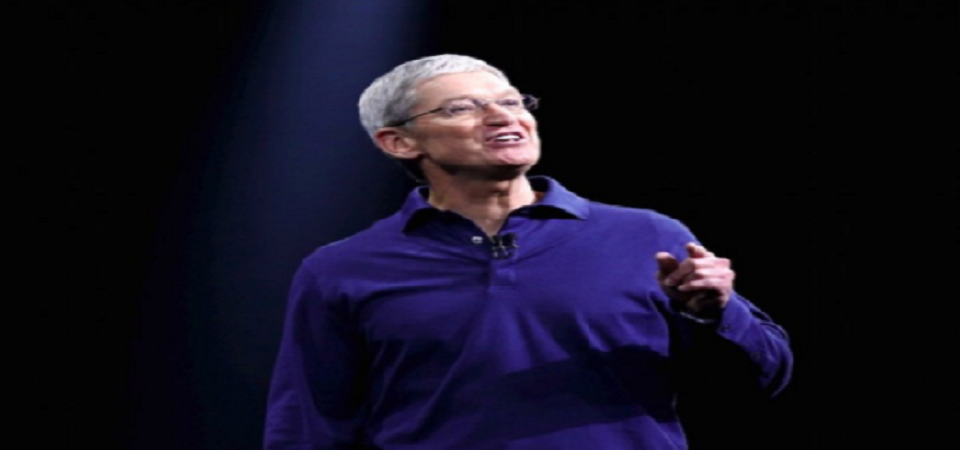
You can read all about this in our story, but the implication is that tech companies are bumping up against an innovation ceiling in smartphones. Chief Executive Officer Tim Cook often says Apple doesn’t aim to be first with a new product, but aims to be the best. In the iPhone X, though, the front-facing 3-D sensor really was a first. Was it worth the supply-chain agony to win bragging rights for this feature?

The 3D sensor system enables compelling features like Face ID authentication and Animoji to work.  That sensor powers facial recognition technology which is a very critical element of the iPhone X. So, it will be very bad if Apple is having problems with this component, even in supply chain. The company is known for its excellent supply chain engineering and a broken one will be devastating.

Becoming the First

Apple over the years has been the first in great profits, revenues, and app-excellence. But in introducing major new (first) features in mobile devices, it does not even try. As noted above, the CEO made it clear, using Bloomberg Businessweek’s own description that “Apple doesn’t aim to be first with a new product, but aims to be the best”.  So going for the first in the 3D which is yet to mature is a big risk for a company that has a reputation of being the best, by waiting for a specific technology to mature before adoption. Of course, many have accused Apple of not innovating enough with the copy-and-perfect model that has worked for it for years. It wanted to use the 3-D feature to silence them.

The Ecosystems

The good news is that Apple will fix its problems and will ship the usual millions of units over the next few quarters. But shipping phones may not necessarily be the whole truth. As Apple differentiates with hardware which runs proprietary software, it will face more challenges as the data race enters a major phase.

Amazon is an ecosystem for reviews with Facebook providing the social feedback element and SnapChat offering instant perspective. Along with Instagram, these ecosystems will be shaping the next phases of web-based commerce. As they mature and become more integrated, the elemental value which makes hardware important, will begin to fade in the eyes of customers.

China’s WeChat has already abstracted the value of mobile hardware. WeChat is the Internet operating system in China. I do think that a U.S. based web business will finally provide a U.S. equivalent, despite possible regulations. Facebook with its Messenger and Instagram is the most likely company to do that.

WeChat is the Internet first operating system which practically does everything: WhatsApp, Facebook, Twitter, Instagram, all in one. It is a seed that will keep growing, and breaking it will have minimal impacts, unless you want another name, not WeChat, to do the same thing tomorrow in China.

This abstraction is the main reason why Apple has struggled in China. And if that trend makes it into U.S., Apple will find itself in trouble. As Samsung Galaxy evolves and Google Pixel advances, iPhone has no margin for error because that is the only product Apple makes that brings huge profits. So any vulnerability to iPhone will unravel the Apple machine. Yes, it may make sense for Apple to just forget about going to be the first, focusing on what has been working for it: copy and perfect what others have done.

The Fortune List

Fortune and BCG’s Henderson Institute published the  The Future 50 – great companies of the future.

The list is based on a screen of 2,300 publicly traded companies, which were scored based on two equally-weighted measures: First, a calculation of the market’s estimate of the company’s future potential (the proportion of its market value not attributable to current earnings and dividends); and second, a calculation of the company’s capacity for long-term growth, based on 14 factors that BCG found correlated with long-term performance. You can read more about the methodology, which included an AI scan of 70,000 10-K reports, here.

The top ten big companies (market value over $20 billion) on The Future 50 are:

  1. Salesforce
  2. Tesla
  3. Facebook
  4. Netflix
  5. Intuitive Surgical
  6. VMWare
  7. Edward Lifesciences
  8. Intuit
  9. Activision Blizzard
  10. Regeneron Pharmaceuticals

The others are here. It includes Alphabet and Amazon… but not Apple.  That is indeed strange, you may think, for not having Apple. But that is not an error – Apple is the most imperiled company in the big league now. As phones mature, the edge will erode. So, the future is not really assured.

All Together

The central theme of Apple innovation is to perfect and make the best of whatever that is out there. But in 3D sensor, it wanted to become the pacesetter, creating the first to be used in the phone with facial recognition and other features. Because iPhone is the key Apple products, the margin for error is low. Its competitors have better positioning: Samsung can have Galaxy blowing up and will still generate huge profits from its semiconductor business while Google Pixel revenue will remain insignificant to Google Search for years. Apple under the pressure that it never innovates, as first in feature, was pushed to become first. But right now, it seems the company may need a new learning as it is struggling to deal with issues relating with 3D sensor. It could be ironic because others will now learn from Apple mistakes, to unveil in the near future, 3D sensors that work, even better than Apple’s. That is not the type of comparison that Apple will want.


Recommendation, all-in-one iPhone manager for you to manage your iPhone content and transfer photos, contacts and other data from your old iPhone to new iPhone X.

The Dangote System: Techniques for Building African Conglomerates

2

Good People,

Something happened last week. A CEO read my piece on Aliko Dangote’s presentation in the Elumelu Forum.

The evolutionary process also saw enormous strategic vision. This is part of the accumulation of capabilities and building moats which make it harder for competitors. By improving efficiency across all segments of its operations, even in a region where there are challenges with infrastructure, a competitor cannot easily find things to improve upon. With its scale, you cannot find any area to improve and have lower cost advantage. In other words, if Dangote Group can efficiently move items, you cannot come in and use that element to compete because the efficiency attributed to transportation in the conglomerate has been built into product costing. Dangote listed some areas he deepened capabilities to improve his business processes as follows:

He emailed me that he would like me to come and talk to his Executive Management to “download” Dangote business method and philosophy in all of them. I told him that I wish I understand Dangote a lot. He said do not worry – I have seen his video but I could not finish watching it. But somehow you made a masterpiece of the presentation. “You come and explain to us”. My firm runs an executive mgt/board level technology advisory service.

This afternoon, they made a contract: my firm will spend two days training the Executive Management on The Dangote System: Techniques for Building African Conglomerates. So, I am now an expert on Dangote business philosophy!  I will put all in a book next year to be available to tekedia.com subscribers.

And meanwhile, we offer frameworks, yes the Dangote System, to help companies win. I have made all my works on Dangote a system which can be applied across industrial sectors. That is another product for the African market. Go figure how ideas emerge!

Nigeria’s Oando Heart Attack

1

Oando Plc had the moments under the sun. It was evolving as a critical energy company in Nigeria which one day could cushion the nation into another level. Oando was a promise to Nigeria, a firm that could make it possible for our nation to play at the upstream level in the energy sector. For years, Nigeria had waited to become energy-production independent by building companies that could play major roles in its energy sector.

Men worked in the Nigerian Railways for decades but Nigeria did not acquire any train making capabilities. Nigeria has been producing crude oil but the upstream remains out of hand to Nigeria. If the major oil companies depart today, Nigeria will cease to be an oil and gas sector player. We have not accumulated capabilities indigenously.

But somehow, there was a shining star, named Oando Plc, out of the horizon for Nigeria’s future. Unfortunately, it seems like an effervescence. Oando is losing it as Securities and Exchange Commission (SEC) has started audits into how the company has been operating. The firm has been suspended in both the Nigerian Stock Exchange and Johannesburg Stock Exchange.

Nigerian oil firm, Oando Plc, allegedly declared dividends from unrealised profits and released false financial statements to the public before it was suspended by the Nigerian Stock Exchange, NSE, a correspondence sent to the oil firm by the Securities and Exchange Commission, SEC, shows.

Oando, which was suspended by the NSE on October 19, has been enmeshed in a protracted crisis for a while.

The NSE suspension followed an October 18 directive by the SEC, mandating the Nigerian bourse to sanction the oil firm.

Similarly, the Johannesburg Stock Exchange, following an advice from the Nigerian bourse, also suspended the embattled firm on October 19

But in a letter sent by SEC to the Group Chief Executive Officer of the firm, Wale Tinubu, and obtained exclusively by PREMIUM TIMES, the commission said it found that the oil firm’s 2014 Rights Issue Circular ”contained misleading information.”

According to SEC, its preliminary findings were “weighty and required further investigation by an independent team of auditors”. Consequently, it has assembled a consortium of Akintola Williams Delloite, United Securities Limited, SPA Ajibade & Co, TJADAP Consulting and Associates, and Nasiru Muhammad and Co. to beam high-voltage searchlights on Oando Plc. My take is that Oando will come out largely paralyzed.

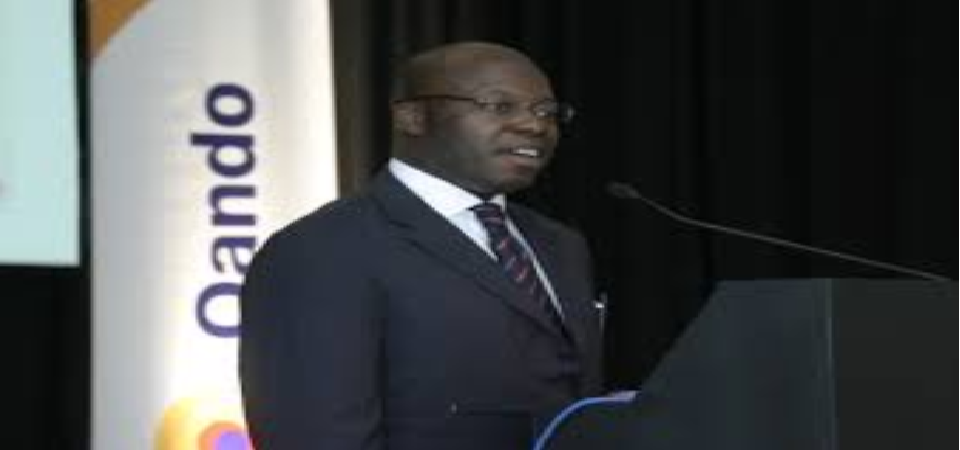
It is a shame to Wale Tinubu, a pragmatic young leader with enormous opportunities ahead of him to build a legacy in his nation. The fact that SEC Nigeria is even saying what it is saying publicly tells you that Wale might have been running a house of cards. Yet, it is just an accusation and Oando could be accused wrongly, but the problem is that Oando is not talking. Some of the deals, as reported by Premium Times, are excruciatingly unfortunate.

This is Nigeria’s Wells Fargo, at the moment. The U.S. bank cooked and manufactured millions of fake bank accounts in a real thriller only Hollywood could have made in modern America. That American bankers could create fictitious bank accounts tells me that all human species have the DNA of bad behavior; the only difference is the consequence that evil attracts. America is pushing Wells Fargo hard with the former CEO since gone and other important executives left or leaving, as Fortune notes.

Wells Fargo’s woes continue to get worse. The bank has fired four senior foreign-exchange staff from its investment bank, according to The Wall Street Journal. That’s particularly worrying because the investment bank had until recently been largely immune from the conduct-related scandals sweeping the much larger retail bank, and strengthens suspicions of systematic governance issues. Separately, the bank has been warned by supervisors that it may need to raise its $80 million payout to customers affected by abusive sales of auto insurance products

We will be watching how Nigeria takes action on Oando after the audit. Nigerians do complain that the Nigerian Stock Exchange is underperforming, with many pointing out that the corporate governance regime in our firms is weak. We have a real test to show how we want the NSE to function and why responsible people should be asked to put money in the exchange. SEC needs to help the bourse in order to boost confidence especially of the retail investors which have refused to return since the Great Recession decimated their investments. In a piece in the Harvard Business Review, I put forward on how African governments can improve the auditing of publicly traded companies.

A key step will be for regulators to change the relationships that exist among auditors, public companies, and the exchanges. Specialty insurance companies may need to be created to protect investors from audit-fueled risks, as companies should be required to buy special insurance policies (audited statement insurance, as I call it) to compensate investors if their audited financials are found to be deceptive. The premium charged by the insurer will track the risk profile of the auditor’s work. To reduce the insurance premiums, traded companies must cooperate and engage better with auditors. In situations where the present insurance companies cannot handle this type of risk, African governments and regulators should create opportunities for new insurance companies. These companies should be built for the digital age, requiring public companies to link critical business data like trading and transaction volumes to insurers in real time to help them assess risks. Companies that fail to share such data may be asked to put money in an investor protection fund. For those that prefer buying insurance, they have incentives to lower premiums, which can only be achieved if they allow auditors unfettered access in their firms.

In addition, African exchanges need to revamp the engagement process for how auditors are retained and compensated by traded companies. Public companies in Africa should not be allowed to hire their external auditors; the exchanges should do so for them. The auditors should be paid from a reserve fund carved out from the raised capital by the public companies. This will fix the biggest flaw in the auditing model, where auditors are financially dependent on the companies they audit. Auditors must be first quality to be added into the pool, and then exchanges must ensure there is constant internal competition for jobs. This rivalry will keep auditing costs low while improving quality, since a high-quality audit will be expected to translate to lower insurance premiums, and vice versa.

But no matter what, Wale Tinubu may have to take an exit. I do not think any responsible person will buy Oando shares with him still in charge, irrespective of the outcome of the audit.

The Certainty of Cryptocurrency

0

I am not a fan of cryptocurrency but I do believe that it will form part of modern commerce, competing with paper money. It may have no intrinsic value but that does not matter. People pay for arts, spending millions of dollars for wood. The same can be said of gold which has marginal industrial use. Yes, gold does not have much intrinsic value. But people invest in it.

In this video, I explain on the certainty of cryptocurrency in our age. It will not go away. Yet, I cannot make a call which of the currencies will survive. There may be a bubble or not, but that is irrelevant. Even after a bubble, the party will continue, because crypto-currencies like Bitcoin will not disappear in our world. No technology has ever become as popular as cryptocurrency within a very short time and then fizzles.

Just like gold and art, if the people think Bitcoin is worth $6,000, that is what it is worth. Provided there are believers, Bitcoin will be here. It has crossed the inflection point to be irrelevant. But even with that, it is possible Bitcoin will fade and another cryptocurrency will take over. But one thing is certain: cryptocurrency will be here. If that is the case, delaying its baptism is waste of time by national governments.

Organically Regenerative Web Companies

0

Earlier today, I wrote on organically regenerative capabilities of most great web businesses like Google and Facebook. I have made a video to take the perspectives home.

As you look into how these companies operate, you can see clear utilities in action. You can even be bolder: monopolies in their respective technology categories. There is nothing that will change the trajectory in the near future. Even if government breaks them apart, the fact remains that another company will take over their positions. Web businesses have this inherent feature that makes them organically regenerative: if you break Facebook because of its influence, another company will just take over its position. That regenerative capability is that ability to get better with more user data. That is what they call network effect:

[…]

So breaking Google will not fix the issues. One day, another company will grow to replace what Google does today. Web businesses get better with growth, unlike meatspace companies where more customers like in a bank hall will frustrate the users. This is a special feature I have captured in inversibility construct: 

That feature is why the more the users the better, and that means the best in technology will re-grow even when broken apart provided it has enough users to seed that moment. Over time, there will be convergence. WeChat is the Internet first operating system which practically does everything: WhatsApp, Facebook, Twitter, Instagram, all in one. It is a seed that will keep growing, and breaking it will have minimal impacts, unless you want another name, not WeChat, to do the same thing tomorrow in China.

A Comment from LinkedIn User

Interesting insight on the regenerative capabilities of the web based companies. I always enjoy your teachings. This brings to mind the Uber case in London. Yes Uber ignored the cues and left a lot for ‘very late’, but my 2 cents is that as long as the value proposition has been effectively delivered to satisfy that latent need for the sharing economy , if legislation stalls one player, customers will gravitate to similarly positioned alternative offerings, but may not rekindle their old desire for the city people’s black cabs. The desire to satisfy that need with the nascent approach will only regenerate itself as available market share for other sharing economy players. After all, uberisation is now a word.