

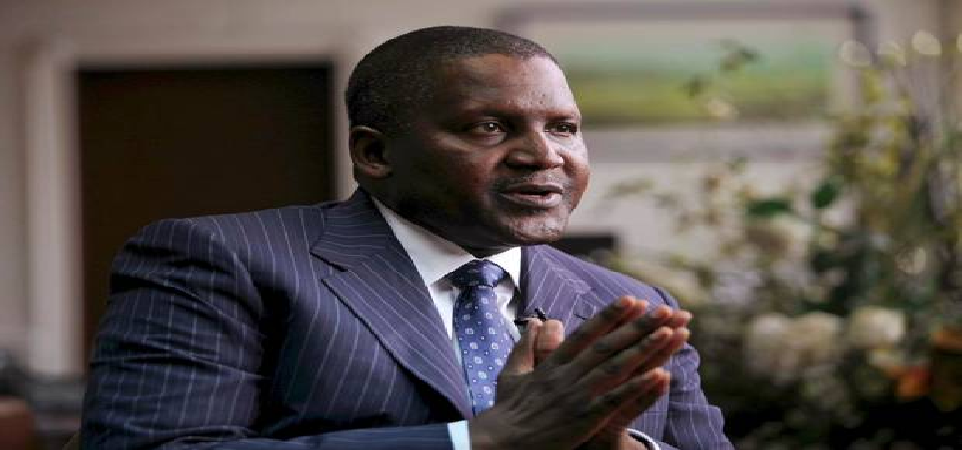
Companies must develop and accumulate capabilities in order to compete in the marketplace. In this video, I explain how any firm can do that and why accumulating capability is very strategic. From Google to Dangote Group, when companies accumulate capabilities, they see themselves operating in the segments of markets with higher value (usually upstream) compared with where their competitors operate (usually downstream). Dangote Group can deploy massive assets and technical know-how in cement production, making it harder for new entrants and rivals.
The Tech World Cheers

Toshiba memory business has survived. A group of South Korean and U.S. investors, led by Bain Capital, has taken over the memory business of Toshiba, an iconic Japanese semiconductor company. Toshiba had needed cash after disastrous strategic moves in its nuclear power business in U.S. As Toshiba gets cash to sort out its future, many industry players are cheering as another power concentration is averted.
Toshiba said it had signed a deal to sell 60 percent of the microchip unit, Toshiba Memory Corporation, to a group of international investors that includes Bain Capital and Apple. The deal, which followed months of tumultuous negotiations, will net Toshiba about $14 billion.
Toshiba has staked its future on the sale, with the proceeds earmarked to help repair the financial damage from a disastrous foray into nuclear power in the United States. The episode threatened to bankrupt the company, one of Japan’s biggest and proudest.
Saving a Toshiba business arm is not the reason why the world is cheering. The main reason is that the investors have saved a supplier of advanced processed sands (yes, memory chips) used in mobile devices like smartphones and tablets. This deal will remind Samsung that besides its #1 position in the global memory supply chain, there is still #2. Samsung is memory chip global leader, well ahead of Toshiba. Had Toshiba failed, it would be the only remaining major player. The implication is huge: Samsung could easily jack up prices of memory chips, and there is nothing anyone can do except to file unfair competition complaints. Certainly, keeping Toshiba running is a better alternative.
With this deal, at nearly $18 billion, the #2 could be strengthened to offer a minor choice in the industry. The deal is yet to pass regulatory and legal hurdles. But observers do not expect any major challenge that may prevent the deal from being closed.
Apple is part of this deal. It knows that with Samsung in control of the memory business, it will remain a choice between the devil and the deep blue sea. How can you be funding your arch-rival? It does not make sense. But that is where Apple is today: its main competitor is also its most important supplier. So, as Apple devises strategies to crush Samsung, Samsung waits for the phone call to supply the components to help Apple execute the strategies!
Apple knows that it cannot do much to dent Samsung’s vision because while Apple needs mobile devices like iPhone and iPad to make money, Samsung does not. Samsung returned with history-making profit numbers despite recalling millions of its products few months before. If Apple finds itself in such a condition, it may be imperiled for years.
Between Samsung and Apple, Samsung is a better company with solid moat, over accumulated capabilities no competitor can acquire within a decade. It takes years to master the art of semiconductor business. About four companies on earth have the top-grade technical quality to execute it at scale: Intel, TSMC, Samsung, and others (Global Foundry, and Chartered)
So for Apple, it knows that without Toshiba, Samsung will grow even stronger and it will not have any alternative for memory chips used in iPhone and iPad. Samsung has benefited significantly from its semiconductor business. It remains the most profitable part of its business.
So, with this deal, Apple cheers. And many in the tech world cheer. Because having one company to supply memory chips will mean that prices of mobile devices will go up. There is nothing better than an alternative when it comes to the moments to negotiate prices. That is how markets should work.
Our Generation’s Moment, A Working Nigeria

In Nigeria, everyone is a victim. The rich, the poor, the welder, the banker, and everyone. The rich citizens believe they have paid taxes and nothing is returned through government services. The not-so-rich citizens believe the nation has rigged opportunities against them. From the north to the south, east and west, everyone has a problem with Nigeria.
Take a trip to Bayelsa State’s Kolo Creek. You will see wealth out of the sands, but walk few kilometers from the flow stations, you will see poverty. As an intern for Shell, I slept inside one of those Kolo Creek buildings. I had the best food possible, but was troubled in the evenings when the villagers would gather looking for crumbs to gather for dinner. I wept; it was painful to see mothers with daughters eating from crumbs in the midst of unbounded wealth in their lands.
Then I was sent to an Akwa Ibom village close to the aluminum smelting company. We had gone to mount telecom equipment. As far I could see, the waters were polluted. Yes, waters everywhere but not a single drop to drink. That day, we went through Ogoni, connecting with boats to Akwa Ibom. The villagers needed water, but could not find any, even when living nearly on top of water. Very painful.
Then I left the East/South for NYSC, and went to the North. I was stunned. What I saw in southern Nigeria was even manageable. As a student that grew up in the East, the mindset was that North was a paradise and the Southern part was marginalized. I am not saying otherwise here. I saw small kids begging for food, at scale, in Bauchi. That was not a possibility in Owerri. My heart broke because everyone is really marginalized in Nigeria. I had a different perspective of Nigeria.
Yes, everyone is a victim, in Nigeria. The difference is the form. The kids I saw in Bauchi were marginalized just as the villagers in Bayelsa. Nigeria needs to work for them. Let men and women be selfish enough to fix our commerce and markets even as they get rewarded for doing so. Let the greed of capitalism work in the land. We are positioned and we have opportunities, far ahead of many of our people. If things are this bad now, imagine the post-petroleum era when our small national budgets cannot even be funded.
President Buhari Cabinet and TeamOur Moments Now
Nigeria needs a new campaign on nationalism to enable us achieve great success through societal energy. It must be based on substance, and fueled by visible economic roadmaps for all citizens to connect. Nationalism will deliver the energy to build our nation. From everywhere, internally and around the world, government must mobilize our citizens. These citizens will help to develop a national pride and confidence and geopolitical strategy with skill and effectiveness to harness our national power for national purpose by using our cottage of intellectuals, artisans, professionals and patriots. Today, we are fighting: APC vs PDP. East vs North. Ekiti vs. Kaduna. It is a shame.
The economic, political and institutional evolutions in Nigeria since oil became the mainstay of the economy remain largely non-core-market parasitic gains fueled by high oil prices worldwide. Our nation has not decoupled her fate from oil. The progress we have made in agriculture before the dawn of petroleum is equivalent to the progress made in our traditional African medicine which remains largely lost. So while we have knowledge, we have destroyed the process of our learning and experience.
Our economy must be diversified towards evolution of potential synchronous regional growth sources across all states of our nation. This will drive an efficient, business-friendly regional system that will support the present effervescence in our economy. A system that will move us from potentially episodic and ephemeral achievements of the present capital markets to a diffused learning that will transform artisans, traders, sculptors and farmers and move them up to learn and apply at higher levels. It also has to offer programs in form of support for small and medium enterprises (SME).
The Change Initiative must not just plan for the adjustments necessary within the next few years, but must develop strategic and tactical visions required for the economy to maneuver any upheaval which would occur as the oil wells dry and our foreign earnings draw down.
All Together
The military has ranks and they enjoy opportunities associated with the ranks. Today, every educated Nigerian, at least to OND, has opportunities to lead and act. Most of us here are positioned, ahead of many of our compatriots, and we have this moment to lead. The poverty in the land is huge. It is not just a political problem. It goes beyond the politicians. It is a national problem. This is our moment to unlock trade, to give sons, daughters, mothers and fathers opportunities to work, and build not just today but the future of the nation. I want to wish everyone happy Independence ahead and do hope that Oct 1 will bring a new spirit of unity in the land.
The Google-Amazon’s Stage
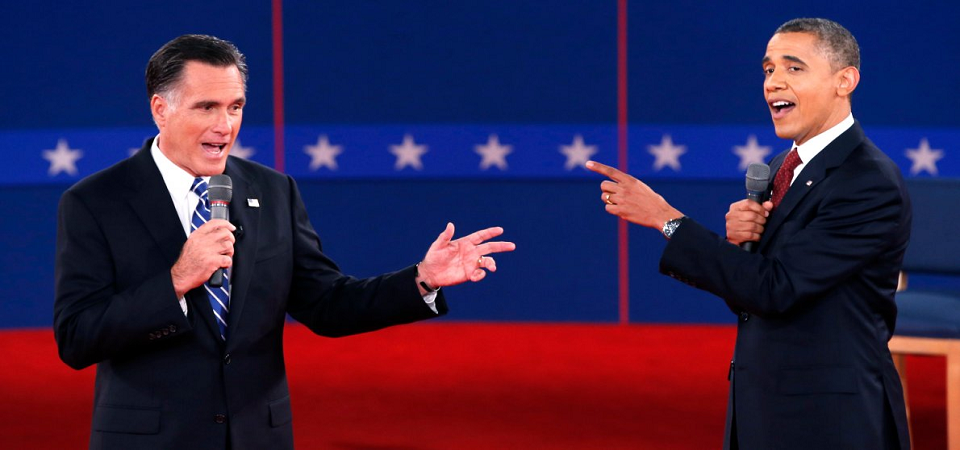
One of the most memorable political advertisements that helped to put President Obama ahead of Mitt Romney during the 2012 U.S. presidential election was the Stage. It was an iconic, memorable, and believable ad. Mitt Romney and his men had bought a company, asked the workers to make a podium for a major announcement. They came on D-Day for the announcement. Standing on the stage with the workers looking, hoping for a promised better future, he told them that they were all fired.
Men cried. Women wept. Families broke apart. But the worst was this: why must they build a special stage for a fund manager to stand upon to fire them. Mitt Romney was defined. He never recovered from that image in the minds of many Americans.
Today, we have a stage. Google had pulled out YouTube from Amazon Echo. Google used to support Amazon but suddenly has noticed something: Amazon wants to build a world that does not depend on smartphone. It wants an alternative computing paradigm at homes and offices. From Bloomberg newsletter:
The way-more-than-a-retailer unveiled several new or revamped versions of its Echo voice-activated home speakers, including one that serves as a digital alarm clock, and it cut the price of its flagship gadget to $100 from $180. All are Trojan horses rolling Alexa, the voice-commanded brain of the Echo devices, into your home.
Alexa can already help you watch web videos, turn on kitchen timers, listen to music, shop on Amazon and do other tasks people do with smartphones run by Amazon arch-rivals Google and Apple Inc.
Amazon is eager to have Alexa do much more. Want it to be your television remote control? Sure! Or Amazon promises with a single command, Alexa can take over your morning routine of flipping on the lights, turning on the coffee pot and firing up your wake-up jams.. Want Alexa to control the 1990’s novelty gift “Big Mouth Billy Bass”? Alexa can do that too, and it won’t question your taste in home decoration.
If you check most of these new products, Amazon is not building them on smartphone. It wants its own ecosystem where it can dominate. It wants to be totally decoupled, unfettered from the smartphone world. It wants to own the home and possibly offices. Google is not happy.
So, like Mitt Romney, Google wants to fire Amazon, making it harder to tap into some of its services. But unlike those workers, Amazon can fight immediately and not waiting for a future political campaign. The Amazon Fire smartphone was a failure, but the new Amazon any-platform-but-phone strategy is winning with many companies adopting the Alexa. This is a challenge Google did not prepare for. Amazon wants to own the home and elevate computing beyond the phone screen. It pioneered voice computing which I have noted will be exciting not just in U.S. but also in Africa. For doing what it is doing now, Amazon has many enemies right now. The company has annoyed shipping companies, grocery chains, book publishers and you name them.
The Alliances
There is a clear alliance against Amazon these days. Google and Walmart have formed one. They want to ensure that Amazon does not disrupt their businesses. Walmart wants to stay relevant in the age of Amazon. Google wants to protect its text-based computing. That is the reason why both got together to battle Amazon with Google Assistant, Google Express and other tools to challenge the extremely brutal Amazon.
This is not new. When that happens, it means you are winning markets.
While Amazon is working to navigate what Google is throwing at it, Uber is also seeing a major alliance against it. Every car company is running to its main competitor for partnerships. From Google to car companies, everyone wants Lyft. Why? Uber is so hot that no one wants to further arm it.
When a company experiences what Amazon and Uber are feeling, see it as a badge of honor. It only happens to successful companies. Uber and Amazon just have to return the fire. Otherwise, they will be crushed.
What is happening in technology is the very reason why antitrust people will struggle to regulate these firms. If you break Amazon, another company will take its position. If you do same to Google, another will assume to be Google. We have moved into the post-core competency era where anyone can do anything because cloud computing and the other technology pieces make it far easier to branch into new technology areas. Anyone can compete in any sector and that is an advantage, but also a huge challenge for antitrust people.
Google might not have started Google Cloud a decade ago, even though it had all the necessary pieces to offer cloud services to the public. Now, it does so, offering a competing cloud solution to Amazon. The transition was not herculean: it put a sales button to rent some datacenters to the public. Datacenter was already an infrastructure it understood very well. That is why these companies can continue to grow as they have many pieces in-house to expand to new sectors.
Yes, they enjoy network effect and when you break one company, say for antitrust purposes, the winning one will take over the benefits of the new network effect. You will need to be breaking the resultant winners continuously to succeed. Unlike the old industrial giants, digital companies are unique. They get better with more users. Which means that breaking Google or Amazon will not fix the heart of the problem, new ones will emerge to fill the vacuum left.
For the players, the nature of the rivalry makes it very hard to know the real competitors. Google might not have seen Amazon as a competitor few years ago. But today, Amazon is after the business of Google as it works to diminish text-based computing and elevate anything but smartphone at home. It is a new basis of competition which can be disruptive if Google does not fight.
All Together
Customers and users will win. That is the good part of this. The rivalry will improve value. Yet, it will make it extremely hard for future new technology titans to emerge. As these companies own and build new empires across industrial sectors, they have moats everywhere. They become utilities which you must deal with as alternatives will be limited. We, the consumers will be happy, but among these tech empires, they will be trading stages as they fight civil wars to win markets.
The Most Brilliant Moment In Business

When Toyota recalled one of its car brands that I own, it sent me a notice of the recall, and provided a document for me to take the car to a dealer for it to be fixed at no cost to me. That is expected in the automobile industry: the makers of the cars are responsible for fixing major issues when the vehicles are under warranty.
If you go to a grocery shop, and buy food that later causes problems for you, you can easily get a trial lawyer to sue the shop in America and most parts of the advanced world. Advancement is used here in terms of maturity of legal institutions.
And when you have a smoke detector in your house, you expect it to do its job which is to detect smoke. But if that smoke detector malfunctions and the house burns down, and you can trace the fault to it, the makers are in trouble.
From one product to another, the makers are responsible when their products fail or severely malfunction. But except one product: software. Sure, there are minor cases as in radiology where a software update error can cause the wrong amount of dose leading to deaths. But even with that, it is the whole radiology equipment that is faulted and not necessarily the software.
So what happens is this: software can cause problems in the world, and the makers are not held responsible. When virus corrupts your files in your Windows laptop, Microsoft is not on the hook. When hackers break banks to steal money, the makers of faulty software that made that easy to happen are not charged. When hackers break into your firm to manipulate your data, you do not return to the software company, suing them for ever selling a product that made that possible.
So, all over the world, the software companies are never faulted. The focus is always on the hackers. There is nothing wrong going after the bad people, of course. The law enforcement will go after them. But no one remembers the person that sold a crappy software product that made that possible, to start with. I am not sure any major software company has been invited by the U.S. Congress to explain why they sell products which are easily hacked. Contrast that to the fire the Congress will send to Ford, GM and Toyota when people are crashing due to faulty cars.
You Never Own Software
Yes, software is one of those products you never own as a company. You have to keep paying licenses to continue to have the rights to use it. Any day you cease to pay the license, you will immediately lose the legal rights to use the product.
Yet, if you are paying and a problem arises like the product has been hacked and your company data stolen, you cannot sue the software firm. You simply rant about hackers. Technically, software ought to be easier to deal with since the users never own the rights. The rights are reserved to the makers. This is far different from cars, for example, where you own all the rights but when challenges come, you still go back to the car makers.
All Together
The most brilliant people in the world are those that architected the structure of pricing software. They elegantly made it possible that value comes to them and risks stay with their clients. Otherwise, there is no reason why the world has not challenged major software companies shipping products which are easily hacked. The makers are brilliant as they have cleverly deflected the burden of product quality with the narratives of hackers being evil.
Yes, take a closer look, and you will agree that the model is not supposed to be that way: if Ford takes the heat for faulty cars, software makers like Oracle should be held responsible for making hack-able software. But they are not responsible, and they are lucky.
The software men created an industry far superior (for themselves) than anything markets and industries have ever seen. They have made sure you never own what you bought and when you have problems, they are never to be blamed. They pioneered a clever narrative that their faulty products which continue to be hacked are never their faults. That has kept them away from the crosshairs of risks.
If you make and sell software, you better thank the legends that came before you. Why? If not the way they structured the business, trial lawyers would sue you if hackers break your software and inflict damages to their operations. Today, those lawyers cannot come after you, just as they go after Toyota and Ford for faulty cars. The software pioneers are peerless in business contracting innovation: head, they win; tail, they win.