DD
MM
YYYY

PAGES

DD
MM
YYYY

spot_img

PAGES

Home Blog Page 7281

Fixing Nigeria’s Tax Clearance Process

0

The process of filing corporate taxes and getting the annual tax clearance in Nigeria is broken for small businesses. Government has to take another look at it. Yes, I know that government has many elements in most business processes to mitigate the evils of corruption and fraud. But on a specific phase of the tax system, I do not see any value on a key requirement.

When you execute a job for a major client, you are supposed to provide your Tax Identification Number. That company debits you the VAT and WHT amounts from your contract amount. The money is wired to the Federal Inland Revenue Service (FIRS). The company that is paying you has done its job: it has paid you your amount and also sent to government the contract value projected tax amount. In most parts of the world, that company can rest because both of you have concluded the business relationship. You have done the job. You have been paid. And government has been paid. Period.

But in Nigeria, that does not happen. As you plan to file your tax clearance, government will expect you to return to that company to get a document called e-payment slip (or its alternates) which is issued by FIRS to your client for making the tax payment on your behalf. This is the phase I find very frustrating.

Why should I go back to this particular client to ask him or her to return to FIRS office to collect this document for me? Government has the money and can make any decision if I have to pay more tax. Also, it is government that issues this slip, which means it can access the document. But that does not happen. The tax office will want you to get a physical document (yes, the e-payment slip) from your client so that they can copy the slip number as they finalize the tax clearance.

Now, there are challenges when the client has no time to pursue this document for you. I do not blame anyone because helping me to file tax is not a client’s business priorities. And government cannot give you the document, only that your client can collect it. Yes, it has to be the person that made the payment, and when that person does not have time, your tax clearance process stalls.

My Suggestion

Government needs to update its process to remove the need of that slip number. Rather, it can generate a digital one which associates a slip number to the payment it has received, automatically. The goal is to prevent one from going back to a client for something that was concluded a previous year. The government has the money and it does not need this document.

What is happening here is similar to the same old thinking of airlines that physical tickets have the same value as money. So when you purchase a ticket, you have to pay to have a physical receipt/itinerary delivered to you. If you lose the itinerary, they will not fly you, even though they can see your name right in the list of customers that bought tickets. So, you can have scenario where after paying for a ticket, you have to pay for overnight ticket delivery for a document that technically has no value since airlines have all the details already. But thank goodness for electronic ticketing or even no-ticketing except confirmation number.

The document FIRS is asking companies to present is issued by it. Also, FIRS has the money. Except to muddle processes, there is no value in this extra process. They need to stop it and update the process. It makes no sense that one cannot file a tax clearance if your business partner has gone bankrupt within a year. That is what the present system is built upon, because if the client cannot get the document, the filing cannot be completed.

All Together

Sure, FIRS has made progress as they continue to simplify the tax process. I am sure if they fix this minor change, it will be easier for small businesses to file taxes. We will certainly appreciate it. I do not want to be begging clients for the certainly avoidable slips when I can use the time to explore new business opportunities.

All The Business Opportunities In Nigeria

12

This is a brief from a talk I gave last week to a business club looking for opportunities in Africa. They had asked me to speak on African opportunities and how they could find them. They made the call after one of their members went through some business ideas I noted in my new book.

I divided my presentation into sections: the essence for business, the opportunities and how to unlock them.

Why do we need a business? We need a business because market is not friction-less. If markets have been friction-less, buyers and sellers will not need firms in between them. In other words, if a saver can find a borrower without going through a bank to put that money, and then the bank will go ahead to lend to the borrower from that money, we will not have a need for a bank. In other words, the reason we have a bank is because there is a friction for a saver and a borrower to do business directly. The bank comes in as an intermediary to reduce that level of friction. For doing that, the bank is paid.

This cuts across all industrial sectors. Schools exist because families cannot optimally engage teachers to teach their children, directly. If for any reason we can create a technology that makes that direct engagement possible, removing the friction, we will not have a need for schools.

So to know where the opportunities are, you will need to look for places where people and firms are experiencing frictions in their lives and businesses. Most times, it begins from your own personal experience. What is the friction you are experiencing and how many people do you think are experiencing the same? That can give you an idea of a business opportunity.

You do not have to fix all elements of the friction. You can just reduce the level. For example, instead of Chisco, a luxury bus, driving you from Owerri to Lagos for 10 hours, another company, Peace Airlines, can do same for less than two hours. Peace has reduced the friction of getting you from Owerri to Lagos. Yet, the opportunity could be to reduce the friction that even made it necessarily to travel to Lagos. That is how the thinking behind telepresence technologies is evolving.

If you have gone to a bank to wire money and it is taking three days to send it from Lagos to Gabon, it means that even though it is helping you to manage a friction, it has not done it optimally. A new business idea could be to make a system that cuts the days from three to a day.

Business opportunities exist where there are frictions. You will find them in agriculture, energy and more. As you discover them, you may need to question how the incumbents are fixing the frictions. When you have a really new way of fixing the friction, you can be innovating and potentially disrupting the sector. People used to go to libraries to learn new things. The friction is to accumulate knowledge based on limited time we have. Someone created a library that has no opening and closing times. It is called Wikipedia. Another person now made it possible to aggregate the world of knowledge. That company is called Google. They are essentially fixing a friction on the discovery and acquisition of new knowledge.

In a nutshell, all the business opportunities in Nigeria are in all the areas we are experiencing friction.  Right where you are right now, provided something is broken, and you do not like the experience. You have the opportunities in power, transportation, education, security and more. If you can fix the frictions, you will find your moments. Opportunities are not esoteric. They live with and around us, daily.

Some Ideas To Explore

I provide some business opportunities to explore in our country. Please remember that there are many others around you in Nigeria.

  • Agro fintech: creating financial solutions geared for the agriculture sector with the use of technology like apps, web apps, AI, blockchain, etc. These will include agro-lending, agro-insurance, agro-trading, etc. FarmDrive, a Kenyan enterprise, connects unbanked and underserved smallholder farmers to credit, while helping financial institutions cost-effectively increase their agricultural loan portfolios
  • Farming ecommerce: expanding farmers’ markets by providing digital platforms for trade of farm produce. This will enable farmers, especially farmers involved in non-perishable crops, find markets outside of their immediate locations. Sokopepe uses SMS and web tools to offer market information and farm record management services to farmers.
  • Precision agriculture: deployment of IoT and cloud-based solutions to improve farm yield by helping farmers to make better decisions through precision agriculture. These sensors will provide weather data, soil data, animal health data, and crop health data in real-time. An example is Nigeria-based Zenvus (which I own) which provides deep insights on farms via sensors which capture data like temperature, moisture, humidity and other pertinent farm data.
  • Pricing aggregation: facilitating trading through provision of produce price data across cities. The goal is to empower farmers with pricing data so that they can bargain better with middlemen and traders. This will improve the value chain for farmers and provide them the opportunities to earn more. An example is Kenya-based mFarm which aggregates pricing data across cities to help farmers bargain more effectively with merchants.
  • Storage: African farmers struggle with storage of produce. Building solutions in this area will be catalytic. Opportunities include warehouses equipped with modern storage systems which farmers can rent. Nigeria-based ColdHubs that helps farmers store produce is an example
  • Logistics: there is a huge opportunity to facilitate the delivery of produce from rural areas to urban areas across Africa with our poor road networks. Kobo in Nigeria which operates as an aggregator is working in this area.
  • Digitization of transactions: from payment to tracing origins of produce, we have a huge need to digitize farming systems in Africa. This will involve making solutions that can help track farm produce. Also, farmers need digital diaries for recording farming activities, mapping solutions to enable farmland registration and titling. Farmerline which operates from Ghana is an example.
  • Commodity trading: besides the top-grade exchanges for trading commodities, there is an opportunity to create mini-exchanges that can facilitate commodity trading at local levels even within states. The goal is to make it easier for cooperatives to create more values for their members through scale.
  • Blockchain: blockchain can be deployed in agricultural value chain, insurance, pharmaceutical supplies, peer-to-peer trading and lending, cross-border commerce, banking and other sectors in the continent. This underlining technology that supports Bitcoin, the crypto-currency, offers many capabilities to power new forms of business models owing to its consensus-driven decision architecture and trust networks. Blockchain delivers reliable, quality and verifiable data which enables assured digital identity during transactions. Bankymoon, a blockchain-based smart metering solution provider for power and utility grids, and BitPesa, a startup that enables trading on digital currency, are examples of the applications of blockchain to businesses. Another company, EnLedger, uses blockchain to combat fake drugs besides other applications like energy, law and land management..
  • IoT: Efficient monitoring and tracking of water resources and quality. Hello Tractor in Nigeria delivers solutions that help farmers improve yield by renting tractors on demand.
  • Artificial Intelligence (AI): opportunities for AI include real-time management of energy distribution, loan syndication, customized online education at individual level, personalized banking and insurance services, peer-to-peer lending, and health analytics.  UjuziKilimo, a Kenyan startup, uses big data and analytics capabilities to transform farmers into a knowledge-based community
  • Solar: decentralized and modular energy systems which deliver better value to homes. This could be designed to be Energy as a Service (EaaS) where users pay for the electricity supplied instead of taking ownership of the equipment. SunCulture which sells drip irrigation kits that use solar energy to pump water from any source has made irrigation affordable. Kenya-based mKOPA provides off-grid solution to households.
  • Health monitoring: wearable devices could power the ability to monitor, track and deliver care to patients more effectively. Example: Kaa which uses sensors to monitor patients.
  • Drones: drones can be used in mapping construction sites, agricultural data collection, and delivery of drugs during natural disasters or conflicts. It can also help to reach rural communities with medicine and other types of supplies. Zipline which operates in East Africa, delivering drug and medical supplies, is a good example
  • 3D Printing: the possibilities that 3D could enable decentralized manufacturing will make it easier to make products at the places where they are needed. This will make it easier to support many African cities not linked with good transportation networks. GE has provided 3D equipment in its GE Garages including the one in Lagos.

Zenith Bank’s 20-Year Jump: From $4 Million to $4 Billion

3

I received a very interesting short summary on a recent Jim Ovia’s interview on CNN. A Lagos-based company, Quadrant MSLGroup, summarized it and distributed via a newsletter. Mr Ovia is the founder of Zenith Bank Plc, a Lagos-based banking institution.

On CNN’s ‘Marketplace Africa’, host Zain Asher sits down with the founder of Zenith Bank to discuss the secrets of his success and the impact Nigeria’s recession had on business.

Founder of Zenith Bank, Jim Ovia describes the bank’s successes over the last 27 years: “I started Zenith Bank in 1990 and 20 years later the Zenith Bank shareholder value was four billion US dollars. From four million dollars to four billion dollars… You can do the math. It’s some thousands of percentages of return.”

Ovia determines that this level of success is unique to Nigeria: “These kinds of numbers and this kind of return doesn’t happen everywhere. You don’t even get it in America, Europe or Russia. You can get it in Nigeria.”

When asked about the challenges he faced in this time, Ovia explains to CNN that poor infrastructure was one of the largest obstacles: “Issues like inadequacies of infrastructural availability were solved when we began building our own roads to our branches. Our customers need to be able to reach us… I call it BYOI – Build Your Own Infrastructure.”


Looking at the summary, you can see three things

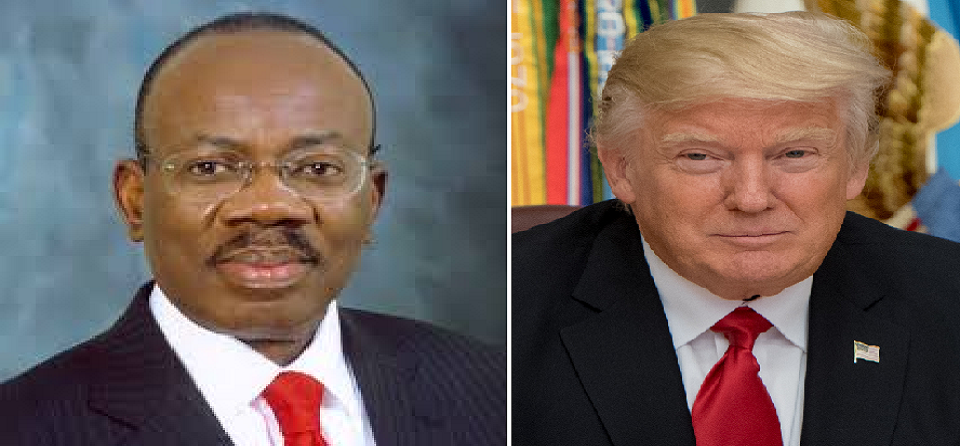
  • Jim noted that within about 20 years, Zenith Bank created a value that moved from $4 million to $4 billion. That is very impressive indeed. That means he even did better than Donald Trump, who has turned his inheritance of at least $20 million into $3.5 billion depending on which number you agree with. Donald had claimed he was worth $10 billion. But I will use Forbes’ numbers. It even took Trump longer, stretching more than 30 years.
  • Jim also noted the infrastructural challenges in the same interview. Of course things have gotten better with airports and roads since 20 years ago. But the reality is that he did not wait for the infrastructures to be perfect before he got into action. This is a lesson: we cannot have everything perfect before we can begin any entrepreneurial journey.
  • Jim saw his success as uniquely Nigerian. I do agree. Except in the technology space, it is very hard to get that kind of returns easily. Interesting, we still have such opportunities across our industrial sectors, from agriculture to energy.

The lesson here is simple: you do not have to wait for a perfect Nigeria before you can launch your business. If Jim had waited for the infrastructures to be built, there may not be Zenith Bank today. Yes, one day we will get a country with mature infrastructure. But do not think the level of competition will be the same. When we get there, big players like Warren Buffett may be interested in Nigeria. Some of those big players like to invest in places with clear and structured order. They are not in the nation today which means you can have an opportunity as a very small player. I do believe that starting a business does not require that all the environmental conditions must be perfect. In the midst of the chaos, someone with vision can find value. Jim Ovia demonstrated that and Zenith Bank is still growing.


The $1,000,000,000,000 Nigerian Reminder

0

This month, the Sovereign Wealth Fund of Norway passed $1 trillion. In other words, it exceeded $1,000,000,000,000. That is twelve zeros.

Norway’s giant pension fund is now worth over $1 trillion. Yes, 1 followed by 12 zeros.

The fund’s managers announced Tuesday that currency shifts had helped push its value above $1 trillion for the first time.

“The growth in the fund’s market value has been stunning,” fund chief Yngve Slyngstad said in a statement. “I don’t think anyone expected the fund to ever reach $1 trillion when the first transfer of oil revenue was made in May 1996.”

For comparison: $1 trillion is roughly the size of Mexico’s economy

Simply, it means that Norway has a pension fund that is at least twice the GDP of Nigeria. Nigeria exports crude oil, just as Norway. But Norway has a strategic vision on building and accumulating wealth, Nigeria is a zen-master in wasting value.

Men (and women) build nations. We have not been lucky to have great ones in Nigeria. Norway started this fund in May 1996, and within roughly 20 years, they have $1 trillion in value.

As you dig deeper into that fund, you will notice other great numbers. In the first half of 2017, the fund returned $68 billion (i.e. with b). In other words, Norway could be receiving about $120 billion this year as income, if the second half of the year tracks the first half. That is more than four times the federal budget of Nigeria.

Let me explain, if Nigeria had seeded such a fund when Norway did, our national budget can be 4x as it is today, and that budget funded entirely from the returns arising from the fund. The fund continues to grow, and the returns will continue to accumulate. The future of Norway is secured.

Nigeria does have a sovereign wealth fund, which was seeded in 2011. I know that government has contributed about $1.5 billion into it. But I have no idea the value of the returns, if any.

Nigeria’s sovereign wealth fund stood at $2 billion this month with the investment agency seeking further growth through agriculture and the addition of asset management, its chief executive officer said.

The government’s contribution stands at $1.5 billion, with the rest including funds owned by the institution and those managed for several government agencies, Uche Orji of the Nigeria Sovereign Investment Authority said in an interview on Wednesday in Kazakhstan’s capital, Astana.

We need to learn from Norway on how to build a future for generations. We seem to have wasted our moments as the dawn of the petroleum era arrives. We will continue to pump crude but the earnings may not even be enough to fund government. Reading the Premium Times exclusive on CBN tells me that we have already started that financial engineering even when the play has not started.

A massive and clearly illegal multi-source funding of the federal government by the Central Bank of Nigeria (CBN) could drag the Nigerian economy to its knees, experts familiar with domestic monetary conditions and current happenings at the CBN have warned. […]

Insiders say the apex bank is “creating money” to “finance a government that is broke and which does not have economic vision,” in what one of them called a “desperate move by the central bank governor, Godwin Emefiele, to remain in office”.

The game is on. Nigeria has a $1,000,000,000,000 reminder to learn from.

Where Are Your Nigerian Customers?

7

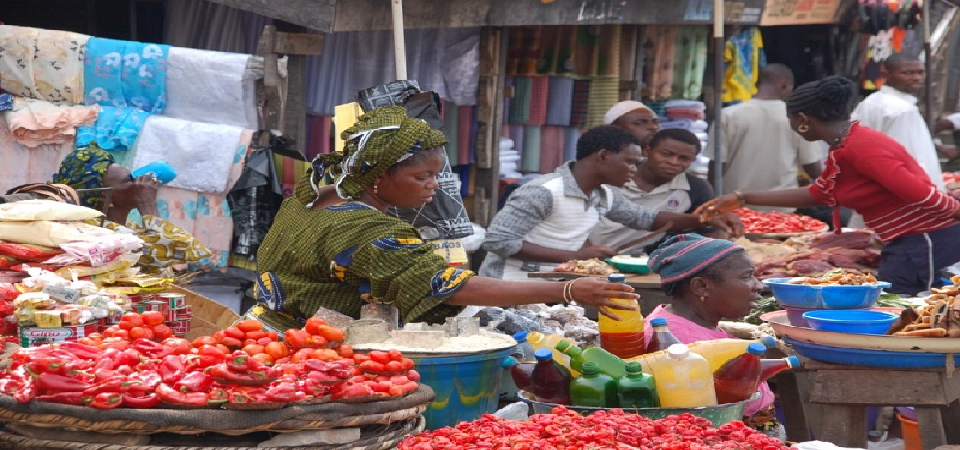
The last time I visited Lagos, I spent good time in Oshodi market. I also took a bus to Yaba. I wanted to see Lagos and understand the evolution. The fact is this: nothing has changed that much. You have a higher chance of making money in Nigeria offline than online. In other words, for everything you do, you must have an offline strategy because the customers are still offline. You are not running a business in Nigeria if all you have is internet-based strategy. The customers and most of the richer citizens are not here.

In this video, I explain why you need to think less of what you get from Silicon Valley. UNWIND and be real; Lagos is not New York. No Director General in any government establishment will take you serious if you do not come in person. And I promise you that no one will respond to any email to the info@ unless you have written to congratulate them for doing a great good. In that case, they will respond to thank you. But anything business must be in paper and blood. That is where we are today.

It is irrelevant if your app runs on low bandwidth, your website is pure HTML or you can make the video download faster on a slow network. You are just pursuing a very small percentage of your potential customers.

This is what I suggest: get offline, go and build a business. You can mix it, to serve today’s customers while you plan to serve the evolving digital ones. But being purely digital, for most businesses in Nigeria and expecting to see success, is an illusion.