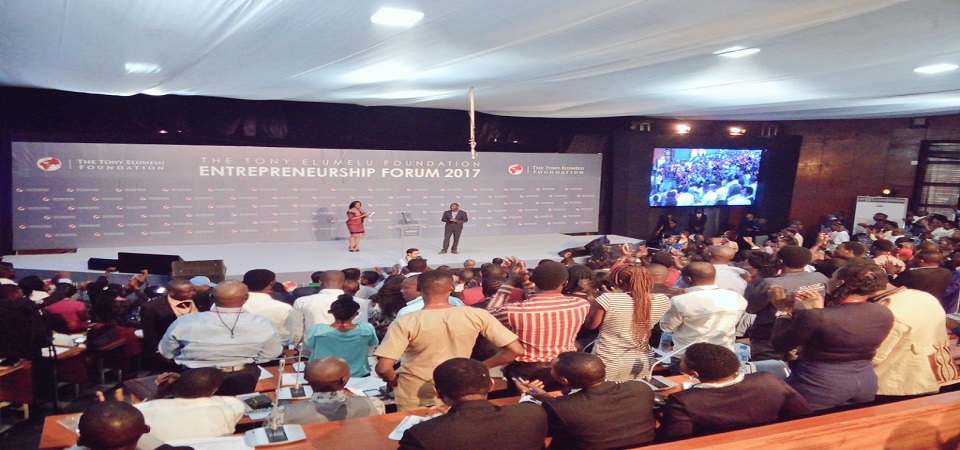
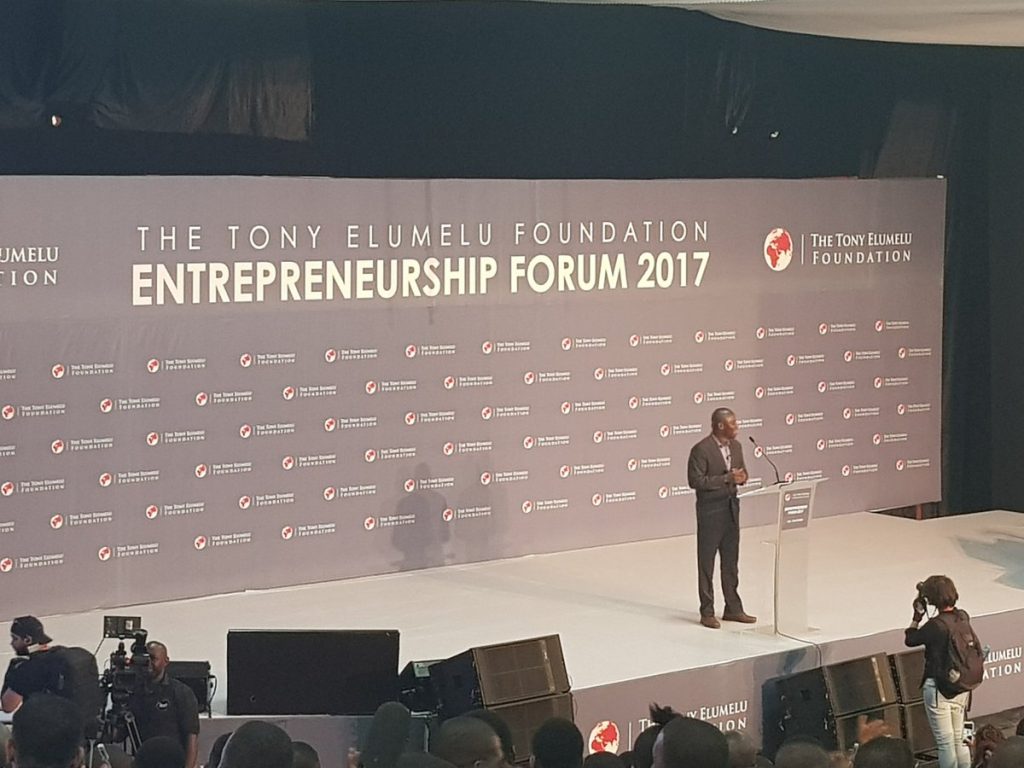
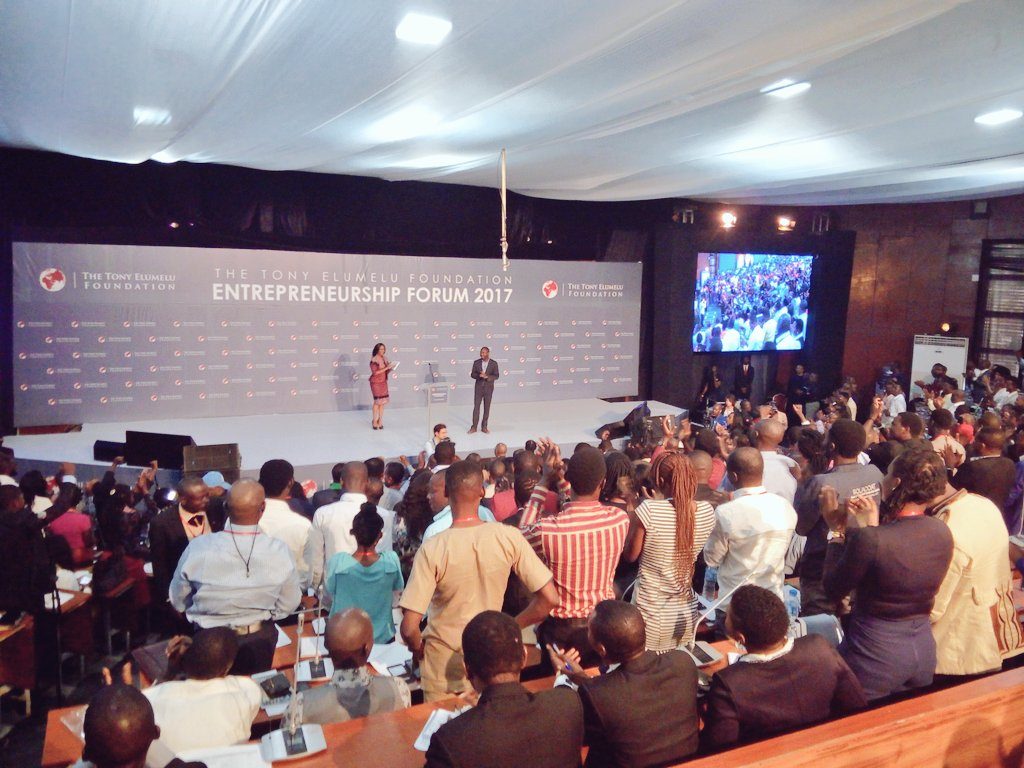
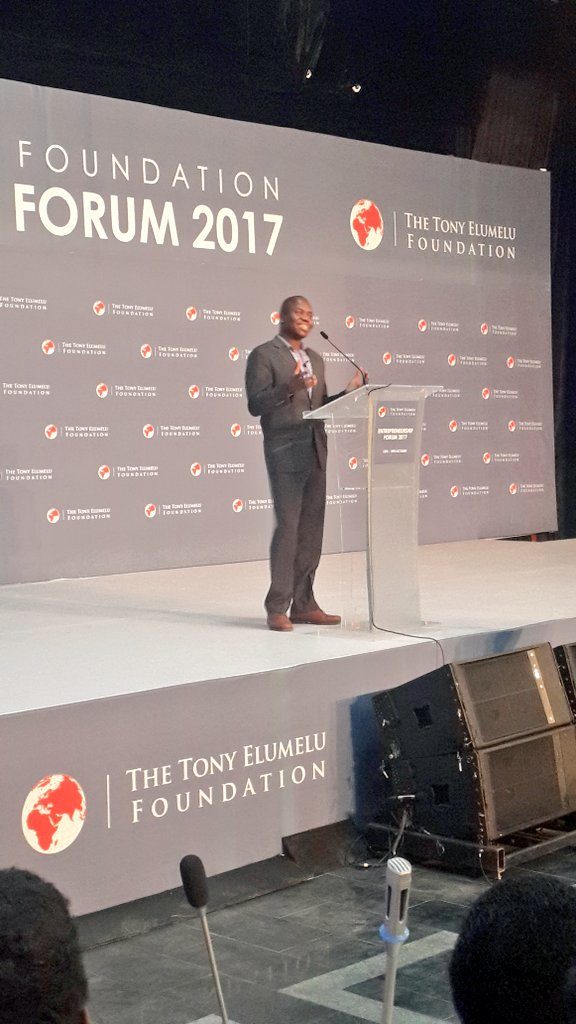
In Data Science Nigeria today, Emeka Okoye, one of the panelists clarified an earlier comment he made. He had noted in the past that Nigeria does not have any technology ecosystem. Part of his thesis was that Nigeria was simply building applications, instead of instituting technology pillars. He made a case that Nigeria has no culture of R&D and broad innovation enablers, and without those elements, it would be hard for us to develop an indigenous technology capability.
He had listed the following as part of the components:
Someone in the audience challenged Emeka, pointing out that Nigeria may not necessarily need to invest in R&D for us to advance in our technology sector. The person did note that Nigeria can just cut and paste, relying on the works of others, as we develop our technology capabilities. Emeka replied that building on top of other technology platforms will not necessarily help the nation. His point was largely that we cannot have the capacity to evolve our technology ecosystem if we do not invest in the fundamental elements that make technology happen.
In other words, any limitation imposed by Silicon Valley owing to how it sees global problems will bound our abilities to create solutions that address our needs. That we have Android to make apps does not mean that we are technically advancing the nexus of technology creation. In his opinion, we are only accelerating the vision of Google at consumerism phase.
Emeka, the founder of Cymantics, a startup working in the domains of semantic web, AI, and analytics, later explained to me today in a private conversation that he would expect Nigeria to go beyond computer science to work on the development of mathematics, physics and broad technical education. In his view, we cannot sacrifice all these fundamental elements of technology with fixation on coding. He wants our universities to lead the charge for that redesign into a future where Nigeria will have real technology ecosystems, over ones structured to accelerate mere technology consumerism.
In some ways, I do agree with Emeka. There are many technology elements besides our fixation with IT and computer science. Yet, I do not really think we need to build everything from scratch. That may not be necessary. I have made similar points in a different way in the past.
Ndubuisi Ekekwe, a professor of engineering at Babcock University in Nigeria, speaking at the Tech4Africa conference in South Africa, said the continent has the ability to climb the technology pyramid, and be the creators of technology, not just the consumers. “Africa has to have a strategy whereby we do not just consume technology. We have to figure out a way to create technology. We can get there by re-designing our educational model and then providing an intellectual property framework so that people can actually make investment risks in Africa, but knowing that their investment is well protected by the law,” said Ekekwe. Ekekwe discussed different technology sectors in Africa, and urged researchers to look beyond information and communications technology. Nanotechnology, he said, can create systems that are very energy efficient, as well as provide another engine for Africans to build upon, innovate, and invent a new future. But, he added, “Africa has a very marginal participation in Nano technology. It’s not just Nano technology – our agricultural technology is dead, our mining technology is dead and our geo-physical technology is dead.
Selected Comments from LinkedIn on this Feed
- Ndubuisi Ekekwe…this is surely a promising read and I will be deep diving into it over the weekend. But for your synopsis above, here’s my one thought. Both sides of the argument is right to some extent. Emeka is right for the long term, while the audience person is right for the short to medium term. In supporr of Emeka though. I posit that Nigeria missed opportunities in the technology development space in the short to medium term, therefore it must now look to the long term lest it misses another opportunity. It was countries like India and China that took advantage of short to medium term opportunities in technology. By demonstrating a can-do attitude and certain work ethic, they convinced the world that they could do tech much cheaper. Even though not better but at least those companies would have a chance to scale their core operations and meet market demands in the medium term, and clean up any tech messes much later. It worked for India and China. Nigeria couldn’t do it. Today, India and China has moved on to the long term with resources and capabilities they built exploiting opportunities in the short and medium term. It’s codenamed China 2.0 and India Rising.
- Well, this sounds more like an academic statement than what reality tells us in Nigeria’s case. The subjects mentioned are basic sciences, and we have been doing them for ages; unfortunately they cannot or have not been able to address our challenges. From Number Base System to Trigonometry and Geometry, and then further mathematics of Partial Fraction and co, up to engineering mathematics of Laplace, Fourier and Partial Differentiation. Then in Physics, from Weighing Systems and SI Units to Energy and down to Wave Particles and Duality of Matter; we have been doing them. What are we going to do differently in these subjects now? Yes, we do not have a clearly defined tech ecosystem, but we have leveraged on existing technologies to build applications that have helped to reduce frictions and provide solutions in several fields. Silicon Valley is what it is, and you cannot have a replica of it elsewhere. You can only look at where there are gaps and try to see how you adapt the existing technologies to fill those gaps. Expecting every country to develop a tech ecosystem from scratch may never work, because you don’t earn much credit for reinventing the wheels. Knowledge rules, use what is available to deconstruct and reconstruct.
- Firstly I doubt if Nigeria will catch up with others if we focus our efforts on going back to build technology pillars. We can have a strategy of “adopt, extend and expand” of the incumbent and emerging technology substrates. The extend part will need a good grasp of the fundamentals which universities and research can help with. And we will do that in a way that speaks to our needs! By expand, I mean there must be a clear path to industrialise and commoditise. China produces a lot of tech for its market today; Apple and Facebook aren’t No 1 there and Google is not even allowed there. Where and how did they start? My second point touches on what one of the earlier commenters wrote. Mathematics? Physics?… I’m not an educator but the fundamental principles in these areas don’t change that often. I love Calculus dearly and I appreciate how Statistics is an enabler of machine learning today. Maybe I can help Emeka make the point here: we need to uplift “Applied subjects and courses”. It’s a shift, in my view, from pure Tech and Engineering. Quickly transition students from the basic and fundamentals principles to real life applications. This puts them in a good place to “adopt, extend and expand”
- …most of us are aligned that there is not a fundamental organic technology ecosystem in Nigeria and we’re at the ‘fringes’. The ‘hype’ with computer science/application development is led by developed economies and we’ve caught the bug. But we are not in control so before it plateaus, we can take a step back to analyse how our education system translates applied sciences into industry, that ‘gap’ is wide as our academic curriculum/teaching methods have not evolved. Hence, the case to build new R&D led institutions (#AFRIT) or at the least a new curriculum that serves to deliver the fundamental organic technology framework to enable localisation of applications/new technologies etc.
- I love the conversation here. Both points are valid. I would have to agree with Justin though. Without growing our technology ecosystem, we will have stunted growth in the existing applications we are leveraging. There are good developers and coding is hip these days, but without the technological base (Applied Sciences, Math), we will plateau very soon and the innovation that is currently gathering momentum in the Nigerian Techspace will become stunted. It is necessary we build up on them because they are truly the only way we can predict our growth. It is the reason why modern day innovators like Elon Musk, Bill Gates, and Mark Zuckerberg can delve into different industry spheres. It’s because they understand the foundations of applied sciences. It’s more of a long-term vs Short term result.
(Photo credit: techpoint. Emeka,left, with a techpoint staff)
Like this:
Like Loading...