DD
MM
YYYY

PAGES

DD
MM
YYYY

spot_img

PAGES

Home Blog Page 7292

Using the Car Salesman Pricing Strategy in Your Startup

0

Getting customers to open their wallets and pay for products requires a lot of work. If you think otherwise, you will be making a mistake. In short, a sign that you do not really care means that you will lose the customers pretty fast. Consumers are smart. Daily, they have to deal with opportunity costs in a world where they have limited resources to meet their largely unlimited needs.

There are many ways of getting customers to open their wallets and buy from you. Over the years, I have noticed one technique that works. I call it the Car Salesman Pricing Strategy. Most car salespeople in U.S. do not give price as a whole amount when you visit dealers for car shopping. Rather, they give you the price based on your estimated monthly payment installment amount, for cars that will be financed. They do not want you to be thinking of committing to a huge amount with all the associated burdens of paying back. The monthly payment is very manageable, in your brain.

Let us say you want to buy a car that costs $24,000 to be financed at 0% for 6 years. A good salesman will give you the price, usually in a written pad, as $333 per month, instead of $24,000. That $333 is more manageable than $24,000 even though the price is largely the same at 0% financing. That you can get 0% means that you have a good credit and the system is rewarding you for that. The product actually costs lesser when you factor inflation over time. But the reality is that you have a product of $333 and not necessarily $24,000 as you will be dealing with paying only $333 every month. You think of your paycheck  to see if it can accommodate additional $333 monthly.

This Car Salesman Pricing Strategy is not new. It has been part of the retail industry especially where the companies offer financing. You want to offer the pricing in ways that customers get to sign the papers as quickly as possible. Apple is deploying it as it works to obfuscate the very fact that its recent iPhone smartphones are expensive in excess of $1,000. Simply, they offer payment plans, focusing on the monthly servicing over the complete number. Samsung does the same.

The phone makers are going to great lengths to elide this psychological price barrier by reframing just how much their devices will cost you. Samsung lists its cheapest Note 8 price at $929.99, but right below it on the company website is the installment price, $38.75 a month for two years. (That zero percent interest rate represents a significant subsidy.) Apple charges $969 for the most expensive iPhone currently on store shelves, the 7 Plus with 256 gigabytes of storage, and over the past year has been heavily promoting its $40-a-month plan. Samsung is also emphasizing ways to defray the cost of a new model. Customers trading in their old phones can now get as much as $300 toward a Note 8 or Galaxy S8, up from $200 before the Note 8 was announced….

A $1,000 iPhone would likely cost customers less than $50 a month over two years. If you’ve absolutely got to have the latest hardware, that’s a lot easier than telling your friends you paid $1,000 for a phone

Apple is dealing with some issues. It is upgrading its phone in the age where innovation means more features and higher performance. According to Quartz, the “ $1,000 special anniversary smartphone, called the iPhone Edition or iPhone X, featuring an edge-to-edge screen, wireless charging, no home button, and a powerful set of dual cameras” will be unveiled today and Apple plans to make sure people do not see the real price they will be paying. They will use the monthly financing strategy.

Besides the monthly payment plan strategy, there are other ways companies use to create this psychological illusion in the minds of customers.

  • Sign up customers to supporting subscriptions or products: Common examples include gym or club memberships for buying some items in your business. Someone buys a car and you pay for the gym membership. The customer will remember that side attraction as though it matters that much.
  • Free optional accessories with the main products: Though the product may not be that valuable, it creates an illusion that you got a deal. Time Magazine has one terrible watch that it gives to new subscribers of its magazine as a time. That cheap watch seems like a big deal but it was nothing of value. But signing up and getting a watch could make the brain think like you have got a great deal
  • Offer “buy one get one” free to customers: You do this when the price of one is high enough to cover the two items. That means, customers are paying for the two items, even though you are making it seem like they are getting a good deal by paying for one item and you giving away another. Fast food companies do this a lot.
  • Reward system: You can give restaurant coupons to customers that sign up. That could be the edge over competitors. Possibly, the idea of going to that nice restaurant can move the customer to buy from you.
  • Through other company products: The cruise industry is good with this technique. They make you pay for cruise but right inside the ship, you could be paying $9 for a bottle of water. By the time you are done after 2 weeks, they have made so much from you to cover the subsidized cruise ticket.

All Together

Irrespective of what you sell, you need to have a strategy to make customers think they are getting value when they buy your products. Customers like to win and you must deliver that construct to them, always. The Car Salesman Pricing Strategy works anywhere and in any industry, and you need to deliver one in your company.
The Boundless Citizen Energy

0

Since democratic system of governance was invented many centuries ago, the present transformation or redesigning phase it is experiencing across many nations is noticeable. From America to Africa, technology is restructuring how citizens relate with their leaders. With readily available information, the citizens have become more informed and active in the affairs of their nations.

Leadership has morphed into a very simple two-way feedback system that is cheap, efficient and timely. And that has come through the powers of social media networks which enable interactions between any interested citizen and the leaders. From American President to his Nigerian counterpart, Facebook provides a platform for dialogue. Citizens can go online and post simple questions and expect the leaders to take note.

This evolving trend is possible because communication systems have become cheaper and accessible. In the old network TV model, only the very influential people could get on the TV to make suggestions on how the country could be managed. But today, what is important is an idea: a great one can be read by the world in minutes.

It is not just the political leadership that is using this citizen energy. Businesses are increasingly sourcing and sharing ideas from the consumers of their products. They get insights that help them shape future products. And the consumers also pass across their feelings when they do not get the products rights. In this piece, I will focus on the political leadership.

Never before is the citizen exerting more influence than what we have today. And the future looks more exciting because Moore’s Law will guarantee us more access to networks of more people as technology prices continue to go down even with more efficiency and performance.

In the midst of this development is a challenge for government to be ethical. Every citizen is a pseudo journalist and control over the media empires will not stop any bad act from being transmitted across the globe.

It used to be, take care of the big networks and any scandal will never be made open. It does not work anymore because there are many avenues to break news without the media houses. And those can move faster with devastating impact that even retraction makes no sense since the digital footprints are always there.

This implies that governments must be mindful that in the era of modern democracy, it has become more open. And this openness brings a challenge to act ethical at all times. There is no more a season of deals because anything can appear on the web. Technically, there is no secret.

The Tripod Relationship

Governments must understand that the tripod relationships among them, citizens and institutions have changed drastically over the years. Globalization makes it possible to have access to information for benchmarking what other constituencies are doing. And immediately, firms and people change their expectations from their governments.

Over the course of many centuries, governments have moved from central, regional, then central, and now to citizen government, especially in democracies. The self-aware citizens do not accept polices hook, line and sinker. Even in feudal systems, the citizens are asking questions and that old dominance has since been challenged on accountability.

In America, the citizens could organize under a Tea Party umbrella; in Nigeria, they have MuMuDonDo. Despite their different names and modus operandi, these organizations and many that can be found in any democracy are pushing leaders to be more open, accountable and responsive. And they honestly think that directing the future of the nation must not be left alone to the politicians. They want to influence dialogue and the nation’s trajectory. They ask questions on areas of national concerns and they want change.

Forty years ago, they might appear to be ill-informed. Not anymore! They have access to information that used to be seen only by government officials as technology has made dissemination easier. From Think Tanks to universities to non-governmental organizations, anyone could read their analyses online, free. Even the government’s own writings are easily available and suddenly that secrecy that leaders enjoyed over things that shaped their policies is eroding. People now challenge them with data and can authoritatively make their points for new directions.

Leadership in this era provides an opportunity that a star could be born overnight as performance news pass across boundaries. It offers an opportunity to be ethical and honest in dealing with the citizens. One understands the difficulty leaders face in trying to engineer the nation to long-term prosperity when most of the citizens are interested in the short-terms. How you communicate the need for minor pains today for major joy tomorrow will depend on how trustworthy you are. Citizens will believe an honest leader and can give concessions for the good of the nation.

As the opportunity is also the threat. It is easier to see politicians resign quicker and faster after scandals are broken. The bad news go through the same pathway the good ones pass.

The Expressive leadership

In open democracy, what is leadership? Can we argue that China which shortened a century of western innovation into a quarter century under no internationally accepted democratic norm is not displaying leadership we could envy? No open democracy, but the world, especially Africa is looking towards China. They envy that state capitalism where the leaders build world class public institutions that Wall Street gladly accepts even when they criticize governments going into business in America and Africa. From banking to energy, we have pseudo government-run empires in China that best investors welcome through successful IPOs.

The reality is that under a citizen government, economic vibrancy is not the only gain of governance. People want freedom, by nature. Nonetheless, leadership and good one minus other externalities is not only found in democracy. However, to the people, denying them the right to attain that position of leadership, if they choose, shows the leader is not a good one. It is about having rights to exercise wishes under the law. And every person irrespective of birth can fulfill a dream. Under this hypothesis, many African leaders that oppose elections are designated as bad leaders by the West irrespective of their efforts in other areas. By acculturation, the West thinks that a political leadership should be expressive and open.

Leadership is the biggest challenge in Africa today. The capacity to redesign the economy with visions that connect young and old, with lofty imaginations of unbounded future, has to be stimulated by a man or a woman. Some seemed to be emerging like the President Rwanda Paul Kagame, but the tonic allure of power has made him an apostle of one nation, under one man, instead of a legacy to have built an institution men and women will commit for generations.

Without institutions, Africa becomes exposed to the  turbulent and irrational open democratic process where the same people that complained of lack of development will accept a penny to vote a man that will steal dimes tomorrow. In Nigeria, it is a very strategic system to win elections and has been christened “stomach infrastructure”, and it works. Once the citizens accept the ” stomach infrastructure” , the other types of infrastructures like roads, water, and electricity are corruptly extinguished like wild fire across state houses.

Yet, there is hope because of the citizen energy. I dream of a world where governance is open and transparent with a vista not only to economic greatness, but individual rights. It must be one where citizen energy is exerted in the affairs of the nation and leaders stewards not only to the citizens, but the nation. And those leaders taking the opportunities that technology brings, through openness and continuous improvement, to restore the dignity of man.

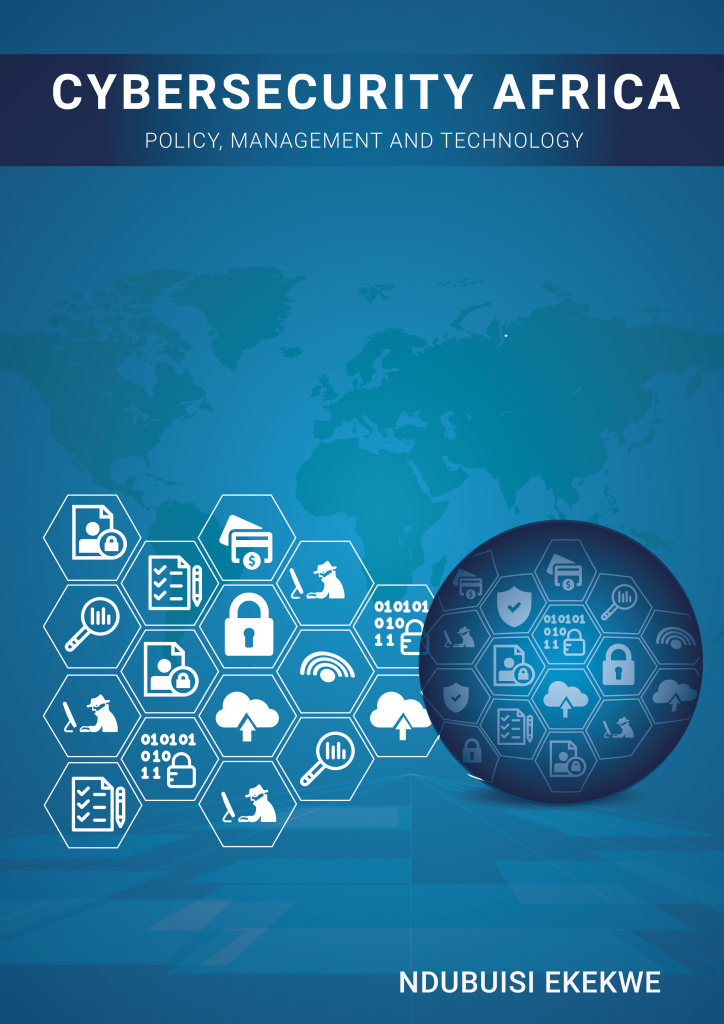
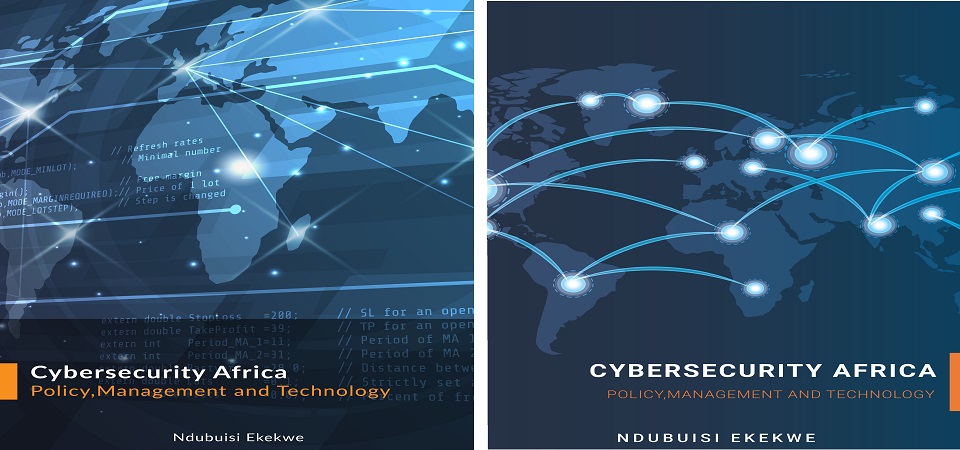
My New Book “Cybersecurity Africa: Policy, Management and Technology” Due Next Month

4

First, I want to thank all those that have subscribed to my new ebook – Africa’s Sankofa Innovation- which was launched six days ago. We have a community now. THANK YOU ALL.

Today, I have decided to also launch another book – Cybersecurity Africa: Policy, Management and Technology – in this same Tekedia portal, next month. I am an entrepreneur and I am never afraid to try new things. Deciding to publish my own book, by myself, and in my own portal is a testament of my confidence in our Tekedia community. I treasure the moments you spend here. Thanks Sir/Madam. We love you, and please keep coming back.

Cybersecurity Africa will be a living document which can be updated many times in a year to keep it up to date and relevant. It will be the top destination for anything Cybersecurity in Africa. I had planned to publish it through a traditional publisher, but right now, Tekedia will host it. It is a fast sector, and we do not need a version number; the only accepted version should be current. Internet makes that possible.

If you have subscribed to Africa’s Sankofa Innovation, you will access Cybersecurity Africa at no extra cost. The same applies to subsequent works we are working on which will include Opportunity Manuals in specific industries to help people unlock value in Africa. Once you are a Tekedia subscriber (subscribe here), all old and new materials will be available at no extra cost.  

The book is going through technical editing as it has some really technical elements, which I want to be 100% sure we got them right. Also, a professor of Law is checking the policy side, and a friend in a Lagos bank who manages a bank’s cybersecurity business is looking at the management section . They will be ready next month and we will launch here.

I have a deep experience in the cybersecurity area. Having earned seven degrees, I understand many things in this world. I  remain very humble. I am the founder of Milonics Analytics, an IBM Partnerworld on cybersecurity and big data analytics. I am the founder of U.S. based First Atlantic Cybersecurity Institute which Igbinedion University awards its nanodegree. As Global Lead ASIC Engineer with Analog Devices Corp, I worked on the accelerometer used in an iPhone generation and was part of the team to ensure it was hardened from attack. From National Identify Management Commission, Nigeria (they made it public so I can share name) to many government and private institutions, my firm remains a consultant helping on cybersecurity, from policy to management to technology. I will be a trusted guide to you.

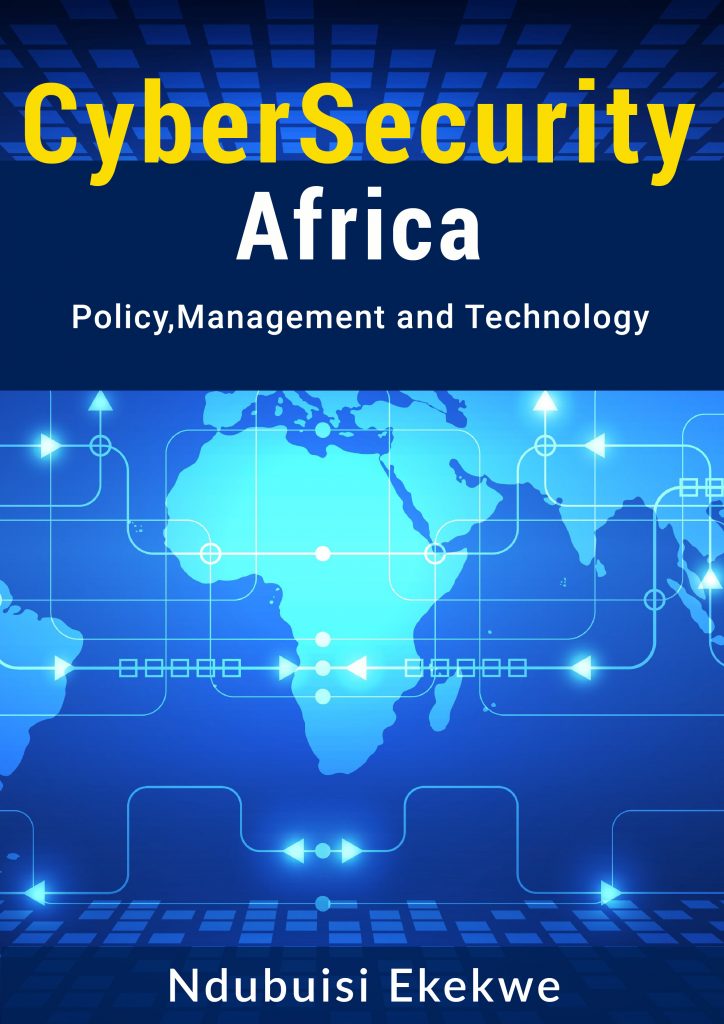
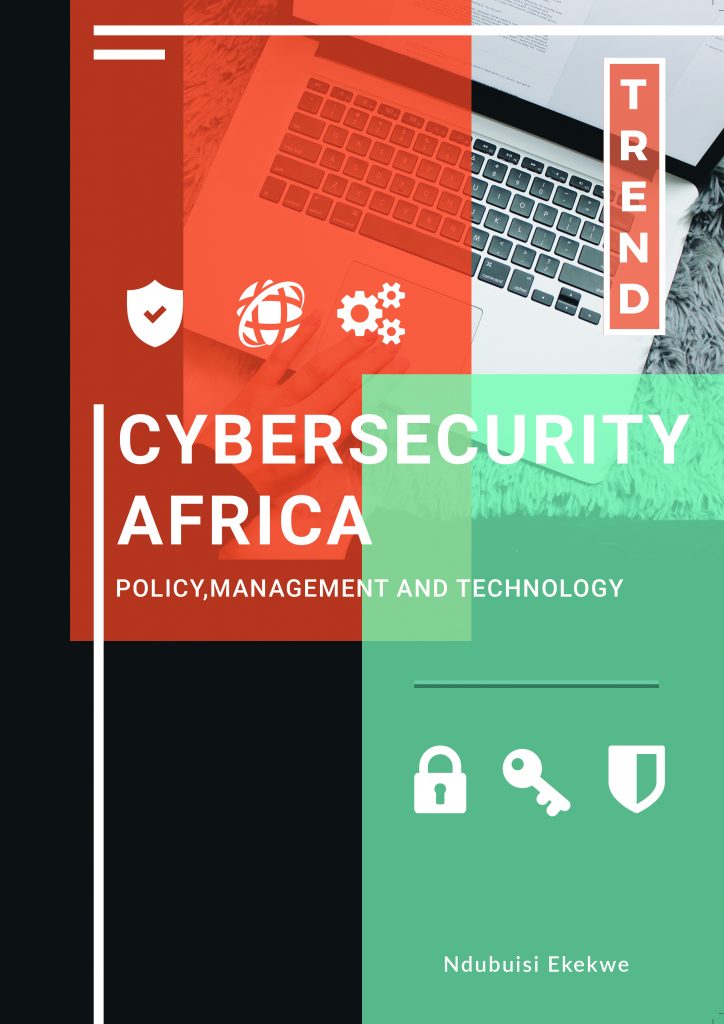
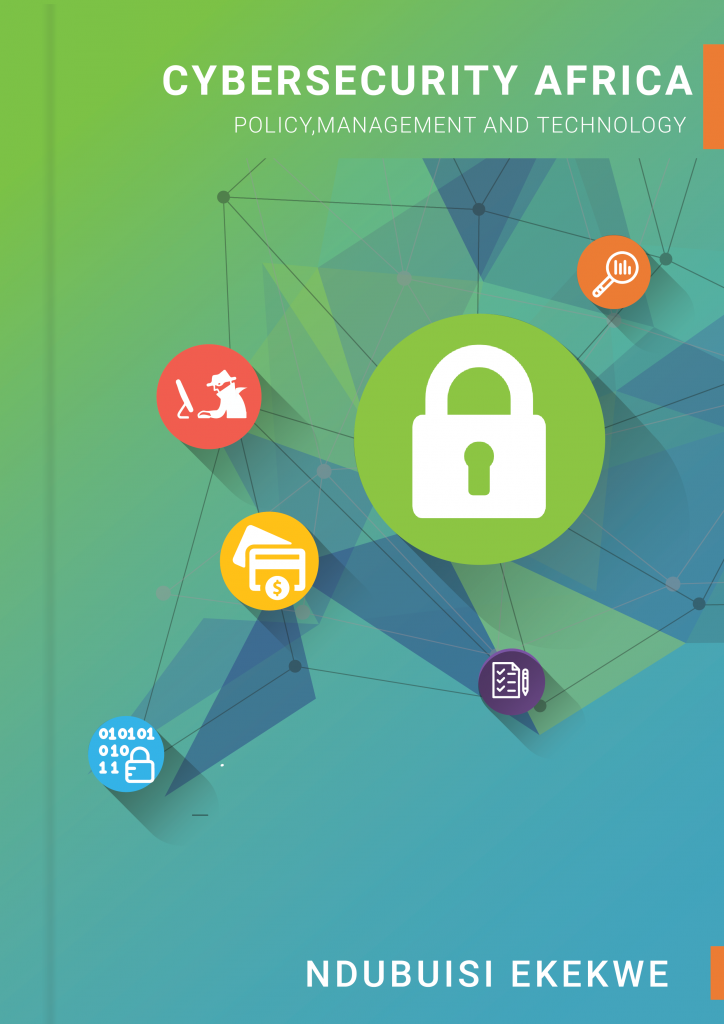
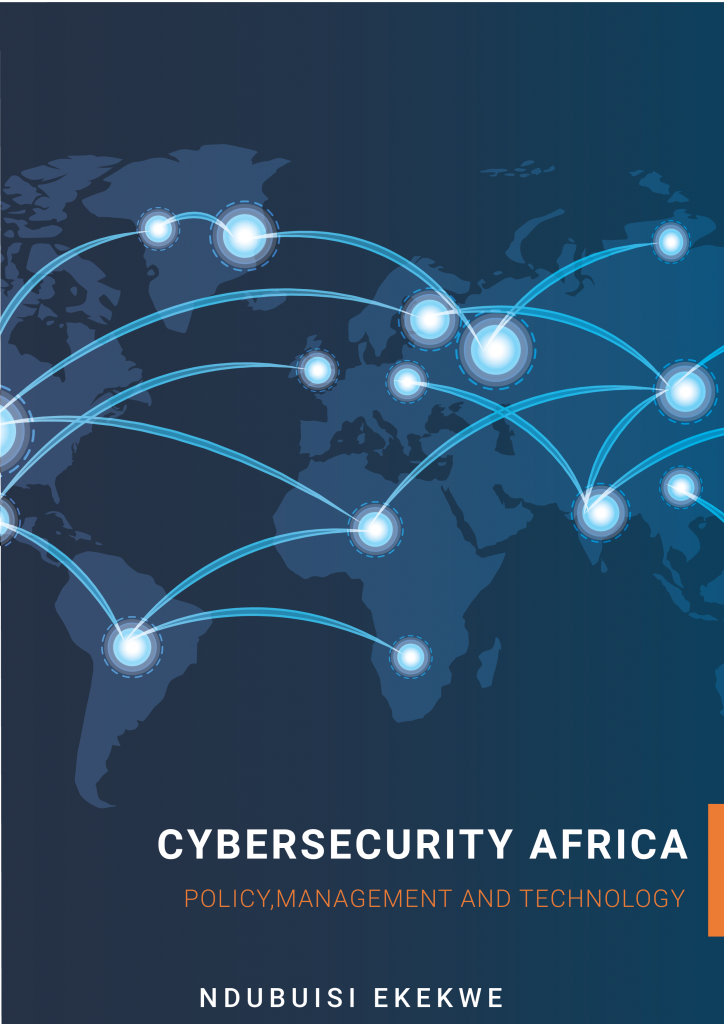
Here are some “cover designs” below. One extra cover, my preferred, will be added tomorrow. Can you help us select the best design or suggest an improvement for the book cover?


Nigeria’s Foreign Exchange Earnings Will Be 70% Agriculture by 2050

0

China is planning to fix a deadline to end the production and sales of fossil-fuel-powered vehicles. That is a big deal because over the last few years, China has been seen as a nexus of heavy global pollution. But now, it is working hard to clean the air and drive a post-petroleum era.

China will set a deadline for automakers to end sales of fossil-fuel-powered vehicles, becoming the biggest market to do so in a move that will accelerate the push into the electric car market led by companies including BYD Co. and BAIC Motor Corp.

Xin Guobin, the vice minister of industry and information technology, said the government is working with other regulators on a timetable to end production and sales. The move will have a profound impact on the environment and growth of China’s auto industry, Xin said at an auto forum in Tianjin on Saturday.

Let us assume that China follows UK and France and puts the deadline in 2040, it means by 2050, more than 50% of global cars could be totally non fossil-fuel powered. (Both UK and France had already set a deadline of 2040 to phase out fossil-fuel-powered cars. I also expect other countries to follow through to make that 50%) Even without America acting, the trajectory is obvious that electric vehicles will be the driving element of automobile making of the future.

Volkswagen AG Chief Executive Officer Matthias Mueller announced sweeping plans to build electric versions of all 300 models in the group’s lineup as the world’s largest automaker accelerates the shift away from combustion engines and tries to draw a line under the emissions-cheating scandal.

The African Development Bank had noted that African agriculture will grow to $1 trillion by 2030. Nigeria will be a big part of that number. The present government is putting emphasis on agriculture and if subsequent ones continue to sustain the plans, we could have a $450 billion business there by 2030. Nigeria and South Africa are the two major agro-producers at the moment in Africa, but Nigeria has more room to grow than South Africa.

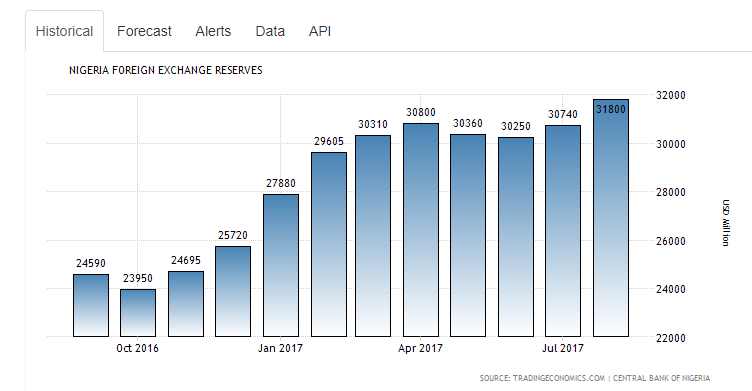
Our petroleum sector will still be relevant with the petrochemicals and other allied sectors required, but projects like refinery may see demand shocks. Simply, Nigeria will see massive economic dislocation over time, as oil makes way for agriculture, and the latter becomes the main source of our foreign exchange earnings. I project we can see up to 70% of that by 2050. Even if we still export crude oil, the competition from electric technologies will reduce the price per barrel. So, it will not attract as much value it has historically attracted in the international market.

While the agriculture sector sustains over 80 percent of rural households, the Nigerian economy remains heavily dependent on its oil and gas sector which accounts for 12 percent of GDP but, as noted above, over 90 percent of export earnings and over 70 percent of government revenues

Agriculture will also stabilize our foreign reserves with minimal cyclical boom and bust associated with petroleum. Nigeria has the land and the population. What we need is to modernize the agricultural process so that productivity can improve.

Today, oil dominates our foreign reserves and government plans to get the non-oil sector to be more than 50% by 2020. A key part of that will be agriculture. The roles of oil and agriculture will reverse on their contributions to Nigeria’s foreign exchange earnings,  in 30-40 years. Today, crude oil accounts for over 90% of Nigeria’s foreign exchange earnings, about 35% of gross domestic products (GDP), and  75% of government revenue. That is not good.

The Federal Government on Tuesday, unveiled plans to derive over 50 per cent of its foreign exchange earnings from agro-industrial exports by 2020. The plans are contained in a draft trade policy which was considered and reviewed during a meeting of the Enlarged National Focal Point (ENPF) on trade matters in Abuja

It will be a huge redesign in the economy as we will see agriculture, move from less than 10% of the foreign exchange earnings to more than 70% within 35 years. I do expect manufacturing, especially lower level manufacturing, to contribute even more than raw-crude export.

Electric vehicles are indeed totally awesome when you note that Tesla can automatically upgrade the batteries of vehicles fleeing the hurricane in Florida. A software update gave Irma refugees a few dozen more miles per charge, according to Quartz. Electric automobile has a great promise, and that will be a challenge to fossil-fuel addicts who believe that the future will not come.

Making Artificial Intelligence Work For You

0

Did you know that 38% of companies around the world are already using artificial intelligence (A.I.) to improve the performance of their business? In fact, if you’re using Facebook “Insights” to monitor your social media page, or Google Analytics to make decisions about your website, then you are already using A.I., too. Many of the world’s leading companies, including Mastercard, Deloitte and IBM are using A.I. more and more as “smart” software not only reduces the time spent of boring, repetitive tasks, but it can help you to understand your business and your clients better.

So, what is A.I.? It’s not actually software which thinks for itself. Rather, it is a program designed to do automate a recurring, sometimes very complex, job, so that you can free up your employees to focus on other tasks.

For example, many businesses today serve thousands, if not millions, of customers. Storing all this data requires money, but what do we do with it then? It can be overwhelming to try and organize all this data, let alone try to understand it. A.I. software can use a predefined set of parameters to search, organise and present data in easy-to-read graphs in minutes, helping you spot key trends with your customers, which you can use to make beneficial business decisions.

Similarly, smart software can also be used to monitor and maintain machinery and physical hardware. Many servers have temperature sensors to monitor the processor’s temperature, and manufacturing machinery requires regular maintenance. If the hardware fails, production stops, and the business loses money. A.I. software, such as DataRPM’s Cognitive Predictive Maintenance Platform, can monitor hardware to ensure it is working at maximum capacity. It can even schedule and remind workers when maintenance is due, identify potentially faulty parts, and make real-time decisions in the event of emergencies.

One of the biggest selling points of A.I., we think, is that it allows you to move your employees off long, tedious tasks, to focus on building the business. Companies like ING Bank and Vodafone now use chatbots to help their clients 24/7. Instead of speaking to a person, the A.I. analyses the customer’s questions, picks out the key words, and searches a database of responses to provide the most helpful answer. Sage have even done this with the world’s first accounting chatbot, Pegg, combining the benefits of chatbots with data mining to help users predict and control their finances. Meanwhile, other A.I. software can even help you to hire new, highly skilled employees by writing and posting job listings for you based on your requirements, or searching social media sites for people with the skills your business needs.

So, whether it is using Facebook’s “Insights” to understand how your customers are engaging with your products and services, from their age and location to the posts they “like” the most, to mining data to find and predict industry trends, A.I. means making software work for you and your business!