DD
MM
YYYY

PAGES

DD
MM
YYYY

spot_img

PAGES

Home Blog Page 7293

The Need for Intelligent Mobility in Africa

0

Despite the continent’s transport infrastructure lagging behind global standards for decades, Africa is bracing itself for a transport revolution as more countries embrace the onset of new technology.

Intelligent mobility involves the electrification, automation and digitalization of existing transport infrastructure, and gives every citizen access to safe, reliable and efficient modes of transport.

The need and demand for intelligent mobility in Africa has never been greater – World Economic Forum competitiveness data reveals that only three African countries feature in the top 50 globally for quality of roads, quality of rail and quality of ports infrastructure respectively.

World Bank data also indicates that the Sub-Saharan African railway network has declined to 59,634km today, down from 65,661km in 1980 with only about 70% of the railway network in operational state.

At face value, it seems as though the continent faces insurmountable transport challenges. But the reality is that we are already setting the wheels in motion to create interconnected, more modern and efficient African transport networks that keep economies on the move, rather than hindering them. This development will not happen overnight, and will be realised one step at a time.

Intelligent traffic systems 

Many African cities have traffic infrastructure plagued by unreliable power supply. To the frustration of motorists, timing of traffic lights stays the same regardless of actual conditions, and many are faulty and take weeks to repair. This means that the road infrastructure can’t handle peak traffic, not because of technology but because of the lack of proper technological investment.

The challenge is partly that these traffic systems have grown in an unco-ordinated way, with lots of different suppliers and systems cobbled together. Speeding and traffic light violations are a problem, and there is limited technology deployed to support effective traffic law enforcement.

Concern of this situation has been expressed by officials and road users alike, who say congestion and accidents have reached alarming levels. Inefficiencies in these transport systems affect a country’s ability to attract and maintain investment.

So where do we begin?

The adoption of intelligent traffic systems (ITS) will keep Africa’s busiest cities as fast-moving investment destinations. ITS includes deployment of smart sensor systems with intelligent algorithms to automatically adapt to improve traffic flow.

Two-way communication can be enabled by running fibre between traffic junctions and a central control centre to gather information from intelligent networked systems, sensors and cameras at every junction. This allows traffic lights to be adjusted according to demand.

Nigeria’s Edo State government recently announced its intention to upgrade to a technologically-advanced ITS system that provides real-time traffic information in Benin City. As part of the integrated solution, motorists and commuters will be informed about travel times, weather conditions and traffic jams on radio or online.

With all traffic management systems automated and digitalized, technology like automatic number plate recognition (ANPR) cameras can be utilised to efficiently enforce traffic rules.

Average speed over distance (ASOD) technology captures the time when a specific vehicle enters and exits the ASOD zone. The journey time is compared against the distance travelled and authorities are automatically notified if the prescribed speed limit was exceeded.

This improves the safety of drivers, passengers and pedestrians. It also minimises the risk of corruption, while promoting best practice among traffic enforcement officers who are exposed to a new skillset when trained in operating these new systems.

Automated rail infrastructure 

Another effective means of reducing congestion on overburdened and under maintained roads in Africa is through greater investment in upgrading passenger rail networks.

Some of the world’s cities with the most advanced transport networks feature fast, efficient, safe and clean rail mobility networks powered by Siemens, and African cities can benefit from expertise in centralised traffic management and automation systems, including train control systems with minimum line side equipment linked to modern control centres.

A clear case in point is the Gauteng Nerve Centre (GNC) in South Africa. The 3400 m2 state-of-the art control centre for centralised rail traffic management in South Africa’s economic hub of Gauteng accommodates 35 train control operators in one place, and constantly monitors Gauteng’s rail traffic where over 600 trains carry more than 500,000 commuters on a daily basis.

The GNC boasts world-class automation capabilities and can immediately respond to any operating failures, accidents and other incidents, thereby enabling greater efficiencies in rail operations and train safety, while offering a more reliable service through higher infrastructure utilisation.

Siemens’ proven railway capabilities are set be bolstered further, following the mobility business’ recent announcement of its intention to merge with French railway engineering specialist Alstom.

With a strong presence in, and dedicated commitment to Africa, this anticipated partnership will create an African champion in mobility.

Intelligent, integrated mobility ensures environmental sustainability 

Transportation is the world’s second-biggest producer of greenhouse gases. In 2015 motor vehicles, trains, ships, and planes emitted 7.5 billion tonnes of CO2 into the atmosphere, accounting for almost a quarter of all CO2 emissions worldwide.

Today transportation-related emissions are already about 60 percent higher than in 1990. One of the reasons for this is the dramatic increase in the number of vehicles in developing countries and emerging markets – of which Africa is home to many.

According to forecasts, transportation-related CO2 emissions will increase by another 67 percent between now and 2050. Clearly, in view of this, the global community must take decisive action to bring about a worldwide transition to sustainable transportation systems.

A well-integrated intelligent multi-modal transport network promotes a culture of eco-friendly travel and healthier living, as it reduces traffic congestion and COemissions by transporting more people more safely and more comfortably, using newer and cleaner technology without relying on fossil fuels.

The time for intelligent mobility is now 

If Africa truly wants to unleash its full potential, then sufficient funds must be responsibly invested in upgrading existing transport and logistics infrastructure like road, rail and ports, in addition to new concepts that include electric bus rapid transport and ferries, to name a few.

Intelligent and integrated traffic systems are part of the future of transport in the world’s advanced cities. If Africa seizes the opportunity, many of its cities will be on that list, and the continent’s citizens will reap the rewards. That is the way forward.

by Kevin Pillay – Vice President for Mobility at Siemens Africa
Google’s Environmental Report And Nigeria’s Shrinking Banking Employment

0

Google has a very nice Environmental Report. If you read it, you will like many things. They are using AI, solar and indeed technologies to reduce their carbon footprints. The search giant has signed agreements that total excess of 2.6 GW of renewable energy. That is impressive.

We tackle these projects because they reduce our company’s environmental impact, and also because they improve our bottom line. But mostly we do this stuff because it needs to be done and it’s the right thing to do. Google has been carbon neutral since 2007, and in 2017 we’ll reach 100% renewable energy for our operations, including our data centers and offices. But our ambitions don’t end at our own door. Climate change is real. We’re a global company, and our goal is to give everyone everywhere the tools and opportunities they need to play their own part in protecting the planet

But beyond all these exciting numbers, you will not see one indicator I really care about: how communities and jobs are performing owing to the disruption from Google. There is nothing wrong with disruption. That is part of commerce. My point is that we need to know besides the environmental sustainability, community sustainability. That one is from me. And there is nothing that says that I cannot bring that conscience in the technology nexus.

Amazon may have its own environmental report with all the usual efforts to reduce carbon footprints. But ask any Mayor in some American suburbs, they will explain how Amazon has ravaged their malls and shopping centers through the disruptive impacts of its ecommerce operations. How do you capture that impact? Possibly, when those malls fail, they are returned back to weeds and then they become environmentally sustaining! Of course, that is not the vision of Amazon. But it is something we need to care about in these reports. How are we fairing in this age of disruptive innovation? Can we capture them as they impact lives and communities in some of these reports? I know that we care about carbon footprints. I also think we need to see the positive and negative impacts on our communities documented.

Google PPA Locations and capacity (source: Google)

It is time we examine how technology disruption affects jobs, and companies should be required to model those in their reports. That does not mean that the companies are going to be victimized, but it needs to be clear if there are efforts to manage such changes. As we welcome AI and blockchain, we can see massive dislocations in the labor force. If companies do not track such impacts, but rather focusing on mundane things like renewable energy installed capacity, and total gallons of water reused, we will not get the full picture. For example, the Google report should include besides designing efficient data centers, advancing renewable energy, creating sustainable workplaces, and empowering users with technology, the efforts to assist communities (and possibly people) which are being disrupted. In Amazon’s report, the community sustainability should be a requirement.

The following data summarize key highlights of our environmental initiatives discussed in our environmental report published in December 2016. They provide a snapshot of our performance and together demonstrate how we’re strengthening our business by reducing the environmental impact of our operations and working to empower people everywhere to live more sustainably.

In other words, I want these technology companies to report the impacts on the lives of people disrupted. If AI has caused the loss of 10% of jobs in an industry, you can take a percentage of your market share to explain if there are efforts you are making to provide opportunities to the equivalent number of people. While we like our trees and nature, humans are part of it. And if we continue to innovate, displacements will continue to happen.

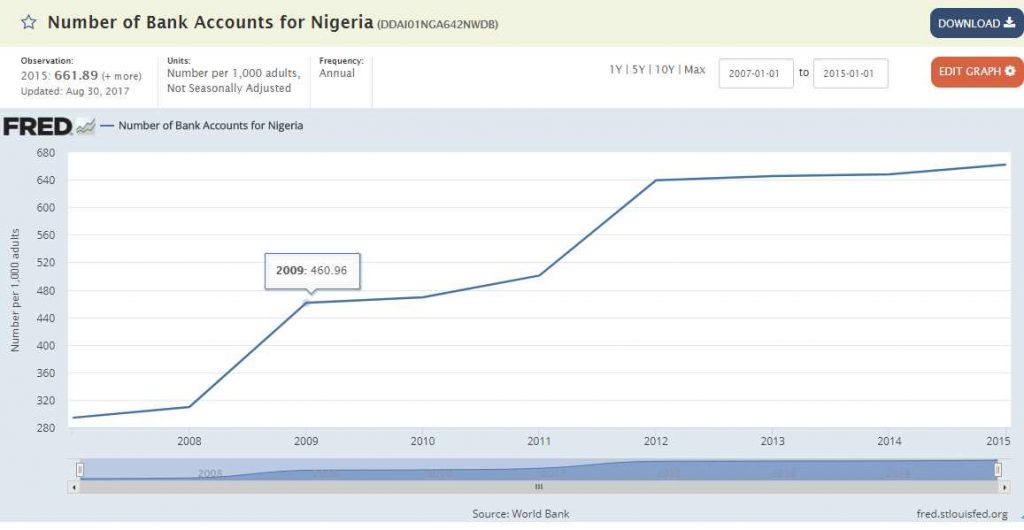
This point may not be obvious. I will explain with employment in the Nigerian banking sector. The rate of customer growth is faster than the rate of staff growth. We have more than 70 million bank accounts today from 40 million above 6 years ago. Total staff strength stands at about 78,000 today. Simply, over six years, we have added more than 30 million bank accounts with only extra 18,000 staff. But note that between 2007 and 2010, the banking sector shrank. Technically, Nigeria has not returned employment to pre-great recession when we had excess of 80,000 staff. So, if you move the analysis few years before, you will note that we have added tens of millions of new accounts while shrinking the total manpower.

Nigeria’s 14 quoted banks with total staff strength of 59,807 incurred a wage bill of N265 billion in 2009. This is about N4 million per staff. This is based on an analysis of the staff cost disclosure by the 14 banks in their 2009 annual reports

Technology has brought productivity gains and banks do not need many staff. The same is happening in insurance, oil and gas and across the industrial sectors. Suddenly, we have many young people unemployed. A graduate that finished 30 years ago was sure of something. Today, a student entering a university today is not certain of job because the jobs opportunities are shrinking.

Number of bank accounts in Nigeria

If you check all these elements well, technology is at the heart of it. And I do think there is a need to capture the impacts as they affect nature and most importantly how a company’s activities have affected jobs, communities and humans. I agree, when one industry loses jobs, opportunities emerge in other industries. Unfortunately, since banks stopped using big halls to hire as they did in the 2000s, and telcos have cut back, I am yet to see new industries that have taken over in the short term. That may come, of course, but at the moment, we have issues at hand.

Reporting how technologies affect labor, just as they affect our environments, makes sense in environmental reports. So, Google next time you publish your environmental report, I want to see community sustainability report inside it.

The Beatification of Bitcoin By Goldman Sachs

0

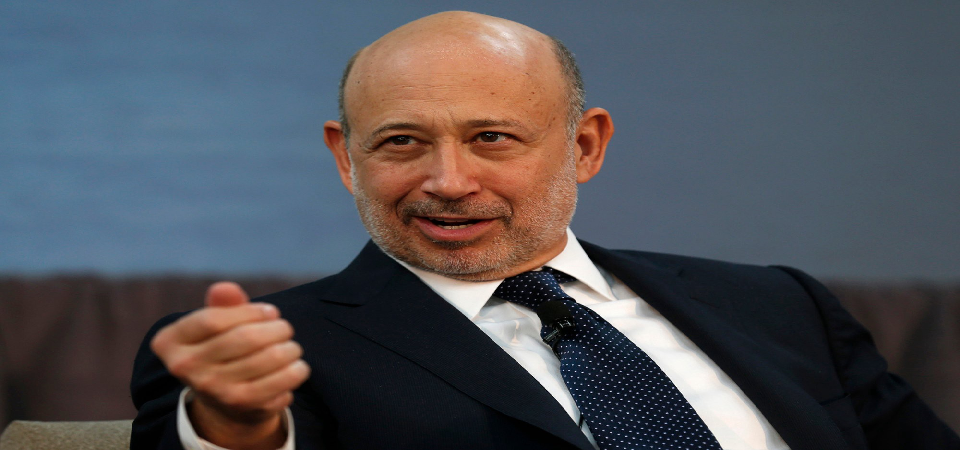
It is big news. Goldman Sachs is possibly joining the list of believers in the cryptocurrency called Bitcoin and others like it. This may be the moment the adherents of Bitcoin are waiting for. This also suggests that regulators may be reading the signs poorly.

Goldman Sachs Group Inc. is weighing a new trading operation dedicated to bitcoin and other digital currencies, the first blue-chip Wall Street firm preparing to deal directly in this burgeoning yet controversial market, according to people familiar with the matter.

Goldman’s effort is in its early stages and may not proceed, the people said. The firm’s interest, though, could boost bitcoin’s standing among investors and fuel the debate around digital currencies, which were initially viewed as havens for illicit activity…

The mere thought that the best of the breeds can have this type of conversations with its clients is an indication on the durability of cryptocurrency. I do believe that digital currency is here to stay. It will not disappear because there has never been a technology on earth which emerges, becomes a household name and then disappears without an impact. Sure, the impact could be bankruptcies and ravaging of lives, but I do not think so.

Even if Bitcoin should fail, it will lead to another flavor of digital currency. Before Facebook, we had MySpace. And before Apple, we had Nokia. So, evolving technologies do not necessarily disappear when they actually deliver value to some people in the society, at scale. All the competitors will joggle until we reach maturity phase. Then the utilities-like category kings will emerge. When that happens, the surviving one becomes part of the society. Facebook is now part of all aspects of our lives including the political spheres. There is no government that does not think of Facebook.

Oh yes, that transmutation and evolution before maturity is the risk on cryptocurrency: you do not know if it will be Bitcoin or one from Japan or China or Nigeria that will survive. That uncertainty is why this is severely risky. But when Goldman Sachs sees alpha, I know the world will follow. Just like that, they have beatified Bitcoin and its cousins in this Gregorian Year of 2017.

Coming Home – Nigeria

My position remains that we do not need Bitcoin but Nigeria needs a digital currency tied to the Naira that will enable the efficient functioning of the blockchain infrastructure which I expect to evolve in coming years in the nation. If the Central Bank blesses such a plan, we will experience a virtuoso innovation system in redesigning the architecture of some of our industrial sectors and make them more efficient even while being cost-efficient. As I noted in my entry on Blockchain Africa, blockchain has a promise for Africa. Nigeria just have to find a way to lead in that promise at least in West Africa where its impact is huge. As Goldman Sachs goes closer to Bitcoin and digital currency, we may be too slow that very soon, it becomes an entirely foreign imports to Nigeria.

What America Can Learn from Africa On Guns

0

We pray for the victims of the U.S. Las Vegas shooting. We pray for their loved ones and families. But if these cyclical problems do not teach America to modernize its gun laws, nothing will. Yes, the U.S. is a beacon on innovation and excellence, but on gun control, it is terribly backward. For all the brilliance in U.S. Constitution and Bill of Rights, nothing there can equate for a man to stock ammunition as though he is going to setup a military battalion.

I mean, when they sold these guns and ammunition to the shooter, did they think he was going to use them on squirrels, elephants or bears? It is puzzling for a nation that is known for its brilliance getting trapped in this seasonal mayhem. From Fortune newsletter:

The worst mass shooting in modern U.S. history is dominating news coverage this morning. A single gunman perched on the 32nd floor of a Las Vegas hotel-casino unleashed a hail of bullets on a crowd at a country music festival, killing at least 58 people. Horrific beyond words. […]

Gun control advocates were quick to point out the absurdity of allowing civilians to buy weapons of mass assault. But, as is usual after such events, gun stocks went up in anticipation of a surge in sales sparked by fears of new gun restrictions. The White House tried to downplay such fears.

Africa fights wars and we have armed robbers. But those are wars and armed robberies. Apart from those, we do not have a history of a man waking up one morning and going to a hotel to kill people like this. Sure, there are terrorists but those are retarded humans. And their guns are always stolen or illegally acquired. So they have broken the laws to have access to the guns. The laws are against them for holding the guns to start with.

But in U.S., that one man can kill 59 people shows that many things are broken. For all the Silicon Valley technology bravado and financial excellence in Wall Street, America is making a mockery of itself by allowing this 18th century way of thinking to exist today. In the 18th century, no one had a gun that could kill at this scale. To maintain that regulation on gun control is not needed despite the advancement in the sophistication of these weapons diminishes America.

In the near future, artificial intelligence (AI) can be connected to weapons to go on wars. I know some will ask for the rights to use AI-guns to hunt for squirrels. But we hardly see the need of hunting squirrels with multi-rounds ammunition some nations cannot afford for their military barracks. Yes, U.S. will sell those guns to one man for his “entertainment and sports”.

President Trump, bring America to the 21st century. Citizens should not acquire weapons as though they are soldiers being deployed for wars. If they want to be soldiers, enlist them, but it is morally unfair to allow someone pile up these weapons in their homes. Enough is enough.

Fixing Nigeria’s Electricity Supply Vicious Circle

2

A year ago, a Nigerian state government contacted my investment syndication business to help fund a water board in one of the south-south states. We received the document and prepared for our funding partners. The business thesis was good except one problem: the water tariff in the state. The last one was reviewed in 1987. We told the government to put a small legislation/regulation to change the water rate. Everyone was afraid of sponsoring the bill. No member of the state house of assembly agreed to put his or her name on it. And the government was afraid to be known as the government that was going to increase the water rate.

Simply, the investment collapsed. We told the government that investing in the deal was a waste of money because the water rate would not even cover 30% of the water cost. Largely, the state water board is subsidizing water to the rich citizens who get water from the water board. That is unfair to the citizens in the villages who do not get water from the water board. That deal reminds me of the electricity issue in Nigeria.

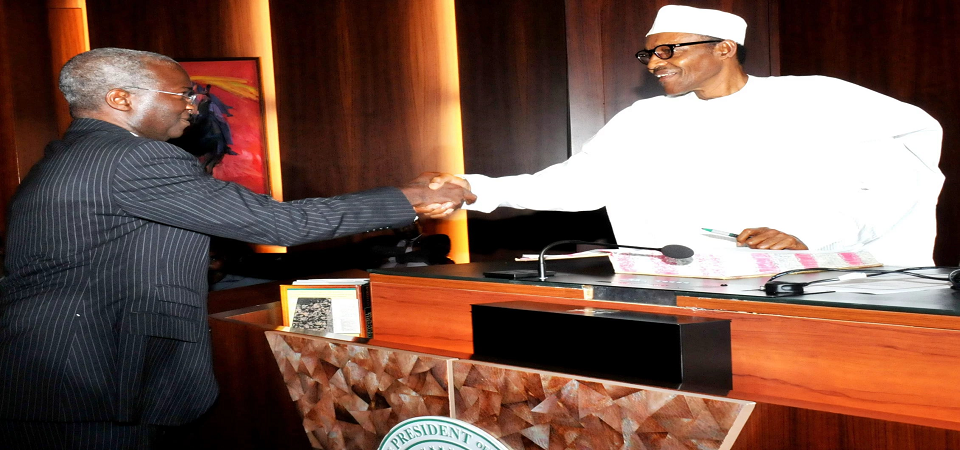
Nigeria is in a loop right now on electricity supply. You can call it a vicious circle. I do not see how we can come out of it until a leader takes a stand. I think President Buhari is the only one that can fix this problem. We have wasted time on the regulatory process. What we need now is someone that can get us out of the loop.

The Transmission Company of Nigeria Plc (TCN), has demanded for a review of the current electricity tariff, ostensibly cost reflective, which will entail more payment by the end users of power.TCN demand was contained in an application filed to the Nigerian Electricity Regulatory Commission (NERC), for an extraordinary tariff review, as a means of ensuring that generation companies (Gencos) are incentivised to provide sufficient spinning reserves and other ancillary services that are critical for managing the national grid.

[…]

The Transmission Company is the only unit of the 18 successor companies unbundled from the defunct Power Holding Company (PHCN) that was not privatised alongside others, but placed under management contract.

Hitherto, Distribution Companies (Discos) had been at the fore of agitations for electricity tariff review and increase, while consumers are opposed to it due to the prevailing power outages.

The issue is now precarious. The generation companies (gencos) do not see the pricing as optimal to waste their efforts generating power. The distribution companies (discos) do not even bother accepting all available electricity to sell to consumers. Discos think it makes no sense selling something at a loss. And the consumers do not want to see any increase because the past ones have not resulted to any improvement in power supply.

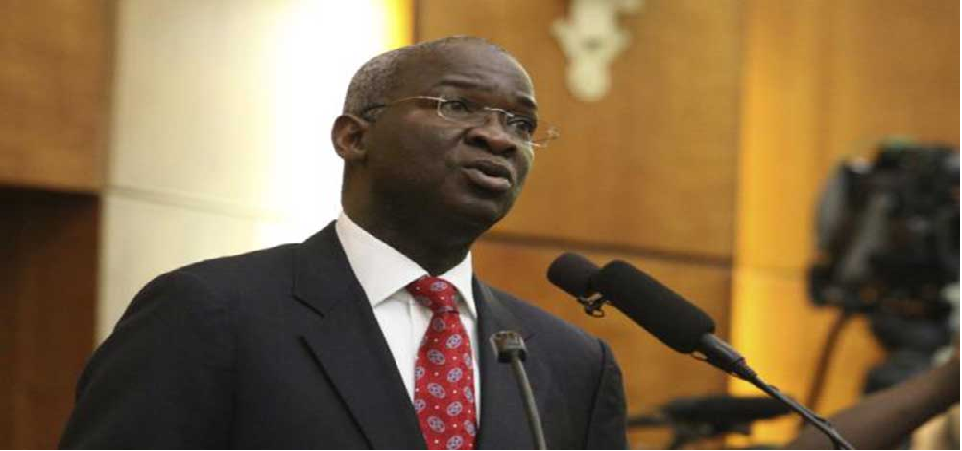
Nigeria’s Minister of Power, Babatunde Fashola

Technically, everyone is right. But I do think, focusing on that misses the point. In my office in Nigeria, the national grid is now the second backup. In short today, we are servicing our main generator. Team has suggested that we disconnect from the national grid to avoid any justification of sending bills which continue to happen despite no power supplied. I told them to hold on. The consumers are indeed frustrated. The process is a mess. You are asked to pay for services not delivered.

But ranting from that angle will not solve this paralysis. The only part of the old NEPA/PHCN that was not privatized, the Transmission Company of Nigeria (TCN), has spoken. TCN has joined gencos and discos asking for a reflective tariff. Government should listen. While I do not want to pay more as a user, the alternative of running two generators, spending more on fuel, oil and mechanics, is not a better option. I am open to pay more because I do think getting power from the national grid will be cheaper when compared to what I have now. Government should listen and take action.

Mr. President, if the court had struck the increased tariff, ask the Attorney General to support the Nigerian Electricity Regulatory Commission (NERC) which I understand is challenging the ruling in the court. Until we can fix this pricing issue, we will not make progress.

Nigerian government has to make good, and go back, and increase electricity tariff as agreed pre-privatization. The citizens do not have to pay this extra fee. Government can decide to write the discos cheques yearly. After all, it tricked the investors to invest based on the tariff. That the court struck and reversed the tariff is irrelevant. Investors did not sign any agreement with the court. That was the condition precedent and where it was voided, the discos have the rights not to deliver electricity. It makes no sense for them to be doing so losing money.

A reflective tariff is critical for us to get out of this vicious circle. Only Mr. President can lead now.