


Bottomline: Legendary co-founder and former CEO of Apple, Steve Jobs, was a legend. He pioneered a management system in Apple which successfully redesigned the firm and brought unrivaled level of product innovation in the world. He engineered perception demand constructwhich made Apple a category-king in most sectors it competes. In this long piece, I explain […]
The World’s Most Confident Investors

This is a Short Note.
I have been following Samsung over the last few years. It makes really great products – microchips, smartphones, kitchenware, and many others. But Samsung is not necessarily spotless. It has had its Galaxy Note 7 exploding-battery problem and continues to battle with Apple in the smartphone business. Yet, despite these issues, Samsung stock has not frozen; a QZ newsletter explains it thus:
Throughout all this, Samsung Electronics—the crown jewel of the larger Samsung empire—has been running a tear on the Korea Exchange. Its components division, which makes OLED displays and semiconductors, has kept operating profit strong. The company’s market capitalization has increased by $85 billion, up almost 44% from one year ago. It seems that in the eyes of shareholders, the turmoil surrounding Samsung Electronics remains secondary to its solid fundamentals.
And the big one few days ago: the heir to the Samsung empire, Lee Jae-yong, was convicted and sentenced to five years in prison. He had been founded guilty in an illegal donation as the company pursued its merger plans.
While not condoning what has happened in Samsung including the illegal donation and making sub-par products that put people at risks, you cannot miss the discipline of its investors. In U.S., Samsung could have paid severe penalty. In short, the conviction of the Samsung heir could have pushed the stock to deep worry territory. Of course, the guy will not even be near Samsung before the trial was over. Activists would have asked him to step down, and resigned from the company. Some could have asked him to sell his shares.
If you think former Uber CEO Travis Kalanick was misbehaving, remember that no one had convicted him of any crime. Yet, they pushed him to step down despite the clear evidence that he was generating alpha.
So, if you look at the South Korean people, you need to question how they have navigated all these issues which have befallen Samsung and still believed. They understand that the company has solid business fundamental, and have refused to be distracted by the scandals. Indeed, it is hard to fathom how a company’s owner (yes, he is the heir) of such a large firm was convicted, and the stock did not even move. The only explanation is: provided Samsung keeps generating profits, nothing matters. They are indeed confident on the fundamentals of this business and Samsung is lucky to have them.
While I do not necessarily support the level of confidence, what is happening in South Korea tells me about resilience and expectation at national level. There is something for every nation to learn here: knee-jerk reaction may not do so much good. The unprecedented collapse of the Nigerian stock market nine years ago cannot be totally blamed on the Great Recession, but the fact that we simply over-reacted to events that we were not necessarily at the center. Even if the foreign investors had pulled their capital, Nigerians could have done things differently. Of course, without solid confidence in the markets and the companies, that would be hard to expect.
Molue and Lessons from Rules of Nations
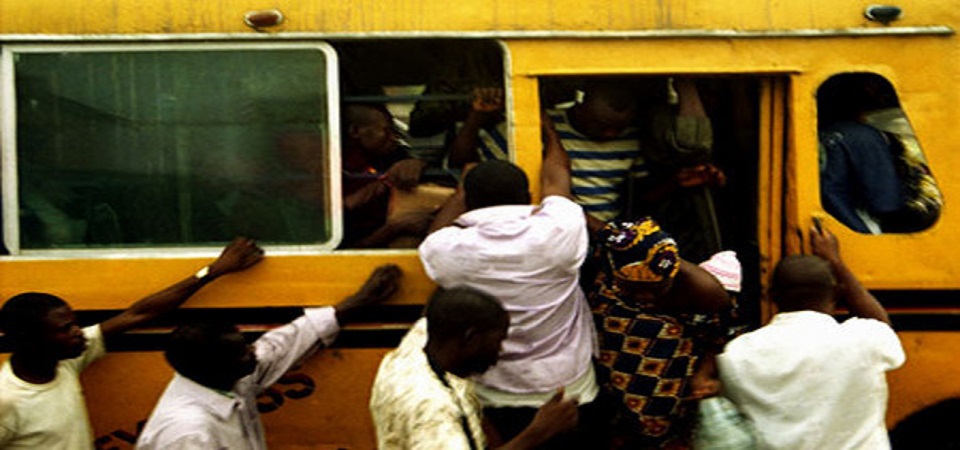
According to the Oxford Dictionary, molue, in Nigeria, is a privately-owned commercial bus seating forty-four passengers. It has an origin from the Yoruba.
1970s; earliest use found in New Nigerian. From Yoruba móòluè, probably lit. ‘mould it’ (perhaps referring to the method of construction from shaped iron sheets) from English mould + Yoruba e, 3rd person singular pronoun object.
Today, we know the bus as that rickety yellow bus plying across some West African cities and most times causing mayhem. It does not have to be seating 44 passengers. There are many incarnates of molue since the 1970s origin.
But here, I am not focusing on the bus, but rather, the rules that govern its operation. In one country, molue, is a school bus, that moves primary and secondary school kids across major American cities. It has many strict rules for both the drivers, passengers and other road users. For the passengers, the students, we have the following:
-
Students must listen to the driver and follow the driver’s directions. The driver has the authority of a classroom teacher.
-
If crossing the street to board the bus, students MUST look both left and right for cars, make sure the RED lights are flashing, and wait for the driver’s signal to cross. Always cross the street in FRONT of the bus.
Before boarding and after exiting the bus, students must keep a safe distance from the bus. Keep at least 10 FEET away from the bus.
Students are to enter the bus promptly, immediately take their seats, and remain seated whenever the bus in moving.
Students are to conduct themselves on the bus in such a way that will not distract the driver. Distracting the driver puts everyone on the bus at risk.

For drivers, we have:
-
Prepare to stop when a slowing bus has its overhead yellow lights flashing
Stop at least 20 feet away for buses when red lights are flashing, unless driving in the opposite direction on a divided highway
Slow down in or near school and residential areas
Look for clues-such as safety patrols, crossing guards, bicycles, and playgrounds-that indicate children might be in the area
Watch for children between parked cars and other objects
The school bus drivers, i.e., those driving the buses have their own rules. For example, they must ensure that all the students are seated before putting the bus in motion. They must also ensure that students who do not behave well are disciplined: they can call the Police to take an unruly student out of a bus.
The School Bus Becomes Molue
Now, the school has been imported into Western Africa, and it is now molue. All the rules governing the bus immediately cease to apply. Molue becomes a symbol of recklessness. The driver can be drunk and drive. The passengers stand-up, and their weights, in some cases, flip the buses into lagoons. The bus drivers run red lights and the highly respected American yellow buses are now disliked by road users. Molue hits cars with reckless abandon knowing that it has nothing to lose. The government of Lagos banned molue few years ago to bring sanity to Lagos roads.
But the question is this: why should it be this way? The school bus had been retired in US and West African businessmen go to U.S. and import them into West Africa. The rules books are torn and just like that, the license to mayhem is unleashed on the roads.
Yet, you may not really blame the entrepreneurs. You have to look at government. Accident kills more people in Nigeria than possibly any disease yearly. It goes beyond molue: we have real problems in West Africa.
All Together
Before its ban, whenever I was in Lagos and saw molue, I was reminded on what the color meant in America. When people jumped into a moving vehicle, I recalled that you cannot even stay 10 feet around the American molue when the red light is flashing.
But what happens to the school bus can happen in any area in Nigeria. We see medicine hawkers promoting and using drugs beyond what their legal uses are. They claim the drugs can cure anything in a broad day light and no one arrests them. We see people using tiles designed for walls for bathroom floors thereby making our bathrooms death enclaves across Nigeria, and no one is stopping that.
Sure, the old molue may be gone but the LAGBUS is turning into one.
MOST Lagos residents move from place to place by road. And due to the importance of this mode of transportation in the metropolis, vehicles of different types have been used, at different times. One of these is the notorious Molue, a long bus with capacity to carry over 100 passengers at once.
Characteristically, Molue is a metaphor of some sort – from sublime to ridicule. In those days, taking Molue as means of transportation was much cheaper, compared to its twin, Danfo and others such as taxi and Kabukabu.
But owing to the dangers inherent in Molue, former Governor Babatunde Fashola, in conjunction with the National Union of Road Transport Workers (NURTW), introduced the Lagos State Bus Asset Management Limited (LAGBUS) scheme as a way of sanitising the transport system in the state…..
Taking a ride in LAGBUS buses is now reminiscent of the old Molue. The old habits have returned. Some of the buses have more than one conductor. Indeed, more than three persons stand at the front and back doors calling out to passengers or shouting at those already inside the vehicle.
Indeed, it is not the color of the bus that matters, but the level of discipline and decency of the people, the leaders and the citizens. Covering the yellow color of molue with LAGBUS logo, as noted in the Tribune piece, does not change the people running them. Until we can strengthen our rules, and make sure people face consequences for bad behavour, we can cover molue color, but the molue styles will still be everywhere.
Bringing McDonald’s Drive-Thru to Jumia and Konga in Lagos
I like ecommerce, but I struggle with the business model. My concern has been the logistics. I think hard about the business, nevertheless, because everyone knows that internet is the future. So, the earlier we figure out what works on the web, the better for everyone.
Today, after a meeting, I tasked myself to come up with an idea on what could be a solution to the logistics challenge, which I could share on this platform, within 10 hours. The challenge has been that sending men on motorbikes across Lagos to deliver items may not be optimal.
This is my solution on how we could improve the ecommerce business in Africa, using the three category leaders in Nigeria here:
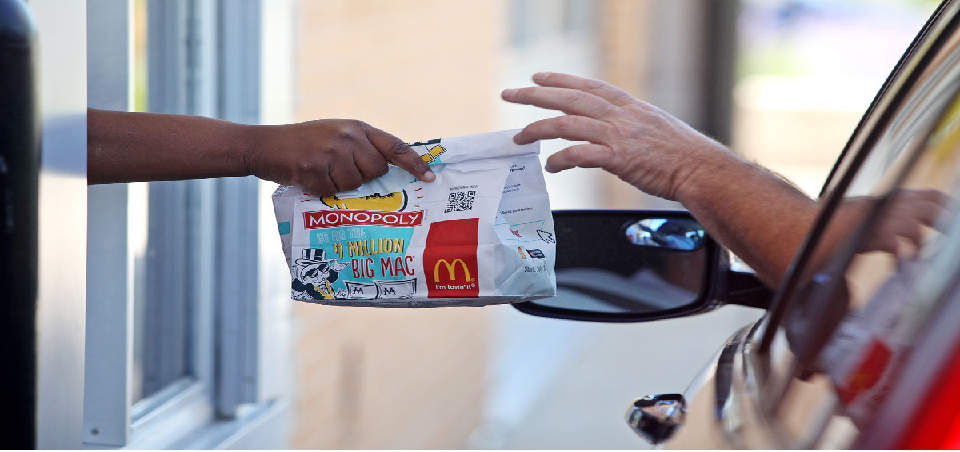
- Let Jumia, Konga and Yudala come together and build drive-thrus in some strategic locations in Lagos and other big cities in Nigeria. The drive-thrus will look like the typical ones seen in McDonald’s, a U.S. fast food (think of Tantalizers or Mr. Biggs in Lagos). The only difference is that the drive-thru will be bigger and will have many outlets, enabling multiple service points. (A drive-thru enables customers to pay for fast food and pick the items without leaving their cars.)
- A customer goes to Konga, Jumia or Yudala website to buy a product. Say the customer has bought a shoe and will need to pick it up within 6 hours. At checkout, he will specify the location of the facility where he will like to pick up the item. The ecommerce companies will specify the turnaround time to get the product ready for pick-up. For example, if you place an order for shoe before 6am, you can drive to the outlet between 8am-8pm that day to collect it. If not, you will have to reschedule the pick-up date and time online.
- When customers drive to the facilities, they will drive to the particular ecommerce company they had ordered the items online. They will put a code in a system (think of McDonald’s voice ordering system except that this will be a typepad to punch a number). The code will help the sorting system to bring out the specific items as the customer drives to the collection point. This facility will be advanced and heavily automated to save labour cost. The customers will not have to leave their cars as the items are loaded in their cars.
- The facilities will be strategically located in the cities. One will be built as people are leaving 3rd Mainland Bridge into the Lagos Mainland. So people that placed orders in Victoria Island could pick the items as they return from work. By positioning these pick-ups, the ecommerce firms will reduce or phase out home delivery. Essentially, the deal is that these customer pick-ups could reduce the need of going to homes or offices to deliver items.
- The ecommerce companies must have a well synchronized system that mimics the legendary McDonald’s’ below 5-minute wait rule. The idea is that when the customer enters the facility, he or she should be done within 10 minutes. To avoid delay, only customers who have already paid for their goods can use the service. There will not be any pay on delivery.
- The ecommerce companies can setup a joint venture that will run this for them. In other words, all of them will pool capital and build the facilities. This could be the model ecommerce needs in Nigeria.
I do think if they can come together and do this in Lagos, Port Harcourt and Abuja in some strategic locations, they will reduce their shipping and logistics costs, while also expanding the product appeals.
Note that I have focused on logistics which I think is the weakest point of the ecommerce business in Nigeria. They already have nice websites (lol) but the logistics is broken. And to get it right, they need to come together and cooperate. Yes, we need coopetition in the ecommerce business in Nigeria.
Coopetition is the act of cooperation between competing companies; businesses that engage in both competition and cooperation are said to be in coopetition
Of course, if we have a functioning postal service, this will not be necessary. When that happens, the new true dawn of ecommerce will begin in Nigeria. But do not count on a functioning postal system in Nigeria anytime soon.
An eCommerce Startup Is Not Really A Web Business, in Africa
This is a Short Note.
I just spent one hour talking Marginal Cost to a new digital business opening in Africa. They are coming to run an ecommerce business. Very brilliant team with solid business vision.
At a time, I asked one question: what is your marginal cost? It was very tough as we spent minutes looking at cost. Largely, to have scalable advantage, your marginal cost must tend to zero in a digital business. In other words, having an additional customer must not carry any new cost.
For great digital businesses, that is a possibility. Facebook and Google enjoy that in their internet units. The scalable advantage ratio is close to 1. That is why the marginal price is zero (they make their services free for all of us).
My client had a great marginal cost in the web side of the business, but in the logistics side, the amount goes high. To add an additional customer in a new city will require cost, even though the marginal cost in an already covered city may be low. So, the only way to bound the cost is to narrow the service region. By coming to that conclusion, the company is no more an Internet business. That scalable advantage has gone and the unconstrained distribution channel which Internet offers has been made meaningless.
At the end, I told the team to go and build a new business model for a logistics company because indeed their success will be largely dominated by logistics and not just on what happens online. That your business receives customers online does not mean it is a web business. What really matters is where the cost elements are. For this particular ecommerce company, the business is simply a logistics firm, as far as cost is concerned.
The firm will also explore how to eliminate that marginal cost exposure through partnership with a local logistics firm. It does not want any logistics capex and in Africa, except South Africa, that will be challenging. They will have a lot to do to make the business an e-commerce. At the moment, I see a logistics firm with a website. As a logistics firm, the valuations will come down to reality because you cannot be a meatspace business, and yet build your growth and valuation models with numbers that mirror truly digital companies.