DD
MM
YYYY

PAGES

DD
MM
YYYY

spot_img

PAGES

Home Blog Page 7296

The Peerless MallForAfrica

0
MallForAfrica

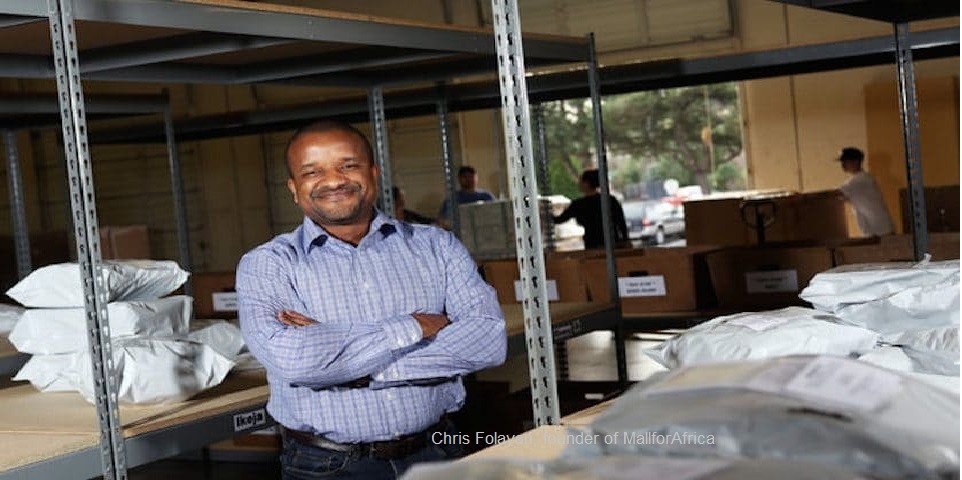
Today, we have an exciting development for our beautiful continent with regards to exports. It is coming from an ecommerce company. We love it and I am very excited. Everyone has been theorizing on how to empower local makers to have access to larger markets. Like an avalanche, some brilliant guys are here. The best ecommerce business in Africa today is MallforAfrica: an electronic mall that enables Africans to purchase items from international retailers, but has added a feature for Americans to also shop in Africa. It runs on the aggregation construct, unbounded by assets or market risks. It is unconstrained: a supremely top-grade asset-light business.

Under the aggregation construct, the companies that control the value are not usually the ones that created them. Google News and Facebook control news distribution in Nigeria than Guardian, ThisDay and others. Because the MNCs tech firms “own” the audience and the customers, the advertisers focus on them, hoping to reach the readers through them. Just like that, the news creators have been systematically sidelined as they earn lesser and lesser from their works. But the aggregators like Facebook and Google smile to the bank. The reason why this happens is because of the abundance which Internet makes possible. Everyone has access to more users but that does not correlate to more revenue because the money goes to people that can help simplify the experiences to the users who will not prefer to be visiting all the news site to get any information they want. They go to Google and search and then Google takes them to the website in Nigeria with the information. Advertisers understand the value created is now with Google which simplifies that process

Through this Aggregation Construct, this company can scale without any limitation. It enjoys scalable advantages both in supply (the customers buy and ship for it) and distribution (it uses courier companies to actually ship to final destinations). In all fashions, this company is built for scale. You can put the scalable advantage at close to 0.8.


Why MallforAfrica Is Unique

Unlike other ecommerce operations in Africa, MallforAfrica does not have deep marginal cost problems. It can easily add a new user without the challenges associated with distribution costs. It is not the one distributing across the Atlantic.  In a newsletter to Tekedia, we have thus:

DHL Express , the world’s leading international express services provider recently announced its partnership with MallforAfrica (www.MallForAfrica.com), the award-winning global e-commerce company, which will facilitate selling of made-in-Africa products to customers in the United States. Businesses can do so via the eBay platform powered by MallforAfrica. Through this partnership, DHL locations will serve as drop-off points for products destined for consumers in the United States. This will be the first time businesses in Africa can sell their locally manufactured products directly on eBay.

DHL Express currently handles inbound express delivery for MallforAfrica and has enabled its customers importing from the US to receive their packages seamlessly in Nigeria, Kenya, Rwanda and Ghana. This is a watershed partnership for African businesses as it allows them an avenue to trade on the global stage.

“We have been partners with DHL Express for many years and have tremendous trust in their ability to ship to our customers,” said Chris Folayan, CEO, MallforAfrica. “Both companies have a common goal of seeing African e-commerce businesses thrive on the global stage. We want to contribute to the future of e-commerce growth, African cross-border sales and most importantly, improve the lives of African artisanal arts, designs, crafts and more.”

MallforAfrica is Africa’s largest e-commerce enabler, providing Africans with a platform through which they can purchase items directly from over 200 international online retailers, such as Macy’s, eBay, Ralph Lauren, Net-a-Porter, Carters, GAP, and FarFetch – brands that, would otherwise be inaccessible to the African consumers. By managing every aspect of the order and return cycle, the MallforAfrica app offers its customers a simple, secure and convenient solution to online shopping directly from the best brands in the world.

“We are proud to be playing a crucial role in connecting African artists with American customers through MallforAfrica,” said Randy Buday, Regional Director West and Central Africa, DHL Express. “We look forward to supporting local artisans across Africa sell into America. ‘Brand Africa’ is something that has increased exponentially in popularity in recent years and this platform allows businesses to capitalize on international opportunities through seamless international trade.”

“As a business, we are focused on connecting African consumers and businesses to global opportunities. Digitalization has reduced the boundaries of doing business across borders – consumers are now able to access goods and services from pretty much anywhere in the world, and we are excited to be the ones facilitating this so African artisans can get access to the global audience they so deserve,” concluded Buday.

Simply, MallforAfrica now makes it possible for you to ship to Americans from Africa. So, it has completed the two-market phases (America to Africa, Africa to America).Yes, it is not just sending from U.S. to Africa, but also the other way. The impact of this could be extremely huge. You will see some art works, special leather works, shoes, clothes etc all finding markets in U.S. This is how you enable and empower people. MallforAfrica is doing so, at scale. By removing this distribution cost, Aba shoe can find its moments to expand into America. The Kano makers that make those special necklaces can find markets in U.S. The same applies to the brilliance of arts in Oshogbo and Ife. If the Yankees buy the products, MallforAfrica will deliver from Africa to them. The world is getting smaller, indeed.

I do not see any systemic risk in this company business model because it simply has a platform and everyone works on the pieces. It runs on the same framework as Google and Facebook: aggregation, carrying no asset risks. (It does operate warehouses by those are not inventories.)  With the unbounded internet and unconstrained distribution connected with physical distributor partners like DHL, you will agree that there is nothing in front of MallforAfrica that will stop it from becoming a billion-dollar business very soon. It is the category-king right now, and it has the moments for itself. Any competitor will have to challenge it to take the top spot.

This company business model is peerless in the African ecommerce sector. All the problems I have noted in my Harvard Business Review piece on ecommerce do not apply here. Most aggregators have zero or negligible marginal costs and operate close to the optimal state of perfect Internet. There is only one ecommerce operator in Africa that has the features: that is MallforAfrica.

Of course, the complexity of the business has increased since it will start sourcing for opportunities in Africa with our infrastructure challenges. But this firm has developed and accumulated capabilities over the years. I do think it will manage the challenges of shipping from Africa to U.S. despite our logistical issues as it in-bounds items to DHL offices. Do not be surprised that they can appoint local firms to aggregate the sub-local supplies across cities. And just like that, MallforAfrica CEO Chris Folayan will focus on processing the invoices, counting the profits, with his usual smiles. People, treasure brilliance: this one is from home.

The Data War and The Two Men To Rule The World

0

I am scared of a day I will have to wait for another man to feed me, approve my movement and communication. A day this man will have to decide what I will do and not do. This is no longer a quote or assumption, it is now a reality. Imagine the future.

The Rockefellers & Rothschild amongst a few others controlled the economy when the Tech Generated Data were small compared to today. Looking at the moment, you will observe that there are a good number of social and media platforms and many concepts which, if you pay a keen interest on them, you will understand as a person, that to some extent you are no longer in charge of your personal data/information and maybe life.

The example Tech-worms gearing my assertion, are the concepts to consider;

  1. Internet Of Things (IoT)
  2. Artificial Intelligence (AI)
  3. Electronic Medical/Health Record (EMR/HER)
  4. BigData and Cloud Computing.
  5. Blockchain

These concepts, though being a good advancement in Technology are in the other way round, harming the future of humanitarian freedom of expression; a time will come when, you can no longer decide for yourself, rather your data will be collected and used to blackmail and compel you to do things which on a normal circumstance, you will never admit to, even at a gunpoint. There is good in every bad they say; the lazy man need not to search the internet for what to buy, googling ads will serve. He need not lift an arm, but his brain nerves will do the work collaboratively with the help of AI and Robotics. Making life a bit easy, I guess. Smh!

The possibility of data war is due to the fact that there are already numerous data being generated in a day, compared to a week, which is already beyond many tech giant enterprise’s control. The same way there were war and people were killed in the past where the likes of weapon makers and sellers utilized the opportunity to become the first hands over the affairs of the world because they could analyze and understand thereby utilize the odd opportunity to enrich their valuables; the similar situation will soon rock the world where the war will be due to the outburst of data against data from different regions across the globe, whereas limited hands will be able to control the systems.

  • The future of the world and her economy lies on the shoulders of the few who can control the numerous Tech Generated data across various systems. Board the train now. by Chidiebere Moses Ogbodo, Founder CEO at PingSmile.com Tech.

The Two Men To Rule The World in Future:

There are many hard heads that will sprout to shove up ideas and enforce quickie rules, to gain some traction, but they also will fall in the list of, “Make We Just Belong,” haha! while the real men that will deal with the world so deeply; except they have the heart of Mercy, they may choose to consider humanity over their personal gains, are;

  • First culprit: The Tech Guy

This guy looks simple, dresses haggard, and talks so gentle, but na big time amo-nsu (wizard, technically).  He has taken his time to learn the art of human-oriented coding/programming; in the sense that he knows human beings behavior very well, taken his time to learn good number of soft skills, some in-born also; hence he can now relate so well and try to convert the human behavior into codes.

A man that can turn a human into code, can compel man to forget his real human sense, and focus on his or phone, graming their life instantly on a daily basis in a simple snap to chat with who he or she doesn’t even know, just by googling through maps has linked him to this alien. This tech guy is worth the concern, and he has a really great share of the future. If he doesn’t start the war, he will not want it to stop because then he will have more room to gather more data. Look out!

  • Second Harbor: Mr. Regulator

A quote reads: If you can’t win them, then join them. This Mr. Regulator has all the political, people backed and gun enabled power, but he will learn so quick, that this time, no be man go save man, even gun can’t stop this war, but a conscience imbibed judicial system may do the world a little good.

Note: Men are in things because of what they will gain out of it, so a tech guy who is enjoying his advanced coding skills and gathering data, and still being paid for his work, cannot listen to your preaching of Conscience. So, what is the solution? Mr. regulator would either go hard on confiscation of infrastructures housing the data centers, or better join the game to save his family for the future. This one is big wahala, if you can understand.

The two guys mentioned above are the President and House of Senate of the future. If you were not able to achieve this political seating now, do not worry, learn coding, and data manipulation, you will soon enjoy the hot seat. It is juicy but wooski.

The Good News

The good news comes in disguise such that, if anyone or group of persons will be able to control at least the 60% of these data, then they will be in charge of the affairs of the world and thereby become the Rockefellers & Rothschild of the future moment.

If you want to control a good share of the world in the near future, learn the strategy behind data manipulation, digital transformation and human-vice-electronic intelligence, else you will be among the willing tools of experiment.

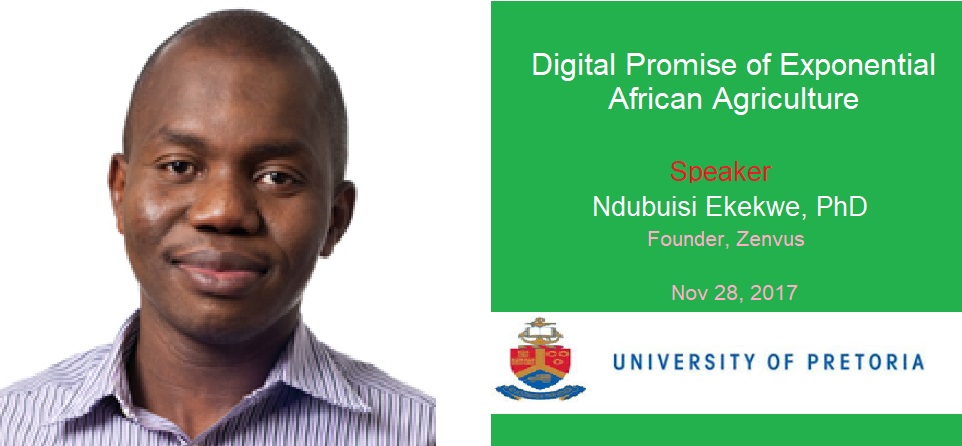
My German Govt-Funded Talk in South Africa “Digital Promise of Exponential African Agriculture”

4

I will be speaking next month in the University of Pretoria, South Africa. The title of my talk is Digital Promise of Exponential African Agriculture.

It will be a great one during the WE Festival. The thesis of my talk will focus on the digital enablers which are emerging to ‘cure” extreme hunger in Africa. Exponential technologies will drive exponential food production. I am one of the leaders in that trajectory in the world through Zenvus. I will present a roadmap for Africa on how it can build a new architecture for modern agriculture. It will be exciting.

My talk is funded by the German Government. The U.S. Government through USAID has also funded this work. We remain thankful for the partnerships we have enjoyed with these governments.

Talk date is Nov 28 2017.

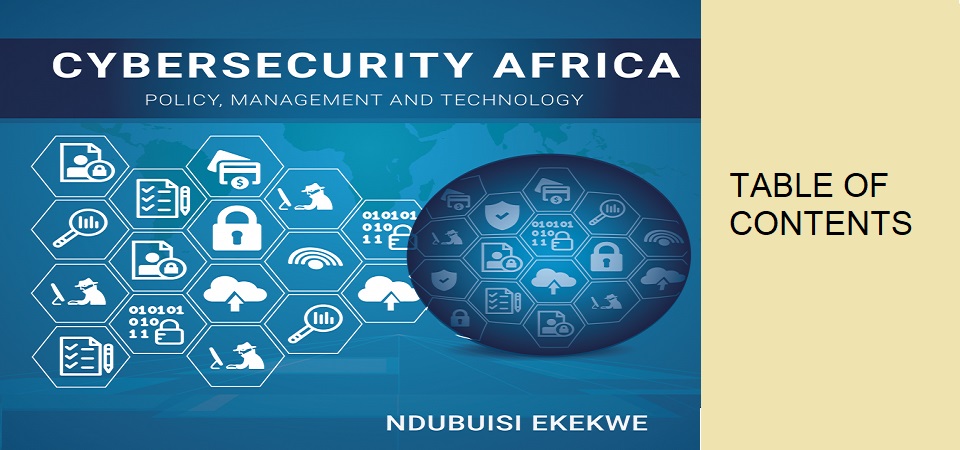
My New Book “Cybersecurity Africa: Policy, Management & Technology” Table of Contents

0

Today, we are publishing the complete Table of Contents for the upcoming book titled Cybersecurity Africa: Policy, Management & Technology. This book will be published on Tekedia just as we did for Africa’s Sankofa Innovation. If you are already subscribed to this site, it comes at no additional cost. If you also subscribe to the Cybersecurity Africa, all other productions will be available at no additional cost to you. Our plan is to provide manuals and documents with specific focus on Africa to help people and enterprises deepen their capabilities as they redesign and unlock opportunities in Africa. We hope you will join hundreds of subscribers in our community. The official launch is scheduled next week.

What you have is the most comprehensive book in the world that deals with cybersecurity policy, management, technology, and digital forensics.  There is no other book that has ever discussed these issues in one production, at this depth. It has a total of 29 chapters all integrated to deliver deeper insights on how firms and individuals can plan and execute their cybersecurity strategies.

What you read in this book is coming years of extensive engagements via units of my business which include Milonics Analytics (an IBM PartnerWorld), First Atlantic Cybersecurity Institute and projects with banks, governments and military around the world. I have put the experiences in a book for you. You will like them. Subscribe today and begin to learn. Easily register in the site and pay with PayPal or transfer to our Nigerian bank. Where you do not have time for that, email my team and they will get you in manually.


Cybersecurity Africa: Policy, Management and Technology


TABLE OF CONTENTS

Beginning

Preamble

About the Author – Ndubuisi Ekekwe, PhD


Structure of Information Systems

1.0       Computer Fundamentals

1.1       Fundamentals of Internet

1.2       Number Systems

1.3       Information System and Business


Information Security

2.0       Access Control Techniques

2.1       Account Administration

2.2       Account Accessibility

2.3       Authentication Techniques


Network Vulnerabilities

3.0       Networking Types, ISO Model

3.1       Networking Devices, Topologies

3.2       IP Address, MAC Address & Ports

3.3       DNS & DHCP Server

3.4       Network Vulnerabilities & Types of Attacks


Foundation of Cybersecurity

4.0       Hacking

4.1       Phases of Ethical Hacking

4.2       Testing

4.3       Cyber-Warfare and Cyber-Terrorism

4.4       Security Implementation and Governance


BYOD & SMAC Security

5.0       SMAC

5.1       SMAC Security & Forensics

5.2       BYOD

5.3       BYOD Security & Forensics


Preventing Cyber Intrusion

6.0       What is Cyber-Attack?

6.1       Cyber-Attack Response Plan

6.2       Compliance Plan Against Cyber-Attack

6.3       Technology for Preventing Cyber-Intrusion


Emerging Cybersecurity Tech

7.0       Emerging Cybersecurity Tech

7.1       Changing Trends in Cybersecurity

7.2       Social Media Role

7.3       Cybersecurity Techniques

7.4       Cyber Ethics


Ethical Hacking

8.0       Basic

8.1       Purpose of Ethical Hacking

8.2       Hackers -Types, Purposes and Goals

8.3      Phases of Ethical Hacking

8.4     Cyber warfare and Terrorism


Malware Analysis

9.0       Malware – Variants, Infections and Effects

9.1       Malware Analysis – Goals, Types

9.2       Method of Malware Analysis

9.3       Setup

9.4       FUD and Avoidance


Penetration Testing & Tools

10.0     Basics of Penetration Testing

10.1     PenTest – Types, Models, Methodologies

10.2     Vulnerability Assessment vs. Penetration Testing

10.3     Penetration Testing Tools

10.4     Penetration Testing Distributions


Intrusion Detection and Prevention

11.0     Intrusion Detection System (IDS)

11.1    Intrusion Prevention System (IPS)

11.2     IDS vs. IPS vs. Firewall

11.3     Common Detection Methodology


Network & OS Security

12.0     Network Security – Basics, Forms, Prevention

12.1     OS Security Threats

12.2     Cryptography-Network and OS Security


Ethics in Information Technology

13.0     Morals, Ethics, and Laws

13.1     Ethics in Business

13.2     Ethics in Information Technology

13.3     IT Policy


Security Policy Analysis

14.0     Security Policy and Law

14.1     Policy Development – Process & Lifecycle

14.2     Policy Types & Standards

14.3     Policy Troubleshooting


Security Policy Implementation

15.0     Identify Needs Issues/Threats

15.1     Identify the Policy Users

15.2     Review & Write Policy

15.3     Train and Enforce Policy

15.4     Review and Modify


Global Cybersecurity Policy & Law

16.0     Cyberspace & Cybercrimes

16.1     Information Warfare & Legal Issues

16.2     National Cybersecurity Policy & Law

16.3     International Law & Policy

16.4     Legal Process & Punishment


Enterprise Cybersecurity Policy

17.0     Enterprise Cybersecurity Policy

17.1     Vulnerability Assessment & Risk Analysis

17.2     Security Testing Frameworks

17.3     Vulnerability Prevention

17.4     Tools & Techniques


Physical & Human Security Management

18.0     Physical Security

18.1     Physical Security Threats

18.2     Planning and Executing

18.3     Physical Security Checklist

18.4     Theft and Locks Picking


Human Security Management

19.0     Human Security

19.1     Social Engineering Techniques

19.2     Dumpster Diving & Shoulder Surfing

19.3     Phishing & Countermeasure

19.4     Staff Training


Cybersecurity Essentials for Leaders

20.0     Planning & Managing Enterprise Information System

20.1     Planning & Managing Enterprise Network Structure

20.2     Privacy & Human Security Management

20.3     Planning & Managing Security Assessment & Testing

20.4     Disaster Recovery/Contingency Planning


Cyber Incident Analysis and Response

21.0     Cybersecurity Incident & Risk

21.1     Planning & preparing for Cyber Incident

21.2     Planning Cybersecurity Incident Response

21.3     Planning Risk Management

21.4     Disaster Recovery & Business Continuity


Building Secure Enterprises & Organizations

22.0     Secure Enterprises & Organizations

22.1     Scope and Approach

22.2     Business Goals & Security

22.3     Baseline Analysis & Desired State

22.4     Policy and Procedures


Cybersecurity Project Management

23.0     Cybersecurity Project Management

23.1     Key factors for Success

23.2     Frameworks for Cybersecurity Management

23.3     Implementation of Framework

23.4     Basic Tenets


Digital Forensics & Evidence

24.0     Digital Forensics

24.1     Digital Forensics Model

24.2     Approach and Process

24.3     Evidence Gathering & Assessment

24.4     Evidence Examination


SMAC & BYOD Forensics

25.0     Social Media Forensics

25.1     Mobile Forensics

25.2     Cloud Forensics

25.3     BYOD Forensics

25.4     Digital Forensics Lifecycle


Guarding Against Cyber Intrusions

26.0     Attacks, Tools for Defending Against

26.1     Privileges and Access Rights

26.2     Policy for Users and Organizations

26.3     Contingency Plan

26.4     Training


Information Systems Security & Assurance

27.0     Information Systems Security & Assurance

27.1     Information Security

27.2     Information Assurance

27.3     Information Security and Assurance


Cyber Intelligence & Counter Intelligence

28.0     Cyber Intelligence

28.1     Information for Strategic Decision

28.2     Counter Intelligence

28.3     Governments & Businesses

28.4     Incident handling & Damage control


29. Conclusion


The Liberation of the Minds of Men

0

Education is one of the most important institutions ever created by man. It determines the wealth and prosperity of any society. Even in the medieval time, there was apprenticeship and that was a form of education. But the modern style of education goes beyond followership to helping students become creators of knowledge. In other words, it transforms students from becoming ‘recipients’ of education to ‘users’ of education as they partake in the process.

Nothing changes a society or a nation more than education. I always say that education is simply the liberation of the mind. It opens the mind to new possibilities and frees it from dogmas and destructive norms. It will remain a popular institution because it is the only institution that holds the key to the future.

Notwithstanding, many students are concerned on the quality and affordability of their education in the contemporary time. According to many government statistics, many schools have or intend to increase tuitions to offset budget cuts by federal, state or local governments.

But it does not end in budget cuts. In most nations, students have to pay more as the schools are increasing tuition, even though they are reducing some services. Under this scenario, these students are concerned that they are not getting the best under historical benchmarks. In general, the students graduate with more debts and are forced to do so despite having lower quality as schools use resources designed for 100 students for 300 students.

The Devaluation

From the debt-ridden states to private institutions globally, university education has become increasingly expensive. Unfortunately, that higher tuition does not positively correlate with higher earning power after graduation. So, most students spend more to get diplomas that reward lesser because of the ‘devaluation’ through globalization. This is one area demand and supply come into play. With more jobs outsourced, the students have to compete for fewer under this difficult job market. The higher supply than demand depresses wage which does not work for the students.

For schools in most developing economies, tuition is also rising and unemployment is also high since the rate of job creation lags the graduation rates. But for most of them, there is no problem of huge debt since education is mostly pay-as-you-go and there is minimal option of government or bank loan. (Sure, families do take different types of loans.) Yet, they are concerned over quality and affordability since the generation that studied about fifty years ago received better education at lower cost, if any, than what they get today, especially in primary and secondary education.

Students (source: Buzz Nigeria)

Even at tertiary level, when these nations had one or two universities, they funded them very well. Now, those schools have to compete for funds with more than hundred other schools. In Nigeria, for example, the number of government owned tertiary institutions has gone from say ten to more than two hundred within half a century. This pushes tuition since government is not providing much help to all the schools. The whole system forces the schools to admit more students because of budget issues thereby creating chaos where most students complain of large class sizes. Quality is low, yet it is not readily affordable.

Beyond Quality

From Nigeria through Argentina to US, most students have quality and affordability challenge of pursing their bachelors and post-graduate studies. It does not mean that knowledge is not expanding or increasing, the problem is that getting it is becoming more expensive. And for most institutions, there is a genuine decision to cut service because of cost. That poses a risk to quality.

When you cut school hours or eliminate a course, there is a possibility that a student could miss an important life-changing idea. When you cut research grants, there is a chance that professors could not push further to enrich the students. Those days in college, the most exciting lecturers were those doing great research works. They bring new insights and perspectives to classroom. If they stop doing those works, though teaching, you deprive students those insights. And that is a quality issue. It remains today that irrespective of mastery of theory, the best schools are the best ones in the labs.

Quality and affordability in education is a big issue in our globalized economy. For most European students, they attend college with the support of government. In Sweden, it is 100% free. Why their counterparts in US are trying to follow a career path that will enable them pay their loans, they are free from such problems. So the students can afford to go into entrepreneurship and spend extra years in learning without the concerns of debts while the heavy indebted counterparts cannot.

Anyone that says that the new dislocation of national debts is not a problem in the educational institutions may not be real. Students are concerned over quality and affordability and they seem to be losing both sides. Higher tuition, fewer courses and lower prospect of great job because of recession and it creates a depressing future.

But alas, in the midst of this concern, most of the students have come to rediscovery. And that realization pushes a need for them to become managers right at college and stewards of their finances in a competitive and disruptive marketplace like the 21st century. It turns out that one of the most innovative generation of students is the one we have now and those concerns may be making them better.

All Together

There is no alternative to good education. No matter the cost, there will be demand for same. And despite the near universal concerns on educational quality, younger people are certainly smarter. Your challenges are histories to them, and their insights are things you lost. They get the advantages of your past, but you struggle to understand their future. That rigs the world for them. You may think they have not mastered the excellence you picked in schools. But look closer, they are better. Your generation might have built planes and turbines, and their own generations are masters of clicks and likes. Yet, the fact is this: they can read about the turbines while you may struggle to understand the likes. Provided their minds are liberated, they will hold up for the next generation. The question that remains unresolved in the developing world is: how do you liberate more minds affordably? My Mercedes is bigger than yours, they wrote many years ago. Everyone always thinks he got a better education. But in reality, things are getting better despite the old metrics we use to measure progress. As I always say: the best company has not been founded. These young people will establish them. Not learning good enough could be the education!