DD
MM
YYYY

PAGES

DD
MM
YYYY

spot_img

PAGES

Home Blog Page 7298

Startups Must Have Awareness To Evolving Regulatory Killers

0

California, a state in U.S., is largely outlawing the delivery of weed by drones or autonomous vehicles. The state is banning shipments by watercraft, aircraft, railroads, and human-powered vehicles.

But one area being left out is the autonomous sector. Sure, a drone can already deliver you a pizza in California. Yet the California Bureau of Cannabis Control is forbidding the delivery of marijuana by an autonomous vehicle—whether from the sky or the ground….

Deliveries may be made only in person by enclosed motor vehicle. Cannabis goods may not be visible to the public during deliveries. Cannabis goods may not be left in an unattended motor vehicle unless the vehicle has an active alarm system. Vehicles used for delivery must have a dedicated, active GPS device that enables the dispensary to identify the geographic location of the vehicle during delivery.

That is not news that should concern us in Africa. But I am drawing a lesson to the mistakes of raising money and operating at edges where drastic regulations can bring the end of a startup. We saw it in Nigeria when the government for all practical purposes banned the use of civilian drones. (Government might not have technically banned drones, but the burden to comply with the regulation has killed the sub-sector. The press release is at the end.)

Nigerian drone enthusiasts, like others across the world, have spent the last couple of months experimenting and exploring innovative ways to use drone technology. Mostly adopted by filmmakers, start-ups and enthusiastic hobbyists, there was also hope on the part of e-commerce companies that drones could be the answer to dealing with delivery challenges in the country, including frequent traffic congestion and a haphazard home address system.

That hope is fast fading, with an announcement by the Nigerian government yesterday (May 8) of an immediate ban on launching Remotely Piloted Aircraft (RUA) or Unmanned Aerial Vehicles (UAV) in its airspace without a permit from the Nigerian Civil Aviation Authority (NCAA) as well as the Office of the National Security Adviser (ONSA)

Government has a right to do most things it needs to do on the basis of security. But for many entrepreneurs, a promising area was cut-off, nevertheless. The blame is not to government, it felt it needed to curtail the spread of drones, owing to many security issues in the country. That is not a bad policy. The startup is responsible for any blame because part of business is mastering risks through a well-structured SWOT (strength, weakness, opportunity and threat) analysis. Any firm that has awareness of Nigeria would not have gone into drone business in Nigeria. It was evident that government would ban it. In my design center in Nigeria, I told my team never to bring drone to our facility even before the ban, to avoid the military ransacking the office on the pretense of their imaginations.

As you do business in Africa, you must have a good pulse of the regulatory possibilities. The risk of being out of step with government could be devastating: they can burn your office and nothing will happen. So, you must have a big separation on what you can and cannot do. That means even before the regulatory ban, you must anticipate what makes sense even before government takes action.

Here are two areas you must never attempt to participate unless you have the right approvals:

  • Penetration testing on websites you do not have clear approvals to test. It is illegal to hack even when you  think you are testing, without the authority and permission of the site owner
  • Never get close to anything ammunition or defense unless the project is within the government premises. In short, the fact that the contract came from one government agency to you is not an excuse. The other agency may not even know about it and just like that, they can burn down your building. Do not make that mistake: run away from such projects. They do not turn well as most African government agencies do not know how to share data. So, you may think you have clearance from the Army and the Police will give you a surprise.

The regulatory elements do not end in technology; it goes into every field of human endeavor. Anyone doing Bitcoin today in Nigeria should expect the Police to raid the office. It is irrelevant it may be legal in other parts of the world. Any entrepreneur raising money via Initial Coin Offering should expect the SEC (Securities and Exchange Commission) Nigeria to send the Police to lock up the office. While other parts of the world may give a warning, Nigeria will come physically. That is why awareness on what to do and avoid entirely is one way to survive as a startup in Nigeria.  Pushing the envelope does not apply here. It may be better to move to Kenya where they have better tolerance on new things with a far more  advanced regulatory regime.


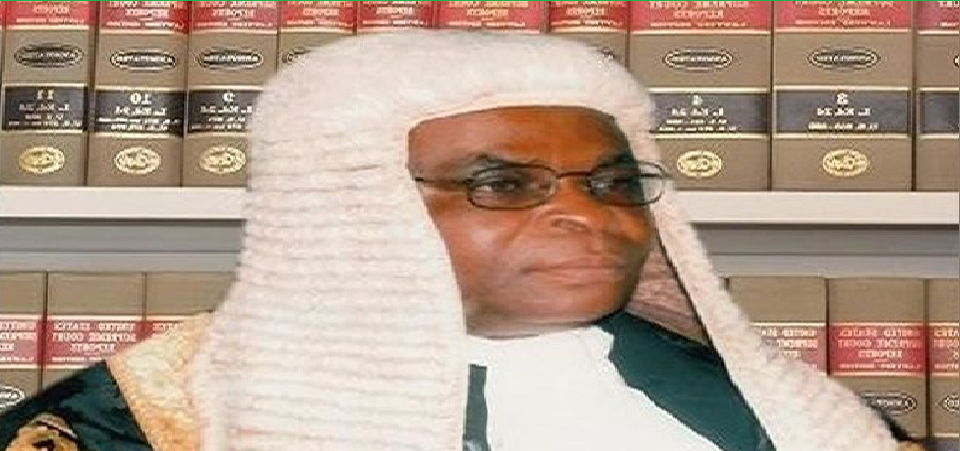
*Photo is Chief Justice of Nigeria, Mr. Onnoghen


NIGERIAN CIVIL AVIATION AUTHORITY

PRESS RELEASE

NCAA ISSUES SAFETY GUIDELINES FOR DRONE OPERATORS

The Nigerian Civil Aviation Authority (NCAA) has taken cognisance of the growing requests for the use of Remotely Piloted Aircraft (RPA) leading to its proliferation in Nigeria and has therefore issued safety guidelines accordingly.

In recent times, RPA/UAV (Unmanned Aerial Vehicles) are being deployed for commercial and recreational purposes in the country without adequate security clearance. Therefore with the preponderance of these operations particularly in a non – segregated airspace, there has to be proactive safety guidelines.

The development of the use of RPA nationwide has emerged with somewhat predictable safety concerns and security threats. The International Civil Aviation Organisation (ICAO) is yet to publish Standards and Recommended Practices (SARPs), as far as certification and operation of civil use of RPA is concerned.

NCAA has therefore put in place Regulations/Advisory Circular to guide the certification and operations of civil RPA in the Nigerian airspace. This is contained in the Nigerian Civil Aviation Regulations (Nig.CARs 2015 Part 8.8.1.33) and Implementing Standards (Nig.CARs 2015 Part IS.8.8.1.33).

Therefore no government agency, organisation or an individual will launch an RPA/UAV in the Nigerian airspace for any purpose whatsoever without obtaining requisite approvals/permit from the Nigerian Civil Aviation Authority (NCAA) and Office of National Security Adviser (NSA).

The Nigerian Civil Aviation Authority (NCAA) wishes to reiterate that all applicants and holders of permits to operate RPA/Drones must strictly be guided by safety guidelines.

In addition, operators must ensure strict compliance with the conditions stipulated in their permits and the requirements of the Nig.CARs. Violators shall be sanctioned according to the dictates of the Nigerian Civil Aviation Regulations (Nig.CARs).


SAM ADUROGBOYE,

GM, PUBLIC RELATIONS,

NIGERIAN CIVIL AVIATION AUTHORITY

The Winning Business Model for Solar Business in Nigeria, Africa

4

We have many solar entrepreneurs right now across Africa. They are innovating and indeed making progress. The future of electricity generation and supply, for Africa, is solar. But for us to make that happen, our business model must evolve on how we help families electrify their homes. We need to find ways to deliver our solutions in ways that our customers can afford them.

What We Do Today

  • Sell solar product to customers: Here, the customers buy the products, and own them. This scares some customers because despite not having to find money to buy the solutions, they have to handle the maintenance element which includes seasonal change of batteries, solar panels etc. Owing to that decision inertia, many have not become solar believers. In this model, the customer is investing in the equipment. Two cost elements are noticeable
    • Initial equipment cost
    • Maintenance cost throughout product life
  • Hire purchase: In this model, customers receive the solar equipment with options to make payments via installment plan. At the end of the installment plan, the customer owns the solution. The entrepreneur may increase the product cost to cover the extended payment plan. One challenge with this model is that the customer is investing in the equipment and not just focusing on getting the electricity. Two cost elements are noticeable
    • Installment payment for equipment
    • Product maintenance cost post-payment (usually the maintenance happens after the payment plan has been completed)
  • Lease 1: Here, customers are never given the option to ever own the equipment. The solution is leased to them and the cost of the electricity consumed is also charged to them.
    • The customer pays for the equipment but with no intention of ever using it (this is similar to a U.S. home broadband company renting the modem which the customer pays monthly. But the day the service is cancelled, the customer must return the equipment to avoid being billed the product full price)
    • The cost of electricity consumed is charged to the customer.
  • Lease 2: Here, customers are never given the option to ever own the equipment. The solution is leased to them but no cost of the electricity consumed is charged to them. The cost of electricity is included in the equipment lease amount
    • The customer pays for the equipment but with no intention of ever using it (this is similar to a U.S. home broadband company renting the modem which the customer pays monthly. But the day the service is cancelled, the customer must return the equipment to avoid being billed the product full price)

In these four models, one problem is that customers are putting money in the solar equipment. That deviates from what they already do from the national grid where they pay for electricity consumed with no acquisition of electricity assets.

The experiences of early adopters of solar which went really bad owing to poor solutions from China, many years ago, have poisoned the minds of many customers to invest and own solar products. They know that the initial payment is just a down payment as more money will be needed to support the solutions.  There is a likelihood that the battery may not last long before another big investment is required. That creates a major problem.

A Winning Business Model

A potential winning model that can scale massively could be delivering electricity to customers, with no requirements for them to buy equipment. They pay for what they have consumed and the company owns all its equipment. You may need to get a contract where the customer must commit to use the solution under defined Key Performance Indicators. Once the customer signs, you take your equipment and install in the customer residence, at no cost to the customer. You make money by billing for electricity consumed.  With this, the customer does not have to invest in any equipment. Also, risks move to the entrepreneur who is now incentivized to make sure the equipment works, as without it working, there will not be any electricity to bill the customer. Yes, all maintenance costs are not concerns of the customers.

I expect customers to respond and sign-up under this model. However, for the entrepreneur, it requires a deep pocket to execute since you are looking at multi-year period for break-even. For example, it may take 5 years to break-even with a customer with all the risks pilled against the entrepreneur.

This is a potential scalable model, especially in the major cities where risks of riots may be limited. A big estate will be the most optimal ecosystem to execute this model. It provides security to the equipment.

All Together

Finding the right business model in Africa will unlock more value in the solar electricity business. One option is to find a way to bill customers for the electricity consumed without them having to invest in the equipment. They are used to a model where they pay for electricity consumed, not owing pricey equipment tools. The solar entrepreneurs must respect that, and find a way to allow customers pay for electricity consumed.  That is a model that will scale immensely and unleash true solar business innovation in Africa’s economy.

Nigeria’s 10-Year Tax Incentive To Dangote Group, How You Can Get Yours

0

It is called Conglomerate Tax. It is a game played in all parts of the world. Conglomerates use their powers and scales to bully governments to do things the very way they want things. If governments refuse, they do not invest and nothing changes. Because they know the governments are financially incapable or strategically deficient, they hit them at the pain points: I cannot solve this problem if you do not accept my terms.

You may not like it, but there is nothing you can do about it. It is legal. From GE to Carlos Slim Grupo Carso, citizens subsidize most things conglomerates do as most times they do not have to pay tax. They get great deals you wish you can. And you can if you follow the game plan (I will explain later).

The news is that the Dangote Group will not pay tax in the next ten years for it to help Nigerian government fix roads.

The Nigerian government has granted a 10-year tax incentive to Dangote group for the construction and rehabilitation of roads, Minister of Power, Works and Housing, Babatunde Fashola, has said.

Mr. Fashola made this known while speaking at the Businessday Road Construction Summit, held in Victoria Island, Lagos, on Friday.

Mr. Fashola, who disclosed that construction of the Apapa to Oworonshoki end of the Lagos-Ibadan expressway has been handed over to the company, said the government had approved a review of the five-year limit on tax order enjoyed by the company to 10 years.

“We inherited a tax incentive policy for individuals to benefit from tax remission, to recover investment made in public infrastructure like roads, which other members of the public can utilise,” Mr. Fashola said.

He noted that pending applications from Dangote Group were not approved by the previous administration, which the present administration has now approved and work has commenced on the 42.9 km Obajana – Kabba road in Kogi State

Dangote Group deserves its deals. I congratulate the firm. I just hope government will extend same to other businesses who may like such deals. If they refuse to extend such deals to other companies with capabilities, it becomes corruption from government against the Nigerian people

But as it stands, there is no issue, in my opinion, if anyone can get that same deal for other roads. Dangote Group needs those roads to do business and government cannot keep them in good conditions. Dangote Group has been paying taxes and yet nothing has been done on the roads. So, Dangote Group wants to keep the taxes and fix the roads. Magical. But what happens if Dangote Group tax burden is 4x the cost of the roads? Government will not go there.

I do think if they extend the deals to the banks, telecoms and oil companies, Nigeria will collapse. Sure, most of the roads will be built, but Federal Inland Revenue Service may just close as there will not be a need to be collecting taxes. Just pick a road and fix it and taxes will be forgone for ten years.

But yet, besides the above points, this is the heart of what even made it possible for Dangote Group to begin that conversation. It is called the accumulation of capability. Once you have it and attain that position, governments will do senseless deals with you. They know you have the power and can help them, and without you, there is nothing else they can do.

After the publication of this piece where I noted how entrepreneurs can use the accumulation of capability to improve their abilities to create wealth, as Dangote Group does, most people noted that Dangote Group has been receiving government support. The assertion is that Dangote Group gets perks from Nigerian government and that has driven its success. In this piece, I explain how you can also get the same level of government support that Dangote gets. It is called Conglomerate Tax and it is done all over the world. The more a firm operates at the upstream, asset heavy, high risk, and long-term view level, the more it needs goodies from governments.

And for governments that want help to put infrastructure at high pain levels, they always listen. U.S government could give Carnegie free land for rail-roads but may not give any to a man that wants to build a toothpick factory. Similarly, Nigerian government can give goodies to Dangote Refinery and may struggle to offer same to a businessman that wants to import toothbrush

You may feel bad, but there is a clear path to enjoying conglomerate tax: just accumulate capability and you can control governments. It is a universal syndrome, unfortunately.

Lessons for Nigeria from the Mercantilist China

0

China is a very brilliant country and extremely committed to execute its version of the world order. Few days ago, I noted that China was redesigning its future by planning to ban the production and use of fossil-fueled cars.

China is planning to fix a deadline to end the production and sales of fossil-fuel-powered vehicles. That is a big deal because over the last few years, China has been seen as a nexus of heavy global pollution. But now, it is working hard to clean the air and drive a post-petroleum era. …

Let us assume that China follows UK and France and puts the deadline in 2040, it means by 2050, more than 50% of global cars could be totally non fossil-fuel powered. (Both UK and France had already set a deadline of 2040 to phase out fossil-fuel-powered cars. I also expect other countries to follow through to make that 50%) Even without America acting, the trajectory is obvious that electric vehicles will be the driving element of automobile making of the future.

Most had commended China for this bold vision to help clean the air and work towards fixing the climate change issue. However, that may not be the whole story. According to Fortune Magazine, via newsletter, the real reason for the ban may not be a pure environmental concern. (Please be guided, U.S. press is not necessarily a friendly press to China’s mercantilist roadmap. It is part of the global competition.) Rather, China wants to play offense to help the local car companies in China. Here are the key drivers which I have expanded, drawing insights from the one-sentence Fortune comment:

  • The patents for hybrid automobile sector are controlled by Japanese companies. Toyota and Honda are leaders there. China has minimal presence there
  • The patents for fossil-fueled cars are controlled by U.S. and Germany, with China having minimal presence. Sure most of those patents have expired but China lags in broad innovation in fossil-fueled cars.
  • But on electric, China is one of the world’s leading patent holders. Elon Musk’s Tesla even made the whole thing better, by making most of its patents royalty-free. That saves China from a lot of trouble. BYD China, which Warren Buffett has stakes, is a leading electric car company.

Of course, GM and most U.S. car companies are not happy with the decision by the Chinese government to plan to ban fossil-fueled cars in the future. They are arguing that China must allow customers to decide, and not dictate choices via mandates. GM sells more cars in China than in U.S. and China is the world’s largest car market. So, no car company can ignore China if it wants to be a global brand.

But irrespective of the feelings of the U.S. car markers, you can see the brilliance of the Chinese government. They are thinking decades ahead and how they can help their local companies. Here, they want to systematically move their customers to products made by Chinese companies. But they have done it in a way that even the citizens will not argue. They will give decades notice and then execute a strategy to ensure by the due date, their companies are ready.

Many Chinese analysts are expecting electric car companies to see a boom and investors will respond because they know that the future is now electric vehicles. By the decision of the government, electric vehicle sector will see massive capital inflow since any cloud has been cleared for the investors.

Contrast this strategy with former president Obasanjo’s model to ban use of foreign laptops in Nigeria, for public workers, during his presidency. The former president’s lack of plan to make sure Nigeria can make decent laptops was evident, and the very reason why nothing positive came out of it. China has put forward a roadmap to make sure its car companies can compete not just in China, but globally.

China knows trade and what drives great positioning. They are doing so in electric vehicles and Nigeria needs to learn from it.

Three Fintech Business Ideas That Will Make You Rich In Nigeria, Africa

0

Bottomline: Nigeria and indeed Africa are undergoing fintech revolutions. There are more than 300 fintechs in the continent. Even the banks are evolving, turning themselves into fintechs. Certainly, not many fintechs will win, and many are light years from disrupting the banking and broad financial orders. But one thing is clear: productivity will accelerate and […]

This post is only available to members.