


New business possibilities will emerge in Africa as new technologies penetrate in the continent. In this section, I note some business ideas from emerging technologies like IoT (Internet of Things), cloud, blockchain, big data/analytics, AI (artificial intelligence), drones, solar and robotics can individually and/or collectively drive in Africa. While some African entrepreneurs are already driving […]
The Confident Message from Kenya
This is a Short Note.
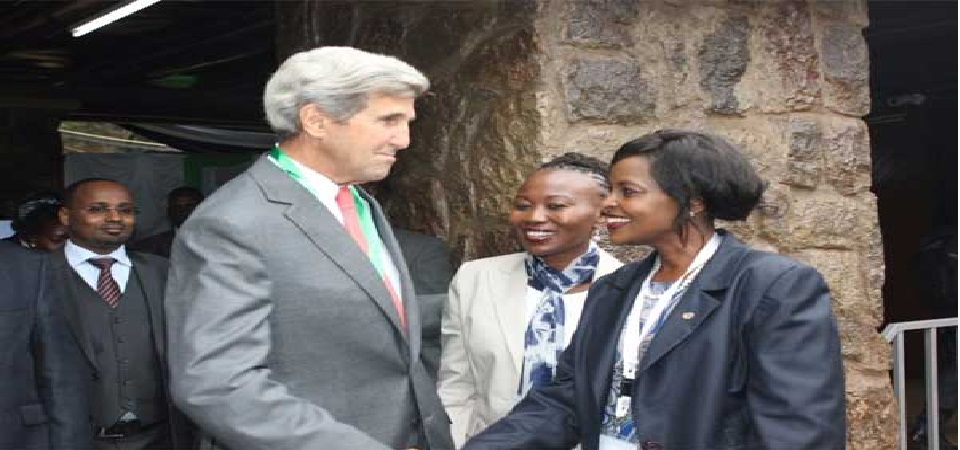
More than 400 election observers including the European Union, African Union, and the United States, felt that the Kenyan presidential election which took place in August was credible. In short, former US secretary of state John Kerry said the election was “free, fair and credible.”
There will also be spaces for IEBC guests, as well as its officials who will be swamped with work to collate, tally, before Mr Chebukati makes the final announcement.
The commission has also set a state-of-the-art media centre, with at least 50 internet-enabled computers.
Former US Secretary of State John Kerry termed as “extra-ordinary” the organisation of the IEBC after he visited Bomas and held a morning meeting with Mr Chebukati.
“The IEBC has done an extraordinary job to ensure that Kenya has a free, fair and credible poll. People will need to be patient, and we wish everybody well,” said Mr Kerry, who is leading the Carter Centre Observer Group
Yet, the Kenya’s supreme court declared the result “invalid, null and void.” Incumbent president Uhuru Kenyatta had been declared the winner by Kenya’s electoral body, the Independent Electoral and Boundaries Commission (IEBC). A contestant in the election, Raila Odinga, had petitioned the court and the court agreed that the process did not meet the constitutional requirement of Kenya.
This is not news – what is news is that nearly everyone saw it differently, including most parts of the Kenyan press, but Kenya’s supreme court and Raila Odinga. Specifically, I am surprised that the court did not even care what Kerry had to say. I mean, America had noted that the election was free, fair and credible. But the voice that mattered saw it differently.
I commend the Kenya’s supreme court for this high level of independence. With the near unanimous agreement from the international community that the election was fair, they could have been swayed. This supports my narrative that Africa’s solutions are within Africa when we begin to do the right things. No one can lead us into the proverbial promised land, but us. We cannot see others, especially Western powers, as gods in our national affairs. We need to have the confidence to be Africans in our shared destiny.
This lesson, demonstrated by Kenya’s supreme court, can be extrapolated into how we run our economies. We do not have to always take everything from World Bank, IMF and other global institutions as gospel messages. African leaders must be independent to question what others present to them. It means relying on African economists, over foreign experts who become African experts just by spending two days per year in the continent.
We know more about Africa than anyone from outside. As the Kenyan supreme court had demonstrated, they understood the situation clearly, even as the world was fooled. I do hope that Kenyans have their moments to elect a leader in accordance with the laws of the land. They have a working court on this.
13.0 – Recommendations and Conclusions
The turmoil of creative destruction is the pill Africa needs to effectively cure itself from the cyclical boom and bust associated with commodities. Innovators with their infectious visions and energies will deliver those pills by providing new vistas of doing things in the continent across industrial sectors. From the north to south, east to west, […]
10.3 – Innovation Frontier Sectors

The following sectors will see innovation opportunities in Africa in coming years as the consumer base increases and the continent becomes richer with higher purchasing power. In some areas like energy and education, the innovation spark is already taking place. These sectors offer avenues for innovators and entrepreneurs to create wealth as they provide solutions […]
10.2 – Major Technology Villages

As technology continues to redesign industrial competitions and shapes lives, new ecosystems have emerged. One of those ecosystems is called a Technology Village. A technology village is a built real estate that provides tenants with different services that include collaborative supports, customized lease, equipment, networking opportunities and community organizations, education programs, lending networks, tax incentives, […]