

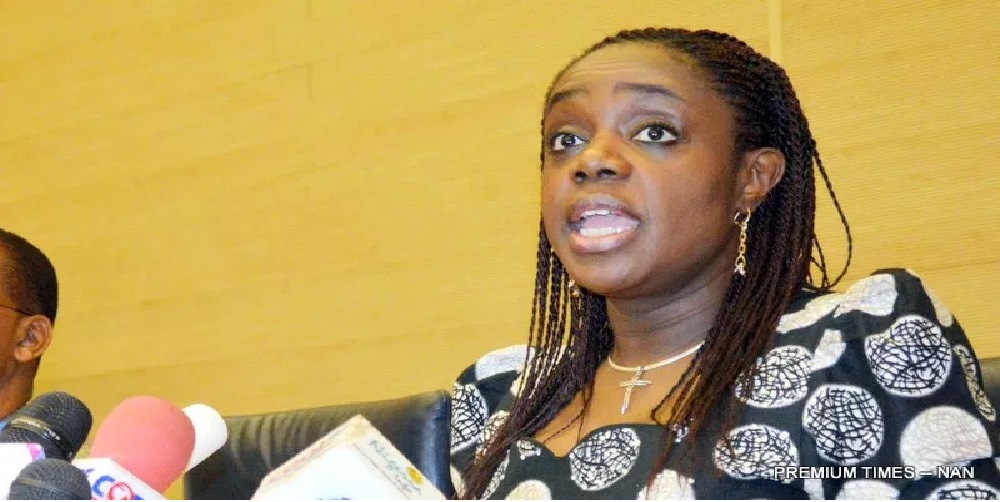
In this videocast, I explain how ICT accelerated productivity in Nigeria’s financial sector, and how Internet will change many things in both the banking and the insurance sectors. The texts are here and here.
Unbounded, Unconstrained Future Business Opportunities
It is October 1 2080; Ken’s parents have just renewed their marriage contract which expires every five years. This is the seventh time. Everyone is happy and they have reasons.
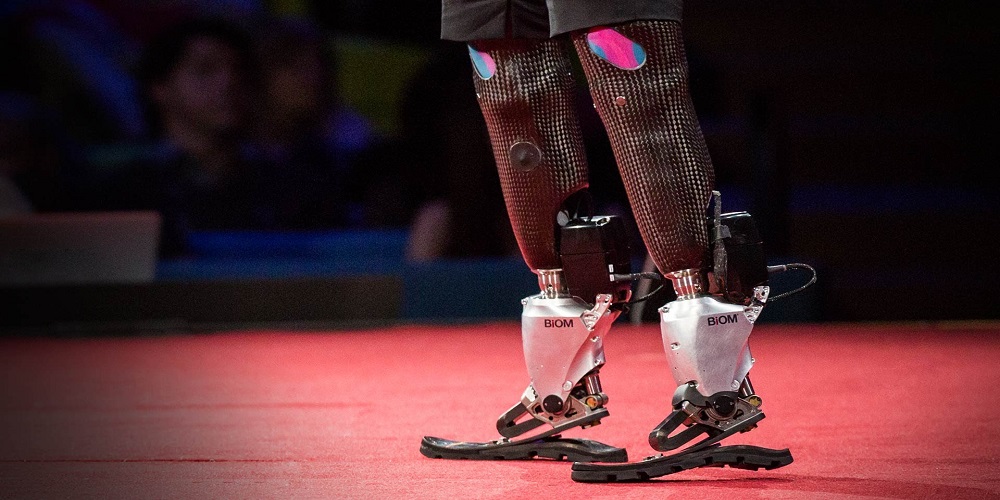
Two years ago, Ken was hospitalized for a severe fracture of the spinal cord. He had an accident and many thought he would never walk again. But thanks to experts in the state’s general hospital, his locomotion was restored through an electronic implant. They have used CPG (central pattern generators) implants to reactivate his motors.
For a young man who at youth joined a faith movement that considered implants immoral and unethical, it has been a long journey. He preached against it and even atoned to die to defend the sanctity of life by preventing human defilement caused by implants. He has reasoned along with the adherents of the faith that implants challenged the creative power of the deity.
But one afternoon while visiting his parents from college, he saw a boy he knew to be blind and deaf seeing and hearing. The joy, the hope and the energy from this boy and his parents enveloped him. The boy had gotten retina and cochlea implants. Ever since, Ken decided to become a neuromorphic engineer-a designer of implants.
Generally, technology takes time to penetrate and be accepted by the population. And in our contemporary society, the resistance to a new one like implants is expected. Unfortunately, that inertia to acceptability goes beyond safety and reliability concerns to morality and religiosity. But over time, the barriers usually crack and the technology is accepted. It could be inorganic food, medical MRI, medical robots, among others; attitudes change over time regarding innovations.
In the past, body enhancements for face and breast were despised until people began to appreciate how accident victims were remade by the technologies. Increasingly, in most societies, it is normal that people may want to improve their outlooks. Similarly for implants, some view that it is normal that someone could decide to hear better, see better and walk better. The issues of morality become blurred because man by nature wants to have a better quality of life. Why remain blind when there is a technology that can help you see?
Unfortunately, bionics touches a very potent area in religion because of apocryphal misinformation by some zealots. They say that implants are designed-ready for the biblical rule where doomed men will receive the mark of beast, ‘666’, in the reign of the anti-Christ as is documented in the book of Revelation. By avoiding implants, one inherently avoids readiness for this mark.
The reality is that the design of retina and cochlea all follow the typical processes used in making the microchips that power our cellphones and computers, except that quality controls are tighter because of their critical functions. As normal is the chip in the cellphone is the biochip in the implant.
We have been transformed by the phenomenal powers of microelectronics that opened the pathway to design tools that can restore vision, locomotion, among others; yet, many still cling on dogmas, denying themselves life-saving solutions. But with time, implants will be welcomed by the whole humanity and man will become mostly bionics. Moreso, as nanotechnology matures, we will see better implants with higher efficiency and lower cost as scientists take advantage of the migration from the classical Newtonian physics to quantum mechanics that provides more affinity to biology at sub-atomic level. Technology will triumph over dogmas with multiple ‘home-runs’.
Why? While it is easy to ignore vision implants on faith crusades, most will overcome personal beliefs to have their visions back through them. And if terrorists continue to ravage the world, governments may require implants in some troubled regions of the world to help save captives. In the near future, it is possible that military personnel will be bionics.
The human instinct to survival will continue to open opportunities for science to push further. As understanding of human biology improves, more efficient breeds of implants that seamlessly capture the event driven asynchronous parallelism of the nervous system will emerge. Will that be a path to attain that holy grail of human immortality? Can humanity in 20000 years today shop for bio-grade artificial brains on the Internet? In essence, this can go beyond body parts like retina, cochlea to all body. Simply put: can man electronically create biological quality human in the far future?
Possibly, this trend will be gradual that generations will experience techno-acculturation of gradual metamorphosis of Homo sapiens to bionics. It is very interesting that people are concerned about bionics when our present computing paradigm is simply a primitive system when compared to the way nature computes. There is going to be a quantum leap in bionics when spiking communication matures so that machine and nature could talk under a similar protocol.
In our time without looking deep into the future, man will be ready for bionics as more needs emerge for them. Our doctors will prescribe drugs that will take photos of our internal tissues and when needed reprogram them while inside us. To save us time, the drugs could be assigned Internet IPs so that irrespective of our location, our doctors can still help us. In other words, it is not just bionics, but man becoming an Internet node. Will this be welcomed? It all depends on the need for survival and life.
Our society will welcome implants as they mature and the health benefits well explained. The acceptance will positively correlate with the advancement. And as the buzz over the green tech fades in few decades, bionics will take central stage. But if society rejects bionics, the entertainment industry will help us break that barrier. When top golfers get new retinas for better vision on the course, we will hail them. And when we understand how those precisions come, the world will accept the inevitable outcome: the Homo sapiens will evolve to bionics.
I tell you today: the best companies have not been founded. Apple, Google, and Konga are placeholders. The world is unbounded, unconstrained and the future have possibilities and opportunities.
My New eBook Coming September 2017 with Exclusive Articles

Dear Tekedia Reader,
My ebook, Africa’s Sankofa Innovation, will be launched on September 1 2017. Besides the book, I will be publishing regular and exclusive articles that focus on business, innovation, and technology, in and around Africa with global perspectives. The articles will explore how entrepreneurs, investors, business leaders and other stakeholders can unlock value. The articles will be longer than the typical ones I share here on Tekedia. Apart from these exclusive in-depth articles and the ebook, Tekedia remains free to the general pubic.
For access to the eBook and the exclusive contents, a $20 annual subscription is required. Interested readers can pay with credit card, debit card, or Paypal processed via Fasmicro Group, my U.S. firm. Those in Nigeria can pay via our Nigerian bank accounts; the equivalent is N7,000.
All proceeds go to African Institution of Technology (AFRIT), my 501(c)3 non-profit with the United States Internal Revenue Revenue, to fund our operations. (Put EIN 30-0752559 on the IRS search site) Just as I assisted many schools in Africa on embedded electronics, I have a plan to assist in the areas of AI and big data. Putting subscription on these contents will ensure I can pay people that will work with us on this community service.
Posting here is a hobby which I enjoy during free pockets of minutes. We are seeing user growth evolving. I am hoping most will join us as we work to support African schools to deepen capabilities in AI and big data.
As always, thanks for reading.
Ndubuisi Ekekwe
The Nigerian Insurance Blurry Internet Vision

Most Nigerian insurance companies have websites. And some have small digital stores to make it easier for customers to pay premium. Apart from these two efforts, there is nothing else, on average, at the consumer side, in terms of new internet-based technologies you can see in the industry.
Sure, they have adopted information technology which has delivered productivity gains in the industry. That has also brought good returns to the owners and investors in the industry. The same thing happened in the banking sector where productivity unleashed unprecedented value creation by the new generation banks.
This ICT worked in the Nigerian banking sector. It brought into existence a new generation of banking institutions, about thirty years ago. About three decades ago, some Nigerian entrepreneurs saw opportunities that they could use better service delivery, anchored on technology, to redesign the structure of Nigeria’s banking industry.
The Nigerian insurance industry is largely on stasis. Remove the automobile insurance which people pay just to make sure the Police does not detain the car, every other product is not that popular. Customers that pay for the automobile insurance never really expect to call the insurer when a problem arises. The service quality is extremely poor that no one gets any decent value. They simply tax us with the premium paid because that is what the law of the land says: we must have insurance to drive cars, even if the insurance product has minimal value.
In 2015, according to the Nigerian Insurers Association (NIA), the volume of business underwritten by the insurance industry reached N350 billion ($1 billion), against N294 billion in 2014. This represents an increase of about 19 per cent. The industry remains very small and will need to grow. At $1 billion premium, it is less than 0.40% of the GDP of Nigeria. That is troubling.
The Nigerian Insurance Industry
The Nigerian insurance market is a paltry $1 billion (by premium sold) and that is for a country with more than 180 million people. (By comparison, the global market size is $4.55 trillion.) Over the years, Nigerian insurers have been unable to expand this market owing to lack of innovation.
South Africa accounts for almost 80 per cent of all premiums in sub-Saharan Africa and the country has an insurance penetration rate — the total value of insurance premiums as a proportion of GDP — of about 13 per cent, well above the developed world average. Of the rest, Kenya is among the most advanced, with a penetration rate of 3 per cent. Nigeria’s, in comparison, is about 0.4 per cent, even though it is Africa’s most populous.
The Nigerian Insurance Industry includes the following sub-sectors: Composite, Non-life, Life and Reinsurance operators. Over the last five years, the Nigerian Insurance Industry has grown at a compound annual growth rate (CAGR) of 11%, buoyed by increased capitalization as well as the introduction of policies aimed at promoting the local market.
Nonetheless, the industry remains challenged with low apathy from the Nigerian populace and weak policy enforcement practices, resulting in a low penetration ratio. These challenges however present enormous opportunities when benchmarked with other African countries especially South Africa. The industry has room to grow, if it can innovate.
The Internet Problem
By not getting into the internet, the insurance industry will not have the same level of challenge: the expanded distribution channel which has caused major challenges on media, airlines, education, banking, and other sectors.
While ICT provided unprecedented productivity in the Nigerian banking sector, Internet is seriously “destroying” value. This is a “problem”. ICT made them, Internet could destroy some of them. Internet is bringing the construct of creative destruction in the Nigerian banking sector where values are destroyed and new opportunities unlocked. But those new opportunities are not going to be, exclusively, within the controls of the banks.
But they are wrong – the future of commerce will be Internet-based and the earlier the insurance sector begins to move into that domain, the better. They may avoid the competition from InsureTech, insurance technology startups, but the future cannot be avoided. We need to see innovations, in the insurance industry, just as the banking sector is demonstrating on the web. I am very sure that the industry is not avoiding Internet in order to preserve value since Internet brings competition and can destroy value (yes, it does also create value, but the incumbents can see value dislocation). Rather, they are not on the Internet because they do not innovate. They like to blame the customers for not buying insurance, even though they have not put forward a compelling reason, through product innovation, for people to do so. They should be thankful that customers even buy insurance, primarily automobile insurance, because the law requires so.
Internet can help them innovate and evolve product vision that can meet the needs of Nigerians. But for that to happen, the players must show interest on the possibilities of the internet.
All Together
The insurance industry in Nigeria has used IT for productivity gains. Now is the time for the next level of innovation which is taking the insurance industry to the web. What they have been unable to do for decades – industry penetration acceleration – can happen if they digitize their products and make it possible for Nigerian entrepreneurs to participate via InsureTech. Should that happen, new products will evolve, and could actually deliver the aha moment that will make Nigerians begin to like buying insurance. The time is now: Nigeria needs a 21st century insurance industry.
The Talent Problem, Exacerbated
This is a Short Note.
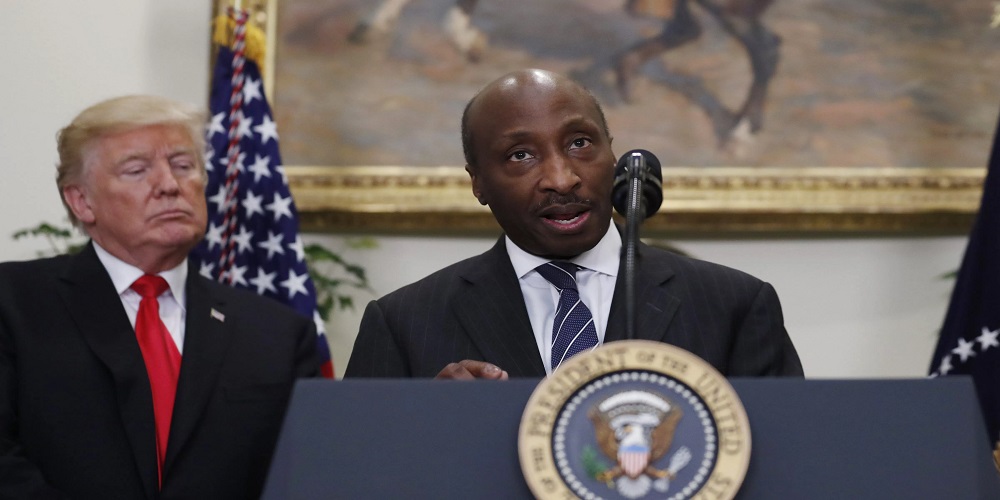
As you read this piece, more business leaders will continue to express disaffection to the president of the United States, Donald Trump, on how he responded to the racist parade in Charlottesville, Va. Over the last few hours, some members of the President’s Council on American Manufacturing have resigned. They do not want to be associated with an American president who cannot stand against racism, even when it is obvious.
Mr. Trump’s remarks came amid a growing rift between the White House and the business community that has emerged since the weekend’s violence in Charlottesville, Va., and criticism of Mr. Trump’s response to it. Six members in two days have stepped down from the president’s Manufacturing Jobs Initiative.
Among those CEOs are Merck CEO Ken Frazier, Intel CEO Brian Krzanich and Under Armour CEO Kevin Plank. .
Without wasting space on what Trump believes as a human being, I want to focus on the lessons, from what is happening. The way leaders behave and conduct themselves can affect pipelines for talent in their businesses. Just as Trump is going to find it harder to find top CEOs who can work with him on whatever he wants to do, it is the same way a business leader could struggle when his/her behavior alienates talent.
That people can run away from the President of the United States tells me that in this age of Internet, with eternal memories maintained by Google, there are limitations on the powers of offices. Indeed, people that occupy those offices matter. Today, Trump is the president and people know that. That means, before the eyes of these CEOs, who are leaving him, they see Trump and not just the most powerful office in the world.
So, do not just assume that holding a position is what matters. People will correlate the power of that office with the dignity the person holding it brings to it. Where there are many deviations, few will like to answer the call. When that happens, instead of working with A-Team, you are going to struggle with B-Team.
We continue to learn on the Trump movie which is still playing. But so far, we can agree that your power in any position means nothing unless you, the person, bring honour, decency and valor to it. The men and women that hold offices are ornaments that decorate the seats of power. The seats lose the efficacy if the ornaments are defective. But radiance emerges out of the seat when the ornaments are made with the finest quality.
Your talent problem – not being able to hire and retain the right people- may be a problem you created yourself. The most powerful person in the building could be so powerful that he/she blows all the fuses along the way. Indeed, the effervescence of power only lasts longer with the vivacity of human dignity.