Did you know that 38% of companies around the world are already using artificial intelligence (A.I.) to improve the performance of their business? In fact, if you’re using Facebook “Insights” to monitor your social media page, or Google Analytics to make decisions about your website, then you are already using A.I., too. Many of the world’s leading companies, including Mastercard, Deloitte and IBM are using A.I. more and more as “smart” software not only reduces the time spent of boring, repetitive tasks, but it can help you to understand your business and your clients better.
So, what is A.I.? It’s not actually software which thinks for itself. Rather, it is a program designed to do automate a recurring, sometimes very complex, job, so that you can free up your employees to focus on other tasks.
For example, many businesses today serve thousands, if not millions, of customers. Storing all this data requires money, but what do we do with it then? It can be overwhelming to try and organize all this data, let alone try to understand it. A.I. software can use a predefined set of parameters to search, organise and present data in easy-to-read graphs in minutes, helping you spot key trends with your customers, which you can use to make beneficial business decisions.
Similarly, smart software can also be used to monitor and maintain machinery and physical hardware. Many servers have temperature sensors to monitor the processor’s temperature, and manufacturing machinery requires regular maintenance. If the hardware fails, production stops, and the business loses money. A.I. software, such as DataRPM’s Cognitive Predictive Maintenance Platform, can monitor hardware to ensure it is working at maximum capacity. It can even schedule and remind workers when maintenance is due, identify potentially faulty parts, and make real-time decisions in the event of emergencies.
One of the biggest selling points of A.I., we think, is that it allows you to move your employees off long, tedious tasks, to focus on building the business. Companies like ING Bank and Vodafone now use chatbots to help their clients 24/7. Instead of speaking to a person, the A.I. analyses the customer’s questions, picks out the key words, and searches a database of responses to provide the most helpful answer. Sage have even done this with the world’s first accounting chatbot, Pegg, combining the benefits of chatbots with data mining to help users predict and control their finances. Meanwhile, other A.I. software can even help you to hire new, highly skilled employees by writing and posting job listings for you based on your requirements, or searching social media sites for people with the skills your business needs.
So, whether it is using Facebook’s “Insights” to understand how your customers are engaging with your products and services, from their age and location to the posts they “like” the most, to mining data to find and predict industry trends, A.I. means making software work for you and your business!
Bottomline: In this piece, I explain how you can operate in Africa and pay zero or extremely low tax, legally. There is nothing wrong in paying zero tax provided it is done legally. And you should not be ashamed that you are paying what you only owe the state. Your fiduciary responsibility to your stakeholders […]
Watch this movie first: it compares what you see with a smartphone display of 720p and another with 1080p.
I am not sure the difference is that significant. So, if you have bought a phone with 1080p, it is possible you have wasted money because the value derivable is not there. But we do it because it makes us look advanced and trendy. In the process, we waste money. This is the fact: a human eye has a maximum possible resolution it can handle. Most times, what we buy are beyond that natural capacity.
Now, read this piece from Fortune Newsletter.
In TV land, where we sit a few feet away from a screen that may be four or five feet across, the difference is often discernible. But on your tiny phone screen? Pretty tough to choose, don’t you think?
And that’s why the kerfuffle about Verizon’s decision this week to downgrade HD videos for its mobile phone customers from 1080p to 720p is probably getting way too much attention. (Tablet users still get 1080p.) AT&T, Sprint, and T-Mobile have been downgrading video even more significantly for many of their unlimited data plan customers—from HD all the way down to DVD-quality 480p, a resolution with only about 350,000 pixels. And all three have reported that customers can’t tell the difference or don’t much care.
So, next time you go shopping, please do not waste money on that 1080p phone display. It does not add much value in the user experience.
Tekedia is evolving as a community. We offer a book that goes for $20 subscription (N7k in Nigeria) per year. When you subscribe to our book, Africa’s Sankofa Innovation, your subscription offers the following:
Access to Africa’s Sankofa Innovation• Access to a new book coming next month (details in coming days)
Regular exclusive articles on business, innovation, and technology. The articles explore how you can unlock value in Africa
Priority access to the author via email/skype for his insights as you explore opportunities in Africa
Member Discussion Forum where members discuss articles, ideas etc.
Our payment system supports PayPal (plus Visa, Amex, MasterCard, and Discover debit/credit cards) and bank transfer/Interswitch. SUBSCRIBE HERE.
Update: I like this comment from a LinkedIn user on the piece feed. ” Dangote wants to invest 50b USD outside Africa. I believe Ndubuisi’s post is about how best he can invest outside Nigeria (to achieve geographical diversification) and at the same time derive additional value from synergies with his investment in agriculture in Nigeria.”
The Dangote Group plans to invest up to $50 billion in U.S. and Europe in coming years, according to Bloomberg.
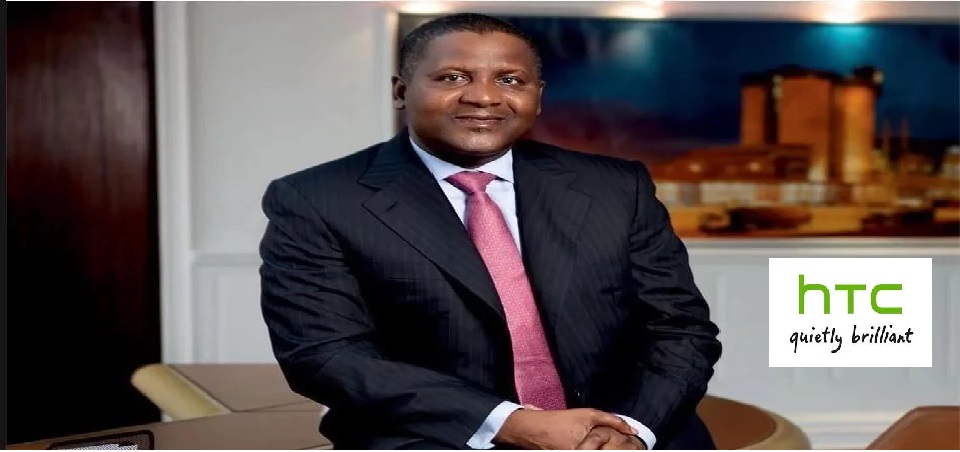
Africa’s richest man, Aliko Dangote, plans to invest $20 billion to $50 billion in the U.S. and Europe by 2025, in industries including renewable energy and petrochemicals.
The 60-year-old Nigerian cement tycoon aims to move into these territories for the first time in 2020 after completing almost $5 billion of agricultural projects and an $11 billion oil refinery in his home country, he said in an interview with Bloomberg Markets Magazine this month.
“Beginning in 2020, 60 percent of our future investments will be outside Africa, so we can have a balance,” said Dangote, who’s worth $11.1 billion, according to Bloomberg’s Billionaires Index. Dangote Group will consider investments in Asia and Mexico, but will focus mainly on the U.S. and Europe, he said. “I think renewables is the way to go forward, and the future. We are looking at petrochemicals but can also invest in other companies.”
Dangote Group will invest nearly $5 billion in sugar, rice and dairy production across Africa. But he does not want to get close to the telecom sector. Also, he is not necessarily interested in the broad technology startup ecosystem, except to take equity, but not to run the business.
[Dangote] When I look at telecom, for instance, I think that would be very tough for us. We are a little late. Some players have been in this market for 17 years already. There’s no way you can go and jump over somebody after 17 years of their hard work. So I think we would pass when it comes to telecom today. There are other businesses that we understand better.
[Bloomberg] Why not back more tech startups?
]Dangote] We can really do almost anything, but I think technology is not really one of the areas we want to go into right now. If I am going to invest in a tech company, I can buy shares, but it’s not something I want to go in and run. I am very passionate about industrialization—more than going into a tech company. It doesn’t make any sense for us to go direct there.
So, Dangote is not going to own technology companies and a telco. There is no problem with that. But Dangote may not know that he can actually do well in technology. He understands consumers through his companies and he can sell mobile devices to some of those customers. My recommendation will be for him to use part of that $50 billion to buy HTC Corp, the struggling Taiwanese smartphone maker. The position of this firm is explained thus, via a Bloomberg Newsletter:
Beleaguered smartphone maker HTC Corp. is exploring options that could include a full sale. The company, whose market value has slumped about 75 percent in the last five years, to $1.8 billion, is working with an adviser as it considers bringing in a strategic investor or unloading its Vive VR headset business, according to people familiar with the matter.
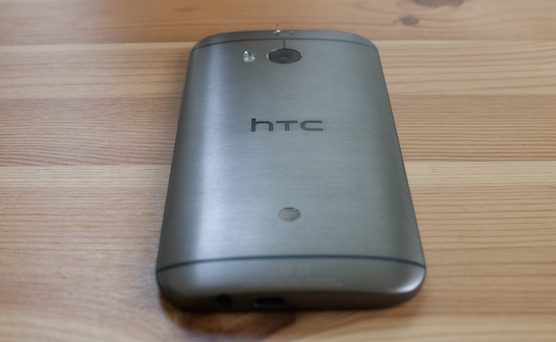
A HTC phone (source: paste mag)
Right now, it is rumored that Google wants to buy this company. But do not hold your breathe, Google will do the Motorola deal – take the patents and sell the company. HTC cannot compete in North America and Google knows that. The once innovative phone maker has lost grounds and may not have the resources to recover in the age of Apple, Huawei and Samsung. Google cannot save HTC, either.
The report said HTC and Google are expected to strike a deal by the end of this year as the Taiwanese firm cannot bear any additional losses from its smartphone operations. The report gave the market a different perspective about HTC’s future development since the market had widely speculated that the company will dispose of its virtual reality assets.
Rationale for HTC Acquisition
Dangote is investing heavily in agriculture and many sectors. Having HTC will help it modernize the agriculture sector and create new demand for mobile devices in the farmers networks. That will help it build a new business, adding more value in the agricultural value chain. The farmers that work with his company could be the first customers of a new device business if he uses his scale and HTC technology to deploy integrated solutions that will improve farming and agricultural services in Africa. This is a growth area and only Dangote has the ability to execute. HTC will have Dangote companies as its first customers, and when that happens in a Group, good things materialize.
Upon acquisition, he should close HTC sales operations in Europe and America and focus the firm in Asia, Latin America and Africa. In Africa, specifically, he will add more value to HTC products, at both the design and the applications inside them. This is one way Dangote Group can engineer huge growth and diversify its portfolios. Some of the areas below are opportunities which HTC acquisition can help Dangote unlock in the agriculture sector. It can build an integrated farming network that will be the foundation of agriculture 4.0 in Africa. And Dangote can use technology to create new businesses in these sub-sectors.
Agriculture insurance technology: making insurance products geared for farming
Agro lending technology: delivering capital to farmers at scale supported by technology
Farming ecommerce: expanding farmers’ markets by providing digital platforms for trade
Pricing aggregation: facilitating trading through provision of produce price data
Storage: African farmers struggle with storage of produce. Building solutions in this area will be catalytic
Logistics: there is a huge opportunity to facilitate the delivery of produce from rural areas to urban areas across Africa with our poor road networks
Digitization of transactions: from payment to tracing origins of produce, we have a huge need to digitize farming systems in Africa
Commodity trading: building exchanges for trading commodities
Others: there are opportunities like making digital tools farmers can use. These could include farm diary, mapping solutions, etc
All Together
Dangote Group wants to invest up to $50 billion outside Africa to diversify its business geographically. It has already planned to invest or rather investing about $5 billion in agriculture in Africa. I recommend that it buys HTC Corp to help it unlock more value in the investments in agriculture. Agricultural commodity is projected to become a $1 trillion business by 2030 in Africa, according to the African Development Bank. The data/equipment/tools around agriculture could be at least $150 billion by then. HTC will help Dangote Group play a major role in this emerging agro sector as mobile computing will anchor that data future. Though the firm may not have the experience to run technology-enabled businesses, selling mobile devices, once they are made in Taiwan, will not necessarily be different for a man that understands consumers and their taste trajectories. Once he brings HTC inside, he needs to close sales operations of HTC in U.S. and Europe since the firm cannot compete in the age of Apple, Samsung and Huawei. This acquisition will create value for the company.