Most times, for tech startups, investors care for only tech founders. If you are three and only one is technical, you have one founder. There is a reason for that: you must have a problem solved before you can market it.
Apple will likely pay $8 billion to Qualcomm on royalties. The latter took it to International Trade Commission which now wants to hear the compliant. According to Credit Suisse, Apple will likely settle. Why? ITC can block imports of iPhone to US. From Fortune Newsletter,
Apple is likely to pay around $8 billion to settle its dispute with chipmaker Qualcomm out of court – possibly as early as this month. So reckons Credit Suisse analyst Kulbinder Garcha, anyways. The International Trade Commission has formally agreed to hear Qualcomm’s complaint, opening the door to a possible ban on imports of iPhones into the U.S
Samsung commands 97% global market share of the OLED display which Apple will have in its new devices. That is a huge positioning power over a major competitor.
Microsoft wants to build in-house the chip for Hololens, the AR system. It is obvious chips for AR must be customized the Apple A8 way. From Google to Facebook, most make some chips for their servers. Google has a really fast one..
On Sunday, the software giant unveiled a new microprocessor of its own design that will go into future hardware products, such as the next version of its HoloLens augmented reality glasses, to perform artificial intelligence tasks. The AI coprocessor will analyze visual, auditory, and other sensor data locally on the device instead of relying on sending the information to a cloud-based server for review.
“This is the kind of thinking you need if you’re going to develop mixed reality devices that are themselves intelligent,” Marc Pollefeys, Microsoft’s director of science for the HoloLens, wrote in a blog post. “Mixed reality and artificial intelligence represent the future of computing, and we’re excited to be advancing this frontier.”
This is it: what you are seeing in these titans is happening at local level. Succeeding in a business now is tough because the cost of doing business is lower. The implication is that incumbents can advance to attack new business models with minimal pains. You make a chip, someone can easily make it because Internet has made knowledge abundant. A bank you want to partner can integrate that feature overnight in its app.
So, as you plan, be flexible for whatever comes. You must be aware of these challenges, understanding that even your best client can do what you are doing. Apple did just that to Imagination Technologies when it decided to make its mobile chip in-house.
So solution is innovation – making sure you stay ahead of the curve. And you must be flexible with deep awareness to pivot with capacities to see problems before they arise. Being a tech founder today requires lots of vision. You must be the Chief Product Officer.
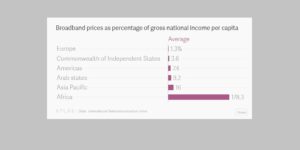
Everyone is complaining of the relative high cost of broadband in Africa. The simple extrapolation is that Africa should not be seeing huge video-on-demand (VOD) market growth. However, it turns out that investors are seeing good data to pump money into the sector. Nigeria’s iROKTOtv has noted that its Africa market has been growing, even as it pivots to subscription based business model. This week, iflix which has Africa as one of its markets, via a newsletter, noted that it raised $133 million, led by Hearst, the same company that backed Buzzfeed, Roku and others.
iflix, … announced it has completed a $133 million funding round as it continues to deliver on its vision of bringing the world’s best entertainment to its audiences.
Since going live in May 2015, iflix rapidly established a clear leadership position in emerging markets, setting a new standard for delivering a world-class streaming entertainment service, passionately focused on local customer experiences. Over the last 12 months, the service has seen extraordinary growth across all segments of the business, expanding from four markets to 19 across Asia, the Middle East and Africa. The company has additionally built deep integrated distribution partnerships with 27 leading telecommunications operators to bundle the iflix service with customers’ mobile and data subscriptions, all sponsored by the telecommunications provider.
In that newsletter, the company noted that it has excess of 5 million registered users (note: not paid users). It also noted that revenue has gone up 230%. Sure, it is not only Africa that iflix operates, but its growth trajectory is not isolated, even within the continent. There is something going in the African VOD market.
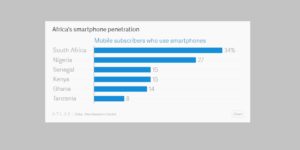
Africa’s smartphone and mobile internet penetrations are improving. Those are good things and would naturally be the drivers for what we are seeing. But focusing on those two may miss critical elements of innovation taking place which many companies are using to deliver videos in ways that customers can watch them without breaking their bank accounts.
Besides, other small things are working for these content creators: localization and ease of payments. Kenyan Gotv users can pay in mPesa while in some African markets, mobile airtime or prepaid voucher works. With these options, more customers are easily on-boarded. For Naspers’ ShowMax, customers can lump the bills in their DSTv or GoTv accounts under the MultiChoice brand.
Besides, we need to give the players credit for efforts to deliver local contents over just syncing Hollywood contents to Africans. The local content has had real impacts in customer experience. Who will not prefer Real Househelps of Kawangware over Real Housewives of Atlanta, if you are living in Kenya?
The Players
Africa’s VOD is growing and very dynamic. In short they do understand that video has no illiteracy challenge when produced in the customer local language. Unlike text, there is no requirement that one has to be educated to read the contents. So technically, video has the full African market for itself provided the videos are produced in the languages of the customers.
There are more than 180 VOD platforms with focus on Africa and black culture. The same report noted that only about 6% of African web traffic is video related. This means that growth still awaits.
Netflix is now in Africa, delivering services to most parts of the continent except perhaps Somali and Sudan where US government has trade restrictions for U.S. companies.
Naspers, Africa’s largest company, owns ShowMax which is huge. So far, Netflix has not intimated it as it continues to grow. Since Netflix launch, it has expanded into new countries. This innovative firm has also added Econet Kwese TV which is delivered via satellite.
iROKOtv is the undisputed leader in West Africa, delivering high quality local contents. When it launched in 2011, it was followed by Kenya’s Buni.tv in 2012. Later, South Africa’s Wabona and West Africa’s Afrostreamm backed by Y Combinator. Some of these companies have merged resulting to Restless Global, Trace Play, etc. Wabona has since shut down. There is also Ericsson Nuvu, South Africa’s Vidi and many other small players across the continent. Sure, most of those startups will fade. But that should not be the end of the story.
Innovation in Technology
Because price of data is still high, I will give these video players credit for what they are achieving. The winner will not just win on content but also technology. That means developing better compression algorithms to make delivering video on slow networks very effective. That not only improves customer experience, it also ensures customers pay lesser in a metered mobile Internet. I see three ways they are doing this:
Capping Technology: you make sure users can cap data as they go on the binge. This bandwidth capping tool is associated with how the user controls the quality of video. In other words, you can save cost by watching a slightly poor quality video.
Offline Watching: This is already common. They allow users to download the video to watch offline later.
Superior Compression: Connecting the above two is compression technology which ensures that watching or downloading video does not take so long in a poor network. Besides, it saves users money.
All Together
While we are seeing more funds arriving, in this sector, it does not mean that the key challenges have been solved. The slow internet, high cost of data and stability of the Internet infrastructure across most African cities will remain major challenges. Since most of these companies are not helping the telcos to address the issues, which will persist for years, VOD growth will remain in the cities. But the resilience in this sector does mean that technology (like compression tool) is indeed a defining competitive weapon. They are using tech to improve customer experience even as they wait for the telcos to expand capacity and improve speed with via investments.
As we wait for major investments in African telecom sector from the likes of MTN, Glo, and Airtel, it is possible that Facebook and Google may turn out to be the drivers for broadband penetration in most rural communities. The reality is that for Google (yes, Alphabet) to continue to keep Wall Street happy, it must find ways to improve ad business pricing power. (Goggle revenue per click dropped 23% in Q2). Sure, revenue was still up (21%) in the search giant because it had more users.
As WhatsApp, Pinterest, Instagram, Twitter and Facebook compete for online ads with Google, the pressure will be massive to reduce price. Over supply affects equilibrium, pushing price lower in an elastic demand market.
Ten years ago, Google was largely unchallenged in digital ad. But that has since changed. Even transition to mobile has even decimated per click value. Google needs to find a solution. Google Africa can deliver that.
The developing world, including Africa, will be the future drivers of growth. Google understands that, and the very reason its CEO is visiting places like Nigeria and India to boost the business. It knows that to compensate for the lower per click fee, it has to have scale. Yes, more users (both publishers and consumers). Unfortunately, what it is doing today is not enough.
Google has to return to its Google Fiber project and provide broadband to communities in developing countries. It can also pipe TV through that fiber so that it can sell ads on TV. This should be Google Africa strategy.
Google Fiber is part of the Access division of Alphabet Inc. It provides fiber-to-the-premises service in the United States, providing broadband Internet and IPTV to a small and slowly increasing number of locations. In mid-2016, Google Fiber had 68,715 television subscribers and was estimated to have about 453,000 broadband customers.
According to Bloomberg, it has some records, laying 621 miles of fiber in Uganda. That is not enough. the reality is that Google needs to commit more funds into this project in excess of the paltry $100m it is investing with partners. Its future in ad will be determined by these projects across developing world.
Google Inc. is scaling up investment in Africa by laying fiber optic cable, easing access to cheaper Android phones and training a workforce in digital skills as the U.S. technology giant seeks to expand on the continent.
“We laid about 1,000 kilometers (621 miles) of fiber in Uganda and we are busy doing about 1,000 kilometers in Ghana,’’ Google’s South Africa head Luke McKend said in a phone interview. “We want to make sure that we cover all the bases. We want to train people and make sure that they have the devices and are able to connect to the internet.’’
Of course, Facebook through its Free Basics is working on a similar strategy. though it partners with telecom operators directly as in Nigeria. I expect these tech firms to have huge impacts in Africa’s telecom sector in coming years as they look for growth.
Nigerian stock market was on the mountain top in 2006. The U.S. stock market was also high. As the Great Recession ravaged empires, triggering domino effects with precipitating avalanche, markets crashed. Nigerian and U.S. markets were not spared.
First Bank of Nigeria priced one of its last IPOs at around N50 per share, today it is less than N7. (I am not aware of any share split). The U.S. stock market has rebounded, even reaching historical heights. Nigerian one still lags pre-Great Recession.
Two things are here:
1. America has a regenerative capitalism that is fluidic and organic. It is like a living organism that can go through phases of adaptation which means that provided its engine of knowledge are not destroyed, it will always emerge from any challenge. Like the old question that occupied Greek Philosophers (what s the material component of the universe?) with different answers from Thales (water), Pythagoras (number), Heraclitus (fire) etc, the American companies have answers to figure out economic growth. When IBM stalls, Apple rises; as Kodak slumps, Nvidia runs.
2. Nigeria lacks institutions with capacities to test policies, resulting to lack of memory. Since independence, there is no defined apparatus to be re-used under periods of economic recession. At more than 60 years old, that is failure. Compared to America, from the Federal Reserve interest rate to injecting of money in the hands of the citizens (last time, they actually sent cheques to all American adults to spend!), America knows how to get out of recession pretty fast.
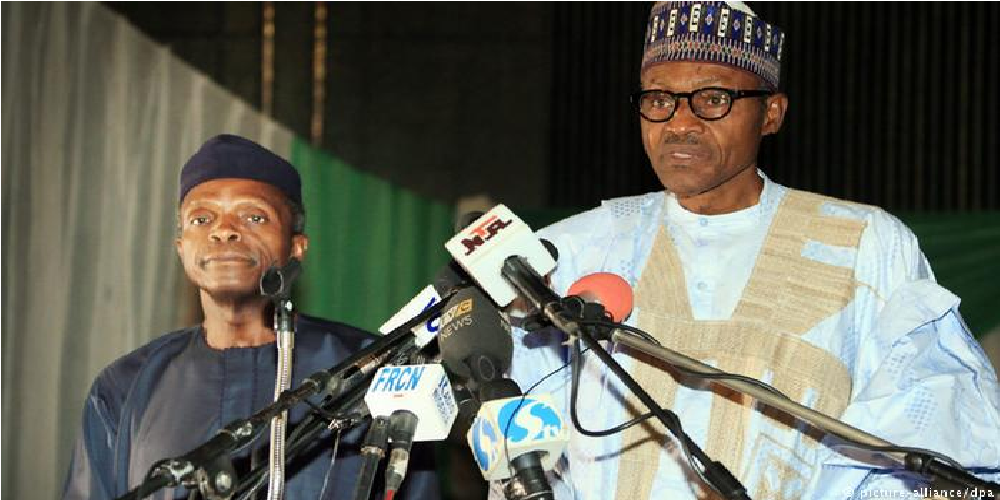
Building a regenerative economy will mean following through. Have you noticed that nearly all President Buhari ministers have launched new roadmaps for their ministries, discarding everything Jonathan’s team had. Jonathan people did the same to the administration before it. At the end, instead of a smooth curve, we have a scatter diagram as policy trajectory. No wonder, no one can predict the future because we have done nothing to create it (not my quote). All those political campaign promises are forgotten as soon as they take oaths of offices.We need to do better.
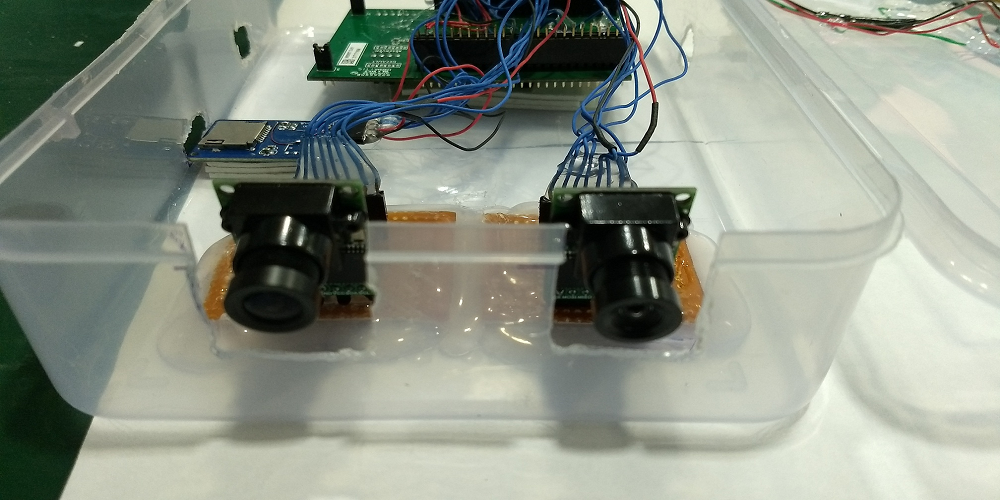
With my team, we are building a camera system which we will use in some new products with our major enterprise clients. This is not your typical consumer camera, this one does something bigger. It runs on our proprietary algorithm and wickedly smart in what we are developing it for. Think of a camera that thinks.
The bloodstream is anchored on biologically-inspired algorithms which emulate the event-driven asynchronous parallelism of the human central nervous system to deliver great and superior imaging processing capabilities at scale. This one belongs to Africa and sales are in even before the finish line. After the validation, we will make the camera enclosure, then mass production begins.
Today is a milestone and I am just excited to share. Sure, I cannot explain the images because of time but what you see is fine engineering. The camera will be used by clients on some specific purposes.