DD
MM
YYYY

PAGES

DD
MM
YYYY

spot_img

PAGES

Home Blog Page 7318

Top Modern Farming Technologies In Nigeria

16


Editor’s Note: This post is published with permission from Wole Ogunlade who originally posted it under this title “These 10 apps will help you practise farming in a modern way (in Nigeria)”


As the wave of “agric-prosperity” is blowing, the new perspective that many of us need to have is that a lot of opportunities exist in agriculture, but we need to unlock it by moving away from cutlass-and-hoes type of subsistence farming to modern way of agriculture. As a side project I recently started farming and I am so excited to see how technology startups are filling a lot of spaces in agriculture for every challenge farmers face. The good new is that while the previous generations depended on cutlass and hoe, today’s innovative farmers can leverage technology to his massive advantage.

I curated my top lists of such modern day tech innovations focused on agriculture in Nigeria.

My curated list of must-have tech innovations and apps for modern-day farmers.

1. Hello Tractor

For farmers that want to practice farming at a commercial scale, getting access to tractors and modern agric tools is one of the biggest problems. Hello Tractor provides a modern, Uber-style way to rent tractor. With a simple SMS booking platform or mobile app, you can join their network of farmers paying for tractor services.

 
Hello Tractor homepage

2. ProbityFarms

This is a FREE all-in-one farm management and accounting platform to manage your farm operations, book-keeping and connect your goods to a ready-to-buy market. Currently in beta, the platform offers farmer insights about farming activities powered by machine learning at each stage (e.g, alert can tell farmer that they should not apply fertilizer on particular days if the weather forecasts that it could rain).

The platform also incorporate a cooperative farming management and a full suite of business accounting tool. The good new is that there is a forever free plan that you can start with (I encourage you to check it out).

Another notable startup for farm management is AgroInfoTech; a social enterprise with a suite of apps and Zenvus; an enterprise-focused farm management application that is built on top of a hardware IoT. The Zenvus suite consists of farm management apps designed to take the guess work out of farming.

ProbityFarms Homepage

3. FarmCrowdy

Do you want to farm by investing in farming projects? FarmCrowdy helps you to invest in any farming initiative of your choice by sponsoring a farmer. It is Nigeria’s first digital agriculture platform. It recently got accepted to 2017 batch of Techstars Atlanta, a US-based tech accelerator . Farmcrowdy is able to leverage the “wholesale” pricing it can get from its partnership with insurance firms, communities of farmers, as well as fertilizer and other agro-allied companies to give its subscribers up to 50% guaranteed returns. It is noteworthy that Growsel is a similar initiative to farmcrowdy.

Farmcrowdy homepage

4. Releaf.NG

Releaf wants to help you get trusted buyers for your agric products. The company is run by Nigerian-American graduates from the most prestigious schools in US. They recently got funded by Ycombinator. Other notable startups in this space include OgaFarmer Farmoly and Farmly (owned by AgriHub)

5. Compare-The-Market

This is a simple platform designed to compare the daily market prices of food crops and animals in Nigeria. A key part of their mission is to track, forecast and monitor price trends of agricultural commodities in Nigeria. The site is updated daily with both retail and wholesale prices to ensure that farmers can price their goods at competitive rates. It is owned by Rotimi Williams, the young agric millionaire with the 2nd largest rice plantation in Nigeria.

6. Cellulant.

In Nigeria, Cellulant worked with the Federal Government to launch an e-wallet programme to aid Nigerian farmers directly redeem government subsidized seed and fertilizer vouchers from retail shops and in effect double their income.

While Cellulant is “transforming” itself to a mobile payment company, Agrikore its agric-focused arm monitors the implementation of agricultural schemes where every farmer can have access to financial services, productivity enhancing technologies & best practices, access to markets for Inputs & access to output markets, all enabled via the mobile phone.

In order to make the vision become a reality, Agrikore has created an ecosystem that comprises of Governments, Development Partners, Financial Institutions, Input Suppliers, Farmers and Off-Takers.

Agrikore?—?showing the categories of schemes (Did you notice 14M farmers are integrated in Nigeria alone?)

7. AgroData

Many will agree that there is a huge gap between research institutes like IITA or FIIRO and farmers. This is making it difficult to commercialize agric research initiatives. AgroData is poised to be the link between agricultural research and the farming populace. Farmers can now have at their finger tips new knowledge on farming activities that can improve their yields.

8. WhatsApp

It is worth mentioning that “mobile messaging is the new internet” and platforms like WhatsApp, Line, Telegram and WeChat are leading the pack. Many farmers’ group are leveraging the group chat features of WhatsApp to create informal groups to facilitate discussions and share intelligence about farming practices. I and my partners belong to a few of such group chats on WhatsApp.

9. VoguePay.

Sending and receiving payment is a fundamental part of every business and VoguePay makes it easy for farmers to do so. Instead of asking your buyers to pay to your “hard-to-find, one-branch-per-city bank that might be too difficult to find”, you can send a“request to pay” digital invoice which you can share via simple link on social media or WhatsApp to your customer to get paid.

You can also create full-fledged eCommerce website with VoguePay. Opening an account on VoguePay is free and easy to set up yourself with this guideline.

Alternative payment solutions to VoguePay that farmers can use to sell their products include PaystackSimplepay and cashenvoy.

10. Other useful tools

In addition to above, other tools which are super useful to the modern farmer is Google (you can always use it to find answers to any question or information). I also use NairaLand Forum, especially the agric section (there is even a whole thread populated with contact details of people interested in agric business)

Conclusion.

It might interest you to know that agric contributes about 22 percent of GDP and over 90 percent of employment, with a potential to add 21 trillion naira to the country’s GDP in 3 years.

There is no better time than now to consider investing in or practicing agriculture as the sector is getting a lot of attention from government, private sector and tech ecosystems. Even ventures capitalists are now funding agric initiatives at scale. Also social entrepreneurship platforms like Tony Elumelu foundation, the British Council and YALI are focusing their grant and mentoring programme towards agric initiatives.

Source: Medium

Wole Ogunlade is a digital and growth marketing strategist for startup. He believes that farming is possibly the new “white collar job”


Your Job Must Not Be Your Hobby, To Thrive

0

This is a Short Note.

Through my non-profit, we come in contact with people across our continent. I have visited many universities in Africa. Through this work, I always get people asking for career advice. Largely, no career advice is bullet-proof. You, the recipient, have to make your career work. Even the person giving you advice needs one. I want to move up the ladder, so I talk to people about career, not for job, but business opportunities.

You cannot be running a startup and also be wiring CVs for jobs daily. I understand the concept of hedging. But when you are out there as a startup founder, and at the same time you are looking for a job, you will likely not be at optimum execution. You want money from investors, and yet you’re polishing your CV. That overlap will even make it harder to have traction to raise that money.

The reality is this: if the startup is not a job you think you deserve to have, simply stop it and focus on looking for a job. It is very unlikely you will do well in the startup if that is a second choice. Besides, startup is not something you enter just because you lost a job or have no job, without making up your mind that it is the best job as you transition. That moment of truth must come that the business is the best I can have.

Confidence comes from dignity of labour. You must commit to what you do to thrive in it. Even if you do not like it, you must commit to it. Your job does not necessarily need to be your hobby, in Africa, because jobs are scarce. Like it or not, excellence in it is the only path to the next level.

NB: Startup in this content means going to create something of value with transformational impacts in the market. It is different from small business which could be barbing salon, selling corn along the roads, etc that rarely scales. You do not build such firms without focus.

“A company five years old can still be a startup,” writes Y Combinator accelerator head Paul Graham via email. “Ten [years old] would start to be a stretch.”…

One thing we can all agree on: the key attribute of a startup is its ability to grow. As Graham explains, a startup is a company designed to scale very quickly. It is this focus on growth unconstrained by geography which differentiates startups from small businesses. A restaurant in one town is not a startup, nor is a franchise a startup.


There Is Abundance In Your Career

0

This is a Short Note.

For  graduates, a key thing I have learnt for getting ahead, in careers, is not necessarily what you studied in universities. But rather, how adaptive and anticipatory you are, as you move on your career.

As a boy that grew up in a village with many military people, I saw success from the lens of military service because many of them in my village were “successful”. Good enough, someone taught us that we could get ahead by doing well in our traditional schools. We listened.

There are people that believe that unless they work in banking, telecom or energy, nothing will work for them in Nigeria. That is not really bad, but obsession with that mindset could be dangerous. There are many paths to getting to those “good sectors” in life. The key is making sure you are moving and not just static. When people waste two years after graduation waiting for jobs from the likes of Shell, GTBank and MTN, passing over little ones, from smaller companies, they may not be making the best decisions.

We read of robots, AI and other emerging areas in technology. We hail engineers and other wickedly smart people building these systems. But behind these geeks is a rush for liberal arts people who are humanizing the systems. They are helping to make science fiction become realities in our daily lives. They do write the sci-fi, engineers do not write sci-fi. Without them, the chips will be hardware with no nice games to power.

I have come to see that what matters, in career advancement, is pursuit of excellence in what you do. Sure, there are areas that make finding opportunities easier, in our modern global economy. But the fact remains  that anybody can be anything. Your life tenacity matters more than what degree you have in the bag. It is dangerous to have self-pity because of your degree or the school you attended. Looking into the future and finding energy to advance your life is what will drive you into abundance in your career.

There is abundance in Africa, across our cities with their hidden acres of diamonds. You will not notice if you are always looking up. Sometimes, careers advance when you look a little bit downward. Good luck.

Update: On this note Linkedin Feed, Dr Noimot Balogun shared this insight which we can all learn from.

I used to be in this situation, wanting to work in the best of NGOs, not really because of value but for the status and prestige. I eventually discovered myself, found out about my unused potentials and found out that those other BIG places can come back to even start chasing you with much more. But first, you have to situate yourself as a personality that can create value and sustain valuable discussions. It’s all about finding the untapped potentials in Africa.

List of 21 new Nigeria federal permanent secretaries appointed by Osibanjo

0

Nigeria’s Acting President, Yemi Osibanjo, has approved the appointment of new Federal Permanent Secretaries in the Federal Civil Service. The list is below with states of origin; the portfolios to be announced later.

1. EHURIA GEORGINA EKEOMA – ABIA
2. AKPAN EDET SUNDAY – AKWA IBOM
3. ANAGBOGU IFEOMA NKIRUKA – ANAMBRA
4. WALSON-JACK DIIARAU DIDI ESTHER – BAYELSA
5. GEKPE GRACE ISU – CROSS RIVER
6. ALIBOH LEON LAWRENCE – DELTA
7. UWAIFO OSARENOMA CLEMENT – EDO
8. FOLAYAN AYODELE OLANIYI – EKITI
9. OSUJI NDUBISI MARCELLINUS – IMO
10. MU’AZU ABDULKADIR -KADUNA
11. SULAIMAN MUSTAPHA LAWAL – KANO
12. ABDULLAHI ABDULAZEEZ MASHI – KATSINA
13. ADEBIYI BOLAJI ADEKUNLE – LAGOS
14. IBRAHIM MUSA WEN – NASARAWA
15. ODEWALE SAMSON OLAJIDE – OGUN
16. ADESOLA OLUSADE – ONDO
17. ADEKUNLE OLUSEGUN ADEYEMI – OYO
18. NABASU BITRUS BAKO – PLATEAU
19. EKARO COMFORT CHUKUMUEBOBO – RIVERS
20. UMAR MOHAMMED BELLO – SOKOTO
21. ADUDA GABRIEL TANIMU – FCT

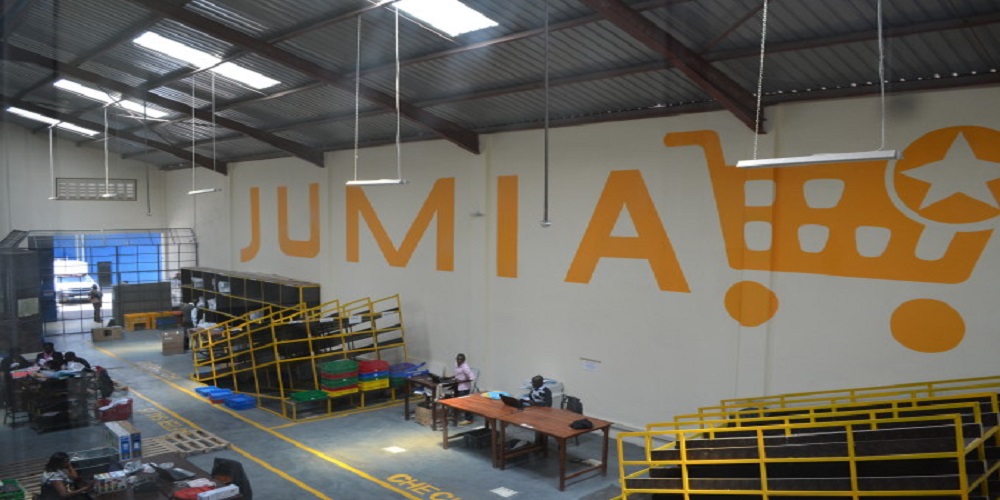
Konga and Jumia Will Not Benefit From Nigeria’s Ecommerce Pioneer Status

3

You can always count on Nigeria to confuse and then clarify. It turns out that Jumia and Konga will not qualify for the pioneer status which could have reduced their tax bills. This was contained in an interview, the The Executive Secretary, Nigeria Investment Promotion Council, NIPC, Yewande Sadiku, gave to Premium Times.

Ms. Sadiku said businesses that have existed for several years in a particular sector may not enjoy the pioneer status, except such companies ventured into a brand-new line of business covered under the list of 27 new industries and products.

“For instances, big companies, like JUMIA, who have established themselves in the e-commerce business sector as well as those in the music industry would not enjoy tax exemption by the government under the new regime.

“The pioneer status actually applies to those involved in their first year of business or operations. Clearly those older than that would not benefit,” she explained.

The objective of government, she pointed out, was to attract more people to invest in those sectors that have no investments to contribute to the growth of the economy.

“Only people that have agreed to venture into those sectors that would enjoy the pioneer status, and not those that have been there for more than a year.

I have written that Konga and Jumia along with others could benefit from up to 30% of corporate income tax break on the pioneer status since ecommerce was included. Now the details are coming out, that will not happen.

Just like that, the Nigerian government has made shopping online cheaper. The savings here could be up to 30% of profit provided the ecommerce companies decide to pass the whole gains to customers. This means that if a shoe commands a profit of N1,000, without the pioneer status, an ecommerce company can now sell it for N700 without any material change in its bottom line. This is because the difference of N300 would have been sent to government as tax, without the pioneer status in place. But since government is forgiving that tax, the online seller can sell at N700 without any change in its financials. This assumes that the seller is transferring all the benefits to the buyer.

We sincerely hope that the government will publish a whitepaper so that everyone will understand what is involved in this initiative.  Premium Times had noted thus:


The pioneer status grants companies making investments in qualifying industries and products a tax holiday from the payment of company income tax for an initial period of three years, with the possibility of an extension for one or two additional years.


—Image credit: Jumia blog