Few weeks ago, I wrote about how abundance of internet traffic does not guarantee more value https://www.tekedia.com/65289/the-law-of-diminishing-abundance-of-internet-higher-user-growth-uncorrelated-with-revenue/ . You can see more visitors using your content and yet nothing positive happens in the bank.
My suggestion to African entrepreneurs, do not build you business with ad-supported strategy. It is challenging. Rather, find a way to create value and have subscribers no matter how small. Do not be caught with traffic, focus on what happens in the bank.
It is very hard to make money from Google Adsense because Google discounts up to a factor of 4 African traffic compared to U.S. and Western Europe. So you need to quadruple African traffic to make up with similar US sites. In short, some Western advertises will not compensate for African traffic (excluding South Africa).
A US user generates $18.81 for Facebook (ARPU) while an African user is $1.41. I like Jobberman which asks people to pay now. I like iROKOtv which charges. It is better you have 100 people paying $10 per month than 10,000 people-traffic that gives you $10 at month end. But to do that, you need to invest in quality and differentiate. Traffic is a number, be focused on the real one – revenue traffic.
When I was in Federal University of Technology Owerri (Nigeria), I was a jacobian (people who read too much). I read hard because I needed to read more to do better. I knew I was not the smartest guy in class, but if I put more efforts I could come on top. There was an exam I prepared for straight 11 hours of study – Thermodynamics.
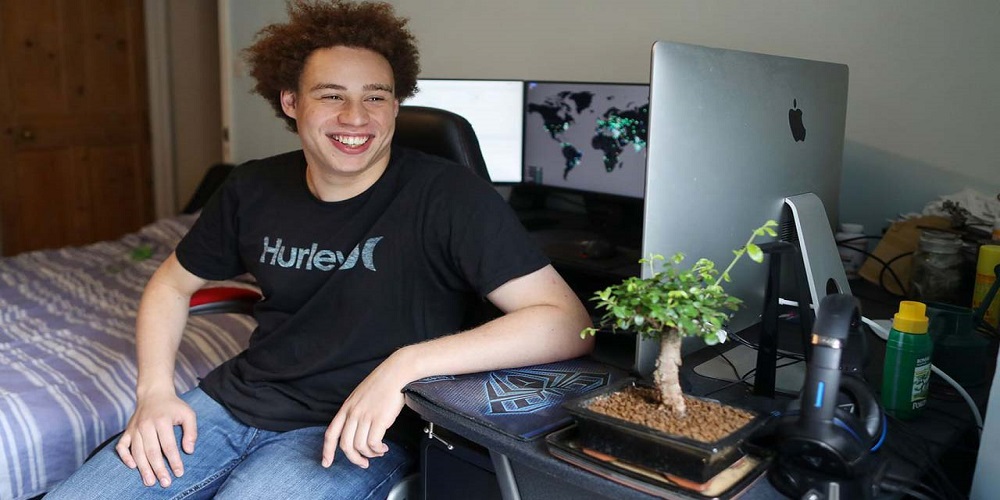
I understand one thing: life is not just about knowledge and being smart. It is more of the path you decide to take. A British whizkid Marcus Hutchin who “solved” the WannaCry malware was arrested in U.S. on the suspicion that he created another malware. He was hailed as a genius when he halted the spread of the WannaCry.
Marcus Hutchins, the young cybersecurity expert, who managed to halt the spread of the WannaCry ransomware’s first wave last week says he plans to donate monetary reward offered to him to charity. Hutchins, was responsible for halting the inexorable march of WannaCry on Friday, when he followed clues from the malware’s code and registered a domain name the attackers were using as a kill switch.
Ever since, his identity has been outed by British media and has been inundated with communications from the media, the cybersecurity world and more. He’s now even been offered a $10,000 by HackerOne, a platform for cybersecurity professionals to report potential security flaws in exchange for bounty rewards. However, Hutchins says he doesn’t want to take the money, and no instead plans to donate the amount to charity. “I plan on holding a vote to decide which charities will get the majority of the money,” he wrote on Twitter.
Now, how can brilliant people decide to be stupid? You have the mind of Einstein and decide to write malware infecting the world. He could be a legend. Hutchin refuses to take the right path just as we see brilliant kids in our universities that simply will not wake up to attend lectures. They fail and drop out.
The most brilliant student I met in FUTO did not last a year. He was peerless. But he had a flaw: his path was wrong. He would be sleeping up to 11am when students went to classes at 2am to “colonize” seats for classes starting at 9am. Do not waste your gifts.
Kangpe is on a mission to deliver quality health information to Nigerians. In an entry in VCA, it explains what it does:
Kangpe is a mobile health startup that allows people to receive answers to their health questions 24 hours a day from verified doctors via SMS, mobile app and web. With an average of 2 doctors to every 10,000 people, Africa has the lowest Doctor to Patient ratio in the world.
Further compounding this is the fact that large numbers of African doctors emigrate abroad for better opportunities, creating a talented but inaccessible pool of doctors of African origin. Thus many Africans do not have the means to regularly access a doctor and those with the means endure inefficient hospital systems.
This creates a climate that makes it difficult for Africans to get the right information to live healthier lives and allows the widespread propagation of misleading information, worsening an already dire health situation as people do not have the right information to take the right action. Kangpe users send their questions via mobile app, SMS or web. Kangpe then routes it to one of the Doctors on the system who then provides an answer. This answer is then relayed to the user.
Kangpe’s business is a brilliant idea for anyone in Nigeria where there are very few medical professionals. You have a problem and need to quickly talk to a doctor; Kangpe makes that a possibility. Three Nigerians – Femi Kuti, Ope Olumeken and Matthew Mayaki – launched Kangpe in 2016. It now operates in Kenya and Ghana with excess of 60,000 users. In an interview with TechCrunch, Femi Kuti, the CEO, noted that using Google search may not be optimal on some health related issues: “Kuti also points out the platforms working in the U.S. don’t exactly translate to care in Africa. “Google doesn’t know about African disease”. That statement is the core of this insight today, because Google is doing something to improve its search engine to provide relevant health feedback to users, at local level.
Kangpe is one of the Nigerian entities in the Facebook Free Basics which makes it possible that one can browse its contents for free without metered Internet. In other words, you can read its contents, and you will not be worried that your mobile browsing credit will be consumed, depending on the phone company providing your service.
Google’s Eclipse
Google understands that the best of its search business can only come when it has the best data. It is working with local institutions across Nigeria to deepen that data integrity. It may not necessarily be good news for Kangpe business model: Google will soon have the capabilities to understand local health disease issues through a partnership with University of Ibadan.
The announcement was made on Thursday at ‘Google For Nigeria’, an event which had in attendance for the first time in Nigeria, Sundar Pichai, Google CEO. Health Cards is one of the several updates added to Google Search in a bid to bring more useful, relevant answers and information to people in Nigeria.
Here are the functions of Health Cards, Knowledge Panels and Posts on Google.
Health Cards: Later this year we’ll launch more than 800 knowledge cards detailing common symptoms and treatments for the most prevalent health conditions in Nigeria. We’ve partnered with the University of Ibadan to ensure that answers have been reviewed by Nigerian doctors for local relevance and accuracy. Nigeria is one of the first countries where we’re providing locally tailored health answers on Search.
Just like that, Google will be providing some features of what Kangpe provides to the market. But of course, Kangpe will still have its phone-based service. It can generate revenue from that model.
Dr Femi Kuti, CEO, Kangpe
What Kangpe Needs To Do
Kangpe will have to innovate as Google moves into the aggregation of local health data. It can connect patients to clinics, health insurance and also deliver care directly to patients. The company has already hinted on these elements in the referred TechCrunch article.
Kangpe’s core business strategy is delivering quality local medical information at scale. If it loses the edge on the web over Google, it must pivot. The model of phone call will remain challenged by scale: how many doctors will they have in the system to support the users? Also, the challenge of phone calls (i.e. making phone calls is expensive in Nigeria as it is pay as you go) limits that model for many Nigerians. So, at the end, it is information discovery that will give Kangpe the best path to a sustainable business. That means, they have to build a platform that does aggregation between patients and clients just as Airbnb and Uber do for housing and transportation respectively. Kangpe can generate enormous value within the aggregation construct.
Under the aggregation construct, the companies that control the value are not usually the ones that created them. Google News and Facebook control news distribution in Nigeria than Guardian, ThisDay and others. Because the MNCs tech firms “own” the audience and the customers, the advertises focus on them, hoping to reach the readers through them. Just like that, the news creators have been systematically sidelined as they earn lesser and lesser from their works. But the aggregators like Facebook and Google smile to the bank. The reason why this happens is because of the abundance which Internet makes possible. Everyone has access to more users but that does not correlate to more revenue because the money goes to people that can help simplify the experiences to the users who will not prefer to be visiting all the news site to get any information they want. They go to Google and search and then Google takes them to the website in Nigeria with the information. Advertisers understand the value created is now with Google which simplifies that process.
However, with Google going into this space, Kangpe will have to find a clever way to structure its business. It cannot just focus on making general information as it does now on its website. It has to build a defined service which must possibly involve subscription by offering value to patients and doctors. Patients pay annual fees to be linked to doctors. That access to doctors is a model that Google Search cannot replicate. But mere information discovery is on direct competition with Google and with Google’s partnership with University of Ibadan, Kangpe may be unable to compete in that space.
All Together
The arrival of Google in the ultra-deep local data business will put pressure on many local companies in Nigeria, as it scales its new products like Health Cards, Knowledge Panels and Posts on Google. Specifically on the medical area, Google is a force for good, and it has all the rights to do what it is doing as Africa will benefit. We need to have more data online to support commerce and trade and Google is investing more than any other company in that space. As it works with University of Ibadan, we will suddenly have access to quality healthcare data on the web, instead of in shelves not accessible by the Nigerian people that fund the university. However, entrepreneurs whose businesses focus on making local data available online will struggle because Google will possibly build better ones and will likely direct traffic to its own contents (which are always better). The challenge for entrepreneurs will be building businesses that deliver service on top of data, beyond the level of mere discovery. For Kangpe, it has to find a way to get people to pay, preferably through subscription, to facilitate linkages between doctors and patients. With that revenue, it can offer many services which Google Search cannot do, and that includes connecting patients to clinics, helping them on the right health insurance product and delivering minimal phone-based care in real-time.
Acting President Prof Yemi Osinbajo spoke brilliantly yesterday in Abuja during a graduation program in the National Defence College. He said: “I challenge the elite of our armed forces that if militants, terrorist groups and internet hackers are constantly re-inventing themselves taking advantage of emerging technologies, you have no reason whatsoever not to be at the cutting edge of technological warfare. You must consistently redefine your role in national security architecture.”
He also challenged the military on a roadmap as Nigeria faces a double whammy: dwindling oil production and displacement as nations pivot to “stop use of petrol vehicles”.
I’ve stated that Nigeria needs to develop a military battalion dedicated to cyber-defence – the cyber version of the traditional battalion. Also, as Mr. Ag President noted, for the military to assure Nigeria’s security, it must fix the oil dependence.
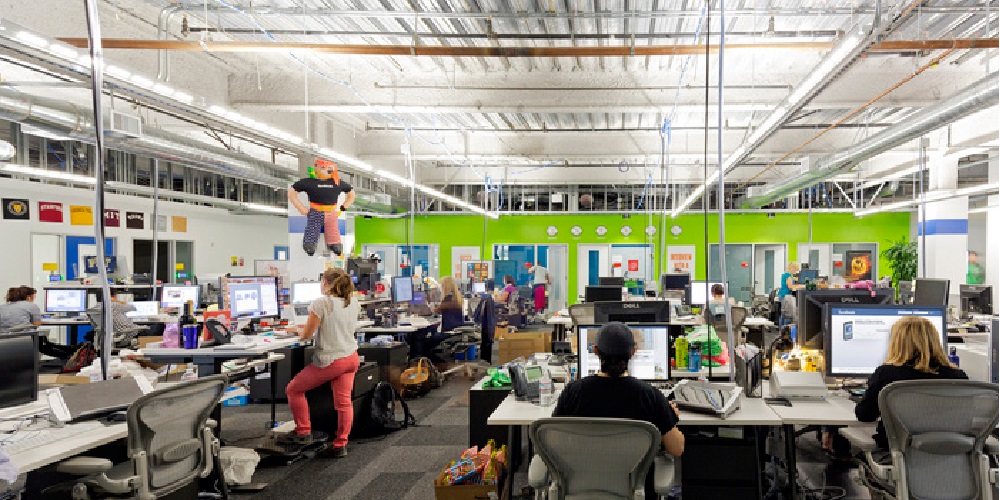
How do you hack Facebook? How do you grow audience? Compare these messages.
Good:
The CEO took the design team to a restaurant. Here is the photo with all
This young lady made our API which you downloaded. Say hello to Aud
This is the card HR left for our marketing team for serving a client well
Bad:
The CEO launched our new products, see launch photos and share
Our API has been upgraded, download and use
We have optimized prices to serve customers
Facebook is about personal moments. You can hack Facebook growth by integrating your marketing in personable ways. Mix it with inspired model and your firm will do well