

Over the past few decades, Nigeria has emerged as one of the key political leaders in Africa. Despite a long history of under-performance, driven primarily by leadership and visioning problems, it remains a key global strategic partner. It has petroleum with the capacity to partly influence the dynamics of global commerce and industry. Whether the […]
Zenvus Boundary Unveils Franchise Opportunities Across Africa

Zenvus is an intelligent solution for farms that uses proprietary electronics sensors to collect soil data like moisture, nutrients, pH etc and send them to a cloud server via GSM, satellite or Wifi. Algorithms in the server analyze the data and advice farmers on farming. As the crops grow, the system deploys special cameras to build vegetative health for drought stress, pest and diseases. Our system has the capability to tell a farm what, how, and when to farm. It has in-built GPS, compass and XL making it possible for a farmer to map the boundaries of his/her farm which could be useful during loan and insurance applications. One of the solutions available in Zenvus is Zenvus Boundary.
Zenvus Boundary
Zenvus Boundary maps farm (land, home, office or any landed property) boundaries and populates them via GIS on Google Map where the survey maps can be printed in our portal. And when done, register with their cooperatives which help them ratify the boundaries with governments. We use this to formalize farmlands and enable financial inclusion. Below is a sample result which the farmer can take to a bank as collateral for loans, after ratification by the local government..
We are looking for partners across Africa. You will use our technology to support farmers in the digitization of their farmlands. We will take a very small commission from the charges to farmers. Also, you will be required to pay membership fee in the franchise.
Contact zenvus@fasmicro.com if interested.






Email info@zenvus.com
Searching For A Leader, For Nigeria
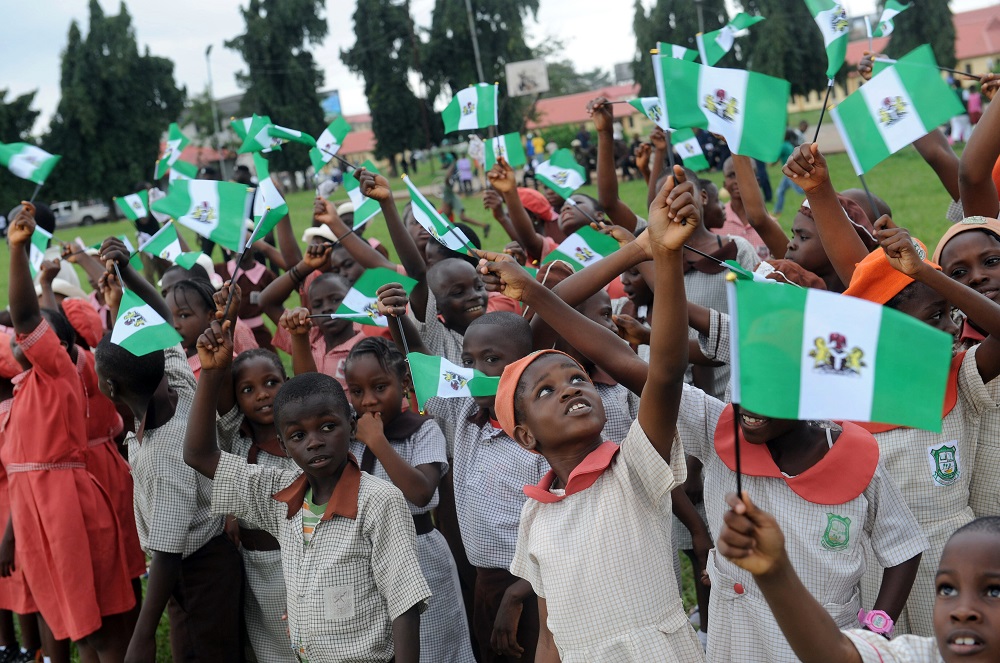
Men (and women) build nations and across human histories, God has raised so few to save the destinies of people. These special people have the visions to lead their fellow citizens into a more hopeful and prosperous future even in the midst of challenges. For decades, Nigeria has sought for a leader that can mobilize its people and inspire them to rise above their perceived terrestrial boundaries. Someone with capacity that can bring change that is sustainable and transformational. As a nation of optimists, can-do people, icons in trade and industry, a special people in the community of nations, our expectations from our leaders have always been gigantic.
Over the last few years, the world has undergone tremendous redesign. The advent of information and communication technology continues to engineer new economic models, transforming nations into knowledge-based economic units with networks of citizens, firms and states that are linked together in interdependent global relationships. From private sector to public enterprises, we are seeing amalgam of new class of workers that are reshaping the traditional model of competition. Globally, these knowledge workers are building new institutions, positioning countries to manage impacts arising from globalization, terrorism and exchange rate turbulence, by establishing modern infrastructures on education, industry, health and energy. It is a new world where nations that fail to develop or learn, acquire and adapt technologies will remain poor. The emergence of China and the continuous threats to traditional industries by startups, enabled primarily by brainpower, are showing that we are in a time of global redesign and transformation driven by knowledge, an important factor of production.
Knowledge will rule modern man and this knowledge is new, fresh and combative. Since Adam Smith’s ‘Wealth of Nations’, there has never been a more urgent time in the history of man where innovative economic and political leadership is required of leaders. The reason is simple; globalization makes it difficult to control factors like trade and labor, which hitherto, could be easily controlled to the advantages of nations. Because of the “new continent”, Internet, only nations with dynamic and insightful leadership can prosper.
From American Wall Street to Nigerian Broad Street, leaders have come to realize that new ideas are needed because many old economics are falling. Old economic models are no more efficient in controlling development plans and new tools are required. Yes, new ideas that accommodate emerging variants that technology has enabled in both the political and economic national models. Models based on the theme that every nation has a limit to national wealth without science and technology. It is an understanding that the era where natural resources dominate international trade is giving way to that of knowledge resources. Natural resources are still important, but unfortunately, the most stable and prosperous nations are those that create ideas with army of knowledge workers.
Nigeria as the largest economy in Africa is not isolated in these events. Over the last few decades, Presidents have come. Presidents have gone. But none has demonstrated the intellectual sagacity required to anchor a virtuoso moment for the beautiful country. They look timid and seem incapable to pilot the economic affairs of our nation excellently. They stumble on minor local and international challenges because they lead operationally, instead of strategically. You watch them approach highly important moments without analytical rigor, pursuing effects, instead of the root causes. Daily, you see simpletons leading a country with legends in Physics, Mathematics, Business, Literature and any field conceivable.
The education system is stale. And across the nation, communities of farmers are hungry. The health sector has been blacklisted by the same government that runs it. It is a total shame.
Nigeria is looking for a leader, from the local to the highest. Our moments of glory are daily passing, because men are shadowing the sun from shining upon one of the most favored people on earth. We have oil, but we enjoy darkness. We have engineers, but they have no bitumen to fix roads. We have accountants, but they have no sales records to reconcile. We have doctors, but those that pay them are never their customers. We have teachers, but they are locked out of labs and libraries with no funding. Yet, government is busy. Busy for what?
For the undeniable spirit of optimistic exuberance, by a people legendary for it, and by men and women believing in churches and mosques that Nigeria will be great, we will not have a nation. Out of them are entrepreneurs and businesspeople doggedly pushing for a future while their leaders gaze. Despite the bravados of the private sector that transcend the shores of Niger, Mississippi, Zambezi and Thames, the leaders have seen them as enemies, with no support. Aba is a waterside when it rains. Maiduguri, once a center of commerce, is now a lab for misinformation. The legendary Ibadan cannot have one of our finest universities to dialogue with its students. And in Yenagoa, universities teachers could stay home for weeks, while it is all normal to close primary schools in Makurdi while simpletons pile up their bank accounts.
The Nigeria flag – will like to fly higher, on the shoulders of great leaders
Yet, the advancement of any modern superpower has been fuelled by its educational infrastructures. And the collapse of any great nation has always been preceded by the decay in its education. The old Greece was known for its fine philosophers, the Babylon known for its wisdom and the old Egypt, where civilization began was known for its knowledge. In its age, Egypt was admired for knowledge as the land of pharaoh had some of the best thinkers. During the British industrial revolution, their education was the best, as few schools could be compared to Oxford and Cambridge. Today’s dominance of the United States is attributed to its education, which remains its best industry, at least at the university level. The schools drive the researches that translate to new technologies, which subsequently diffuse into the economy. No modern Nigerian leader has understood that the nation will be on perceptual stasis if education is not strengthened, from primary to university levels. We are still striking in the 21st century.
Nigeria enters the knowledge century unprepared despite all the efforts from its youth and entrepreneurs. Leadership has failed to galvanize a visioning process that delivers fundamental changes in trade and industry to make us the destination of quality capital. From electricity to road networks, Nigeria is a nation resembling a young lady left at the altar, alone, on her wedding day. As the youth runs towards the mountain-top with the blissful energy of happy stars around the world, they always remember that from the creeks of Yenagoa to the lagoons of Lagos, from the mangrove of Calabar to the grassland of Sokoto, their nation is not helping them compete, at the global arena. While their peers talk of artificial intelligence, they are concerned with artificial darkness perfected by man.
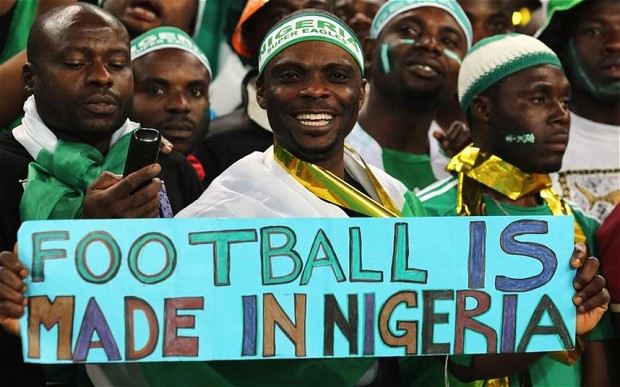
Nigerians are optimists, despite the challenges, they always have fun (Source: Travelstart Nigeria)
But we are Nigerians. We are of the same blood as Achebe, Soyinka, Azikiwe, King Jaja, Ahmadu, Bayero and other heroes current and past. We are Nigerians smart, ingenious and optimists. We want a leader who has demonstrated the capacity to rally the nation in honesty, hard work and raise our imaginations beyond where we are for a better future. A leader that can engineer a transformation for our nation with bigger and larger dreams that generations of Nigerians will unite for. He is born a Nigerian and belongs to Nigerians but to none.
A leader that can create a society to engage our brightest minds in government by evolving a new political system designed to seriously solve problems. A person who can engineer Nigeria into rebirth and restoration to offer a prosperous nation that is colorful, fluidic, vibrant and open for change. Yes, a person of immense intelligence, competence, pragmatism, and unimpeachable. A person of integrity, broad knowledge, enormous vision and solid experience; one that can stimulate more vibrancy in the private sector and move the public sector out of its stasis. With that leadership, Nigeria will witness changes in trade, education, and commerce as battalion of knowledge workers emerges to give us the needed clout in the global arena.
I am looking for that leader. And I know in this great nation and even greater people, they abound. I am searching for a leader, for Nigeria.
Tax Incentives Required To Stimulate Africa’s Venture Capital Sector
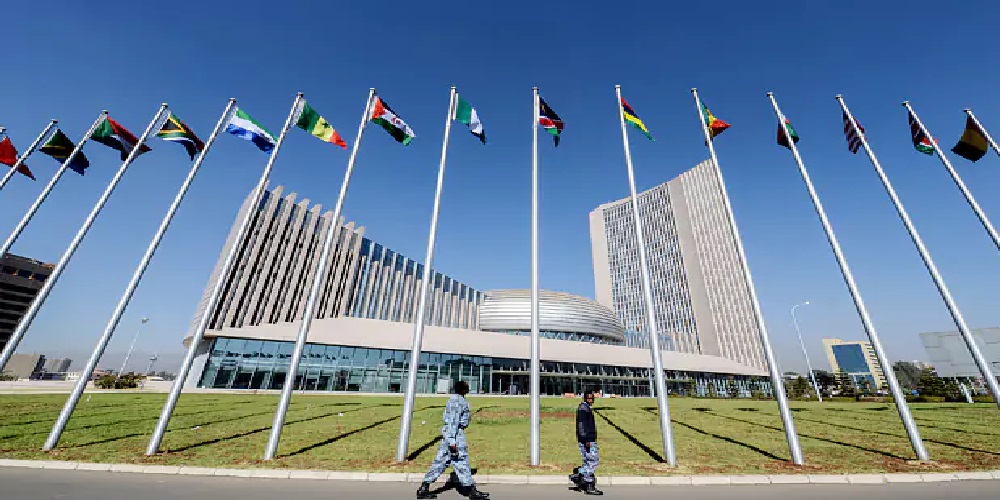
In this video, I explain why Africa needs to stimulate its VC sector with tax incentives. The supporting article is here.
Fixing Aba Shoe And Leather Industry
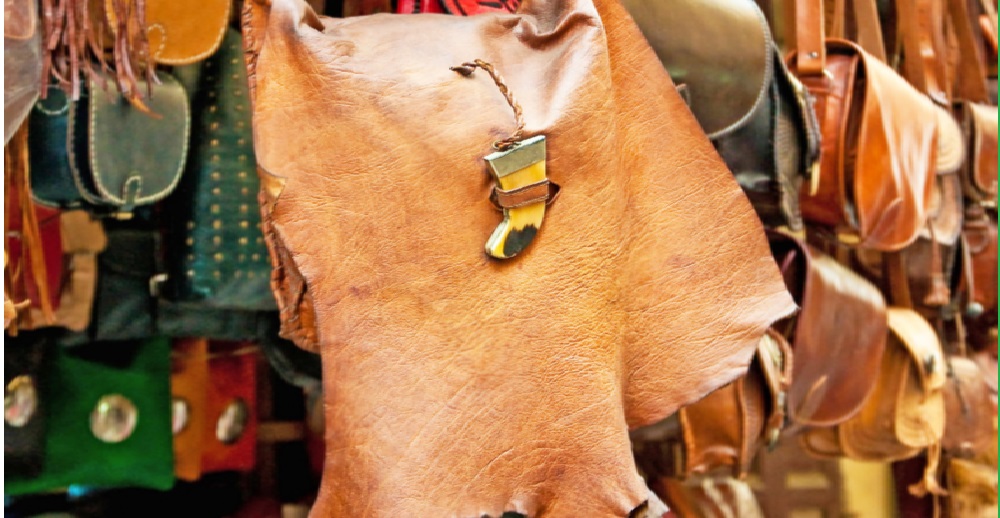
Nigeria is proud of Aba, for the creativity, ingenuity and resourcefulness of the makers and artisans working therein. However, Aba has been a promise which for decades has not delivered on its leather industry. The professionals have not evolved their production processes for generations, resulting to products, which have sparks of genius, but which are at the end, defective in quality.
Lack of automation is one of the key factors stifling innovation there. The designers and their administrators have failed to learn modern industrial processes, making them largely remaining as craftsmen instead of businessmen. New ways of making modern shoes and bags, by using computer software, to improve specifications and quality, are yet to be adopted, at scale.
The implication is total frustration: why can’t Aba rise for Nigeria?
Aba is not a man-made cluster. It rose without specific government intervention policies. Also, unlike most global clusters, Aba does not have much affinity to any university and local government lab. The people are the researchers, guiding their business processes, to the levels where they are today. The implication is that Aba leather sector is subsistence, with men working for years with nothing to show for it. It is not seen as a business, it is a cultural career with men having fun, and not being in positions to earn decent wages to help and support families. They make shoes with their hands and barely can find margin to send kids to good schools and cover medical expenses. They are artisans in a global industry, full of legends, who make money doing what they, but in different ways.
The poor innovation capabilities in Aba is the weakest link in that city. Poor R&D activities, management talent and infrastructure, make it extremely difficult for Aba to shine. Unlike in the past, when manufacturing firms like Bata dotted the Factory Road (Aba), the infrastructure problem is keeping many multinational firms out of the city, as they cannot setup R&D operations without the necessary basic amenities. The security issues in the past, have also affected the perception of the Enyimba city despite any award Enyimba Football Club had brought to Nigeria. Financing at corporate level that can help transform makers to companies is lacking. Aba has become a Tier 2 city going down the drain of Tier 3 city, in Nigeria.

It is a broken promise, because in the Aba leather industry, we have men and women, struggling to have decent lives, in a market with a verifiable demand to meet. They come to work in the morning, they pray for light to come so that they can work.They sing in Ariaria Market and invite pastors to make light come. These problems have been there and it is largely the Nigerian problem. Light has refused to come. And everyone is frustrated, and as soon as the drum of IPOB (Indigenous People of Biafra) beats, men with nothing to do, rise up.
Nigerians are entrepreneurial, mobile and ambitious. Some little support can help unlock the opportunities that exist in Aba to compete with Italian brands, at least in Nigeria and Africa. We can make Aba great.
In this piece, my focus is the shoe, bag and general leather sector (textile is excluded). Here is how to fix Aba.
Branding/Rights
We propose for Aba to have at most five core brands under which the players can market their products. This branding will bring noticeable differentiation and equity in the market. The essence of the branding is to help them make Aba innovation a living entity that needs to be nurtured and supported. To do this branding, we suggest for the local government to organize an auction where the top five companies will be selected, based on capital capacity, global insights and other factors. The makers in the industry will commit to sell within those five brands, for support. The structure will enable the investors have scale and also offer the designers promise that any volume they produce will be bought. They will have to produce based on the quality level of the brand owner. Having this branding structure does five things
- Provides a managed identity (brand) for the makers
- Makes it possible to have scale from the subsistence designers
- Provides vehicles to enter into global partnerships through higher quality
- Makes it easier to invest in logistics and distribution
- Drives economies of scale when one person buys all materials over pockets of makers
(The brand owners will work with the administrators to do thorough cluster mapping of all the players in the sector. In other words, they have to know all the players and those making things in the leather industry. They are already organized, but they need to make that organization more structured)
Shared Infrastructure
Aba will need a hub where many designers could share infrastructure. For example, the brand owner can have a dedicated area in Aba where the designers can do their computer aided designs. This is important since some of the design offices are so small that new modern equipment cannot fit. This shared infrastructure means designers will schedule time to come and use them. This will save the brand owner cost and also reduce the temptation to move the designers from their present natural ecosystem. That can happen,in future, but that is not the most important challenge at the moment.
Capacity
The companies that have the brand rights will then help the makers in their networks, who are largely going to produce like franchises with the promise that all the outputs from the makers will be bought. The firm will invest to boost capacity for the designers so that they can produce more shoes and leather materials. For example, a shoe designer producing 20 shoes in a day, can be supported to expand to 200 in a day. With assured right control, the brand owner will be in a position to tap capital to support all within his or her system.

Quality
A key element of the new system will be quality. The makers have to produce quality shoes and bags. delivering consistent quality which can be sold internationally. The brand owner will give them the specifications and then offer training to assist them do the job right. This will include better materials, use of Computer Aided Designs (CADs) and general automation to improve quality. Quality, defined by the brand owner, becomes the identity of that brand.
Advertising
A globally structured advertising will be done, using the Aba Innovations (Aba needs a city brand which has to be nurtured. While Enyimba is great, something that transcends culture may be needed) emblem and the brand rights. This will go online, and put in TV, newspapers and magazines around the world. We do think Aba is Africa’s Zara and can compete in any market. Developing that advertising must be organically engineered so that authenticity can come in it. Think of a message like “Discovery my story” with products of makers shown and readers asked to visit a website to get that great story. There are many ways the ads can be made, to be organic.
Marketing
The brand owners will be expected to be international with experience in the luxury and non-luxury leather materials. They will open small stores in at least Paris, London, New York and across major African capitals. Quickly, all the five will have strategic partnerships with Amazon.com and Alibaba to reach the world, at scale. Their abilities to keep quality and drive logistics will be strategic. The makers, who are now franchises, will produce for them, making sure they can meet global production capacities.
Global Anchors
The brand owners must look for global anchors who can help make the message of Aba Innovations powerful. These are celebs who can help promote Aba in its authenticity. I recommend
- Chimamanda Adichie: Brilliant and authentic woman with passion for Nigeria
- Victor Moses: Ace footballer that is easy to like
- Beyoncé and Jay Z wearing Aba to any popular global event and saying so on live TV or tweet. They bring the African heritage and may ask for cuts. But they can help add global searchlights to Aba. If Beyoncé wears Aba to Grammy Awards, Aba is global.
The brand owners must work to secure strategic arrangements with these celebs who can help them drive the message. The indigenous actresses and actors will also help within the African scene. Pete Edochie and Tiwa Savage will be great messengers.
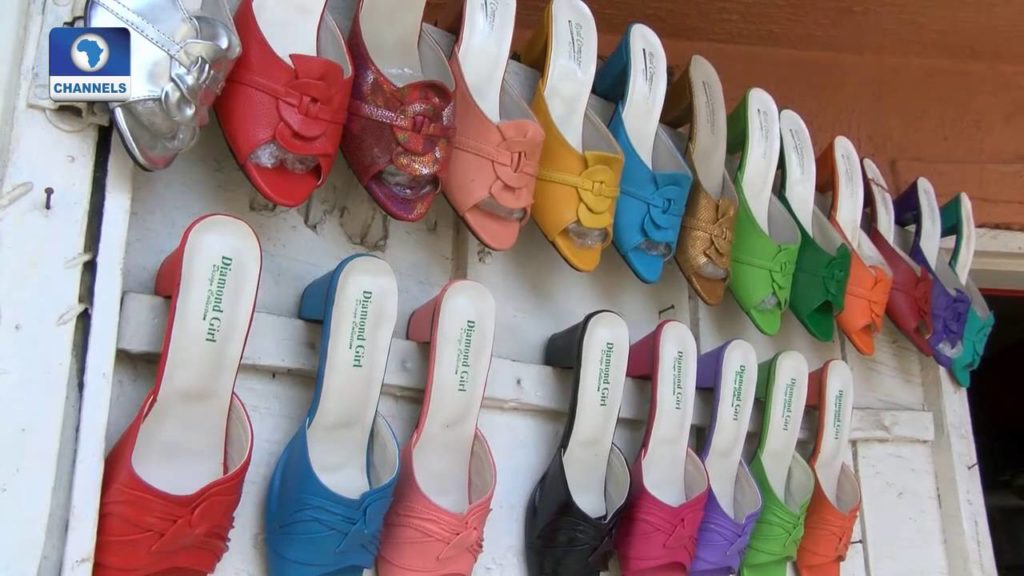
Ladies wears – made in Aba (source: Channels)
Nollywood (Aba – Made for World)
The brand owners will commission a documentary, and movies staged in Aba within the lives of families who generate income through the Aba leather industry. The goal is to expand the audience of the city and reach out to the whole of Africa where Nollywood has become Nigeria’s best export. This movie will become a simple way to tell the world about Aba shoes! It is structured marketing and advertising at scale.
Abia State Polytechnic Department of Industrial Designs
We recommend the establishment of a new department in Abia State Polytechnic Aba to help facilitate knowledge base in the sector. This department will train, educate and facilitate knowledge and collaboration in the overall area of designs. Inside this department will be a Leather Design Hub where makers and designers can come and learn new processes used by global players. The goal is to be sure of pipeline of designers for continuity and succession management.
Rounding Up
Aba could be great and has the sparks of genius to compete with Italy and Spain in the leather industry. I have offered some clear strategies to redesign the sector. Establish a vehicle that will galvanize the different shoe making entities into brands. Each brand will push for higher quality through better tools and training and advocate more collaboration among players. A requirement that a brand buys from the entities will be established. It will be similar to a merchant buying farm outputs from farmers even as the merchant has provided seeds to the farmers at planting season. Through strategic advertising and marketing, Aba will reach its promise.
——
About Aba, Abia State NIGERIA
Aba is a big trading center in Abia State in the southeastern part of Nigeria. It is considered to be the economic heartbeat of the state which has Umuahia as the political capital. It has more than a million people and is home of legendary craftsmen and handcrafters especially in the leather industry. Its main tertiary school is Abia Polytechnic Aba. It hosts Ariaria International Market, one of the biggest markets in West Africa. Enyimba people, the nickname of Aba residents are traders, businessmen and are respected in Nigeria for their entrepreneurial brilliance. Educated or not, they know how to simplify commerce and build new opportunities.
Some of the key sectors include light manufacturing in brewery, textiles, pharmaceuticals, plastics, cement, and cosmetics. Aba has a relatively developed manufacturing sector along the Factory Road, very close to the railway station. The iconic Unilever towers in the area along with PZ and Nigerian Breweries. It is a hub for gateway from eastern part of Nigeria to many other regions with luxury buses. Before the collapse of the Nigeria Railways, Aba Railway Station was a strategic hub for moving agricultural produce from the northern part of Nigeria to eastern part of the country. It hosts the most successful, at least at the continental level, football club in Nigeria – Enyimba FC.
However, Aba could also look dirty and neglected. The roads are bad with dumps of refuse everywhere. During rainy season, Aba floods. The connecting road to Aba from Port Harcourt was one of the most strategic for the city. But for years, that road has been neglected. The popular Oil Mill Market in Port Harcourt is important to Aba traders just as Arriara Market is to the Port Harcourt dwellers. Because of this, Uyo has been attracting some companies that used to operate from Aba. The traffic congestion problem especially after rainfall is turning once a virtuoso city into decline.
Though it would have been the official capital of leather works in Africa, Aba is very notorious for poor branding of its products. It is hard to see a shoe made in Aba Nigeria with the label that it is made in Nigeria. They feed into the wrong assumption that nothing made in Nigeria will be patronized by customers. So, you see quality products from Aba workshops with fake tags of Italian and French fashion houses. They export them to neighboring African countries but never capitalize on their product pipelines as they never ever claim they made them with their unpatriotic branding. Education will certainly help to change those understandings and help transform the market.
We see automation to be the future of this city. Most of their operations especially in craft are manually done, businessmen must use machines to scale and reduce cost. Automation will position Aba to compete with foreign companies that export their wares into Nigeria. But for that to even happen, they must learn to put their labels proudly on their products.
Credit: I thank Tony Elumelu Foundation for funding my non-profit African Institution of Technology which has done many research works across many clusters in Nigeria. The outcomes have been published in Harvard Business Review and other leading publications.