

In this videocast, I discuss how a smart software acquisition strategy can help your organization reduce cybersecurity risk.
How Fintechs Can Build Efficient Solutions for Intra-African Remittance
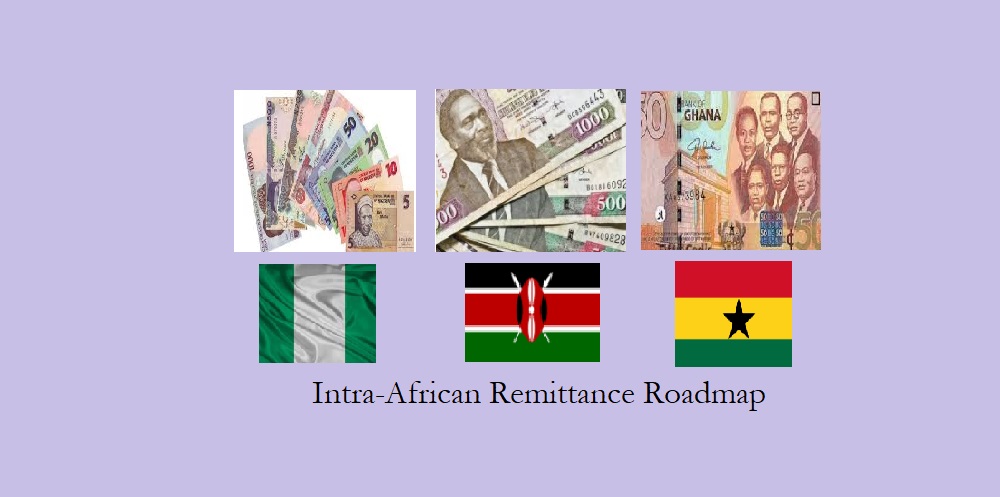
In the financial technology (fintech) ecosystem, we have seen many activities and innovations in and around Africa. We do expect one of these innovations to drive the acceleration of intra-trade in Africa, making it possible for African countries to trade among themselves, more efficiently. Today, it is estimated that the total African intra-trade as a percentage of total African trade is mere 11%.
There are many challenges why this has been the case – i.e., this low intra-trade. One is logistics, African ports and transportation routes are wired right to the domains of the old colonial masters. This makes it easier to move goods from Gabon to France than from there to Nigeria, despite the proximity of the African neighbors. In short, to travel from Lagos to Libreville, you may have to fly into Paris before returning into Africa.
Another problem is that Africa does not have much to trade among themselves since we do not have factories to process our raw materials. The list goes on, on why this low intra-trade volume, has not improved despite efforts by the African Union to boost it.
Nevertheless, something can be done about it. A key element is finding a way for money to move from one African country to another in the most cost-efficient way. Because the volume of trade is low, the typical way to settle trade balances and by extension foreign currencies is hard.
For example, if Nigeria trades with South Sudan, there may be huge problems to find offsetting and counter-balance Nigerian currency and South Sudan currency which will make it possible for the two countries to transfer money at equilibrium. One country will likely have more movement in one direction. That position will immediately create a problem.
What Can Be Done
It turns out that technology cannot easily solve this problem since apparent lack of the above equilibrium point will create a problem. If an entity has so much Nigerian Naira to move to South Sudan and cannot find enough South Sudan pound to move to Nigeria, equilibrium cannot be attained. The implication is that transfers will be expensive and also take days. The hope of making the transfer fast and cheap will not easily come, using the contemporary technique deployed by banks.
In the way it is done today, the money has to move across boundary from say Nigeria to South Sudan with all the forex losses and associated delay. This makes the cost of business very high. The sender of the money will surely lose value when the money is likely covered to US dollars or Euro or British pounds and back to the destination African currency.
Based on these challenges, we are not experiencing efficient intra-African remittance. While the volume of participants on the America, Europe and Asia axes to Africa continues to increase, we cannot say there is much traction serving intra-African remittance.
We propose a new solution that works this way for any fintech that will like to boost its African business:
- A fintech will register in each of the countries in Africa where it wants to do business. It can just take say the top interesting 25 countries. A good plan will be to be in all countries, though. It will open bank accounts in the respective countries
- It will deposit money in the bank accounts. For example, in Nigeria, it can have $100,000 in local currency. In South Sudan, $10,000 and in Kenya $30,000 – all in local currencies. It will do this across the continent understanding that some countries, based on size, will need to have more stock of local currencies. Largely, the fintech can look for local partners but that will remove its capacity to manage the local currency – foreign currency risk as the local partner will likely push the risk into the exchange rate. For us, we think having these accounts, despite the operational challenges, will do the magic.
- The fintech will have its technology to match people that want to transfer money across the continent. Once it matches sender and receiver, say someone in Ghana with Cedi that wants to pay a merchant in Nigeria in the local Nigerian Naira, with another person in Nigeria with Naira but wants to pay in someone in Ghana on Cedi, it can execute a transfer deal fast. This is the best case scenario. But it rarely happens because of the heterogeneous structures of African economies. This also has transfer latency which is not good.
- Note that in the present banking order, the typical thing is for the person to wire that Cedi from Ghana to cross boundary and then land into Nigeria where the bank will pay the merchant in Naira. The reverse happens.
- Instead of doing that which is expensive, the fintech will simply credit the Nigerian merchant from its account maintained in Nigeria which is already in Naira. It keeps the Cedi in Ghana. Making this work does not require if there is anyone sending money from Nigeria to Ghana. Provided the fintech has enough stock of local cash to meet demand, it can effectively meet all obligations at better speed and cost.
- With this, no money has moved across the boundary. This means the risk of forex has been abated and certainly the transfer can happen very fast, instead of days.
Banks may not easily do this because of many factors on what they do with money and how they keep it. But a typical fintech with good asset base can execute this model. It can also work even from Europe and North America to Africa, if they have local operating accounts for settlements. This will mitigate the challenges when they cannot pair senders and receivers effectively which happens a lot thereby slowing the process; Transferwise, a cross border money transfer firm, does experience this issue.
To ensure the risk of local currency is managed where the fintech might have raised money in US dollars and converted to local currency, its pricing of products to customers may be tied to the exchange rate. That it is not wasting that money via SWIFT does not mean it cannot bill customers on it. A pricing model to handle the domiciled money forex risk is not a huge problem. The reality is that most customers will not mind. Someone sending money from Sudan to Nigeria may not mind since by default this process will be cheaper than the present bank model and will also be faster.
Will be happy to explain more how this system will work to improve the remittance process. I have looked at this from all the angles – taxation, local fees etc – and the conclusion is that this will boost intra-trade and also create a niche for any firm that does it,
List of Yemi Osinbajo’s Appointed Chief Medical Directors, etc for Federal Health Institutions

Yemi Osinbajo, the Acting President of Nigeria, has approved the appointment of 14 Chief Medical Directors and Medical Directors in Federal Teaching Hospitals, Federal Medical Centres and Specialty Hospitals in Nigeria.
This was disclosed in an approval letter signed by the Deputy Chief of Staff to the Acting President and addressed to the Minister of Health, Isaac Adewole.
According to a press statement by the ministry, the appointments take immediate effect for a four-year tenure and are in two categories.
The new chief executive officers and their health facilities are:
- Bisala Ekele (University of Abuja Teaching Hospital, Gwagwalada)
- V.A. Osiatuma (Federal Medical Centre, Asaba)
- Idris Suleiman (Federal Medical Centre, Birnin Kudu)
- Abdus Musa (Federal Medical Centre, Abeokuta)
- O.O. Alabi (Federal Medical Centre, Lokoja)
- Adejuwon Dada (Federal Medical Centre, Ebute-Metta, Lagos)
- Ibrahim Wakawa (Federal Neuropsychiatric Hospital, Maiduguri)
- O.C. Ogun (Federal Neuropsychiatric Hospital, Lagos)
- Shehu Sale (Federal Neuropsychiatric Hospital, Sokoto)
The five that will be serving their second tenure are;
- A.Z. Mohammed (Aminu Kano Teaching Hospital, Kano)
- Anthony Igwegbe (Nnamdi Azikiwe University Teaching Hospital, Nnewi)
- Wiza Inusa (Federal Medical Centre, Jalingo)
- Joseph Okegbe (Federal Psychiatric Hospital, Calabar)
- Sunday Olotu (Federal Neuropsychiatric Hospital, Uselu, Benin-City)
How Diamond Bank Plc (Nigeria) Can Grow
Diamond Bank is one of Nigeria’s new generation banks. In the 1990s, it was considered one of the most innovative banks in the local banking scene. It pioneered a new way of banking through the nationally acclaimed Diamond Integrated Banking System (DIBS) which made it possible to deposit cash in one branch, and withdraw the same cash in any other branch of the bank. Before then, customers were required to return to the specific local branch where the account was opened to withdraw that same cash.
But recently, the bank has struggled. Largely, it now belongs to the Tier II class, hugely far behind previous peers like GTBank and Zenith Bank. Over exposure to the oil & gas sector, where it made poorly performing loans, has exacerbated its problems. The bank is expected to raise fresh capital to strengthen its balance sheet.
In this piece, I explain how the bank can grow again, by going back to its root. The key is specialized banking innovation in delivering top grade service to specific sectors of the economy. At its peak, Diamond Bank served traders and importers with excellence and professionalism. It aggressively opened branches near markets where it had domain expertise. It was the importer’s (and trader’s) bank and they liked Diamond.
In Q1 2017, the bank reported pre-tax profit of N5.58 billion against N6.69 billion in 2016; in GTBank, profit before tax stood at N50.39 billion, representing a growth of 64% over N30.68 billion recorded in the corresponding period of March 2016
With Commission on Turnover (COT) effectively curtailed, the promise of flipping transactions, even digitally, is not going to drive the future. What will be critical now is finding how to get new sources of deposit base to do want banking is about – get cheap money, loan that with interest. The sector is very competitive and nothing is a given.
For the realignment of this observation, innovation is very critical. In the early 1990s, Diamond Bank was one of the most innovative banks in Nigeria. Its pioneering Diamond Integrated Banking System (DIBS) which made it possible for a bank customer to put money in one branch and access it from any other Diamond Bank branch, gave it market share, from the old generation banks . That was a golden era in Nigerian banking with so many innovations, including in pricing. The invention of COT (commission on turnover) provided capital that funded growth and transformed the sector as they made good profits, and they invested in modern technology. But ever since, disruption has been muted and innovation is largely incremental. Tier II banks must come up with ideas beyond the needs, expectations to perception of customers just as DIBS provided to Diamond Bank the tools to take market share from the older banks.(Other new generation banks like Zenith, GTBank, STB (now UBA) , etc had their own incarnations of innovations that improved customer experiences)
The New Landscape
Diamond Bank is moving aggressively into digital which is good. But it needs to understand the major limitations of digital in Nigeria. It cannot necessary help any bank in the short term, to grow deposit base. The digital channels are still designed for transactions and moving money, without core technologies to accelerate bringing new classes of customers into the banking sector. The bank has to find ways to focus on how to use technology to bring farmers, artisans, herdsmen and others into the bank.
Apps are great but they add marginal value because the money is still in the physical world. The richest Nigerians are yet to get the memos that business of banking can be done online. This means the best customers, who are the profitable ones to banks, are not going to be found online. Students, while potential customers of the future, are not going to drive the deposit base required for growth, So, Diamond Bank must intensify its efforts to deepen its business development in the physical world because that is the key source of customer acquisition.
The bank’s short-term future is in the meatspace (physical world), though digital offers medium and long-term opportunities. The implication is that solution must come through discovery of new business segments that can bring deposits. These customers are not part of the highly fascinating digital natives wiring daily N2,000 to one another on apps and web apps.
The bank has to look to discover and serve a segment as it did with traders and importers in the 1990s and 2000s. It did that with total quality and absolute service excellence.
What The Bank Can Do
Diamond Bank should work to drive agency banking with new technologies that will simplify the process and eliminate most of the inherent risks. People call them financial inclusion for the un-banked customers, but the reality is that a very innovative bank like Diamond Bank can unlock the value here, just as it used DIBS, to create value in 1990s.
BVN is an opportunity, and NIMC (National Identity Management Commission) provides even a richer source of data. The roadmap is to develop a technology that will help make citizens/shops extension of bank branches so that banks are closer to the people that need them, at better cost model. We do not need full scale branches to reach villages and communities. Technology provides the capabilities to scale this and also make it cost-competitive.
The herdsmen who move tens of cows have more values to a bank than college students who barely have enough for three square meals. But the college students are accessible while the herdsmen are not. Find a way to reach them and provide banking services and boost your revenue.
Agency banking with proprietary technology supported with tokens, phones, BVN and mobile kiosks will deliver the magic. The transactions will be capped to avoid fraud and risk-management tools embedded. As these agency banking systems mature, banks can close and sell off expensive branches which may not be necessary in 5 years as the immersive digital economy evolves.
A technology that provides innovation, at scale, delivering good cost-to-income ratio, even when improving deposit base, is what Diamond needs. They need to pursue this strategy, building specialization and competence, in the niche markets. They need to know what farmers, herdsmen, artisans etc need on the overall constructs of banking in order to deliver value to them. In the past, Diamond Bank opened branches in markets developing capabilities in meeting the needs of traders. Now is the time to go to carpenters, artisans, herdsmen and farmers, because they are latent opportunities which are waiting to be unlocked. A localized version of Spare, redesigned for agency banking, with some new features will be appropriate.
SPARE turns any cash register into an ATM. SPARE is a service that simplifies safe access to your money by employing a mobile phone application and a unique security system to create convenient access to cash, that is less expensive than 3rd party ATM’s. SPARE is a B2C Mobile Cash Access Service that allows any business to leverage cash on-hand like an ATM, making the presence of a payment device unnecessary.
SPARE intends to turn businesses into cash-dispensers, obviating the need for third-party ATM’s, which carry hefty fees & ever increasing risk of fraudulent activity. Consumers are attracted to SPARE for Convenience, Cost-Savings & Security. Merchants recognize the value of an Additional Revenue Stream & Increased Foot Traffic
Diamond Bank has been stellar in discovering and nurturing market segments. It has the tools to build a new market and use that to get itself out of the stasis it is at the moment with its market capitalization severely degraded. It has a great team and can execute a strategy to go back to its roots of serving specific market segments, well.
CWG Plc Should “Merge” With SystemSpecs
CWG Plc (formerly Computer Warehouse Group Plc) is one of the leading technology integrators and operators in Nigeria. Founded by Austin Okere, the firm dates back to 1991 when it was largely a hardware supplier and integrator. But quickly, the company evolved, providing solutions especially to corporate clients in the areas of VSAT, metropolitan, wide and local area networks. If found success and in 1999, it acquired Expert Edge to emerge as a software solution and training powerhouse, in Nigeria.
Today, CWG Plc is a Nigerian success. It is built with tenacity, vision and excellence, despite all the odds for such a company in Nigeria. Few banks in Nigeria can open their branches tomorrow if CWG cannot work for six hours. Its impact is huge and it permeates many sectors in the Nigerian economy.
It is a company of three core areas – hardware, networks and software- all integrated. And it is growing with operations in Ghana which was opened in 2003. The company was one of the firms that demonstrated the value of shared resources when it consolidated all its businesses for leaner, efficient and more focused operations in the market. Besides Ghana, which handles the Western African business, excluding Nigeria, CWG operates in Uganda and Cameroon for East and Central African business opportunities, respectively. It went public in 2013 in the Nigerian Stock Exchange. It is ISO9001 certified and was recognized by the World Economic Forum (WEF) as a Global Growth Company. This public-traded CWG is worth about N6.4 billion (~$22 million) according to the Bloomberg Markets. (Nigerian Stock Exchange is always hostile to tech companies, decimating their values.Beware.) This company, in our estimate and using our model, is worth excess of $60 million, largely because of many strategic exclusive partnerships it has with foreign companies.
Key Attributes of CWG Plc
- Nationwide operations with experience dealing with nuances of Nigerian business climate, at scale. It is one of the few companies in Nigeria that can provide IT support to nationwide operating firms.
- Deep experience in manufacturer representation. CWG represents many foreign brands as a local partner. This is how it makes most of its revenue. It is not necessarily a local innovation powerhouse with its own core intellectual properties. It is an integrator and it uses scale to support its clients. Recently, it has deepened capabilities in digital products, nevertheless. But most of the bank solutions it supports are with foreign partnerships
- African operation remains limited. Its strong base is Nigeria and lack of deep inside operations in markets had not delivered its full pan-African mission. It needs to be in Congo DR, Kenya, Ethiopia and cannot be meeting their needs from satellite regional offices.
- The innovation is business-model oriented doing what it does at scale. It has to bring technology-centered innovation to improve gross margin in its business.That will mean having the capacity to own the IPs of some of the solutions it delivers and supports.
SystemSpecs
SystemSpecs is one of the most innovative local IT companies in Nigeria that actually makes money. It has also evolved over the years. Though in the past it had represented a foreign software company for its Fixed Asset and Inventory Management software, SystemSpecs, which is privately held. has branched into making its products, in house. Its flagship HumanManager is one of the most successful local technology brands in Nigeria. Many banks and financial institutions depend on its solutions to run their supporting operations.
It worked heavily with SunSystems which is still partners with for some of its solutions in the market. However, the success of HumanManager, a Payroll and HR processing software, gave the firm a lot of recognition and cashflow for growth. .HumanManager can be seen as one of the most successful local software products in Nigeria, ever, with extensive adoption in the market.
Founded by John Obaro in 1992, SystemsSpec operates in all the key sectors of the Nigerian economy. It is the company behind Remita which is one of the most exciting products in the country today. Remita helps the Federal Government of Nigeria to collect and manage payments, under the Treasury Single Account project, earning commissions in the process. Increasingly, Remita supports other institutions besides governments, to receive and make payments, as typical with electronic platforms. The firm is a pioneering local software company and is assumed to be the most successful. Besides software, it also offers solution delivery, training and maintenance services.
SystemSpecs is Nigeria’s finest software powerhouse with all the attributes you expect from local brands. However, SystemSpecs is inherently local and leaving opportunities in Africa despite its strengths. That is why we think it needs to combine with CWG to lead Nigerian IT sector into the continent, with more vigor and energy.
“Merging” A Public and Private Company
Together SystemSpecs and CWG can go far. But one is public while the other is private. So largely, only reverse merge can work here. Another is pure acquisition but do not go there. Certainly SystemsSpec is worth more than $22 million the market assigns to CWG Plc, making any talk of acquisition baseless. We also believe that CWG is more than what the market is valuing it, as has noted above. The best way this can work is to for the company to emerge, “post-merge”, as a different public traded company. “CWG”, the three letters, is a more marketable and differentiated name than “SystemSpecs” which is amorphous, but keeping it will confuse traders. So they need to find a new name. We propose CSSG Plc, removing the “W” in CWG Plc and replacing with “SS” from SystemSpecs. CWG cannot afford to swallow SystemSpecs and SystemSpecs cannot afford to take CWG private; this strategy will be a compromise. CWG goes private and then emerge public with SystemSpecs at a better market valuation. As they grow, in Africa, they could also consider listing in the Johannesburg Stock Exchange which has more liquidity. (You can call this reverse merger or anything you prefer, but do not call it acquisition of SystemSpecs by CWG.)
Why A “Merger”?
For these two companies to scale and become a pan-African operation, they need to come together. Nigerian companies are not necessarily good in doing this because we like to control 100% all the time. But this is what will help the two firms compete against South African firms like Business Connexion which is expanding rapidly across Africa. Besides, IBM. Atlas Mara, and Accenture are competitors in some sub-sectors in what CWG does.
A merger will provide the following:
- Liquidity to fund pan-African growth in areas of marketing and business development
- Capital to expand SystemsSpec R&D into new areas of software especially Artificial Intelligence making sure that its solutions are upgraded and ready for new and evolving market needs
- Operational scale to reduce per-unit cost. That will cut expenses in management and drive the businesses to more profitability. It can also help them to bundle their services more efficiently.
- Produces a business that can aggressively enter into new markets while having an innovation engine behind for new product lines. The old-CWG will provide the business development and support while SystemsSpec power the merged firm with new product lines
- Systematically reduce focus on foreign manufacturer representation and then moves into building Africa-themed solutions in-house
- Take Remita Africa-wide as quickly as possible. We do believe that Remita can compete in the evolving fintech world. With the free cash it is earning in Nigeria with its present contract with the federal government, the merged firms can fund growth, across African cities.
- Push with the combined resources into the major pain areas in the African economy with software solutions for agriculture, informal economy, transportation, etc. They have to go beyond financial, public and oil & gas sectors. Future growth is poised to come from bringing under-served Africans into the financial sector. The new firm can play a role developing technology the banks and insurance firms can use to provide services to these fellow citizens. The Asian and Western firms lack the capacities to understand the challenges here and the new CSSG Plc has an edge. Besides, CSSG Plc can pioneer tools and solutions to make corruption difficult at least in procurement phase.
Rounding Up
CSSG Plc will have more capacities to compete against IBM, Atlas Mara and other leading technology integrator brands in leading African markets. It will also begin that glorious era where Nigerian IT companies begin aggressive push to earn foreign exchange across the globe. The bravado of CWG Plc and the intellectual ingenuity of SystemSpecs will lead to a new corporation that will have more opportunities in Nigeria and beyond. That is why we call for a MERGER or simply want them together.