The revenues, and by extension the profits, of the leading mobile operators in Nigeria can be radically improved, despite all their challenges, if they begin the move into industrial services where mobile telephony and broadband services are specifically delivered to improve specific industrial operations in the country.
Everyone understands the challenges in the telecom sector in Nigeria. There is the problem of extra tax burdens on one side and the erosion of revenue, accelerated by OTP services like Whatsapp which consume infrastructure capacities without the telecom companies earning decent revenue therein, on the other side.
Yet, these companies have opportunities to unlock more value if they can move into certain new industries like agriculture. They need to move into providing services that help farmers improve their businesses and that will help them find new sources of revenue. This means in each of these giants, we need to see MTN AgTech, Etisalat AgTech, Glo AgTech and Airtel AgTech business units.
With this AgTech IoT (Internet of Things) innovation, companies like MTN, Airtel, Etisalat and Glo can pipe a lot of agriculture data to farmers, banks, insurers and others across the food chain. The telecom operators will aim to improve the connectivity of sensors and other data-capturing devices on the farm to help farmers turn this data into actionable insights. They can work with partners to execute this business.The opportunity is huge as this is an untapped market and these companies can even come together to seed the connectivity part of the business. We mean these companies can come together under an initiative to connect Nigerian farms. It would be a necessary investment for them to expand beyond where they are today.
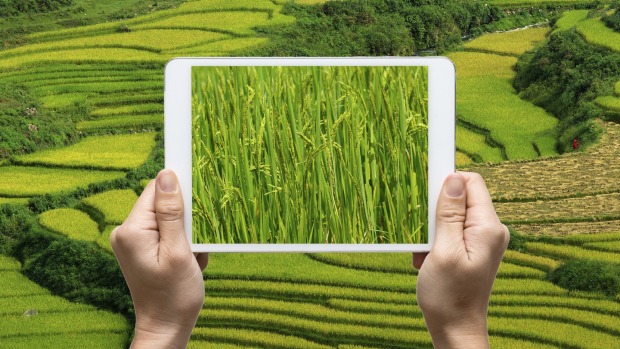
They have served the banks, insurance and oil & gas sectors. But agriculture is where the money is because that it is the most impactful sector, that employs more than 60% of Nigeria’s working population. We want them to be there. Our farmers will need that level of support for Agriculture 2.0. to be unleashed in Nigeria.
Consider MTN AgTech which can develop tools, with partners, to help local developers and others build for, and use, IoT in the agriculture space. The telcos will work with partners to develop APIs that will support such an initiative. People are talking of smartcity in Nigeria. We think that is largely elitist because we have more urgent things to deal with before whether a city is smart. The real deal right now is agriculture and the demand projection is huge because farming productivity is very poor and any improvement in yield will improve the living conditions of more than 60% of the Nigerian citizens.
Did we note that the telcos will make more money in the process? As Nigerians do well, the bulk being farmers, the telcos will have better annual parties!
The telecom companies will help the sensor partners handle connectivity issues with a national standard set in the nation for the agriculture space. This is good business; NCC, the regulator, should not be anywhere close. We just suggest the telcos work together and build a new business segment. Bringing a network and a platform together will quickly help drive this innovation process.
In addition to providing farmers with the ability to track everything that’s happening in their fields such as irrigation, and efficient fertilizer application, the telecom firms working with smartfarm sensors will aim to provide farmers with prescriptive and predictive recommendations based on the combination of historical, geospatial and on-farm data via dashboard. This is not just for farmers, even local gardeners will be on board and the telcos will benefit.
The telcos in this partnership will focus on their strengths in wireless connectivity and tackle some of the technical challenges of connecting devices and getting data out of the field and into the cloud through gateways. We envisage that they could decide to build a completely open IoT platform that an existing and future ecosystem of companies could build farmer-focused solutions on which could tether those customers in their networks because their farm data are already resident with these telcos. We believe that participation and interests from the telcos will help accelerate innovation in this area.

This is the new industrial beyond what they are doing today. This will open more revenue opportunities and by extension help them towards higher profitability. We do hope the telcos will not suddenly try to focus on selling their own software products to farmers. If they choose that path, they will likely fail because working with farmers is not an expertise the telcos have in their DNAs. They just need to provide the networks so that AgTech entrepreneurs will do the rest. The cost model will not work in their favors because the farming entities in Nigeria are very fragmented. This means they will be required to operate with new cost models to succeed. That will be hard.
I suggest the telcos focus on the connectivity and leave the rest to precision agtech partners to run. My company provides services in the precision agriculture and will be in a position to work with these telcos to pioneer this sector.
Like this:
Like Loading...