DD
MM
YYYY

PAGES

DD
MM
YYYY

spot_img

PAGES

Home Blog Page 735

A Look At Ferrari’s Blockchain Strategy and How It Will Shape Automobile Management

0

Ferrari’s blockchain strategy primarily focuses on integrating blockchain technology to enhance its business operations, with a notable emphasis on accepting cryptocurrency payments and exploring applications like non-fungible tokens (NFTs) and supply chain transparency.

Ferrari accepts Ethereum (ETH) payments, along with Bitcoin (BTC) and USDC, in both the United States and Europe. The Italian luxury sports car manufacturer began accepting cryptocurrency payments in the U.S. in October 2023, partnering with BitPay to facilitate transactions.

This move was expanded to European dealers starting at the end of July 2024. The system converts cryptocurrencies into traditional currency immediately to protect dealers from price volatility, and most European dealers have adopted or are adopting this payment method. Ferrari plans to extend crypto payments to other international markets where legally permitted by the end of 2024.

Ferrari’s Blockchain Strategy

In 2022, Ferrari’s CEO, Benedetto Vigna, highlighted the potential of blockchain and NFTs, leading to the establishment of a dedicated digital retail department to explore Web3 technologies. This department focuses on potential projects like NFT collections tied to Ferrari’s brand, which could enhance customer engagement through digital collectibles or virtual experiences in the metaverse.

These initiatives aim to position Ferrari at the forefront of digital innovation in the luxury automotive sector, capitalizing on blockchain’s ability to create unique, verifiable digital assets that resonate with its high-net-worth clientele. While Ferrari has not publicly detailed extensive blockchain use in its supply chain, the broader automotive industry’s adoption of blockchain for supply chain transparency suggests potential interest.

Blockchain can track components from origin to assembly, ensuring authenticity and preventing counterfeit parts, which is critical for luxury brands like Ferrari. Ferrari’s focus on innovation makes it likely that they are exploring or could explore such applications to ensure quality control and traceability in their manufacturing processes.

Ferrari’s approach to blockchain compliance in the automotive sector aligns with industry-wide challenges and opportunities, particularly in ensuring regulatory adherence and operational efficiency. Ferrari operates in a highly regulated industry with stringent requirements for safety, emissions, and financial transactions.

By partnering with BitPay for crypto payments, Ferrari ensures compliance with financial regulations by converting cryptocurrencies to fiat currency, mitigating risks related to volatility and regulatory scrutiny. The company must also adhere to evolving blockchain regulations, such as data privacy laws and cross-border transaction rules, which are critical in Europe and other markets.

The automotive industry faces challenges like regulatory uncertainty and the need for interoperability between blockchain platforms. Ferrari’s cautious expansion of crypto payments only to regions where cryptocurrencies are legally accepted demonstrates a strategic approach to compliance.

For instance, Renault’s blockchain solution for vehicle compliance certification, announced in 2021, highlights how blockchain can meet new market surveillance requirements, a model Ferrari could potentially emulate. Blockchain’s decentralized and cryptographic nature ensures secure, tamper-proof data storage, which is vital for protecting sensitive vehicle and customer data.

In the automotive industry, blockchain can secure vehicle histories, maintenance records, and ownership transfers, reducing fraud risks. Ferrari’s exploration of blockchain could involve creating digital vehicle passports, similar to BMW’s VerifyCar app, to provide transparent, compliant records of a vehicle’s lifecycle.

Ferrari must ensure blockchain implementations comply with data privacy laws like GDPR in Europe. Blockchain’s transparency can raise privacy concerns, but solutions like selective data sharing through smart contracts can address these issues, allowing Ferrari to balance transparency with privacy.

Ferrari’s crypto payment system likely leverages smart contracts to automate transactions, ensuring compliance with predefined terms (e.g., immediate conversion to fiat). Smart contracts can also streamline other processes, such as warranty management or leasing, ensuring compliance with contractual and regulatory obligations.

The use of smart contracts in the automotive industry, as seen with other manufacturers like BMW, supports compliance by automating processes like regulatory reporting or recall management, reducing human error and ensuring auditability. Ferrari could adopt similar mechanisms to enhance operational compliance.

Leading automakers, including BMW and Ford, are part of MOBI, which explores blockchain applications like supply chain transparency and vehicle data management. While Ferrari’s involvement in MOBI is not explicitly documented, its blockchain initiatives suggest alignment with industry efforts to standardize blockchain solutions, which is crucial for regulatory compliance and interoperability.

Blockchain networks must handle large transaction volumes without compromising speed or security, a challenge for automotive applications like real-time data sharing for autonomous vehicles. Different blockchain platforms must work together seamlessly, requiring industry-wide standards that Ferrari must navigate. Evolving regulations around cryptocurrencies and blockchain data management require Ferrari to stay agile and compliant, particularly in Europe with its strict data and financial laws.

Ferrari’s blockchain strategy is in its early stages but shows promise in enhancing customer experience and operational efficiency while addressing compliance needs. By expanding crypto payments and exploring NFTs, Ferrari is positioning itself as a leader in digital innovation within the luxury automotive sector.

The U.S. $37 Trillion National Debt Milestone Signals a Critical Need For Fiscal Discipline and Reforms

0

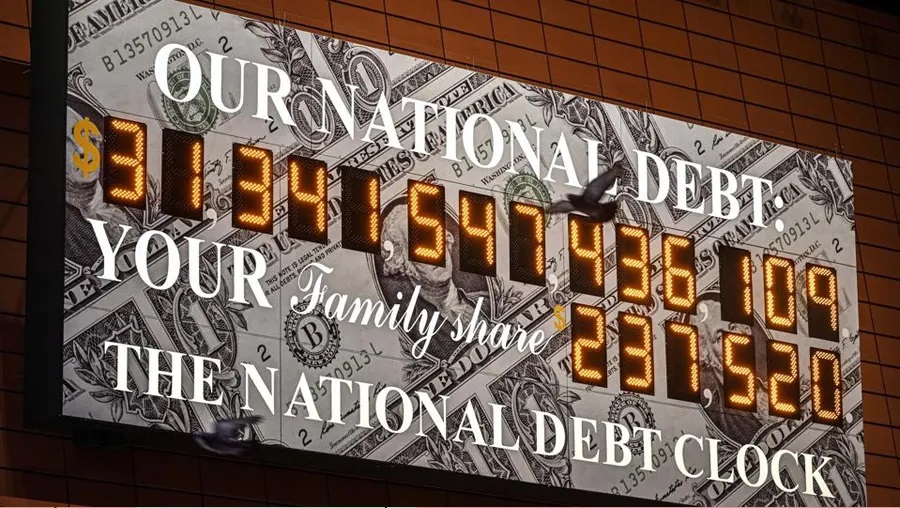
The U.S. national debt has surpassed $37 trillion for the first time, as reported by multiple sources including the US Debt Clock and the U.S. Treasury Department.

The debt stood at approximately $37.08 trillion as of early July 2025, reflecting a dramatic rise from $23 trillion in 2019 and $36 trillion earlier in 2025. This equates to roughly $108,000 per American citizen and $323,000 per taxpayer, with a debt-to-GDP ratio of 123.1%.

The federal budget deficit exceeds $2 trillion annually, with interest payments on the debt reaching about $1 trillion per year, consuming roughly 25% of tax revenue. Since the debt ceiling was lifted on July 4, 2025, with the “One Big Beautiful Bill Act,” the debt has increased by about $780 billion, averaging $22 billion in new borrowing daily.

The U.S. spent $1.1 trillion on interest in 2024, nearly double the amount from five years prior, outpacing spending on Medicare and defense. Projections suggest the debt could hit $40 trillion by the end of 2025 and potentially $55 trillion by 2034 if current trends continue.

Economic Implications of $37 Trillion National Debt

The debt, at 123% of GDP, absorbs significant capital as the government borrows heavily to finance deficits (currently ~$2 trillion annually). This crowds out private investment by increasing borrowing costs for businesses and households, as capital is diverted to purchasing Treasury securities.

The Congressional Budget Office (CBO) estimates that unchecked debt could shrink GDP by $340 billion over the next decade, potentially costing 1.2 million jobs and slowing wage growth. Annual interest payments on the debt are approaching $1 trillion, consuming about 25% of federal tax revenue.

This diverts funds from critical programs like Social Security, Medicare, and infrastructure, straining the federal budget. As interest rates rise (e.g., 10-year Treasury yields increased from 1.1% to 5.0% under recent policies), the cost of servicing debt doubles, exacerbating fiscal pressure.

High debt levels reduce the capital stock and national wealth, impacting future generations. Studies, including a Cato Institute review, show a negative correlation between federal debt and economic growth, with the CBO estimating a 0.1% GDP growth increase if the debt-to-GDP ratio stabilizes. Without action, GDP growth is projected at a sluggish 1.4%–1.6% for 2025.

A potential loss of investor confidence in U.S. debt could trigger a fiscal crisis, marked by a sharp spike in interest rates or a dollar collapse. This risk is heightened if global investors demand higher yields due to perceived default risks or if political brinkmanship (e.g., debt ceiling disputes) undermines credibility.

The U.S. dollar’s status as the world’s reserve currency is at stake, which could lead to global economic disruptions. Persistent deficits and high debt levels create “fiscal dominance,” where central banks may face pressure to keep interest rates low to ease debt servicing, potentially undermining inflation control.

Inflation has already risen significantly (e.g., 20.9% cumulative increase from 2021–2024), eroding purchasing power and increasing costs for essentials like food (+22.6%), gas (+32.3%), and rent (+24.1%).

Reliance on Printing Cash Flow and Tariffs

To manage the debt burden, there’s a risk the Federal Reserve could resort to printing money (quantitative easing or monetizing debt), which increases the money supply and can fuel inflation. This approach devalues the dollar, potentially eroding its global reserve status and increasing import costs, further driving inflation.

Experts like Ray Dalio warn of a scenario where an oversupply of Treasury bonds meets weakening demand, leading to higher inflation and a weaker dollar. Historically, the U.S. has avoided hyperinflation, but persistent deficits could push the Fed toward policies that prioritize debt servicing over price stability, especially if investor confidence wanes.

The Brookings Institution notes that a fiscal crisis could be avoided if policymakers maintain strong institutions, but political missteps could exacerbate risks. Recent policies, including President Trump’s tariff initiatives (e.g., 25% tariffs on Mexico and Canada, 35% on certain goods), aim to generate revenue and protect domestic manufacturing.

However, tariffs contribute minimally to federal revenue—less than 2% annually—compared to income and social insurance taxes. Tariffs can disrupt global supply chains, increasing costs for consumers and businesses. For example, a 25% tariff on U.S. imports could reduce exports from countries like India, impacting sectors like pharmaceuticals and textiles, and raise prices domestically.

While tariffs may stimulate some U.S. manufacturing, their revenue potential is limited compared to the $2 trillion deficit. Relying on tariffs to offset debt is insufficient, as they cannot replace the need for broader fiscal reforms like spending cuts or tax base expansion. Tariffs increase the cost of imported goods, contributing to inflation.

This compounds the inflationary pressure from potential money printing, creating a double bind for consumers already facing higher prices. The combination of high debt, tariff-driven revenue, and potential money printing creates a precarious economic balance. Tariffs may generate some cash flow but risk economic slowdown and inflation, reducing their net benefit.

Printing money to cover deficits could further weaken the dollar and investor confidence, potentially leading to higher Treasury yields and a self-reinforcing cycle of rising borrowing costs. The U.S.’s ability to borrow at relatively low rates (due to the dollar’s reserve status and domestic debt ownership) provides some breathing room, but this is not unlimited.

Experts estimate a 20–30-year window before fiscal space is exhausted, necessitating urgent reforms. Stabilizing the debt requires spending restraint (e.g., cutting subsidies, reforming entitlements) and revenue enhancements (e.g., closing tax loopholes).

The bipartisan Simpson-Bowles framework is often cited as a model for balancing tax reforms and spending cuts. Avoiding a fiscal crisis depends on credible policymaking. The Fed must maintain independence to control inflation, while Congress needs to address structural deficits.

Investors are advised to diversify into inflation-protected securities or global assets to hedge against dollar weakening or interest rate spikes. Staying informed and advocating for fiscal responsibility can also mitigate risks. While tariffs generate some revenue, their economic costs outweigh their ability to address the deficit.

Relying on printing money risks further inflation and dollar devaluation, threatening long-term stability. Without reforms, the U.S. faces slower growth, higher borrowing costs, and a potential fiscal crisis, though the dollar’s reserve status and domestic debt ownership provide a temporary buffer. The window for action is narrowing, making bipartisan reforms urgent to ensure economic resilience.

Little Pepe (LILPEPE) Is Growing Faster Than Solana (SOL) in 2021, Back When Everyone Thought It Would Flip Ethereum (ETH)

0

In 2021, we saw the rise of Solana (SOL), which exploded from obscurity to $250 in a few months. It was further fueled by the promise of offering ultra-fast speeds, smart contracts like Ethereum, but at a fraction of the cost. Some believed Solana could even surpass Ethereum (ETH) as the top smart contract platform. Watching this type of growth was phenomenal. But today, Little Pepe ($LILPEPE) is showing similar momentum, and by some metrics, it’s growing even faster. From a meme coin idea to a Layer-2 Ethereum-compatible blockchain, Little Pepe ($LILPEPE) with presale profits of over 700% is emerging as the next Solana-style breakout. This time, however, it is wrapped in meme culture with a tech backbone.

From Meme to Mainnet: The Little Pepe ($LILPEPE) Acceleration

The DeFi and NFTs booming off of Solana’s back in 2021 drove immense growth. With what Little Pepe ($LILPEPE) is working on, the driving forces are quite similar – the virality of memes, the scalability of Ethereum, and the rapid implementation of meme utilities. While the token started off at $0.001, it reached $0.0018 during the presale, skyrocketing its value and gaining over 85,000 holders and $12 million in presale funds within 9 stages.

The roadmap doesn’t stop at hype:

  • A Meme Launchpad called Pepe Pump Pad
  • Built-in anti-sniper bot protection
  • Zero tax model
  • No team wallet, making it truly decentralized
  • A dedicated Ethereum-compatible Layer-2 network for meme token projects
  • Near-instant transaction finality and ultra-low fees

That’s more than Solana had when it made headlines in 2021—and $LILPEPE is still in presale.

Growing at Lightning Speed

Now let’s compare timelines. It took Solana nearly 18 months to grow from under $1 to $250. Little Pepe’s progress from $0.001 to $0.0018 in under three months— a 2x surge— is remarkable. Following this trend, it could reach $0.05 to $0.10 at launch, with $0.50 or more projected by early 2026.   It was Solana’s early hype investors and institutional funding that advanced its growth. In contrast to Solana, Little Pepe’s growth concentrates on community and grassroots adoption fueled by robust meme culture. Little Pepe ensures fairness, limits whale influence, and enables faster adoption.

The Ethereum Comparison: Different Fight, Same Pattern

Ethereum’s scaling problems have led to the creation of Solana and other L1 competitors. Little Pepe ($LILPEPE) has no intention of competing with Ethereum; instead, it seeks to enhance Ethereum’s capabilities, specifically for meme tokens. The project’s forthcoming Layer-2 chain is tailored for:

  • Meme token creation
  • Decentralized ownership
  • Lightning-fast transactions
  • Anti-sniper fair launches
  • Community-run infrastructure

It’s not simply another meme coin—this one is creating its ecosystem instead of hitching a ride on someone else’s. We observed this in Solana’s DeFi Summer. However, with Little Pepe ($LILPEPE), the builders are starting with culture, not code, and then integrating the necessary scalability.

What Happens Post-Presale?

The current price is at $0.0018, which means Stage 9 is almost filled. When it hits centralized exchanges, which are said to include tier 1 exchanges, analysts expect a 10 to 25x pump in the first few weeks. This means early holders could turn their $100 investment into $1,800-$4,500 almost instantly. Just as Solana was the go-to chain for NFTs in 2021, Little Pepe ($LILPEPE), predicted to launch in 2026, could serve as the default token for meme project launches on the Ethereum Blockchain.

Comparative Growth Snapshot

Metric Solana (2021) Little Pepe (2025)
Starting Price ~$0.77 $0.001 (Presale Stage 1)
Current Price (Relative) $250 (Nov 2021 peak) $0.0018 (Stage 9, Jul 2025)
Time to 9x Growth ~8 months ~10 weeks
Infrastructure Launch After the price explosion Before listing (Layer-2 L2)
Community Size Mostly institutional 85k+ holders (grassroots)

Conclusion

Conversely, Solana grew, which was technology-driven first, and the community came later. Here with Little Pepe, it’s community-driven first. Infrastructure closely follows, all while leveraging the strongest trend in crypto-memes. All three – Solana’s scalability, Ethereum’s compatibility, and the magic narrative of Shiba Inu are combined in one token. For investors in search of the next 100x opportunity, Little Pepe is beyond a mere glance. It is already outpacing Solana’s early growth curve, and is still in presale, under 0.2 cents.

For more information about Little Pepe (LILPEPE) visit the links below:

Website: https://littlepepe.com

Whitepaper: https://littlepepe.com/whitepaper.pdf

Telegram: https://t.me/littlepepetoken

Twitter/X: https://x.com/littlepepetoken

TRX’s $0.334 Cap and Cosmos’ $4.30 Lift Fade as BlockDAG’s $0.0016 Limited-Time Price Nears End!

0

Momentum-based rebounds can deliver quick gains, but lasting ROI often depends on timing and market access. The ATOM price recovery has shown strength above support, while Tron price performance reflects rising on-chain use and growing activity.

BlockDAG’s current $0.0016 entry, even with batch 29 priced at $0.0276, creates a different dynamic. This rare price gap gives late-stage participants a chance to capture returns close to origin levels without facing early-phase risks. With over $369 million secured and more than 24.9 billion coins sold, BlockDAG (BDAG) is the only top decentralized crypto offering this scale of value at this stage.

Final $0.0016 Entry Creates Early-Phase ROI Window for Late Participants

BlockDAG is providing a unique chance for late entrants to achieve early-stage style returns. While the presale is in batch 29 at $0.0276, a limited window lets new buyers enter at $0.0016. This 94% difference from the live batch rate marks one of the most appealing entry levels in any major presale.

To date, BlockDAG has raised $369 million and moved over 24.9 billion coins. Early buyers at $0.001 gained an ROI of 2,660%. Now, with this discounted entry, late participants can access similar ROI potential without waiting for post-launch corrections or risking higher market prices.

This pricing strategy strengthens BlockDAG’s standing among top decentralized crypto options. Instead of closing doors with higher tiers, the project offers a return path to near-origin pricing, widening access and building stronger community backing. It is a calculated choice that fuels confidence while keeping upside open.

For those who value timing and capital efficiency, this is a pivotal moment. The offer will close soon, and once the presale moves ahead, this low pricing will vanish. Acting within this window secures both immediate value and future growth potential, making the $0.0016 entry one of the most strategic presale moves now.

ATOM Bounce Sparks Interest for Timed Market Moves

The cosmos ATOM price recovery is gaining attention as a recent rebound hints at a stronger setup. After sliding toward $4.18, ATOM pushed back to $4.30, recording a 3% lift from key support. This helped shape a fresh range between $4.27 and $4.29, supported by visible large-scale buying.

Recently, ATOM also rose from near $4.13 to $4.24 as trading volume surged past one million units, far above the norm. Part of this momentum followed news of a Cosmos-linked project joining the Coinbase listing roadmap. Both factors point to growing demand and renewed market confidence.

This double push signals an opportunity for those seeking well-timed entries. The recent lows may now serve as firm support, and with strong buying pressure returning, the possibility for further recovery is open. For now, the cosmos ATOM price recovery is shaping up as a chart worth following for potential short-term gains.

TRX Holds Ground and Shows Signals for Possible Breakout

The Tron TRX price performance remains steady despite a pause at the $0.334 resistance. Price action continues to find support near the 20-day simple moving average around $0.30, suggesting a stable floor. Network activity supports this, with over 1.1 billion TRX burned in August, tightening supply and strengthening long-term prospects.

Large holder transactions have jumped by more than 1,200%, hinting at accumulation. Even with some profit-taking, trading volume has risen 26% to $931 million, showing consistent interest. Should TRX break past $0.334, the next targets sit at $0.355 and then $0.38, presenting a clear upside path.

This phase may be a window for those who aim to position before a move higher. The mix of steady fundamentals, reduced supply, and active use makes the current range appealing. The Tron TRX price performance sets up a case for value-focused entry ahead of possible near-term gains.

Why BlockDAG’s Pricing Stands Apart in Today’s Market

While cosmos ATOM and Tron TRX have patterns that may lead to short-term gains, both rely on wider market follow-through. BlockDAG offers something different a defined pricing point that works independently of market swings.

The $0.0016 entry, still available despite batch 29’s $0.0276 pricing, opens a rare path to early-stage ROI even at this late presale phase.

With more than $369 million raised and strong participation levels, this point creates a reset option for latecomers with a focus on entry efficiency and longer-term returns. In today’s field of top decentralized crypto projects, BlockDAG’s limited window offers a distinct edge for those looking for clear and structured upside potential.


Presale: https://purchase.blockdag.network

Website: https://blockdag.network

Telegram: https://t.me/blockDAGnetworkOfficial

Discord: https://discord.gg/Q7BxghMVyu

Top 10 Trusted Crypto Gambling Platforms in 2025 Reviewed

0

As the crypto gambling space grows in 2025, players are focusing more on safety and fairness. The top 10 trusted crypto gambling platforms stand out by offering more than flashy designs or large bonuses. Players want sites that handle crypto securely, provide fair games, and pay out on time without hassle.

These top 10 trusted crypto gambling platforms have earned a good name for their reliable deposits, smooth play, and fast withdrawals. Leading the list is Spartans.com, known for instant crypto payouts, fair gaming systems, and a simple design that works well for both sports betting and casino games.

1. Spartans

Spartans stands at the top of the top 10 trusted crypto gambling platforms in 2025 for clear reasons. It delivers where it matters most. Payouts happen fast, not after long waits. Players avoid issues like bank holds or card declines. Winnings go straight into a crypto wallet in seconds, which really matters during big wins.

The site accepts Bitcoin, Ethereum, Tether, and other popular coins. There are no hidden charges or delays from third parties. Its games are provably fair and fully verified for honesty. The selection includes thousands of titles like blackjack, slots, crash games, and live shows.

For sports fans, Spartans gives full coverage on football, UFC, basketball, and more. It includes live odds, current stats, and smart bet tools to guide choices.

Since Spartans is crypto-first, users skip fiat conversion steps and KYC checks. Its layout is clean, works well on phones, and responds quickly. It fits players who want something simple and reliable. With its fast service, secure play, and open systems, Spartans earns its place as the top name on the list of top 10 trusted crypto gambling platforms in 2025.

2. Stake.com

Stake.com stays strong on the list of top 10 trusted crypto gambling platforms due to its large user base, known influencers, and wide mix of games. Players often return for its familiar layout and active community.

Still, some parts could slow things down. Withdrawals might take longer during busy hours, and access may be limited in certain areas based on local rules. Even with these limits, the site continues to be a trusted pick for many around the world.

3. Roobet

Roobet earns a spot in the top 10 trusted crypto gambling platforms by focusing on fairness and rewards. Its games are checked for honesty and the platform runs giveaways often. It works with Bitcoin and a few other coins, offering casual users a fun place to play.

One downside is the payout speed. Some withdrawals need manual reviews, which can take time. But Roobet stays a reliable choice for those looking for games they can trust.

4. BC.Game

BC.Game also makes the list of top 10 trusted crypto gambling platforms with its huge game lineup and wide crypto support. With more than 100 coins accepted, it attracts players who use different types of digital currencies.

Its own game options are fair and enjoyable. However, new users may face delays if asked for ID checks before getting their winnings. Despite this, BC.Game is still a go-to platform for altcoin users looking for variety and safety.

5. Bet365

Bet365 is well known for its strong global presence in sports betting and a long-standing reputation. It appears in the top 10 trusted crypto gambling platforms because of its reach and trust factor. In some regions, it has added crypto support, but that feature is not yet fully available everywhere.

The platform often relies on older banking systems, which can slow down withdrawals. Compared to crypto-first platforms, the process still feels slow and less smooth for digital users.

6. BetMGM

BetMGM brings industry trust through its licenses across many regions. Its position among the top 10 trusted crypto gambling platforms comes from its strong reputation and steady updates.

While crypto options are being rolled out, the system still feels more like a traditional bank. Transactions are safe but not as fast or flexible as on platforms made for crypto from day one.

7. Gamdom

Gamdom builds its name with strong community features like chat and tip rain. It earns a spot in the top 10 trusted crypto gambling platforms for its support of skins and digital currencies.

However, it has fewer traditional table games than some other sites. Withdrawals usually work well, but they are not as quick as those on top-level crypto platforms.

8. LeoVegas

LeoVegas is known for its success in traditional gambling and has started moving into crypto slowly. Its strong mobile platform and trusted name help place it in the top 10 trusted crypto gambling platforms.

But because of its banking background, crypto withdrawals take longer. Regional rules and older systems can slow the process down for users who want fast access.

9. 888Casino

888Casino has been around for many years and is considered one of the most reliable platforms. Its place in the top 10 trusted crypto gambling platforms is based on its long-term reputation and strong license backing.

Crypto options are still very limited, and the site is only starting to expand in this area. Still, players trust it because of its long history and secure setup.

10. Betano

Betano is well known in European sports betting and is starting to explore crypto in some areas. It appears in the top 10 trusted crypto gambling platforms because of its reliability and large market base.

The platform works well overall, but its crypto features are still in early stages. It lacks the quick wallet connections and speed that newer platforms already provide.

Final Thoughts on Choosing the Right Platform

In crypto gambling, trust is key. Players want to know that their money is handled with care, their games are fair, and their winnings will not be delayed by extra checks.

Among all platforms in 2025, Spartans.com stands out with fast payouts, fair-play checks, and a design that works smoothly. It offers the kind of service others are still trying to match.

No matter your level of experience, picking one of the top 10 trusted crypto gambling platforms helps avoid delays and problems. Spartans remains a top choice for those who value speed, fairness, and control.